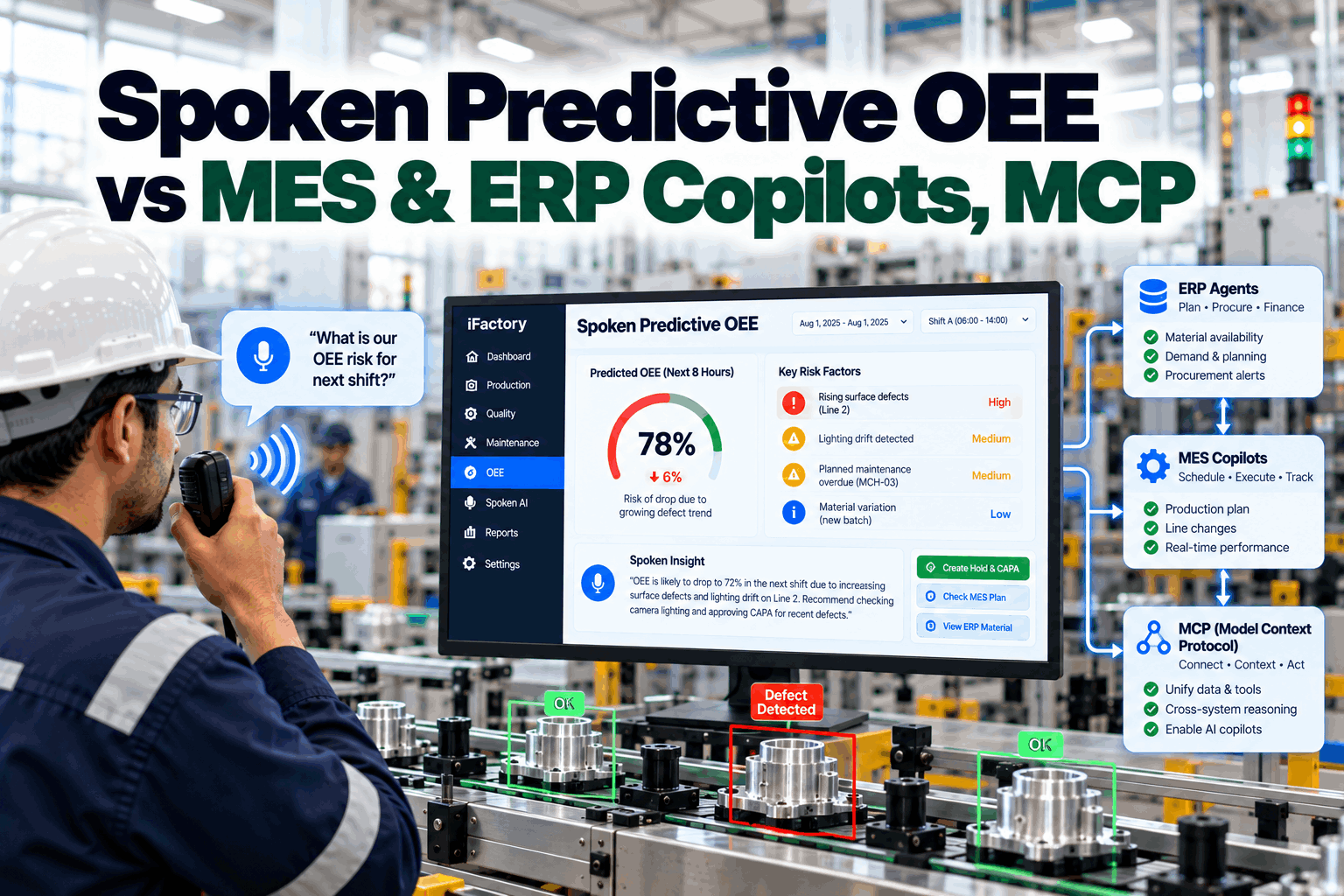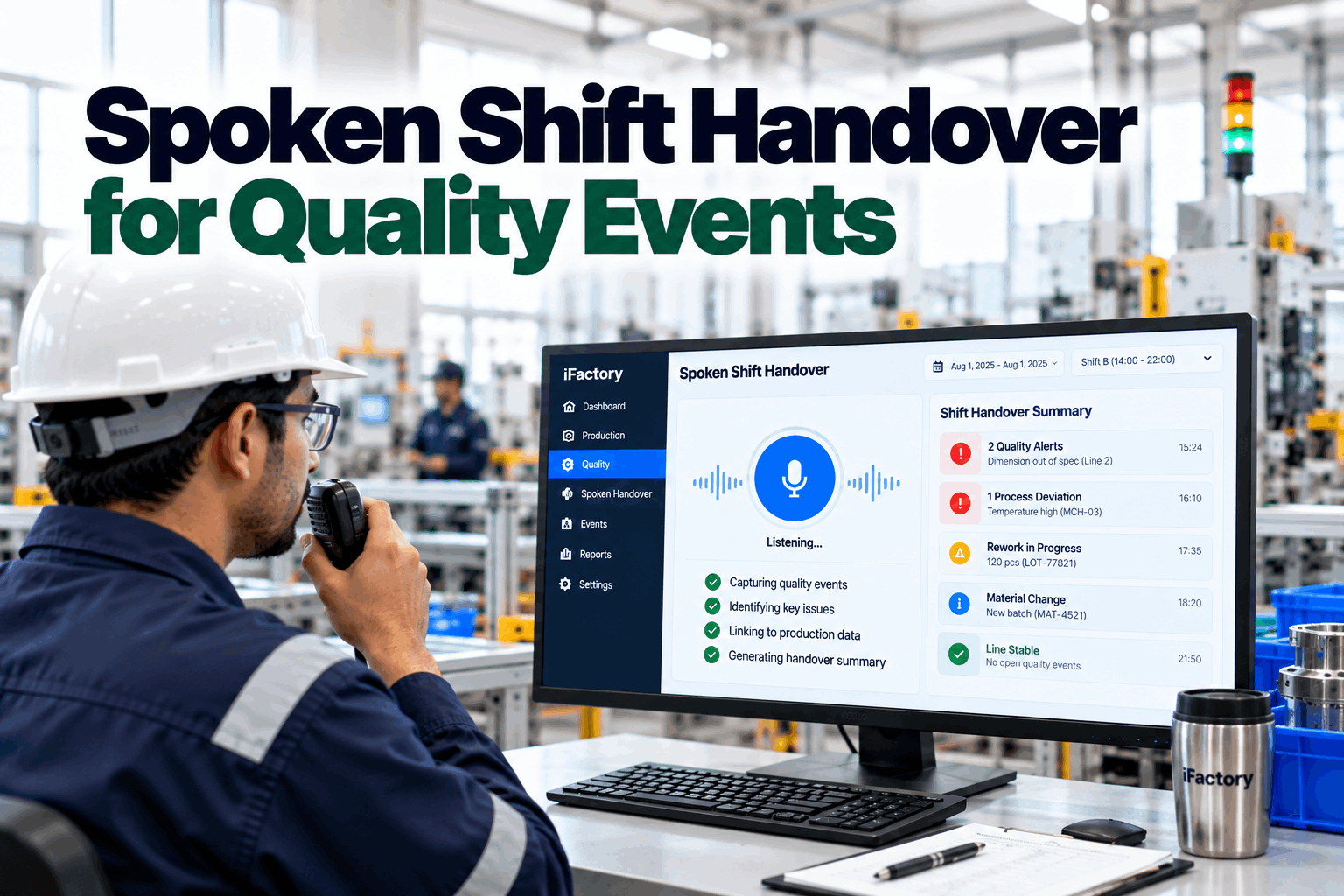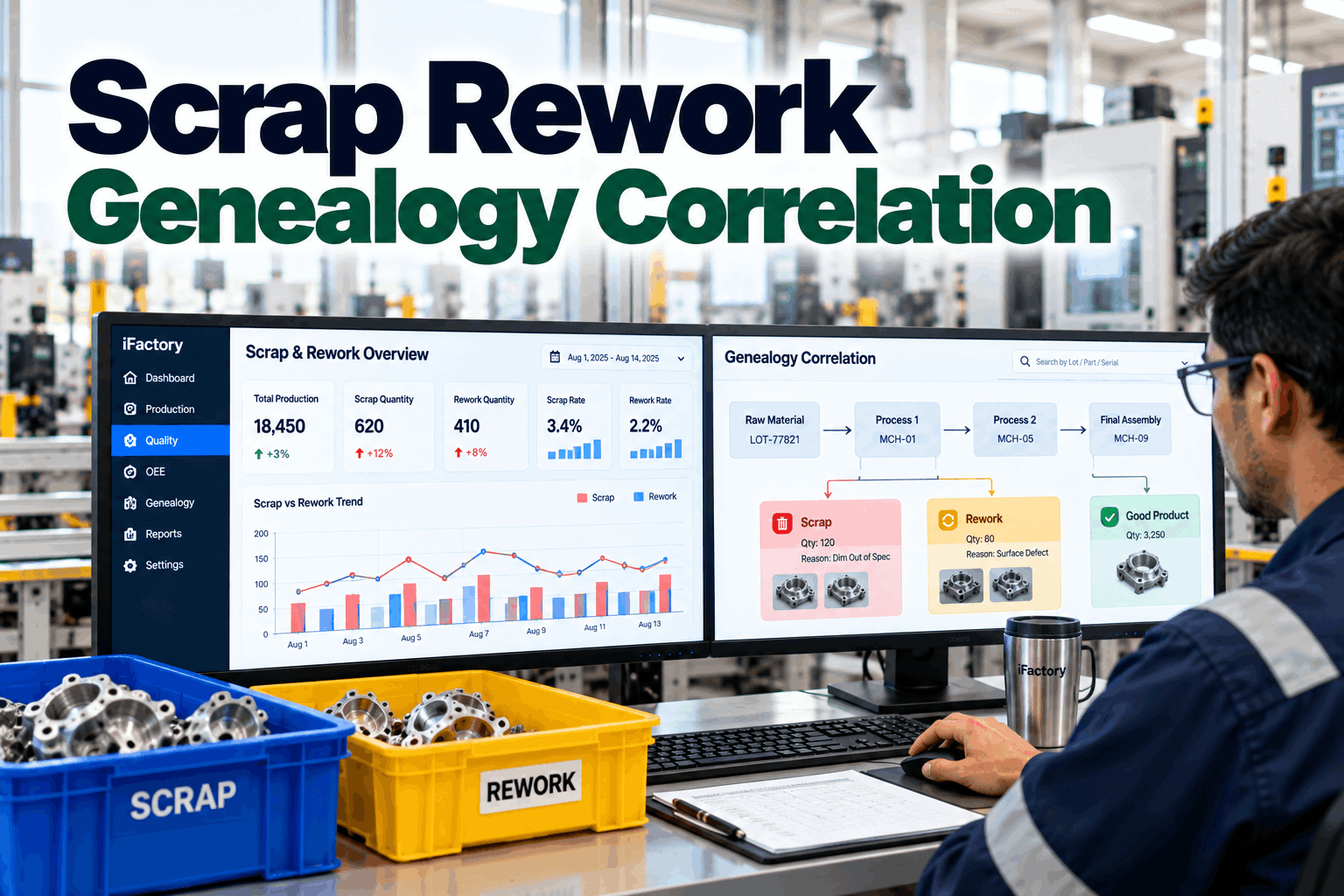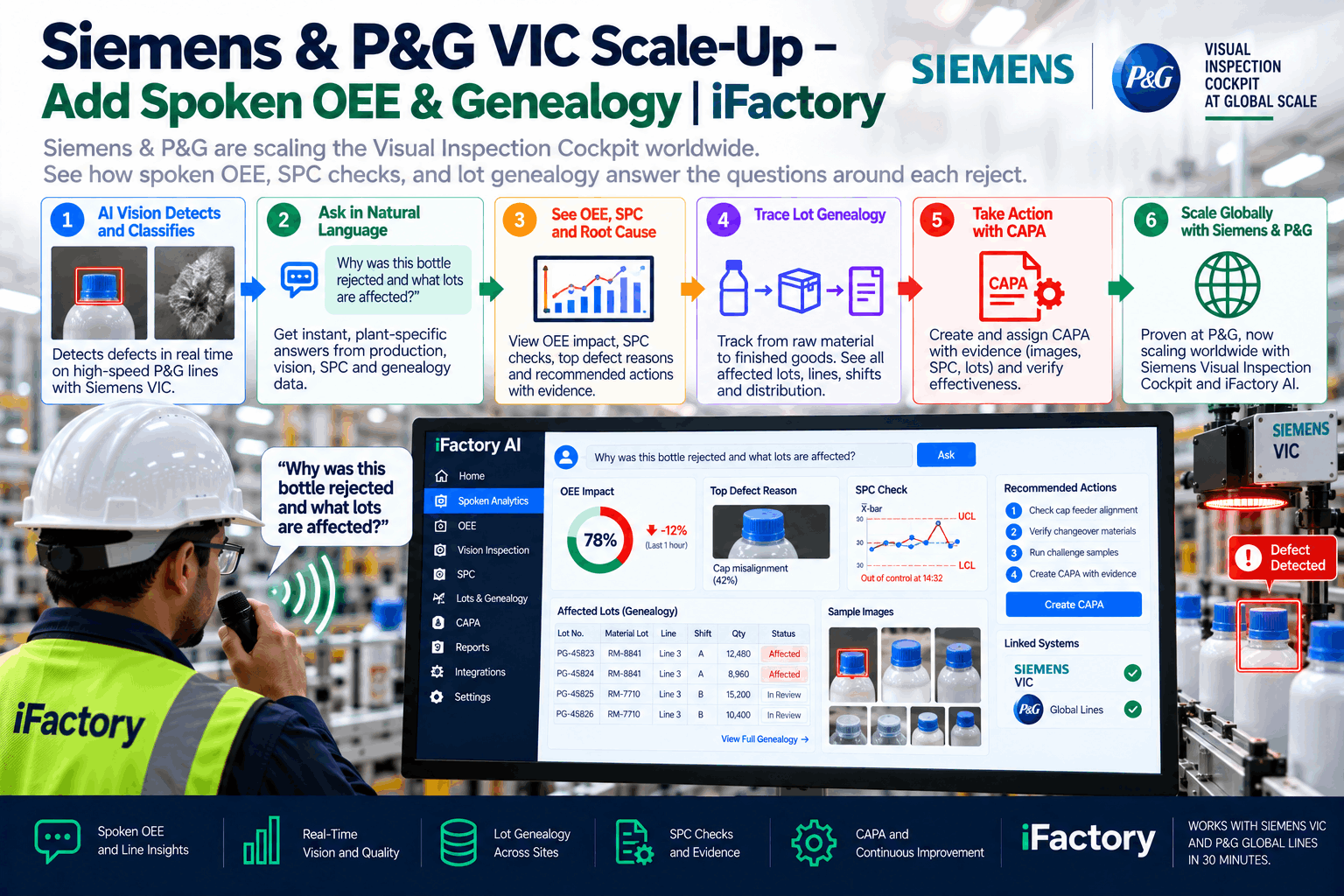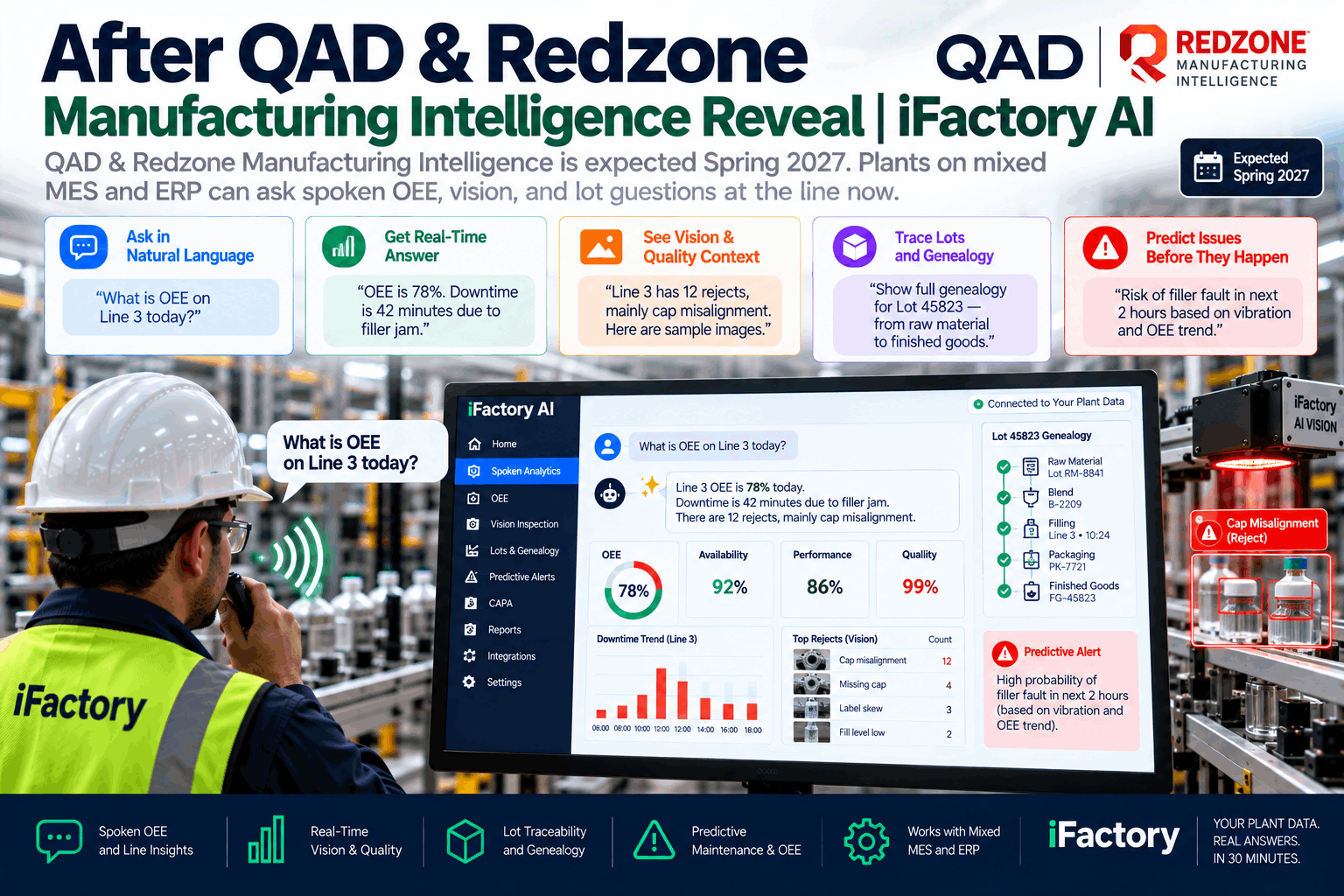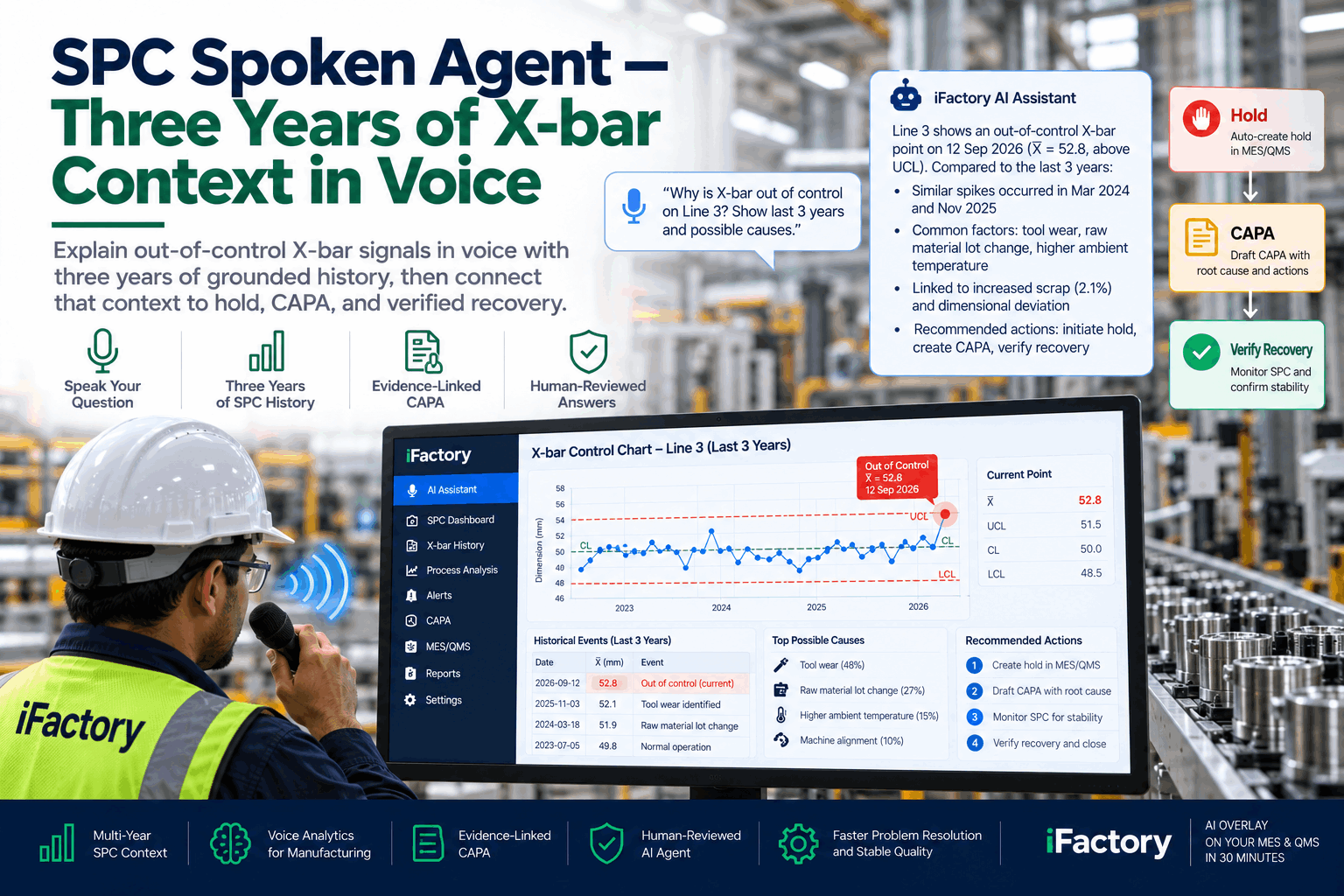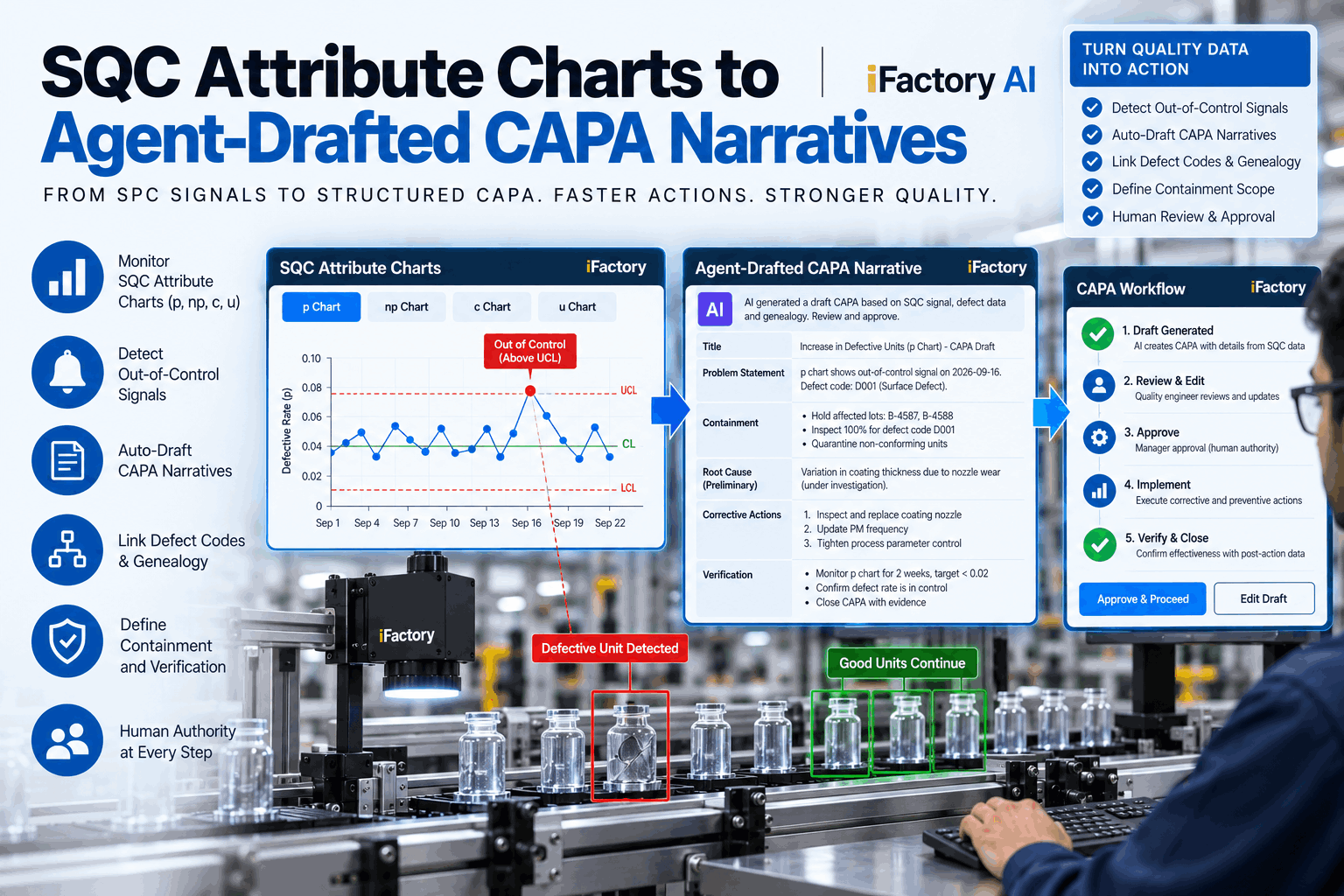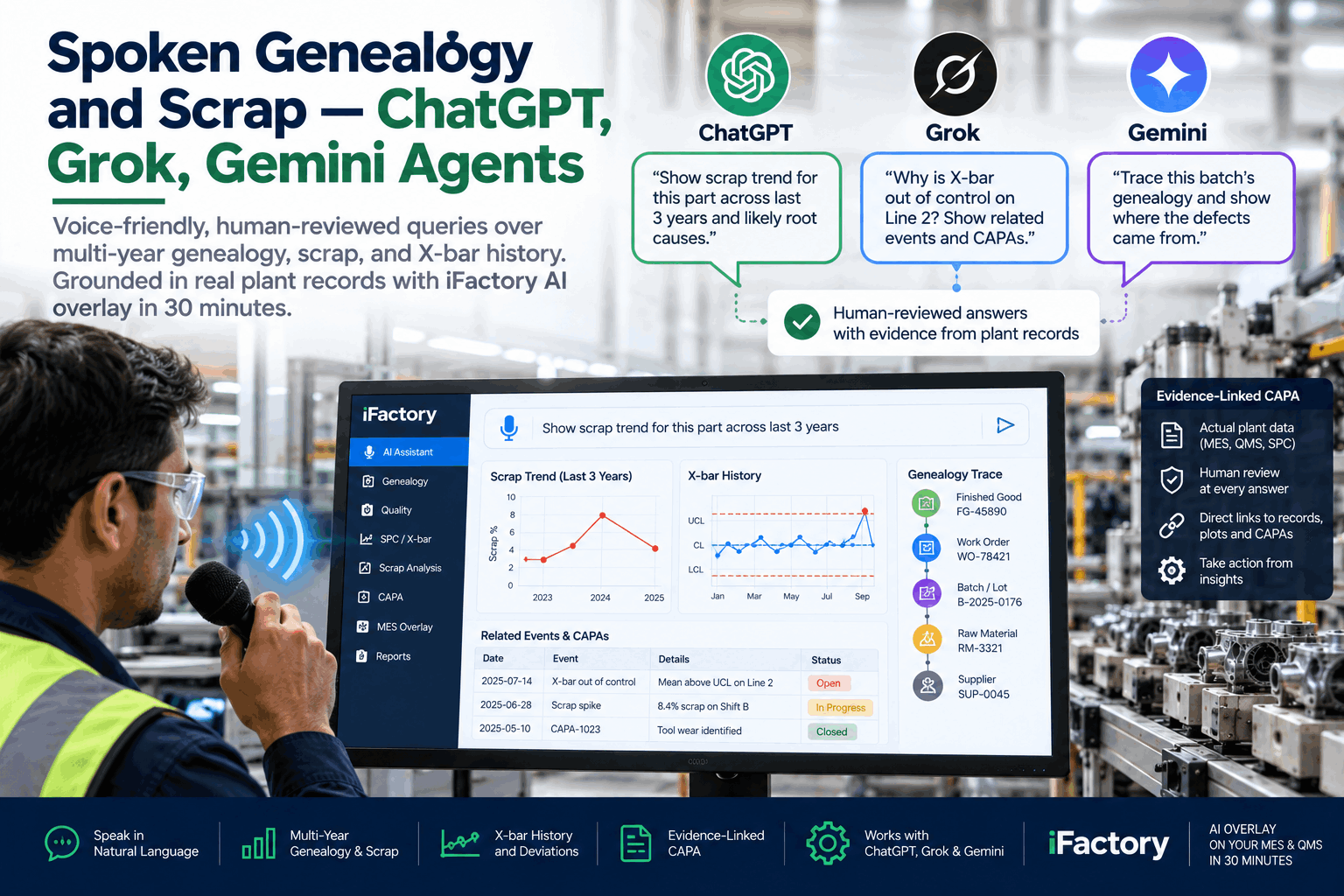
A line goes out of control, scrap spikes, and the team has three different explanations before the shift ends. A spoken analytics layer connected to ChatGPT, Grok, and Gemini-class agents can explain the last three years of genealogy, scrap, and X-bar history in plain language — then hand that answer to a human reviewer before anything is held, released, or written into CAPA. iFactory AI provides the evidence-linked overlay that makes those answers grounded and reviewable, sitting beside your MES and QMS instead of replacing them. See spoken genealogy grounded in real records in 30 minutes.
A voice-friendly, human-reviewed way to query multi-year genealogy, scrap, and process history — grounded in real plant records, not generic answers.
At a Glance
Why Spoken Genealogy Matters More Than Another Dashboard
Most plants do not lack data. They lack a fast way to turn scattered data into a decision. Scrap is logged in one place, genealogy in another, SPC in a third, and CAPA notes somewhere else entirely. By the time someone has stitched the story together, more units may already be affected.
That is why the real opportunity is not just another chatbot for manufacturing. It is a spoken analytics layer that can answer a question like what changed when this defect family started recurring six months ago, and then ground the answer in actual records. Because this is about human-reviewed manufacturing AI agent workflows, the output must remain auditable. The agent can explain. Humans decide.
What a Spoken Genealogy Workflow Actually Does
In a manufacturing setting, spoken genealogy means a voice-accessible layer over the records that already matter — not a generic chatbot. The user asks a question in plain English or voice, and the system returns a grounded summary from connected records.
Tool, machine, shift, and line context across multi-year history — searchable in one interface.
Prior findings, defect families, and recurrence patterns tied to the same product and process context.
Historical scrap clusters and rework loops connected to upstream lots and material lineage.
X-bar and R trends, attribute chart excursions, and rule-based patterns explained in context.
Quarantine history, disposition outcomes, and release decisions linked to the source signal.
Corrective action records, verification outcomes, and recurrence checks over time.
Why Multi-Year Context Changes the Quality Conversation
The phrase years of context is not a marketing flourish. It is the whole point. Short-term views can tell you that scrap rose. Multi-year context can tell you whether the pattern is new, seasonal, supplier-driven, maintenance-linked, or simply a recurrence of an old issue that was never fully closed.
That long view matters because manufacturing defects rarely appear in isolation. They usually connect to recurring material lots, tooling wear or maintenance cycles, operator or shift differences, gradual process drift, supplier process changes, or earlier CAPAs that addressed symptoms rather than causes. A voice agent that can speak that history gives quality and operations leaders a better memory than a dashboard alone — helping answer the question every plant asks eventually: have we seen this before, and what actually worked.
The Closed-Loop Path — From Signal to Verified Recovery
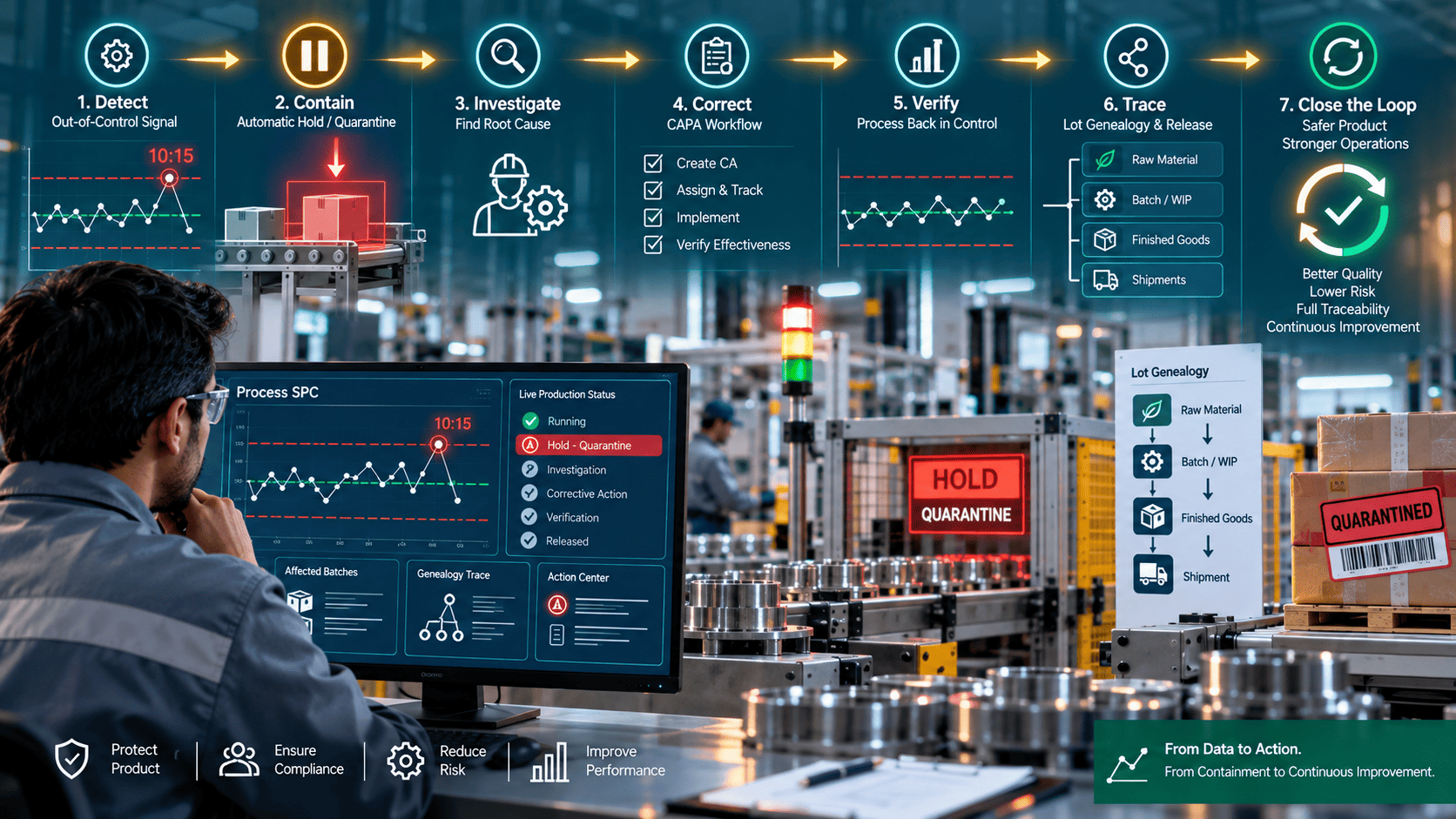
The real manufacturing value comes when the spoken answer leads to action. A good closed-loop workflow moves from signal through to verified recovery, with human authority at every decision point.
This is why quality and OEE belong in the same conversation. A recurring defect family can create availability loss through holds, performance loss through manual checks, and quality loss through scrap and rework. If you only measure the defect count, you miss the operational impact.
Walk through a spoken query, a genealogy trace, a hold recommendation, and a CAPA draft — all human-reviewed.
How iFactory AI Fits as an Overlay, Not a Rip-and-Replace
iFactory AI is best positioned as a quality and MES intelligence overlay beside the systems you already use. That matters because plant teams do not want another isolated platform. They want a layer that makes existing MES, QMS, historian, and SPC data more useful.
- Ingest defect, inspection, machine, genealogy, and process events
- Support human-approved quarantine and hold workflows
- Generate evidence-linked CAPA drafts for review
- Compare recurrence and quality loss before and after action
- Trace affected material and process history across long time horizons
- Evidence must be traceable
- Dispositions must be auditable
- Releases require sign-off
- Language in CAPA needs review
- False confidence is worse than slow analysis
The best agent is one that helps your team think faster, not one that thinks for the team.
Frequently Asked Questions
Yes, if it is connected to the right records and constrained by evidence. The value is not a generic chatbot answer but a grounded summary of genealogy, scrap, process, and quality history that a human can review.
A dashboard shows what happened. Spoken analytics lets you ask questions in plain language and synthesize context across systems faster. It is a retrieval and explanation layer, not a replacement for MES.
Use event contracts, evidence-linked outputs, role-based permissions, and human sign-off. The agent drafts and explains — it does not autonomously approve disposition or close quality actions.
Yes, in a supporting role. They interpret X-bar or attribute chart signals, summarize what tripped, and connect those signals to genealogy and prior corrective actions.
When recurring defects drive holds, rework, false rejects, or downtime, scrap becomes an OEE issue. Genealogy analysis helps trace the root pattern, contain it sooner, and verify whether the corrective action actually improved quality loss.
Not AI for manufacturing in the abstract, but a way to explain years of genealogy, scrap, and process history in a form your team can actually use.