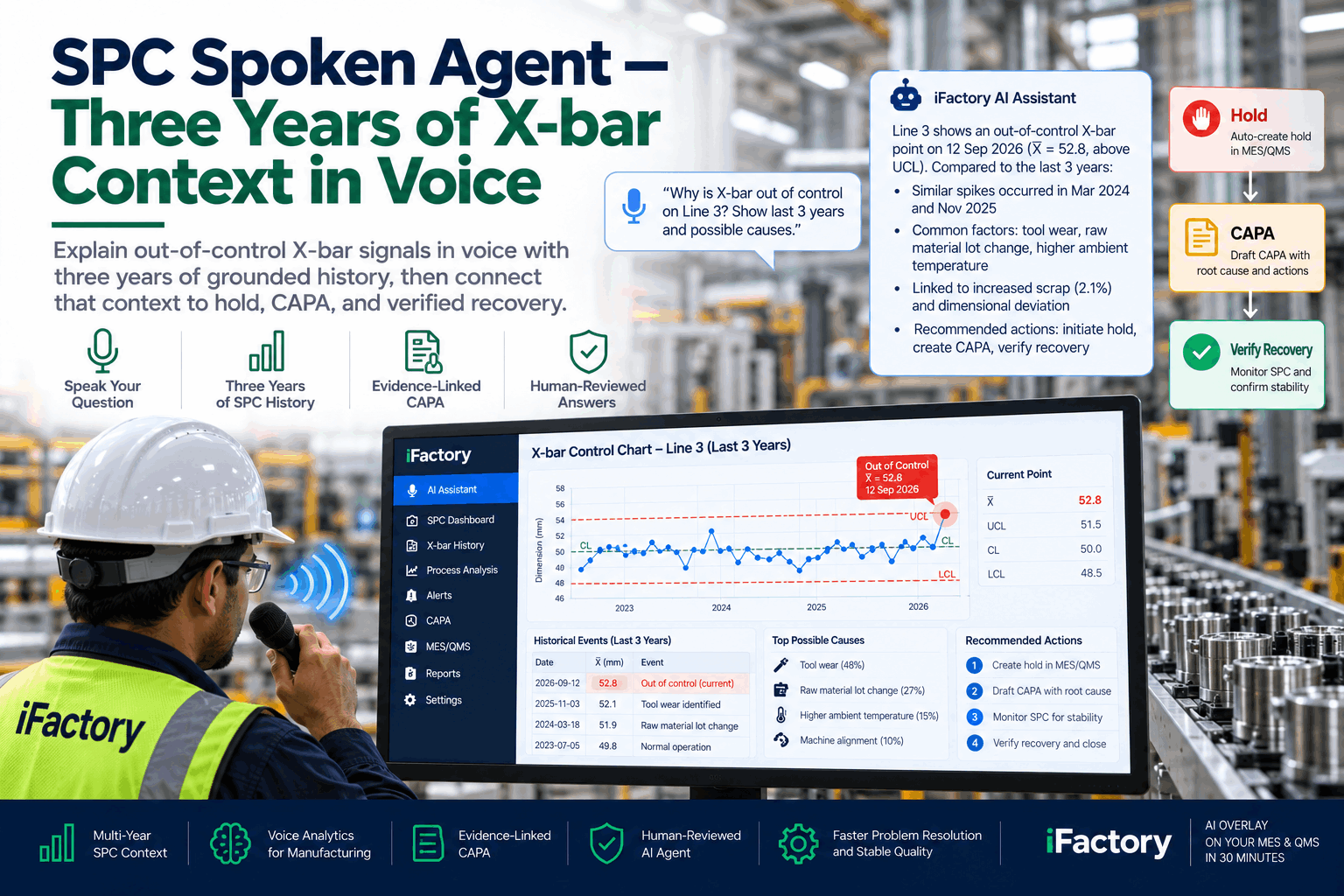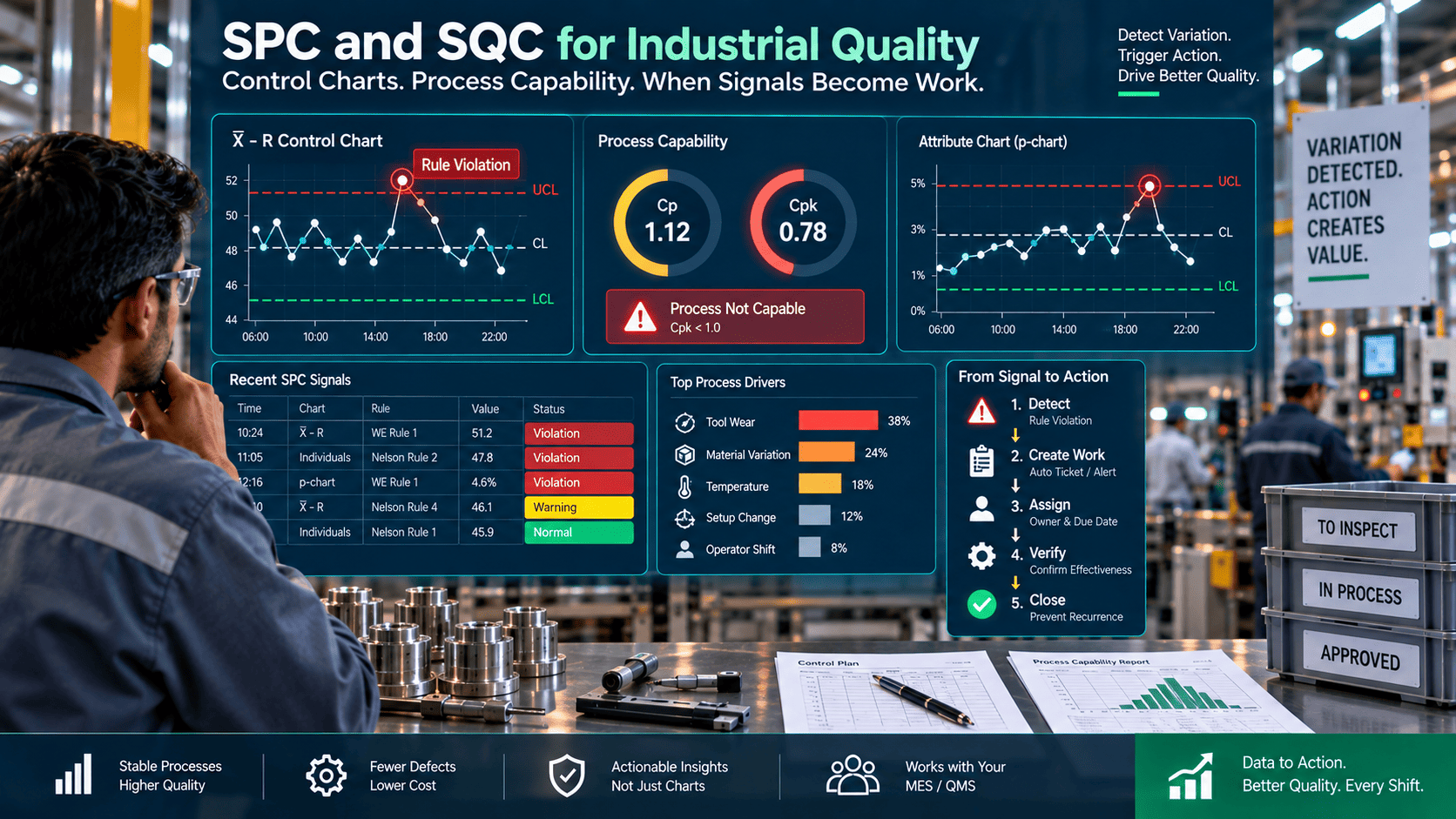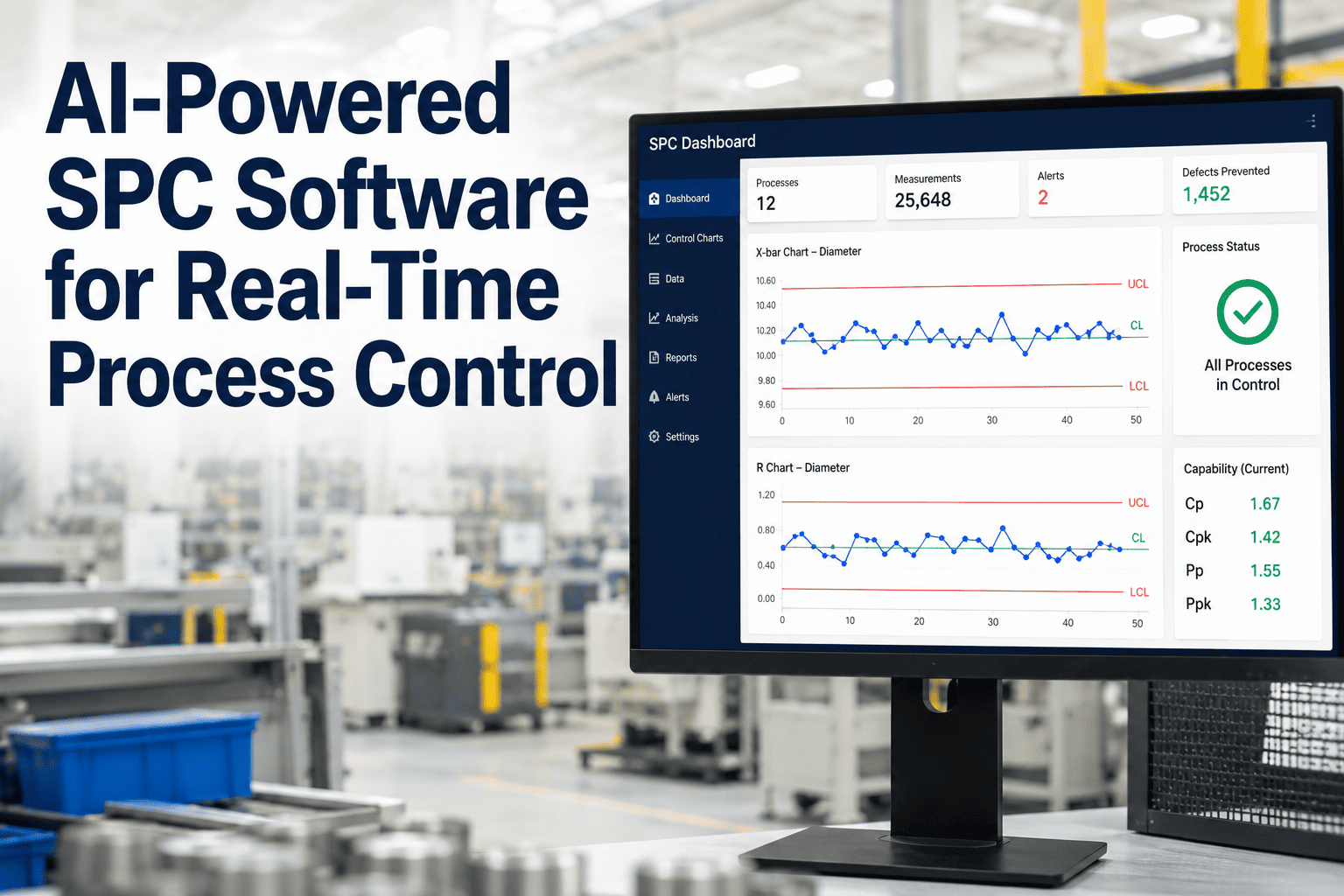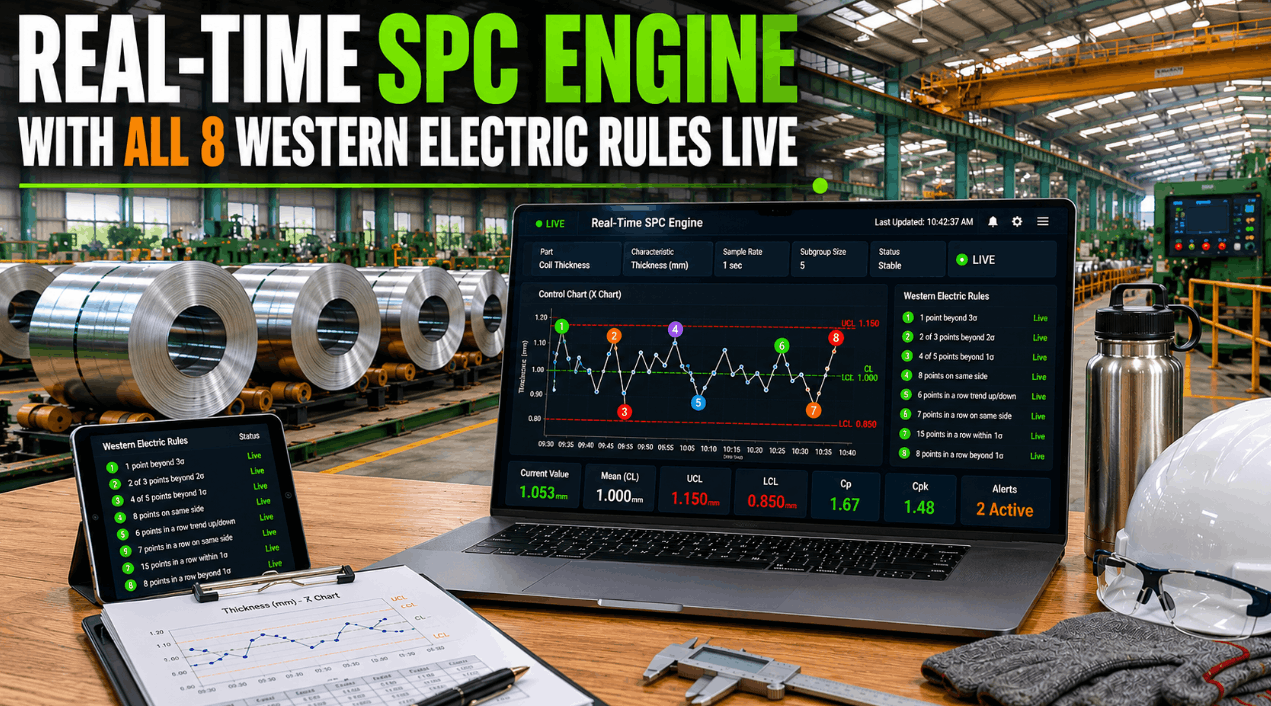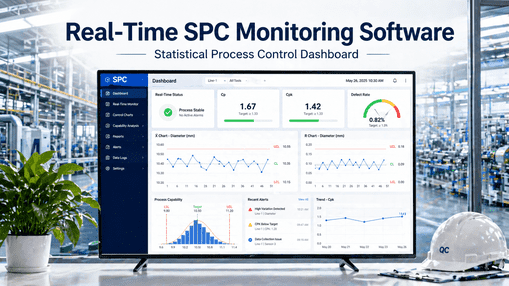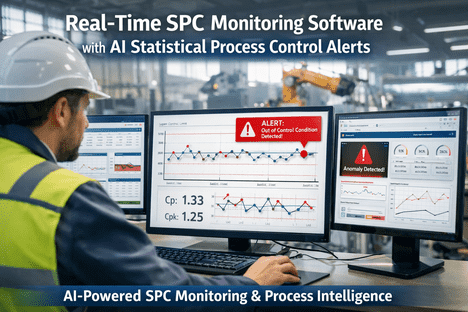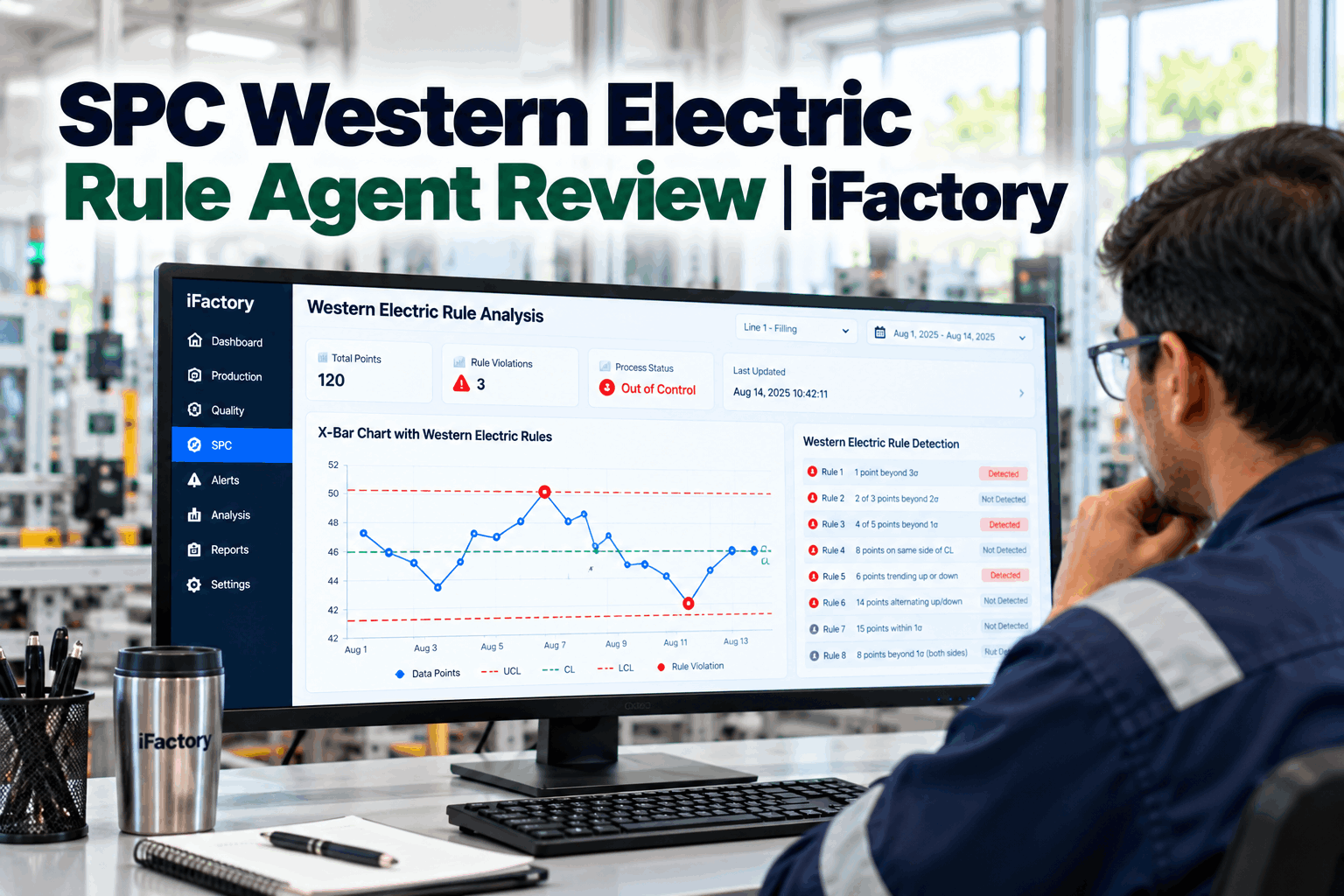
A quality engineer looks at an X-bar chart and knows the SPC engine has flagged Rule 2 — nine points on the same side of the centerline. The system is doing its job. The question is whether that flag should trigger containment, extended sampling, a machine check, or none of the above. iFactory AI overlays your MES, QMS, historian, and SPC systems so Western Electric rule triggers arrive with the shift, lot, machine, and process context needed for a human-reviewed decision — not more alerts, but faster and more defensible decisions. Book a 30-minute walkthrough of one Rule 2 flag reviewed with full context.
The rule flags the pattern. The review needs the shift, lot, machine, and recipe context to decide whether the pattern is signal or noise.
At a Glance
Western Electric Rules and Why Context Still Matters
The Western Electric rules define specific patterns that indicate a control chart is no longer behaving like a stable process. Rule 1 catches points beyond three sigma. Rule 2 catches nine points in a row on the same side of the centerline. Rule 3 catches six points trending in one direction. Rule 4 catches fourteen points alternating up and down. When one of these rules fires, the SPC engine has done its job by detecting the pattern. The question is what the plant should do about it.
That question rarely has a purely statistical answer. A Rule 2 trigger on a filler line during a stable production window is a different signal than a Rule 2 trigger during a changeover, on a shift with a new operator, or immediately after a supplier lot change. A rule flag in isolation invites a routine response — check, log, move on. A rule flag with process context invites a considered response — investigate the specific dimension that changed, contain scope if warranted, and document the reasoning so the next reviewer can follow it.
Context Fields That Sharpen a Rule Review
What iFactory Delivers
iFactory puts process context next to every Western Electric trigger so reviewers make faster, better-documented calls.
Shift, lot, machine, recipe, process events and sample origin next to each rule flag.
What Rule 1, 2, 3 or 4 means for this chart in plain language.
Checks worth making first, offered as options for the reviewer.
Log, extend sampling, contain, open CAPA or escalate, stored with rationale.
Quality engineers ask what fired on a characteristic and hear the context.
Time to decision, repeat triggers and no-action rates over time.
Bring one recent SPC trigger. We walk through shift, lot, machine, recipe, and process context — and the resulting review record — beside your existing MES, QMS, and SPC systems.
A Review Loop That Preserves Human Sign-Off
Agent-assisted review does not mean the agent decides. It means the agent organizes the evidence, drafts a summary that names the trigger and the context, and hands the review to a person for interpretation and sign-off. The human decides whether to log and continue, extend sampling, contain scope, open a CAPA, or escalate. Every review outcome — including no action — is recorded with rationale so recurring patterns are visible over time.
This model preserves what SPC is for: statistically grounded, human-interpreted process control. It also solves the operational problem that motivates so many plants to look at agents in the first place — reviewers running out of time to look at every trigger, and defaulting to routine responses that erode the value of the control chart itself.
Practical Signals of a Healthy Rule Review Practice
A healthy rule review practice does not look like more alerts on a dashboard. It looks like fewer reviews defaulting to routine responses, more reviews with a documented rationale, and a growing library of prior reviews that new reviewers can learn from. Over time, the plant should see the average time from trigger to reviewed decision come down, the rate of nuisance triggers acknowledged without action come down, and the number of triggers that escalated to a real CAPA remain stable or grow modestly — because the ones that mattered are now being caught earlier. When those three signals move together, the rule review practice is doing what it should.
There are also warning signs to watch for. If every rule trigger routinely gets acknowledged with no rationale, the review has become a routine response and the value of the control chart is eroding. If reviewers are spending long minutes assembling context for every trigger, the workflow needs better context aggregation upstream of the review — not a different agent. If new reviewers cannot find the prior reasoning for similar triggers, the review record is not being preserved in a searchable form. Each of those signals points to a specific fix, and none of them requires replacing the SPC engine.
Frequently Asked Questions
They define specific control-chart patterns — points beyond three sigma, runs on one side of the centerline, trends, alternating patterns — that indicate a process is no longer behaving like a stable process.
No. The agent organizes context and drafts a review. A human quality reviewer makes the decision and signs off.
Shift, lot, machine, recipe version, process events, and sample provenance are typically the first fields worth reviewing alongside the trigger.
By giving reviewers process context alongside the flag, so they can distinguish a real process shift from a nuisance trigger without defaulting to routine responses.
No. The SPC engine still owns detection. The agent-assisted layer helps organize the review that follows a trigger.
Western Electric rules give the plant a proven detection framework. Agent-assisted review gives the plant a faster, more defensible way to act on what the rules find — with human sign-off preserved.