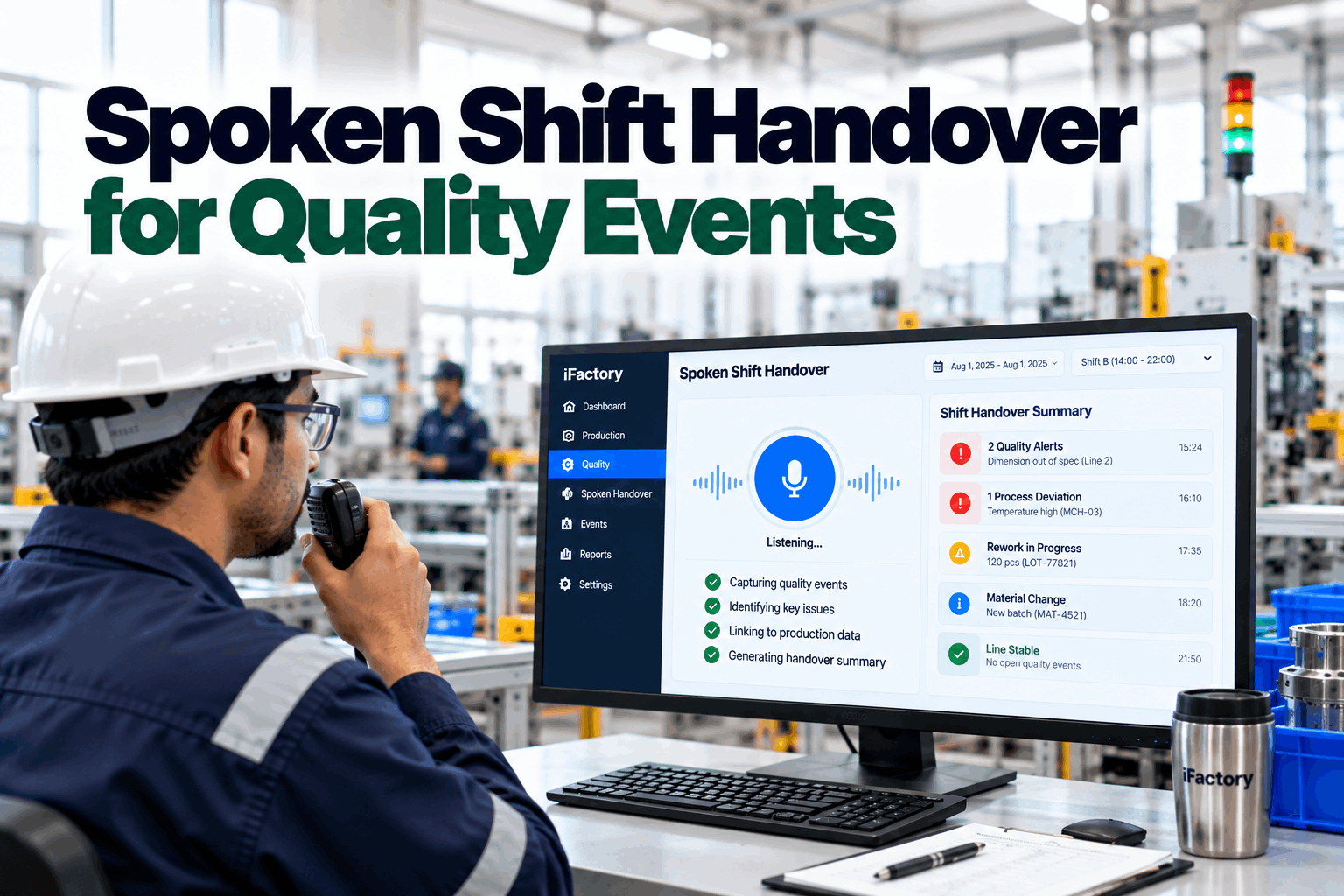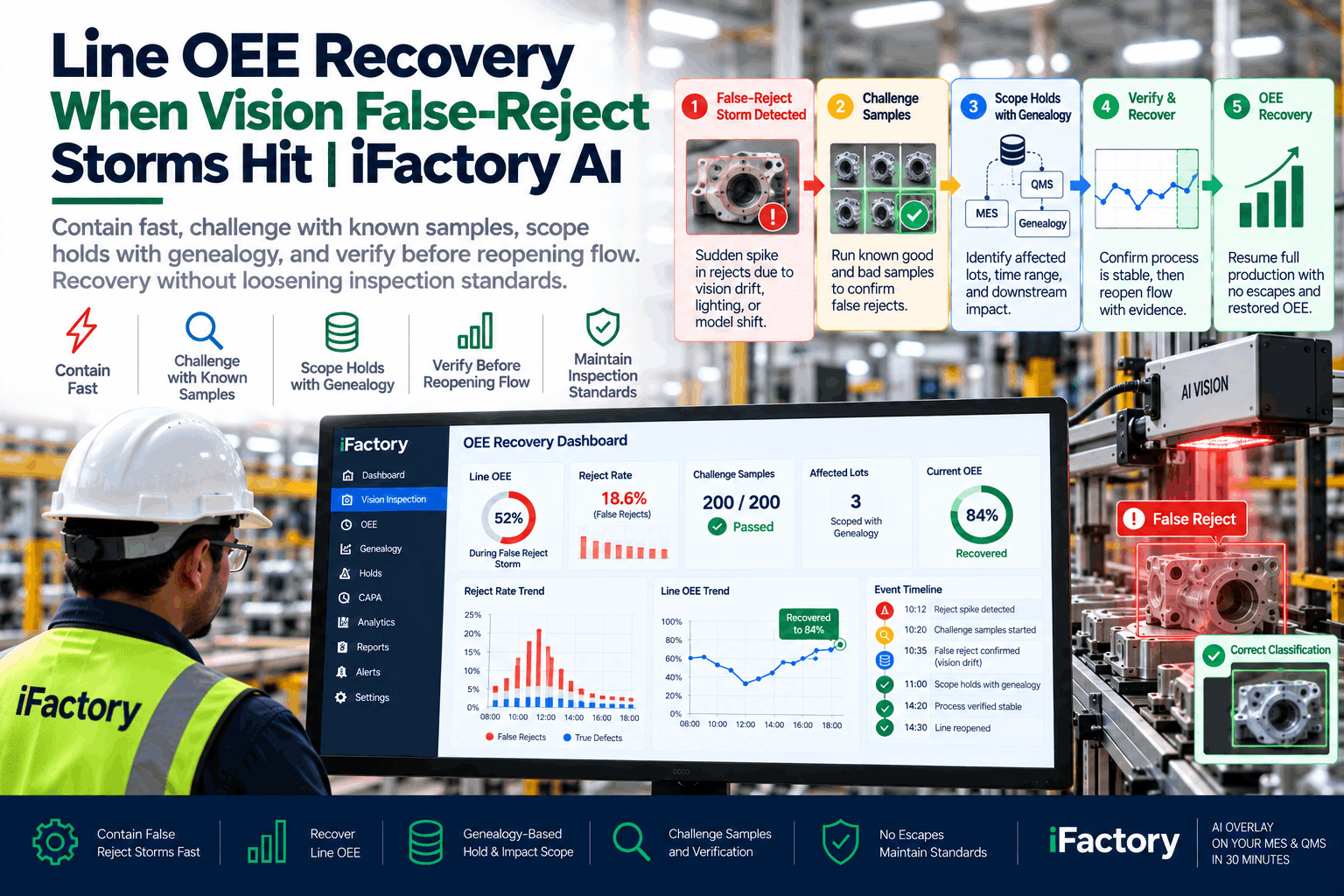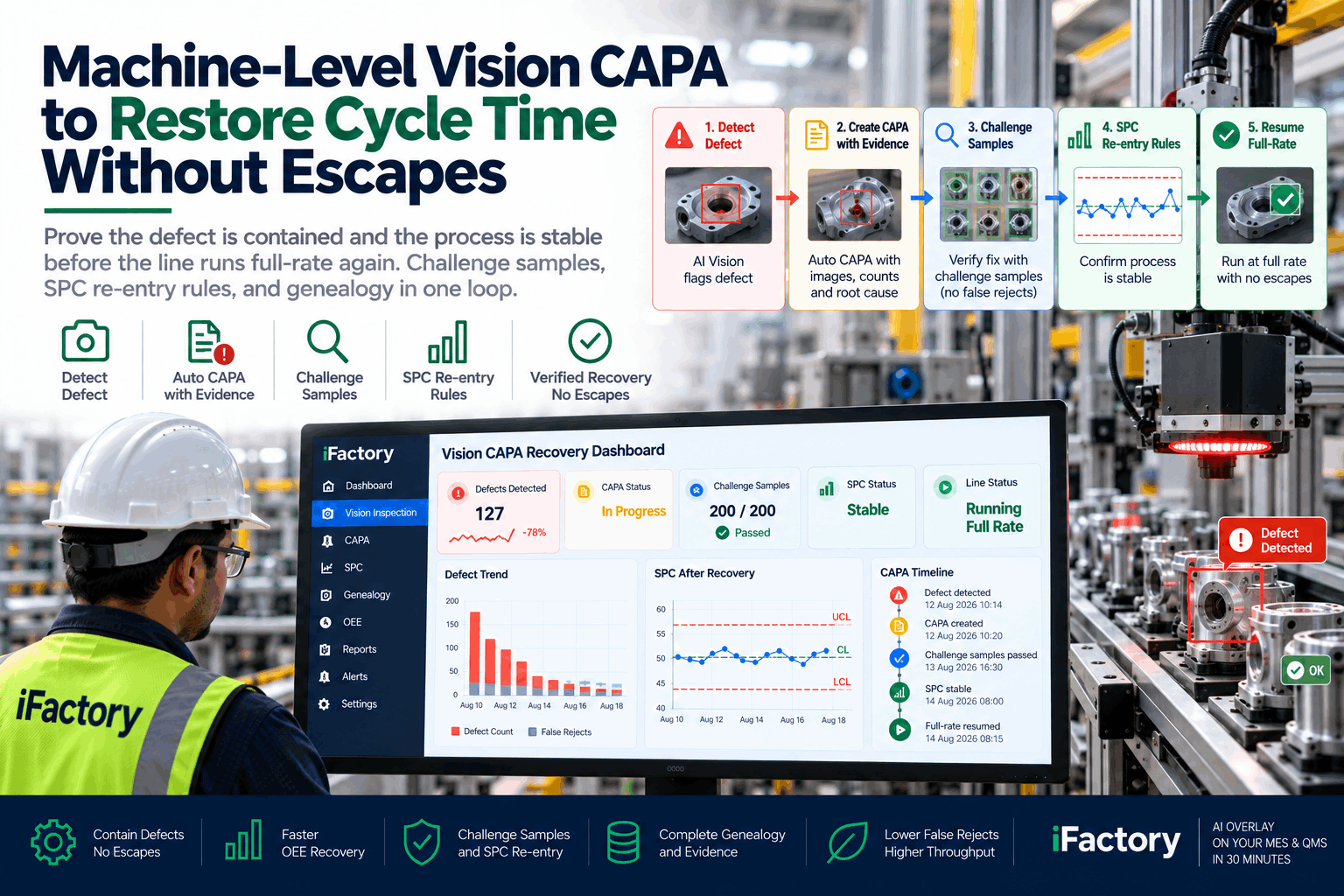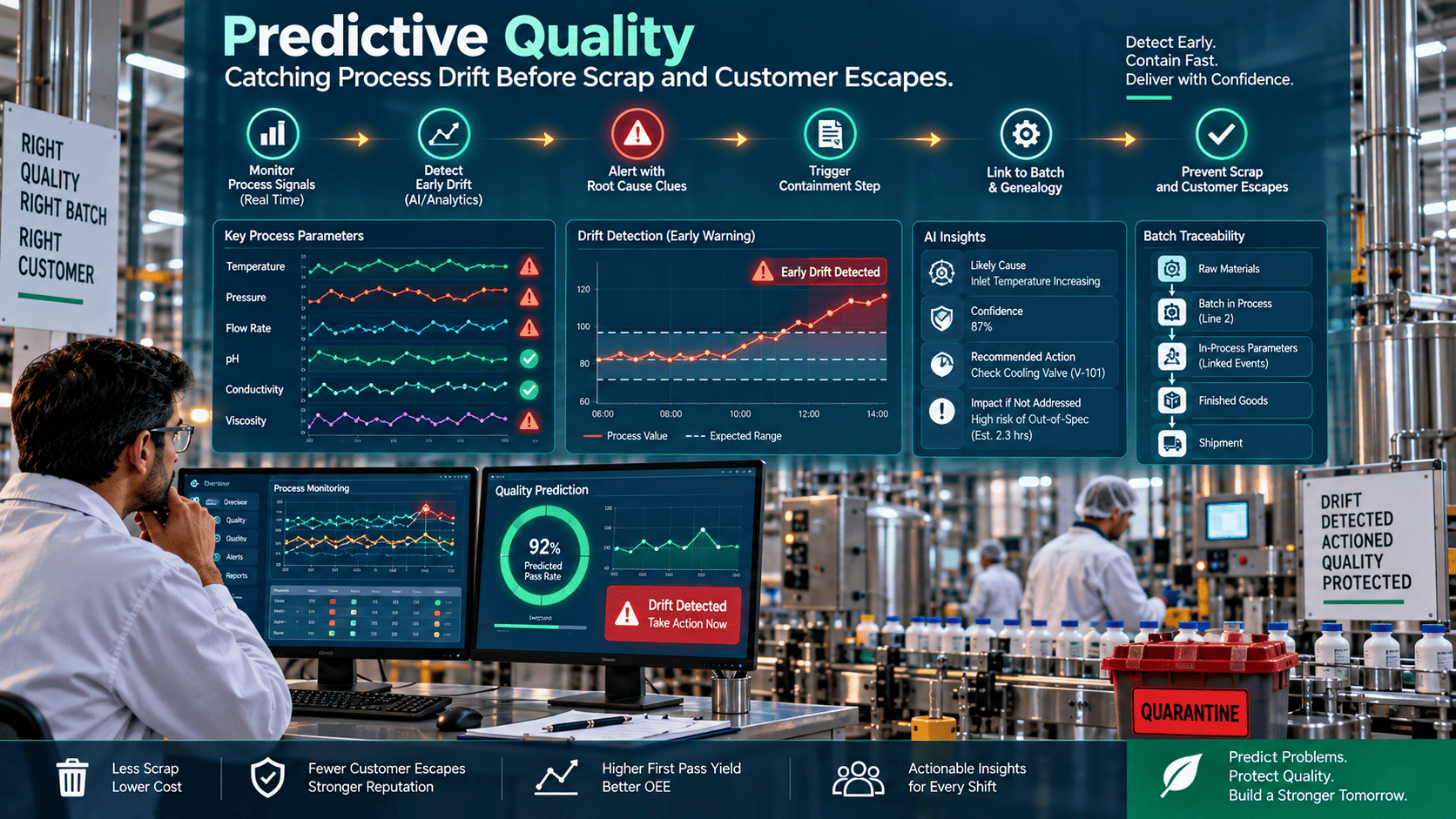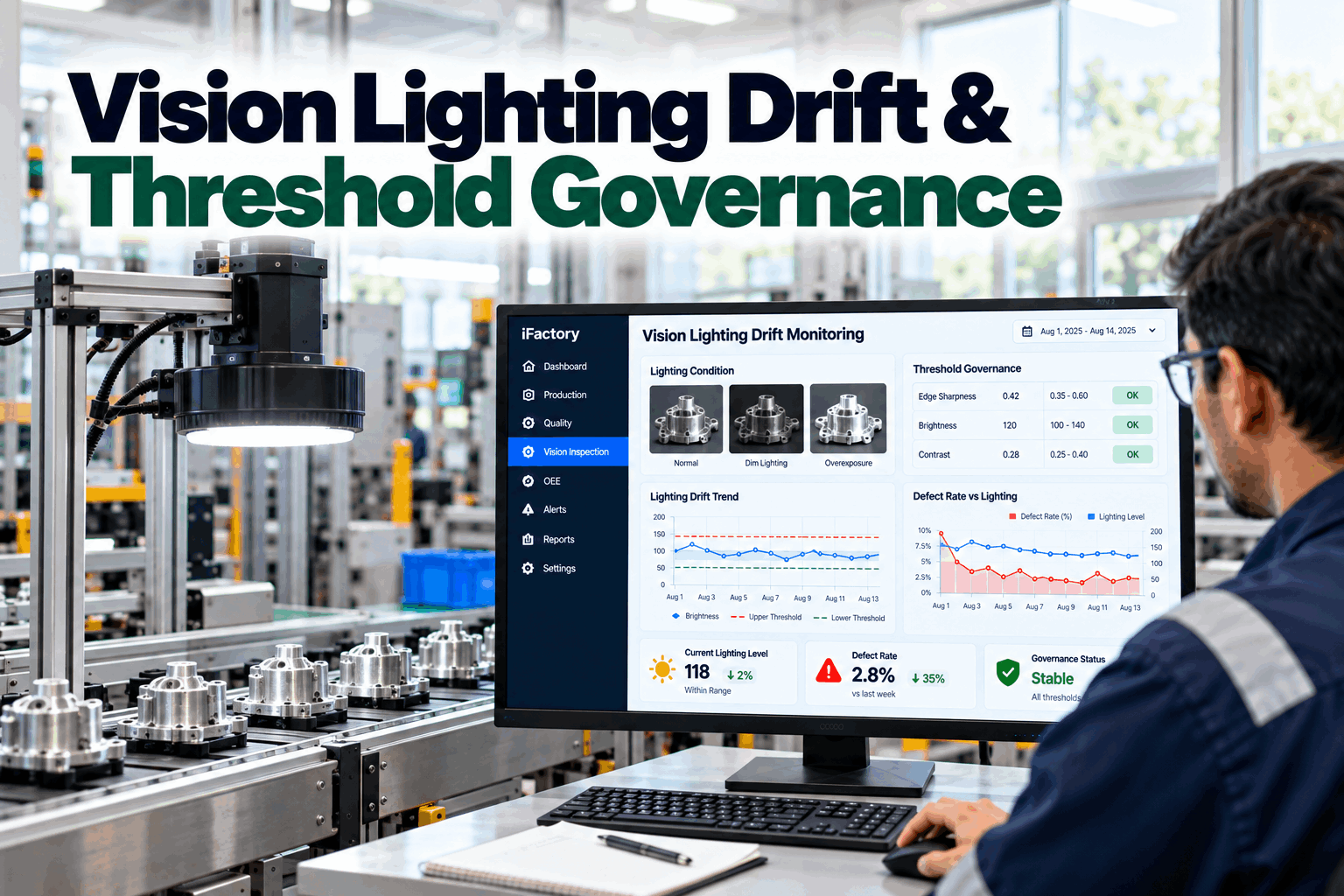
A vision inspection has been running clean for weeks, and the false-reject rate is quietly climbing while the true-defect rate looks flat. In that moment, the plant is asking whether the process changed, the lighting changed, or the threshold no longer fits — and if the threshold has drifted, whose job is it to change it, and with what evidence. iFactory AI overlays your MES, QMS, historian, and vision stack so lighting drift and threshold governance are treated as a shared discipline — with human sign-off on every threshold change and a searchable record of who changed what, when, and on what evidence. Book a 30-minute walkthrough of a threshold governance review end to end.
Vision threshold changes deserve the same governance discipline as recipe changes — reviewed, signed off, and preserved with the reasoning intact.
At a Glance
Why Threshold Drift Is a Governance Question
A vision inspection threshold is a small number with a large downstream effect. Move it slightly one way and false rejects climb, punishing OEE without preventing any defect. Move it the other way and true defects slip through, moving the quality risk downstream to the customer. In a well-run plant, the threshold is not a value someone can change quietly at the HMI. It is a governed setpoint, changed only after a documented review, with a reason and a sign-off attached.
Threshold drift is not always malicious or careless. Often it is well-intentioned — an operator adjusts because false rejects are hurting OEE, or a maintenance technician adjusts after a lighting change to keep the inspection running. Neither adjustment is wrong in the moment. What is wrong is when the adjustment happens without a review, without a rationale, and without a record. That is what governance is for.
Elements of a Threshold Governance Discipline
iFactory brings governance to vision thresholds: evidence assembled, change reviewed, decision recorded, verification tracked.
Inspection score distributions tracked week over week against the threshold.
Shifts in false rejects or escape risk surfaced before someone adjusts at the HMI.
Evidence, rationale and verification plan assembled for the approver.
Who approved, when, on what evidence, with rollback conditions.
Post-change false-reject and escape trends checked against the plan.
Monthly view of threshold changes by line for structural fixes.
Bring one recent threshold change or drift event. We walk through evidence, rationale, verification, and the searchable record — beside your existing MES and vision system.
Where Spoken Analytics Fits in Governance
Spoken analytics does not approve or change a threshold. It helps the reviewers assemble the evidence for the review — recent distribution shifts, false-reject and escape-rate trends, lighting condition history, related quality events — into a review-ready summary. The reviewers still discuss, decide, and sign off. The layer preserves the discussion in a searchable form so a future audit or CI review can see how the decision was made.
Over time, this creates a searchable archive of threshold reviews that supports two audiences. Auditors can see that changes were governed, evidence-based, and reviewed by authorized personnel. CI leads can see recurring drift patterns and propose structural fixes — new fixtures, better shielding, revised sample plans — that address the root cause rather than adjusting the threshold repeatedly.
Signals That Threshold Governance Is Working
When threshold governance is working, the plant sees fewer undocumented adjustments at the HMI, more threshold reviews with full evidence attached, and a growing archive of prior reviews that new reviewers can learn from. The false-reject and escape-rate trends stay within their expected bounds, and when they drift, the drift is caught and reviewed rather than absorbed by silent adjustment. If those signals are absent, the governance discipline is drifting into paperwork or being bypassed — either way, it needs attention.
The governance discipline also benefits from a periodic audit of its own outputs. A monthly or quarterly review of threshold changes across the plant — how many, on which lines, with what rationale, with what verification outcome — helps surface patterns that would otherwise stay hidden. If one line accounts for most of the threshold changes, that line probably needs a structural fix rather than continued threshold work. If verification outcomes are being recorded but not reviewed, the closed loop is not really closed. And if new reviewers cannot find the prior reasoning for similar changes, the searchable archive is not searchable enough. Each of these signals points to a specific improvement, and none of them requires more sophisticated software — they require sustained attention to the discipline itself.
Frequently Asked Questions
Because a threshold change moves the balance between false rejects and escapes — both have downstream cost — and the change should be reviewed and recorded rather than absorbed silently.
Recent distribution shifts, false-reject and escape-rate trends, lighting condition history, sample plan compliance, and related quality events.
No. Authorized reviewers approve, and the change is applied by the vision system. The agent organizes evidence and preserves the searchable record.
By preserving the review record across many changes so the recurring conditions — lighting, fixtures, sample plans — become visible for structural fixes.
By capturing who approved, when, on what evidence, with what rationale, and what the verification showed — so the change story stands up to audit review later.
A vision threshold is a small number with a large downstream effect. Governance preserves the story — authorization, evidence, rationale, verification, record — so the change stands up to review long after it was made.