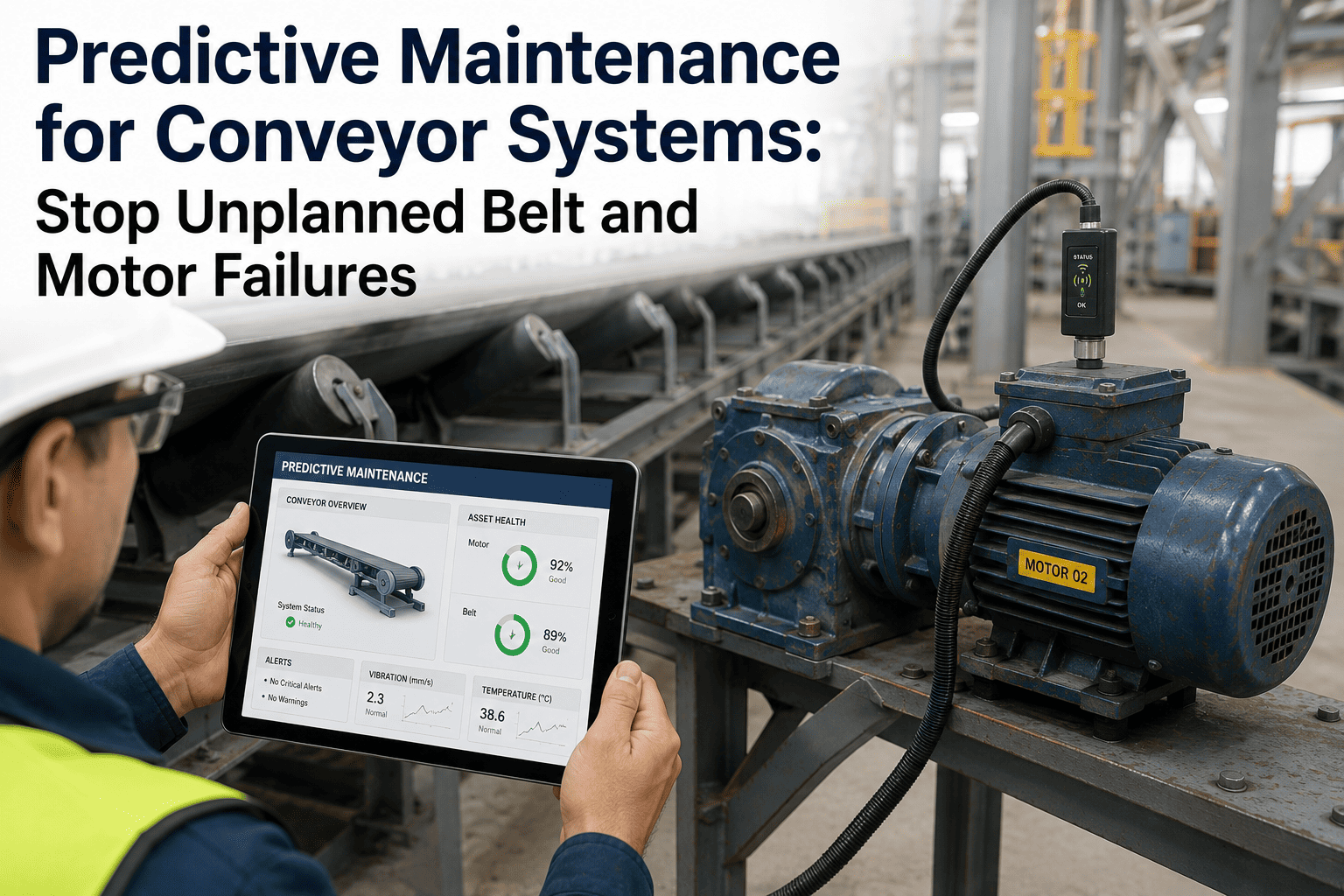
A conveyor line rarely fails all at once. It fails one worn roller bearing, one loosening belt tension, one overloaded motor at a time, and by the time any of those shows up as an alarm, the line is usually already down and a shift's worth of production is stopped with it. Most maintenance teams still find out about conveyor problems from an operator report rather than from the equipment itself. Book a demo to see predictive monitoring built specifically for conveyor systems.
Your Conveyor Line Is Telling You It Is About to Fail, If Anyone Is Listening
Belt tension drift, rising motor load, worn roller bearings, and stretching drive chains all produce measurable signals long before a conveyor actually stops. iFactory monitors those signals continuously and turns them into a maintenance schedule instead of an unplanned line stoppage.
What an Unplanned Conveyor Stoppage Actually Costs
Because conveyors are the connective tissue of a production line rather than an isolated piece of equipment, a failure rarely stays contained to the segment where it started. A jammed roller or a snapped belt on one section idles every station feeding into it and every station downstream waiting for material, which is why conveyor reliability has an outsized effect on overall line uptime relative to its individual cost as a piece of equipment.
Four Signals That Predict a Conveyor Failure Before It Happens
Catch the Failure Before It Catches Your Production Schedule
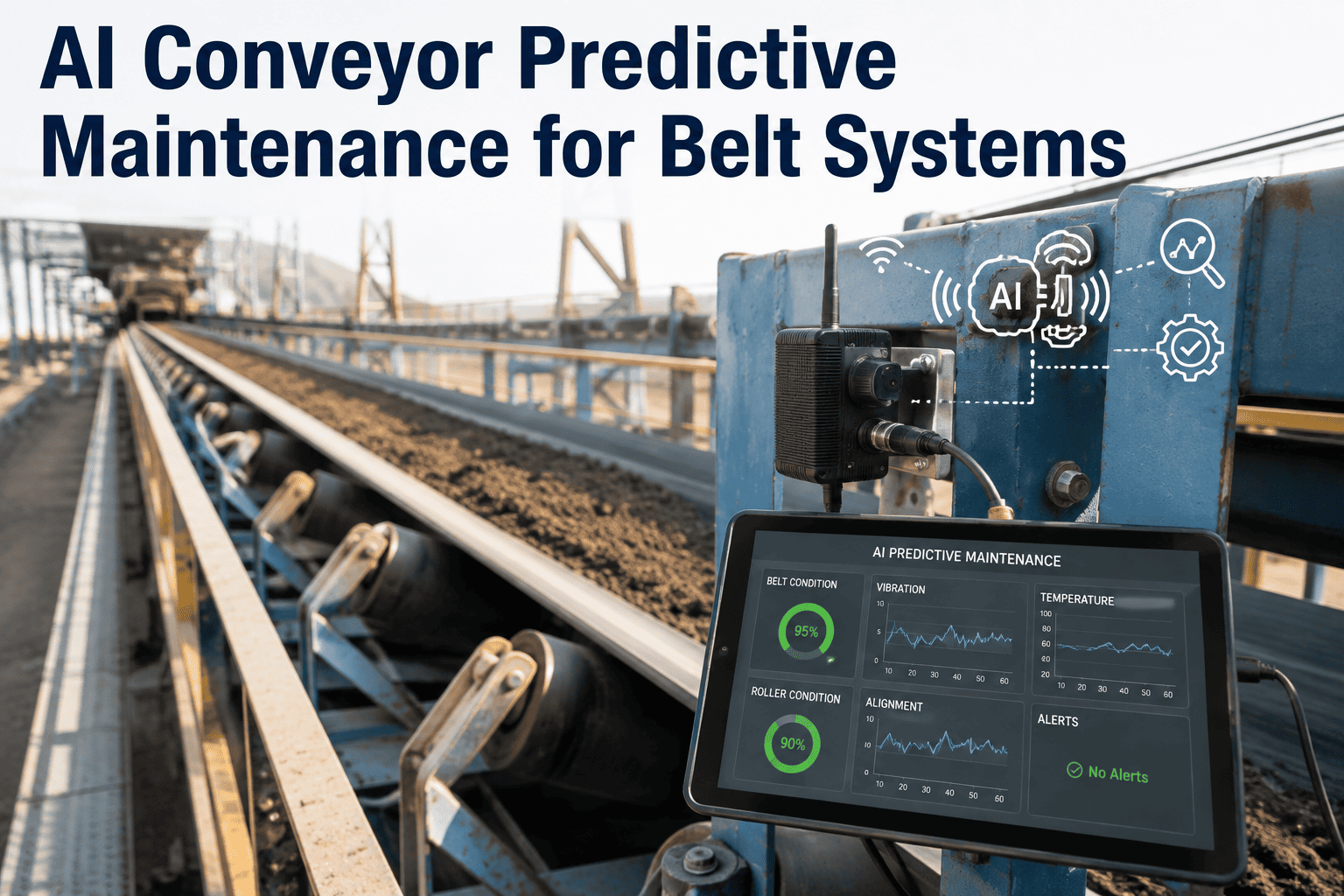
iFactory continuously monitors belt tension, motor load, bearing vibration, and chain wear, converting raw sensor data into a prioritized, dollar-ranked maintenance schedule.
Comparing Reactive Repair to Predictive Conveyor Maintenance
| Approach | When the Issue Is Found | Typical Repair Cost | Line Impact |
|---|---|---|---|
| Reactive, run to failure | At the moment of stoppage | Highest, often emergency labor and parts | Unplanned, full stoppage |
| Scheduled preventive maintenance | On a fixed calendar regardless of actual condition | Moderate, sometimes premature part replacement | Planned but not condition-based |
| Predictive, condition-based | Weeks ahead, based on trend data | Lowest, planned during scheduled downtime | Planned, zero unplanned stoppage |
The middle path, fixed-schedule preventive maintenance, is a meaningful improvement over pure run-to-failure but still replaces parts on a calendar rather than on actual condition, which means healthy components sometimes get replaced early while a component that is degrading faster than expected can still fail between scheduled service intervals.
A Five-Step Path From Sensor Data to a Maintenance Ticket
The Conveyor Failures Predictive Monitoring Catches Most Often
Roller bearing failure is consistently the most common conveyor failure mode across industries, since rollers accumulate more running hours and more contamination exposure than almost any other component on the line. Bearing failure also has one of the clearest early warning signatures of any conveyor failure mode, with vibration frequency shifts appearing well before audible noise or visible heat.
Belt tracking and tension issues rank close behind, often accelerated by product buildup, misaligned idlers, or gradual stretch that goes unnoticed until the belt starts wandering off center. Motor overload, frequently caused by an accumulating mechanical restriction elsewhere in the drive train rather than a motor defect itself, rounds out the most common failure categories predictive monitoring is built to catch early.
Common Questions About Conveyor Predictive Maintenance
How far in advance can predictive monitoring warn of a conveyor failure?
Warning lead time depends on the failure mode, but bearing wear and belt tension drift typically show a detectable trend weeks before an actual stoppage would occur, giving maintenance teams enough time to schedule a repair during planned downtime rather than reacting to a sudden failure. Faster-developing issues like a sudden foreign object jam are harder to predict in advance, though continuous monitoring still shortens the time to detection and response once they begin. Book a demo to see typical lead times for your specific conveyor equipment.
What sensors need to be installed, and does that require significant conveyor downtime?
Vibration sensors on rollers and drive motors, current sensors on motor drives, and tension sensors on belt take-up assemblies make up the core sensor set, and most of these can be installed during a normal maintenance window without requiring an extended dedicated shutdown. Wireless vibration sensors in particular have simplified installation considerably compared to older wired monitoring systems that required extensive cabling runs. Contact support to plan a sensor installation schedule around your existing maintenance windows.
Does predictive maintenance eliminate the need for scheduled preventive maintenance entirely?
Predictive maintenance typically supplements rather than fully replaces scheduled preventive tasks, since some maintenance activities like lubrication or visual safety checks are appropriately time-based regardless of condition monitoring data. The shift is in component replacement decisions specifically, moving bearings, belts, and chains from a fixed replacement calendar to a condition-based schedule driven by the actual wear trend rather than an estimated average service life. Book a demo to see how predictive and preventive tasks are typically balanced.
Can predictive monitoring work on older conveyor systems that were not designed with sensors in mind?
Retrofit sensor kits are commonly used to add vibration, current, and tension monitoring to conveyor systems that predate any built-in sensing capability, since the sensors mount externally to rollers, motors, and take-up frames rather than requiring the original equipment to have monitoring designed in. This makes predictive maintenance accessible for aging conveyor fleets as much as for newly installed lines. Contact support to assess retrofit feasibility for your existing conveyor equipment.
How does conveyor predictive maintenance integrate with an existing CMMS or maintenance ticketing system?
Flagged deviations and predicted failure timelines are designed to route directly into the maintenance ticketing workflow your team already uses, so a predictive alert becomes a work order with the specific component, location, and urgency attached rather than a separate dashboard that maintenance staff have to check independently. This integration is typically configured during initial setup based on your existing CMMS platform. Book a demo to see ticketing integration with your maintenance system.
Stop Finding Out About Conveyor Failures From the Line Itself
iFactory turns raw conveyor sensor data into a prioritized maintenance schedule, catching bearing wear, tension drift, and motor overload weeks before they become an unplanned stoppage.