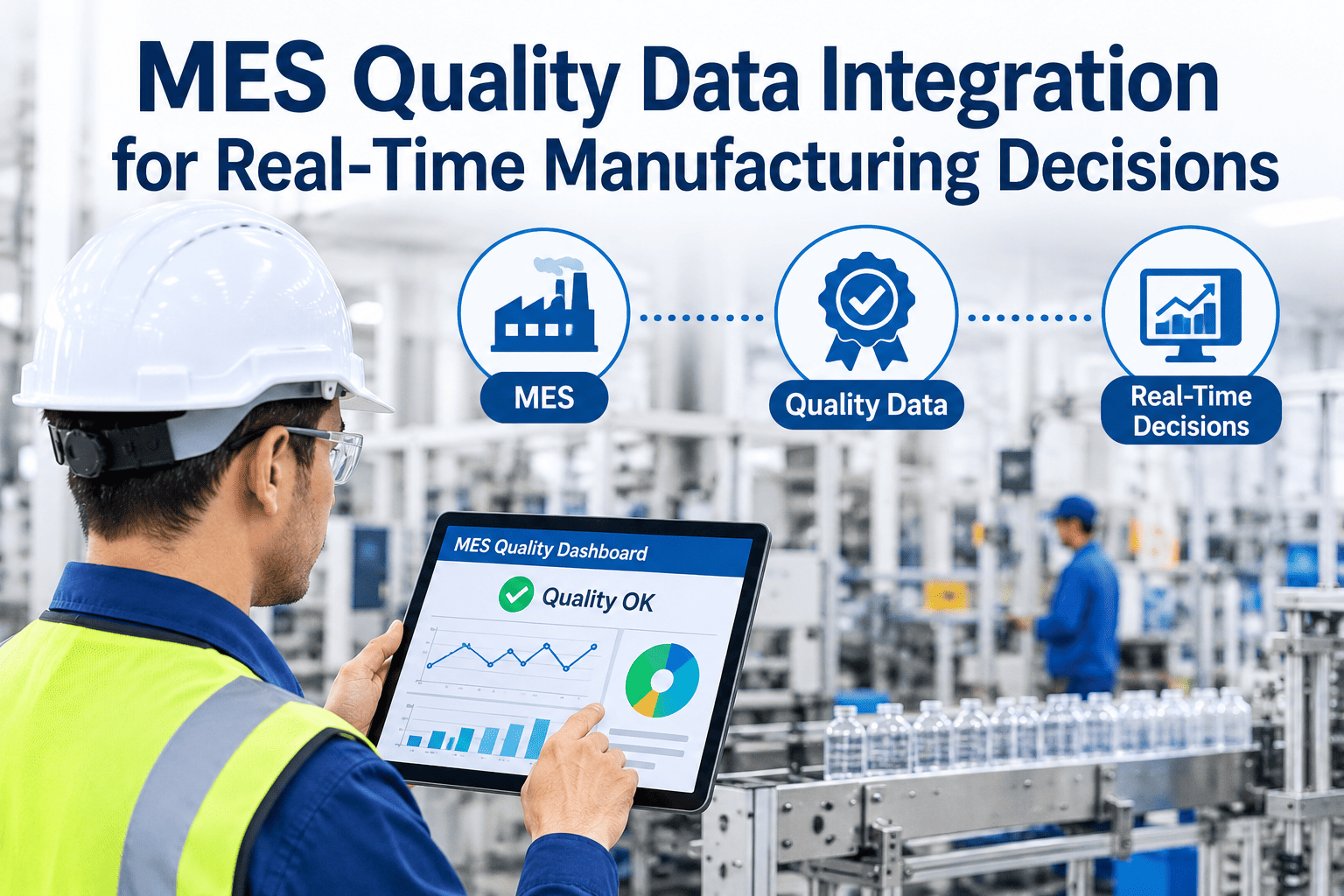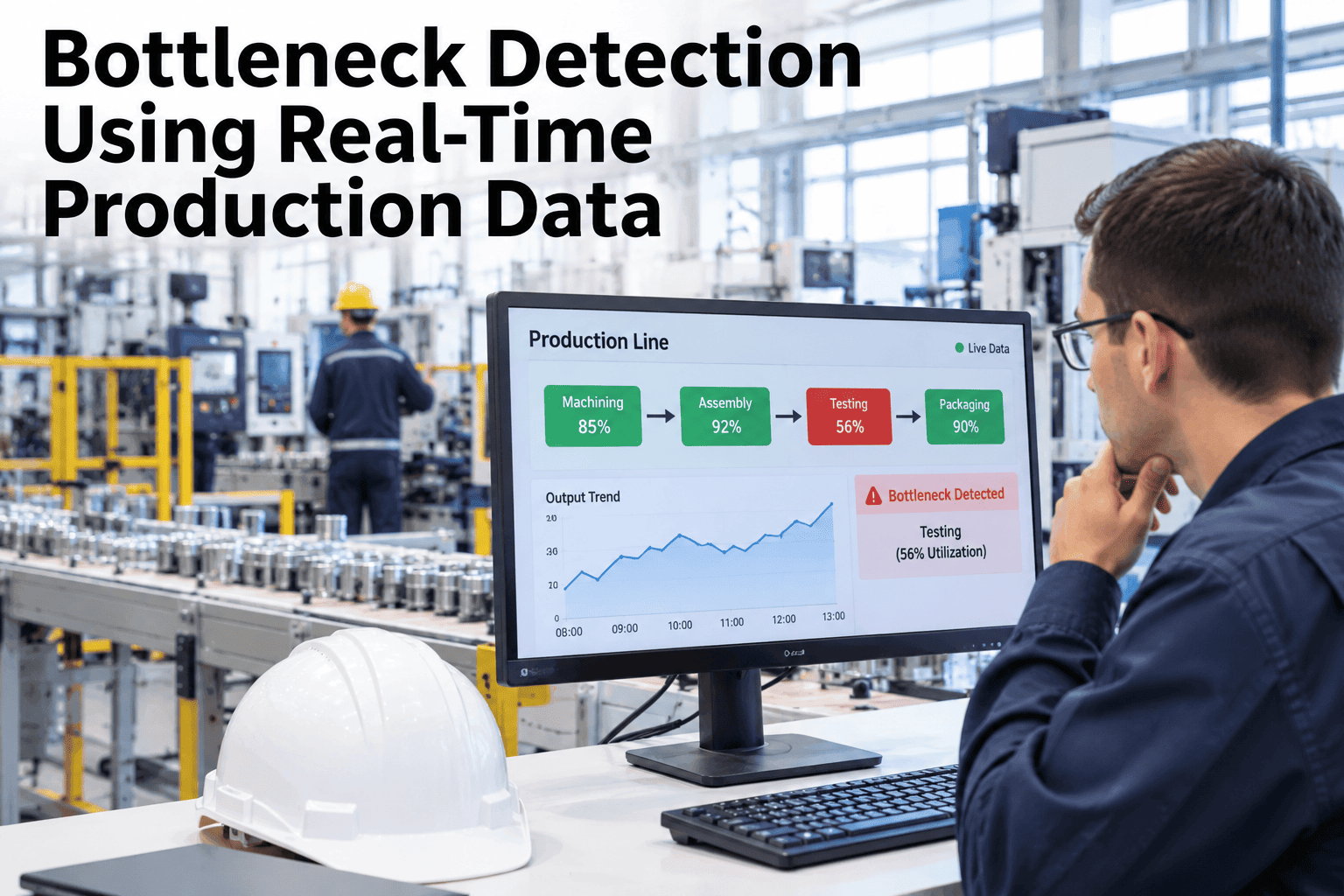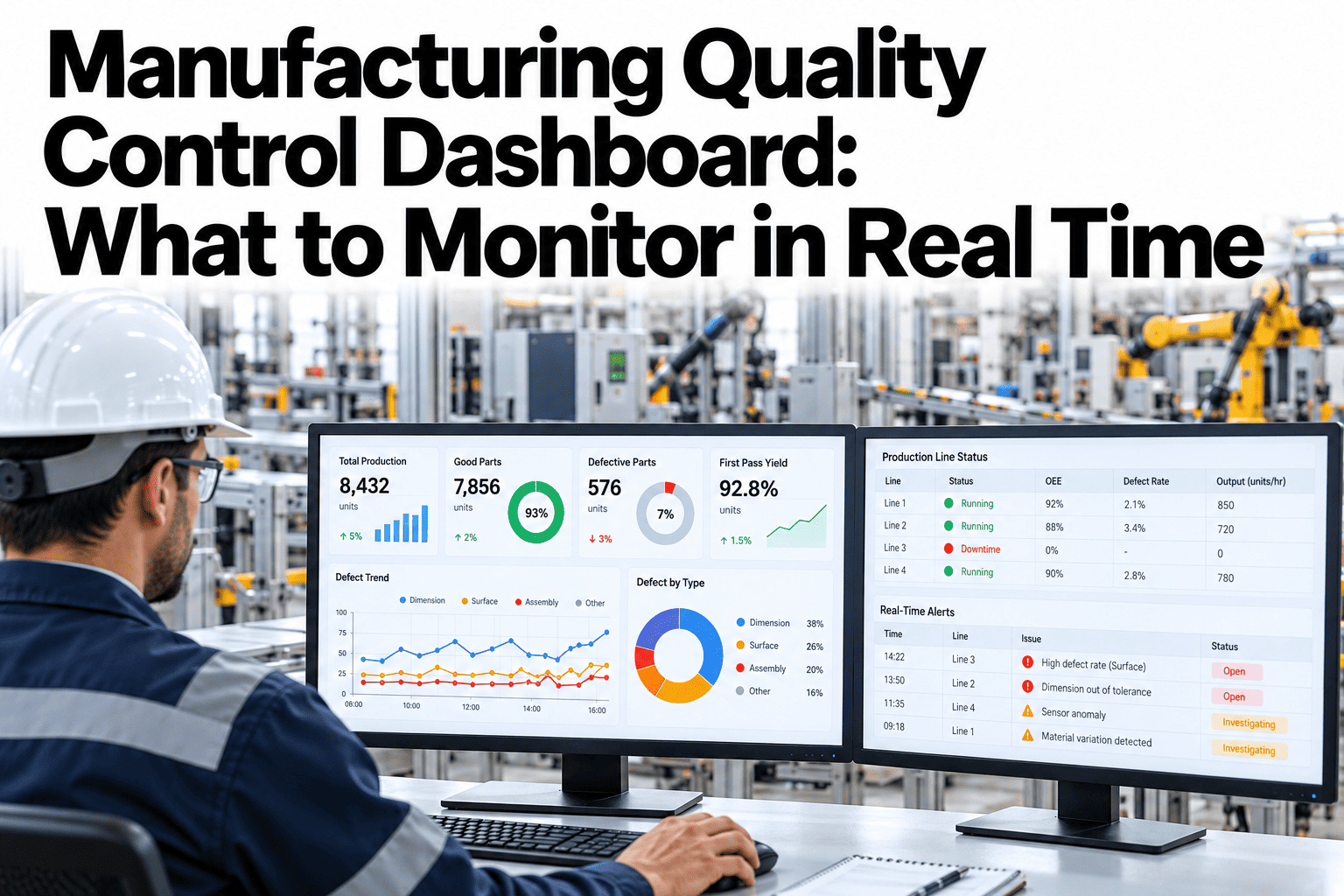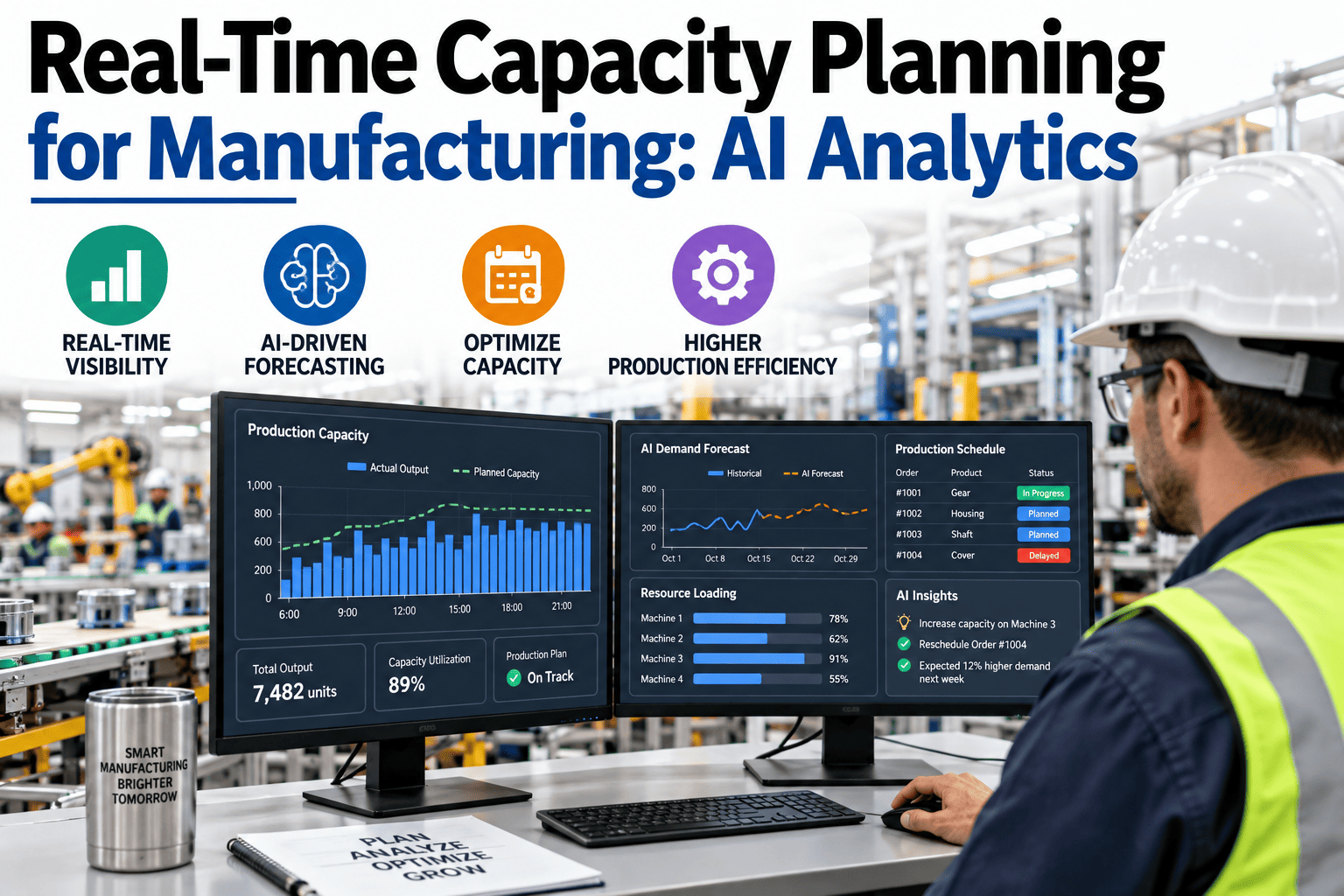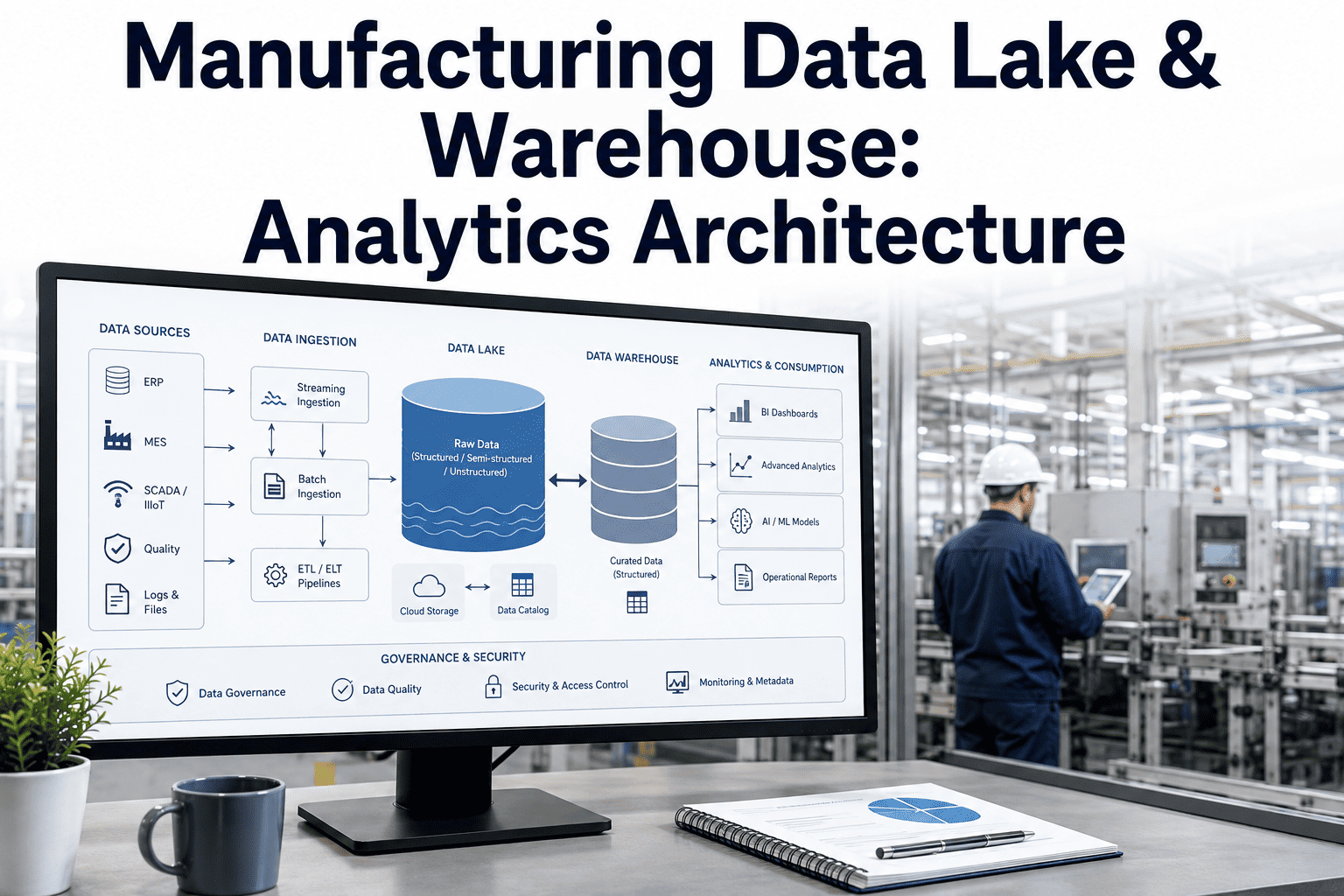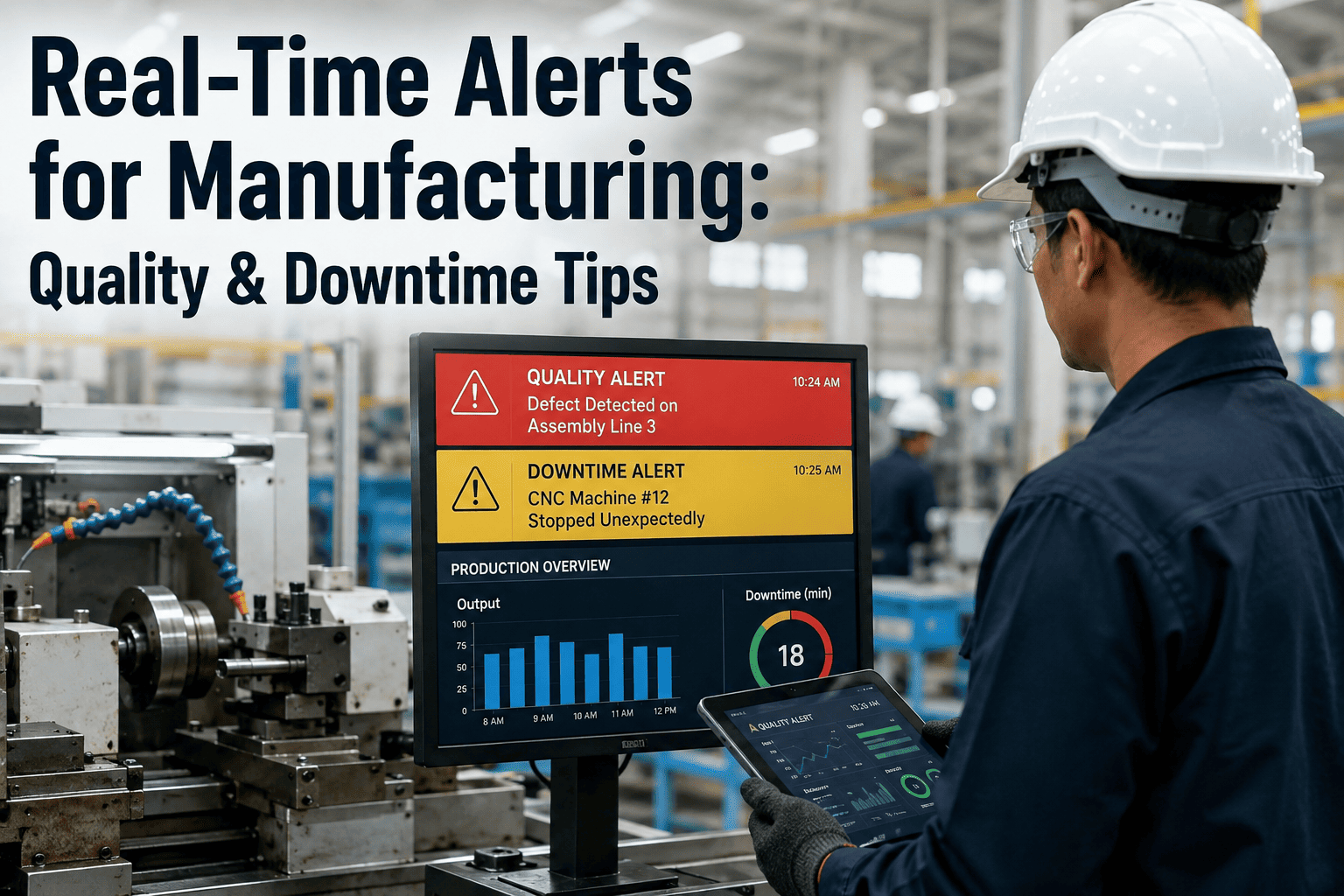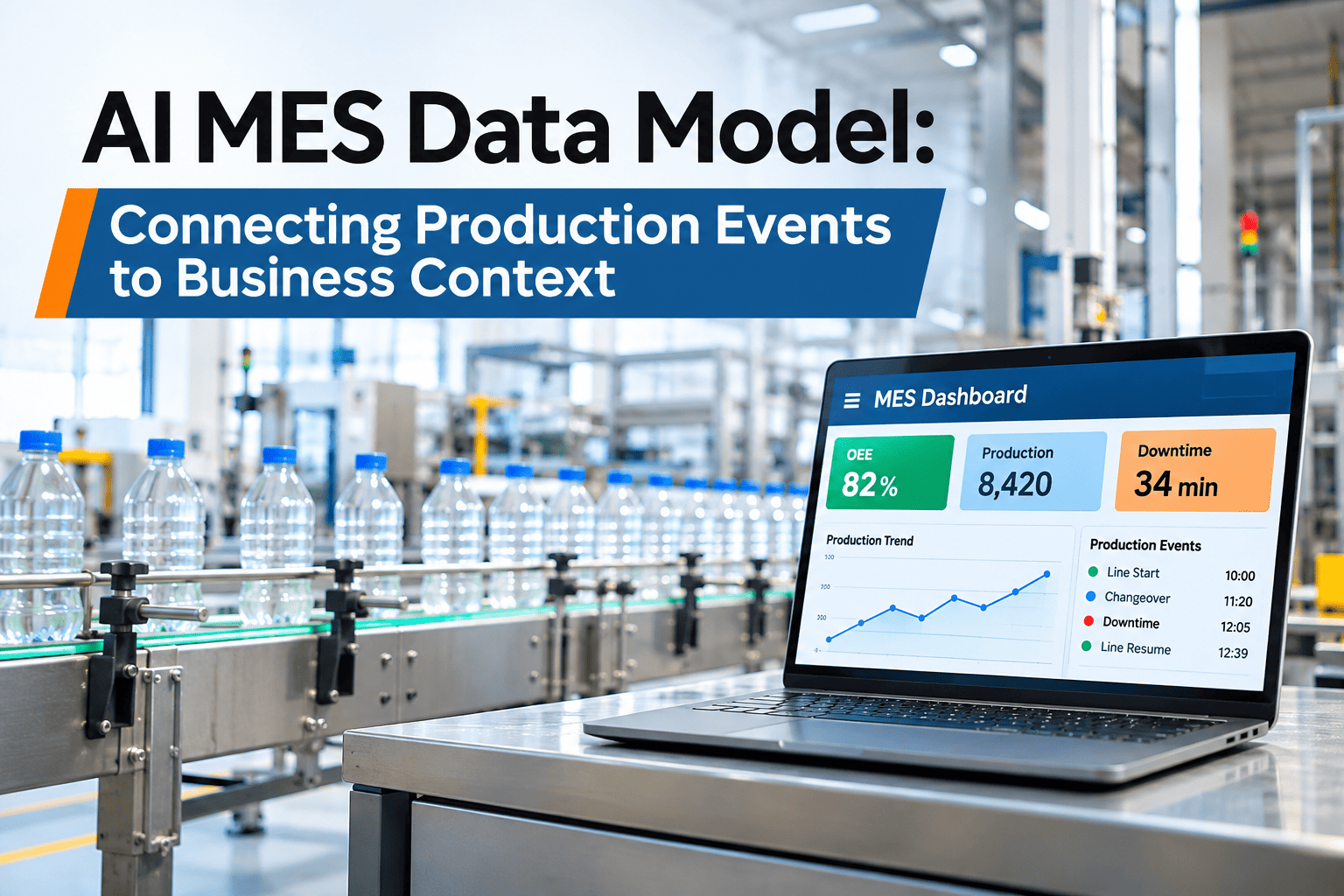
A production event by itself is just a timestamp and a status, and it only becomes useful once it is tied to the order it belongs to, the asset that produced it, the quality result it fed and the cost it drove. An AI MES data model is the structure that holds those connections, so a single event can answer a shop-floor question and a business question from the same record. Teams still reconciling MES, ERP and quality data by hand after the fact can see a connected data model built around their own production events before the next audit forces the reconciliation again.
One Production Event, Connected to Every System That Needs It
iFactory AI ties every production event to its order, asset, quality result and maintenance record, so the same data answers a floor question and a finance question.
What Is an AI MES Data Model?
An AI MES data model is the structure that defines how production events, orders, assets, quality results and maintenance actions relate to one another, so an AI layer built on top of it can reason across all five rather than reading one isolated feed. iFactory, an on-premise AI platform for manufacturing execution, tracks production orders, output, downtime reasons and quality records in one system, with OEE and other business metrics calculated from that same connected data rather than reconstructed by hand afterward.
Five Layers Every MES Data Model Needs
What Connects to What
| Data Domain | Typical Source System | Connects To |
|---|---|---|
| Production events | MES, PLC, SCADA | Order, asset, quality result |
| Quality results | Lab system, vision inspection | Production event, order, defect class |
| Asset data | CMMS, condition monitoring | Production event, maintenance record |
| Business context | ERP, order management | Order, cost accounting, delivery date |
Map Your Own Systems Onto This Model
Bring your current MES, ERP and quality system list and iFactory's team will show where the connections already exist and where they are missing.
Building the Model in Four Steps
Common Mistakes When Connecting MES Data
Frequently Asked Questions About AI MES Data Models
Do we need to replace our existing MES to build this kind of data model?
Not usually. The data model is typically built as a connecting layer across the MES, ERP, quality and CMMS systems already in place, rather than requiring a wholesale MES replacement. Confirm compatibility with your current systems on a short call.
How is a connected data model different from a data warehouse we already have?
A data warehouse typically stores data for reporting after the fact, while an MES data model is built to support real-time queries and AI reasoning across production, quality and asset domains as events happen, not only in a nightly batch. Ask support how this complements an existing warehouse for your environment.
What is the minimum connection needed to start seeing value?
Connecting production events to orders and to quality results first, before tackling the full ERP integration, is usually enough to surface a useful first set of cross-system insights. Scope a starting connection for your specific line.
How does this support traceability requirements like FSMA or automotive quality standards?
A connected model that ties production events to orders, materials and quality results by design satisfies much of what traceability regulations ask for, since the links auditors look for already exist rather than being reconstructed for the audit. Discuss your specific traceability requirement with the team.
Who typically owns this data model inside a manufacturing organization?
It usually sits jointly between operations technology and IT, since the model spans shop-floor systems and business systems that have traditionally been owned by separate teams. Discuss ownership and governance for your organization's structure.
Connect Every Production Event to the Context That Explains It
iFactory AI ties production, quality, asset and order data into one connected model. Book a walkthrough on your own systems.