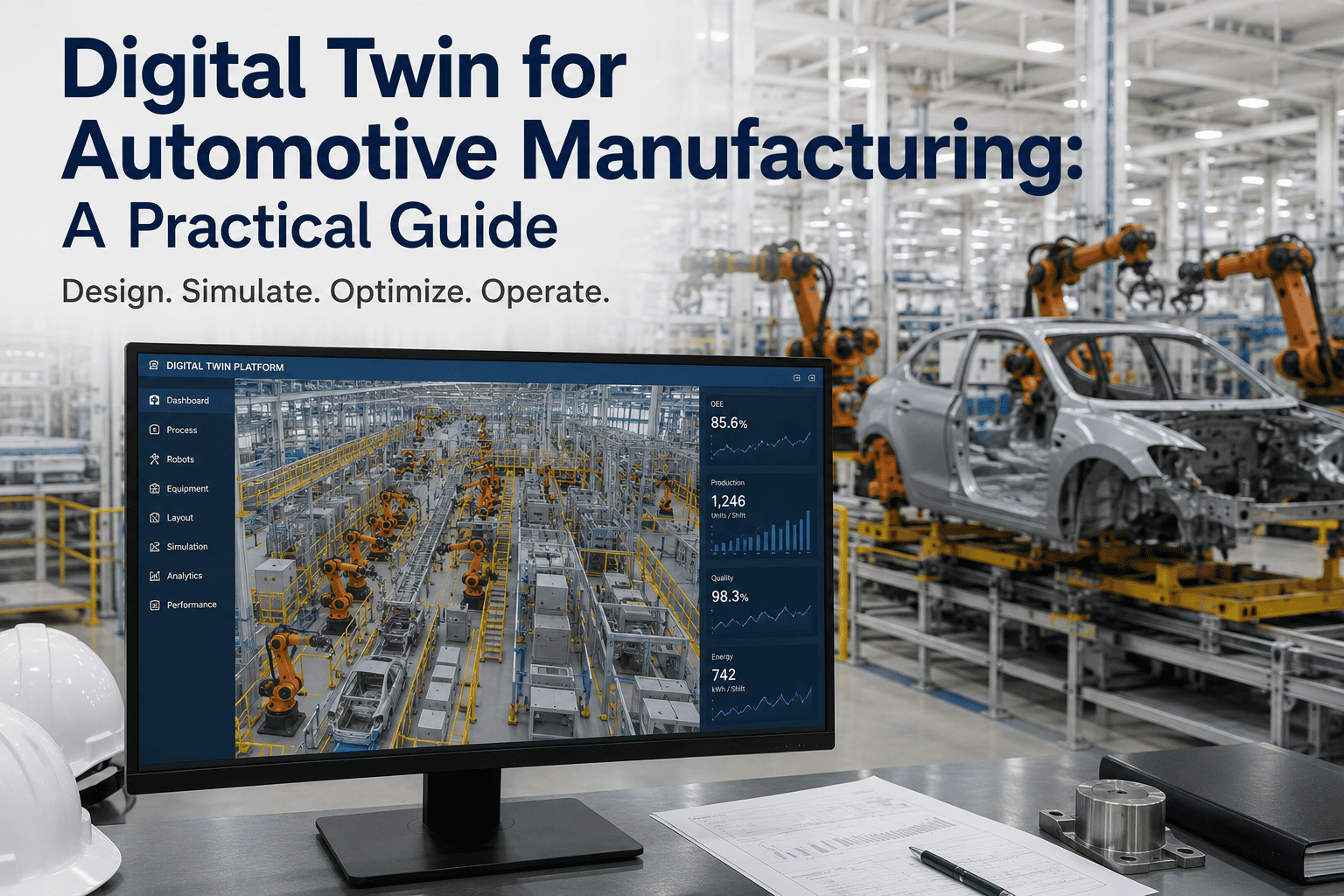
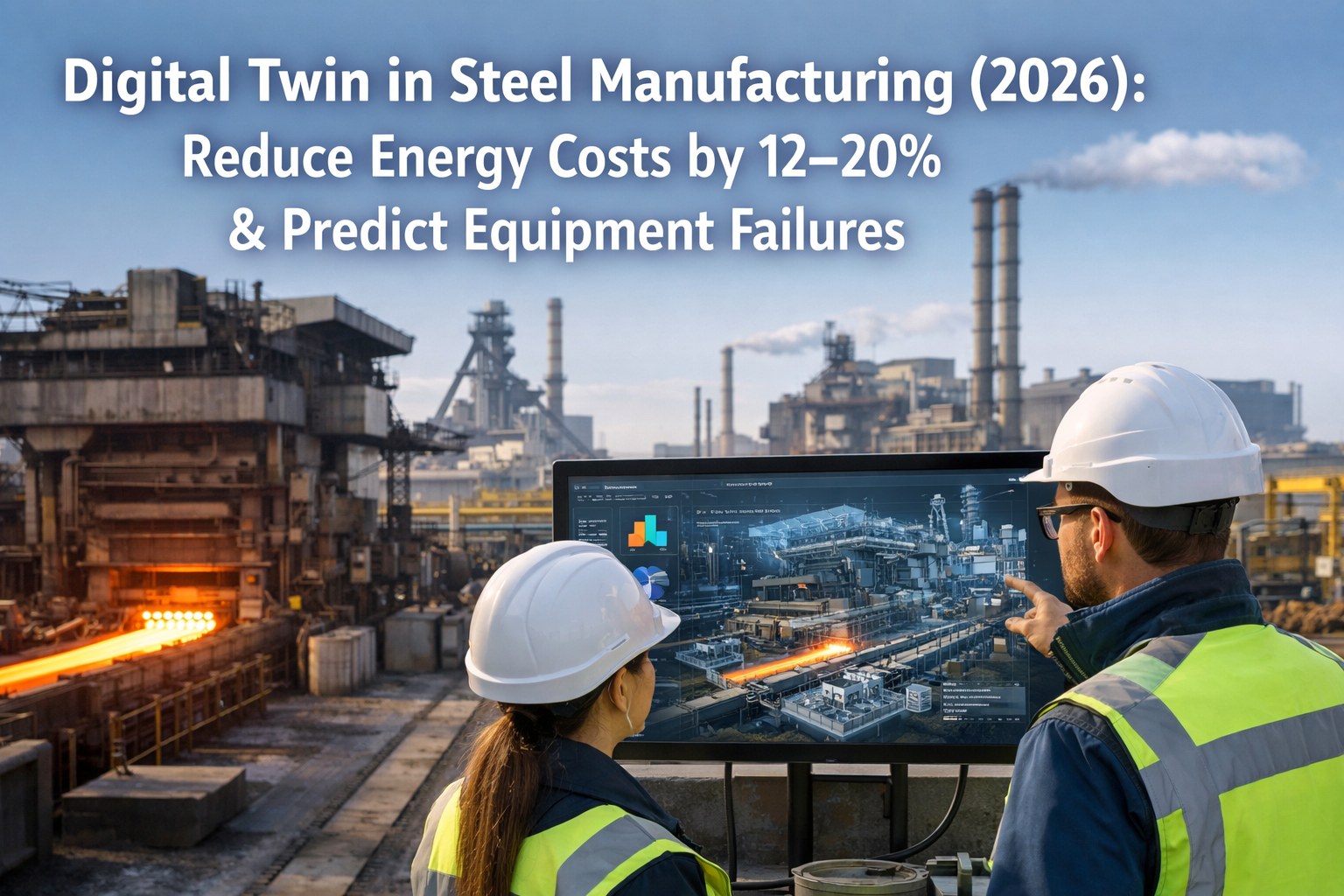
"Digital twin" is one of the most over-claimed terms in manufacturing, so start with what separates a real one from a 3D render. A digital twin is a virtual representation of a physical asset or process, connected to it by live data, used for prediction, optimization, and decision-making — not a static CAD model. The distinction is the data flow: a model has none, a shadow receives data one way from the plant, and a true twin closes the loop in both directions. BMW makes the value concrete. Across more than 30 sites and over a million square meters of virtual factory — its plants modeled and validated in NVIDIA Omniverse, with San Luis Potosí among the network built digital-first — BMW projects up to a 30% reduction in production-planning costs from simulating layouts, robotics, and logistics before steel is cut. iFactory's digital-twin platform connects the live plant to its virtual replica across BIW, paint, and assembly — on a turnkey on-premise NVIDIA stack inside your firewall.
iFactory Digital Twin · Automotive
A Digital Twin That Pays Back, Not Just Renders.
Live, bidirectional twins of body-in-white, paint, and assembly — built on the same Omniverse-class approach BMW uses across 30+ plants — to simulate, predict, and optimize before you commit the line. On a turnkey on-premise NVIDIA stack inside your firewall.
Up to 30%
planning-cost cut (BMW projected)
6-12 mo
typical validated payback window
0-5
capability levels, standalone to autonomous
On-prem
data never leaves your firewall
Model, Shadow, Twin: Know Which You're Buying
The single most common digital-twin mistake is paying for one thing and getting another. The three terms describe a precise progression defined by which way the data flows. Get this right and the rest of a program follows; get it wrong and you've bought a viewer that can't optimize anything.
Digital Model
No live data flow
A virtual representation with no automatic connection to the physical asset — a CAD model or high-fidelity simulation. It can exist before the asset is even built. Useful for design, but it does not reflect the running plant.
Digital Shadow
Plant to virtual, one way
Live data streams from the physical plant into the virtual model, so the model reflects current state and can diagnose anomalies. But changes in the model don't flow back — it watches, it doesn't act.
Digital Twin
Plant and virtual, both ways
The loop is closed: the plant updates the twin and the twin can inform or control the plant. This bidirectional link is what enables prediction, optimization, and — at the top end — autonomous response.
The honest framing for any vendor conversation: ask which data flows exist. One-way is a shadow, however photorealistic. Two-way is a twin. The word on the brochure doesn't decide it — the data flow does.
The Capability Ladder: 0 to 5
Beyond the model/shadow/twin distinction, the industry uses a capability scale from 0 to 5 — adapted from a DNV framework and widely cited — that tells you what a twin can actually do. The key insight is that twins are objective-oriented: a descriptive twin may deliver substantial value on its own, and you climb only as far as the decision you're trying to make requires. Buying Level 5 for a Level 2 problem is how budgets evaporate.
0
Standalonevirtual replica with no live link — exists before the asset does
1
Descriptivelive data streams in; the twin shows current and past state
2
Diagnosticanalytics on the stream detect and explain anomalies
3
Predictiveforecasts future state — the basis for predictive maintenance
4
Prescriptivewhat-if scenarios and recommendations to reach a target state
5
Autonomousthe twin acts on its prescriptions and controls the asset
Not sure which level your problem needs? Get a turnkey AI quote and we'll map your objective to the right capability level in the pilot — no over-buying.
Three Shops, Three Different Twins
An automotive plant isn't one twin — it's a federation of them, and BIW, paint, and assembly each demand different physics and different payoffs. The platform builds the right kind for each and ties them into one plant view, the way BMW links building, equipment, logistics, and vehicle data into a unified model.
Body-in-White
Hundreds of robots and weld guns in tight space. The twin runs virtual collision checks and reach studies, validating that a new model fits the line and robots don't clash — before launch, not during it.
Payoff: collision and reach problems caught virtually, fewer change orders at launch.
Paint Shop
The longest cycle and highest energy load. The twin simulates booth and oven flow, conveyor balancing, and energy use, testing throughput or setpoint changes against cure quality in the virtual line first.
Payoff: cycle-time and energy scenarios modeled before they touch a setpoint.
Assembly
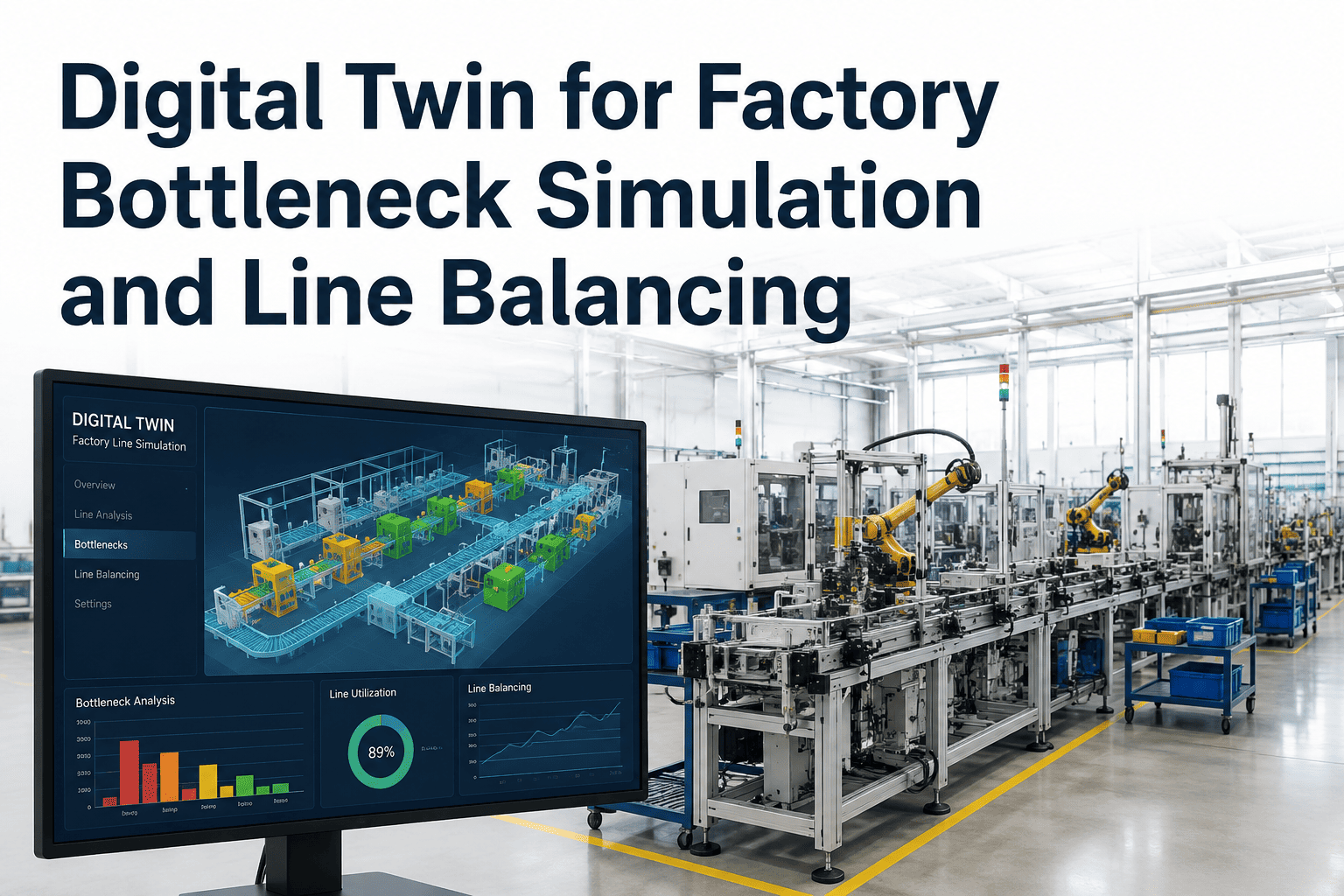
People, conveyors, and stations. The twin simulates manual work processes, line balancing, and logistics flow, validating ergonomics and takt before the layout is built in steel.
Payoff: line balance and ergonomics proven virtually, smoother ramp.
What Powers It: The Digital Thread
A twin is only as good as the data feeding it, and the connective tissue is the digital thread — the continuous flow of data linking the physical plant to its virtual counterpart and back. BMW's approach consolidates planning data from architecture, plant engineering, and logistics into one 3D environment using OpenUSD, a format that imports different file types without losing information. The platform does the same: it ingests CAD, PLC, SCADA, MES, and sensor data into a coherent live model rather than a disconnected set of viewers.
CAD & layout
geometry of building, equipment, and tooling as the spatial base
PLC & SCADA
live machine state and process signals from the control layer
MES & orders
production schedule, genealogy, and execution context
Sensors & IoT
condition data — vibration, temperature, energy — for prediction
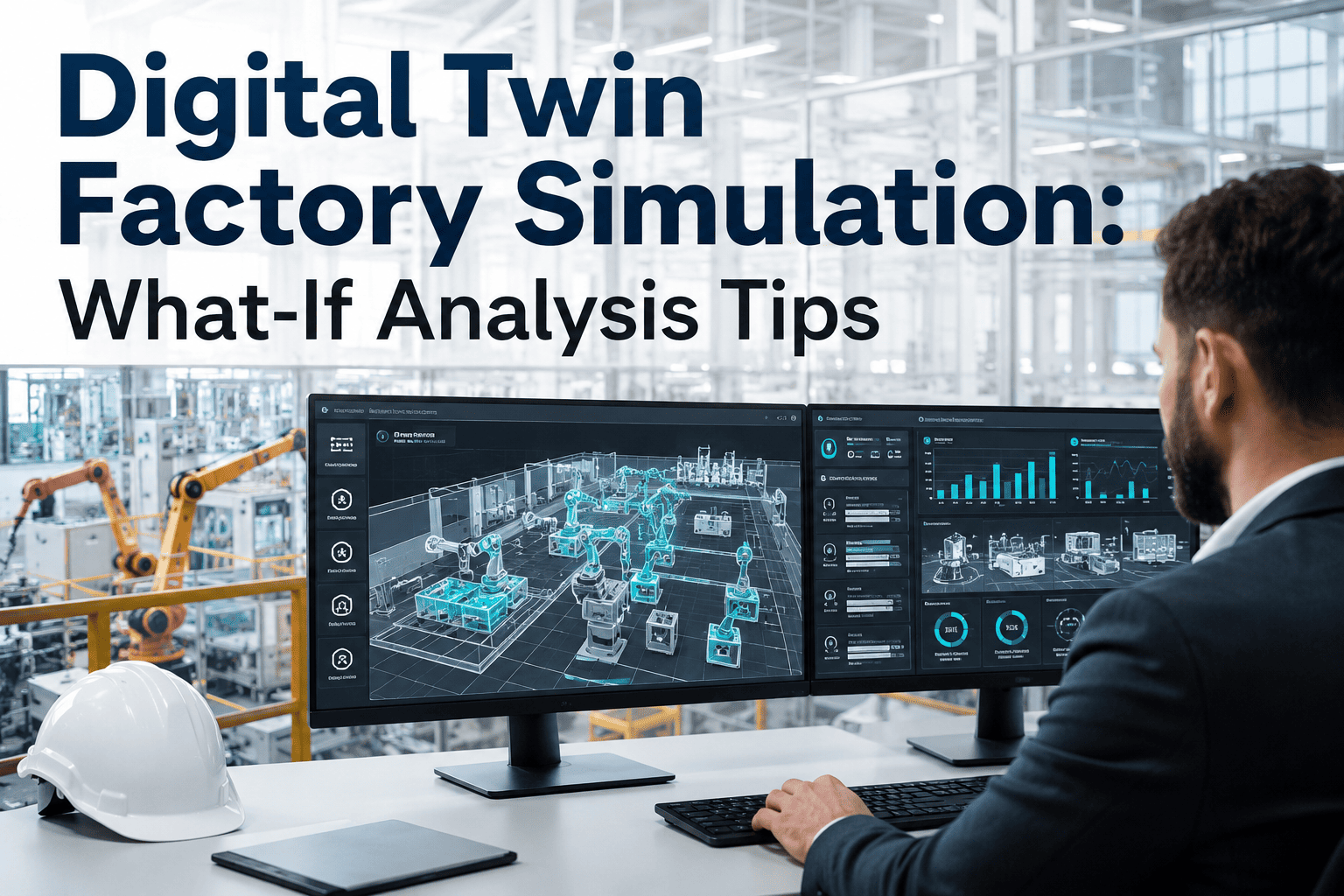
Run offline, the same twin becomes a digital sibling for what-if and risk analysis without touching production; archived over the asset's life, the thread informs the design of the next generation of line.
The ROI Is Real — and Phased
Validated digital-twin projects in manufacturing and logistics often show ROI in 6 to 12 months when the model is paired with a concrete lever like line balancing, predictive maintenance, or route optimization. But the honest sequence matters: a twin starts as an investment phase and accelerates once the model stabilizes and scenarios become operating policy. The benefits land across four measurable dimensions, and a rolling model that compares projected against actual savings keeps the payback real rather than theoretical.
Cost reduction
Fewer change orders, less rework at launch, lower capital from optimized layout — BMW's projected up-to-30% planning saving lives here.
Efficiency gain
Better line balance, higher throughput, and tuned logistics flow from simulating before building.
Quality improvement
Process windows validated virtually, fewer defects escaping into a ramp, more stable launches.
Revenue uplift
Faster time-to-market and shorter ramp from validating production years before series start.
Investment phase
Data integration, model build, and validation. Costs lead; savings are still theoretical. This is where weak data inputs sink a program, so fidelity is proven before scaling.
Stabilization
The model tracks the real plant within tolerance. Scenarios begin to translate into operating decisions and the first verified savings appear.
Payback & beyond
Optimization becomes policy; a rolling projected-vs-actual model recalibrates monthly so the twin keeps producing validated financial outcomes.
Want a payback model on your own line? Start a 6-week pilot and we'll baseline one shop and build the projected-vs-actual savings model.
Ask the Copilot
The twin answers plain language too — for the planner pressure-testing a layout change or the operations head sizing the payback before committing capital.
Plant Copilot — Digital Twin
Planner
We want to add a new variant to the BIW line. Will the robots clash?
Copilot
I ran the collision check in the twin against the new body geometry. Two issues: at station 14, robot R3's weld path clips the new B-pillar reinforcement by about 40 mm through the rotation, and at station 21 the reach study shows R7 just short of the new weld point — roughly 60 mm outside its envelope. Everything else clears. Both are fixable in planning: R3 needs a path re-teach, R7 needs either a reposition or a fixture shift. Caught now, these are change orders on paper; caught at launch, they're line stoppages.
Planner
What's this twin actually saving us versus planning the old way?
Copilot
On this variant launch, the projected-vs-actual model shows the virtual collision and reach checks have already removed 11 change orders that historically would have surfaced during physical commissioning — that's the bulk of the planning-cost saving, in line with the up-to-30% range OEMs cite for virtual planning. It's a descriptive-plus-prescriptive twin doing the work here, not full autonomy, so the cost is proportionate to the problem. Want the change-order breakdown for the capital review?
Turnkey: Hardware, Software, Live in 6-12 Weeks
iFactory ships a pre-configured NVIDIA AI server — racked, software pre-loaded for 3D simulation and live data ingestion. Rack it, plug in power and Ethernet, and the twin platform is live inside your firewall. The engagement covers CAD and layout import, PLC/SCADA/MES and sensor integration over your existing protocols, twin build for the target shop, scenario and what-if setup, planner training, and 24×7 remote monitoring. Your existing systems are the data sources, not migration targets.
Phase 1 · Weeks 1-4
Ingest & Build
Edge server on-prem; CAD, PLC, SCADA, MES, and sensors connected. The target shop's twin built and its data fidelity validated.
Phase 2 · Weeks 5-8
Sync & Simulate
Live sync established; the twin tracks the real shop within tolerance. What-if scenarios run as digital siblings against the baseline.
Phase 3 · Weeks 9-12
Optimize & Go Live
Predictive and prescriptive scenarios feed planning; projected-vs-actual savings tracked, planner training, 24×7 monitoring at 99.9% uptime.
1000+
clients running iFactory
6-12 wks
to live operation
On-prem
inside your firewall
What the Plant Gets
A real bidirectional twin instead of a viewer, the right capability level for each shop, a digital thread that feeds one coherent model, and a phased payback you can defend at a capital review — proven virtually before a line is committed in steel.
Real twin
Not a viewer
bidirectional, closed-loop data
Right-sized
Capability level
matched to the decision, no over-buy
Unified
Digital thread
CAD, control, MES, sensors in one model
Air-gapped
On-prem deployment
plant data stays in your firewall
Frequently Asked Questions
What's the real difference between a digital model, shadow, and twin?
The data flow. A digital model has no live link to the asset — it's a CAD model or simulation. A digital shadow receives data one way, from the plant into the model, so it reflects current state but can't act back. A true digital twin is bidirectional: the plant updates the twin and the twin can inform or control the plant. Only the twin enables real optimization and autonomy.
Do we need a fully autonomous, Level 5 twin?
Almost certainly not at first. Digital twins are objective-oriented, and a descriptive or diagnostic twin often delivers substantial value on its own. You climb the 0-to-5 capability scale only as far as the decision requires — predictive for maintenance, prescriptive for what-if planning. Buying autonomy for a problem that needs only diagnostics wastes budget without adding return.
How does BMW actually use digital twins?
As a core part of its iFACTORY strategy, BMW runs a Virtual Factory across more than 30 sites and over a million square meters, built on NVIDIA Omniverse and OpenUSD. Planners optimize layouts, robotics, and logistics — and run automated collision checks for new models — years before production, validating plants like its digital-first San Luis Potosí approach. BMW projects up to a 30% reduction in production-planning costs.
When does a digital twin pay back?
Validated projects often show ROI in 6 to 12 months when the twin is tied to a concrete lever like line balancing or predictive maintenance. But it's phased: an investment phase comes first, then savings accelerate as the model stabilizes and scenarios become operating policy. A rolling projected-vs-actual model keeps the payback grounded in real outcomes, not assumptions.
Where does our plant data live?
Entirely on-premise inside your firewall on the pre-configured NVIDIA server — read-only and inbound-only to your source systems. CAD, control data, and the twin models never leave the plant, with 24×7 remote monitoring and 99.9% uptime. The deployment can be fully air-gapped where required.
Bidirectional Twins. Right-Sized Capability. Phased Payback. On-Prem.
See a Real Twin of Your Shop
Bring one shop — BIW, paint, or assembly — with CAD and a data feed. We'll build a live bidirectional twin, run a collision check or cycle-time scenario as a digital sibling, map the right capability level to your objective, and stand up the projected-vs-actual payback model — then scope the 6-to-12-week turnkey deployment, on-prem, inside your firewall.
3 shops
BIW · paint · assembly
0-5
capability, right-sized
6-12 mo
validated payback
1000+
clients · 99.9% uptime