Greenfield commissioning without a quality stack is avoidable risk. When the line starts before SPC rules, genealogy, hold logic, and CAPA are live, the plant does not just face launch friction — it inherits preventable quality debt from the first lot. For consulting teams and plant leaders, the commercial question is simple: how do you make commissioning ready for control, traceability, and response before production becomes irreversible? That is where iFactory AI fits as a launch-time quality stack layer, helping teams build SPC, genealogy, and CAPA into the operating model instead of bolting them on after defects appear. Book a launch-readiness review with our team.
Greenfield Consulting
Build SPC, Genealogy, and CAPA Before the First Production Lot
Commissioning-time quality architecture that keeps launch defects, containment labor, audit exposure, and quality debt off the balance sheet. iFactory AI sits beside MES and QMS as the launch-time quality stack layer.
Launch-Time KPIs
Day 1
Control plans live before first lot
100%
Genealogy fields captured from first serial
0
CAPA processes in email or spreadsheet
Live
SPC alarms tied to reaction owners
At a Glance
✓
Build the quality stack before first lot, not after startup issues create rework
✓
Stand up SPC, genealogy, FAI, and CAPA during commissioning
✓
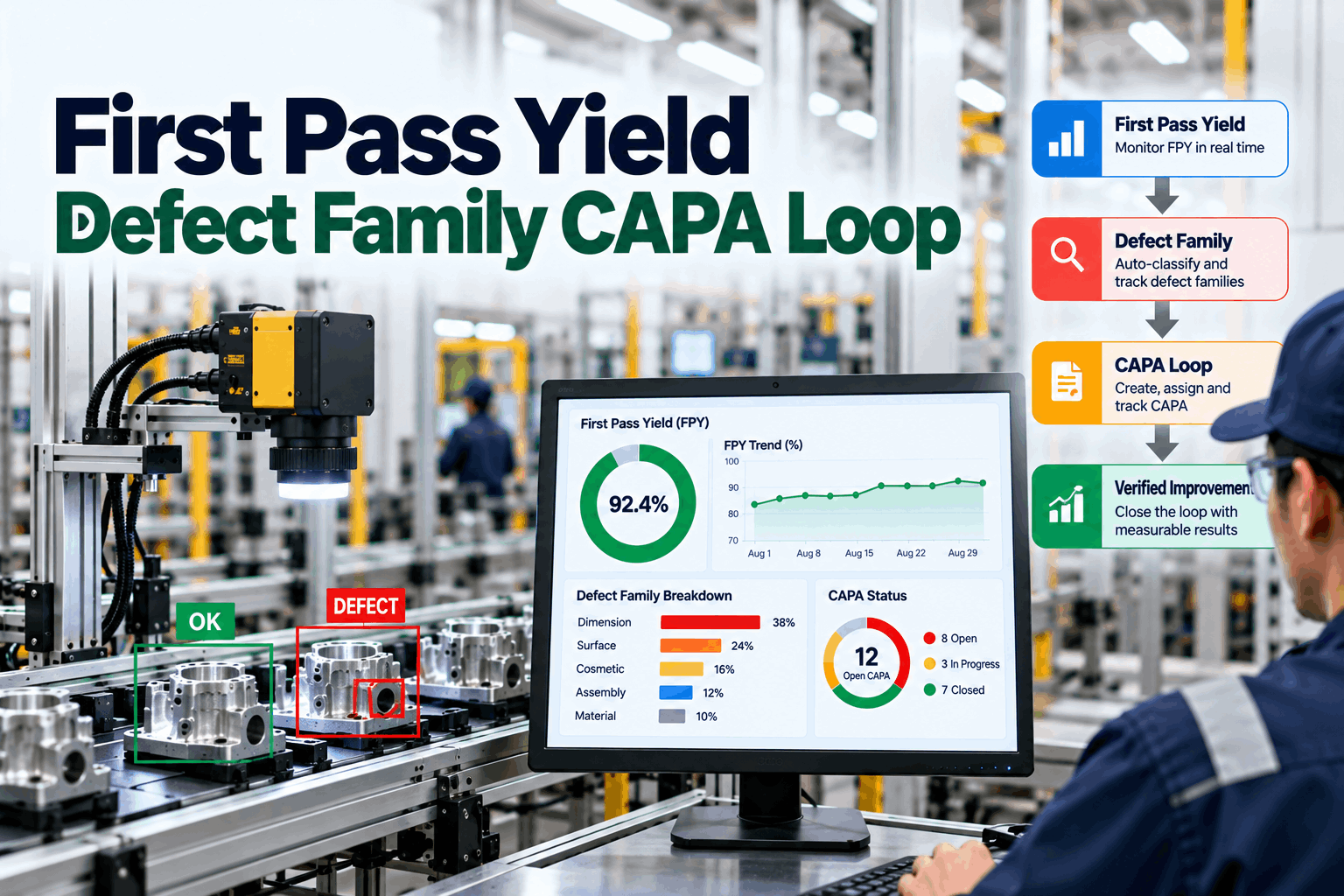
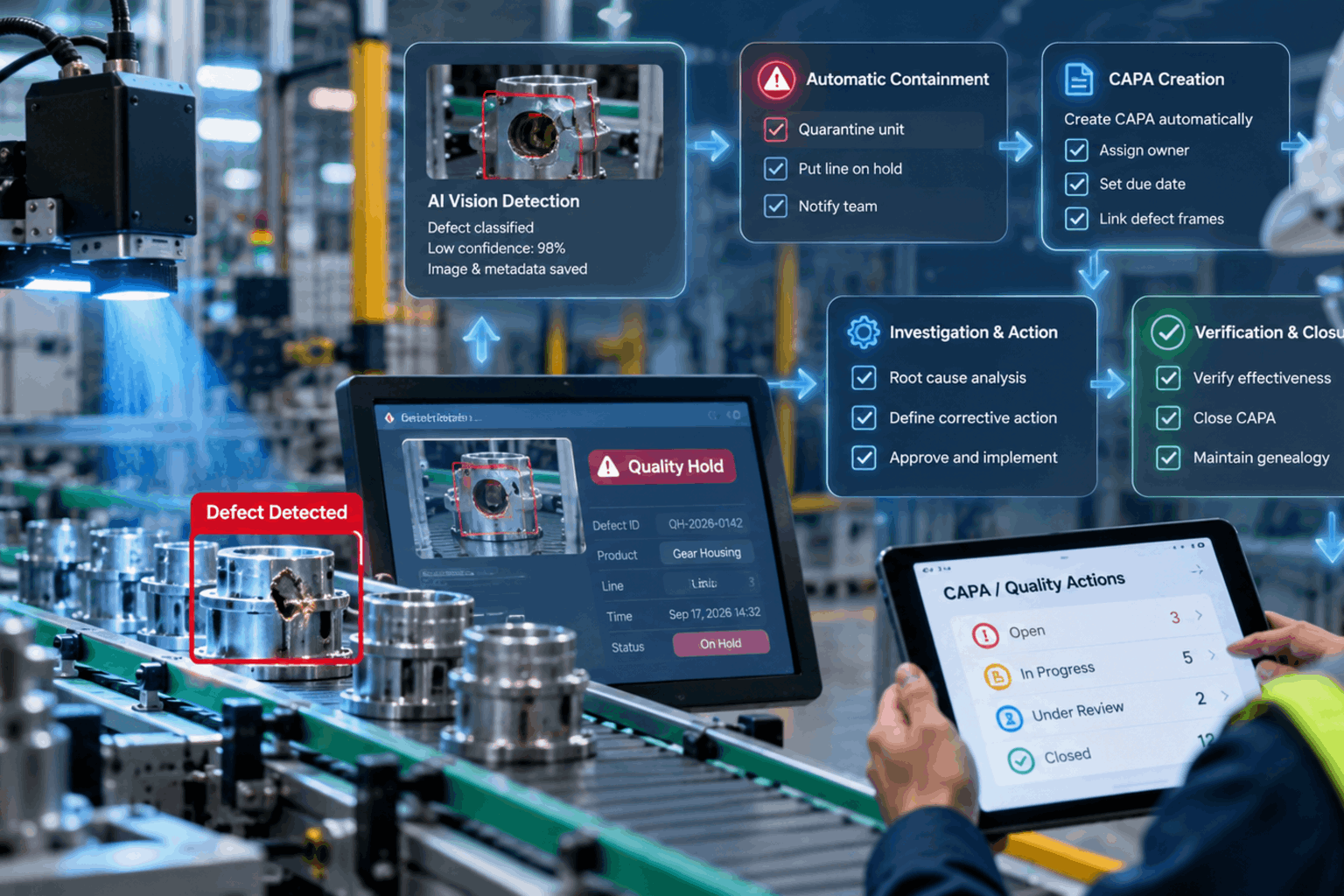
Use closed-loop quality to detect, quarantine, correct, verify, and trace issues
✓
Keep iFactory AI beside MES and QMS to operationalize the loop in real time
✓
Add edge AI inspection only where it accelerates startup readiness
What You Get in the Demo
01A review of your launch stage and quality gaps
02A map of SPC, genealogy, and CAPA flow
03A check on where iFactory AI fits with MES/QMS
04A discussion of whether edge AI inspection adds value at startup
Why Greenfield Quality Fails After Startup
Most greenfield plants do not fail because equipment cannot run. They fail because the quality stack lags the production stack. The pattern is familiar. Machines are commissioned, the line is ready to produce, and teams assume inspection rules and traceability can be finalized later. Then the first issues appear: sampling is inconsistent, control limits are weak or copied from the wrong process, genealogy fields are incomplete, and hold decisions live in email threads or on whiteboards. CAPA becomes reactive instead of structured. First article evidence exists, but it never becomes the operating standard.
!
The Executive Question Is Not “Can We Produce?”
It is “Can we prove every lot is under control, traceable, and correctable before volume begins?” That gap drives scrap, rework, containment labor, line stops, launch delays, and audit exposure — and it creates a dangerous illusion: the plant may look operational while still lacking proof that it can hold spec consistently.
What the Greenfield Quality Stack Should Include
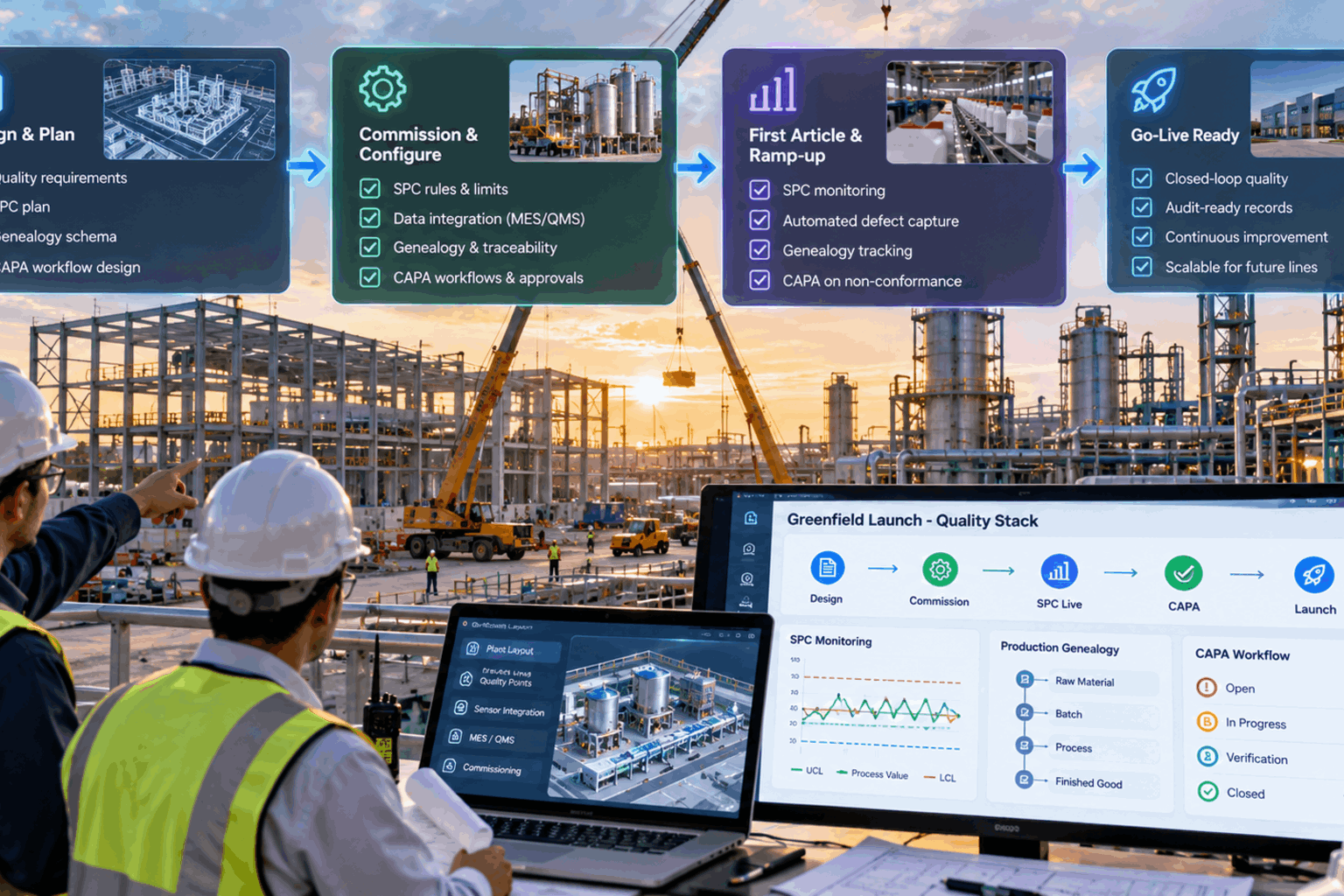
A greenfield launch needs more than construction completion and equipment validation. It needs a production-ready quality architecture — four pillars that must be live before volume ramp.
Statistical process control should be defined before the first production lot. That means setting control limits, sampling frequency, reaction plans, and escalation rules while the process is still being tuned. SPC is not just about reporting variation after the fact — it is about catching drift early enough to prevent a defect wave. In a greenfield environment, this matters because process capability is still forming. If the charting logic is unstable or the wrong chart type is used, the plant gets noise instead of insight.
A strong SPC setup answers:
- What characteristics are critical?
- Which chart type fits each characteristic?
- How often is data sampled?
- What happens when the chart signals out of control?
- Who owns the reaction plan?
Pillar 02
Genealogy Schema
Traceability has to be designed, not improvised. A genealogy schema should be established before ramp so the plant can track lot, serial, machine, tool, shift, operator, supplier batch, and rework lineage from day one. That structure matters when a plant needs to isolate a problem quickly. Without it, teams spend hours reconstructing history from disconnected systems. With it, they can see where a defect started, what equipment or material influenced it, and which lots may need quarantine or review.
Genealogy must map into:
- MES production events
- QMS quality records
- Tool and equipment history
- Shift and operator context
- Supplier batch traceability
CAPA must be built as a closed loop, not a mailbox. If CAPA starts too late, or if containment is vague, the plant keeps paying for the same issue repeatedly. That sequence is what turns a defect from an isolated event into a solved problem.
The workflow should define:
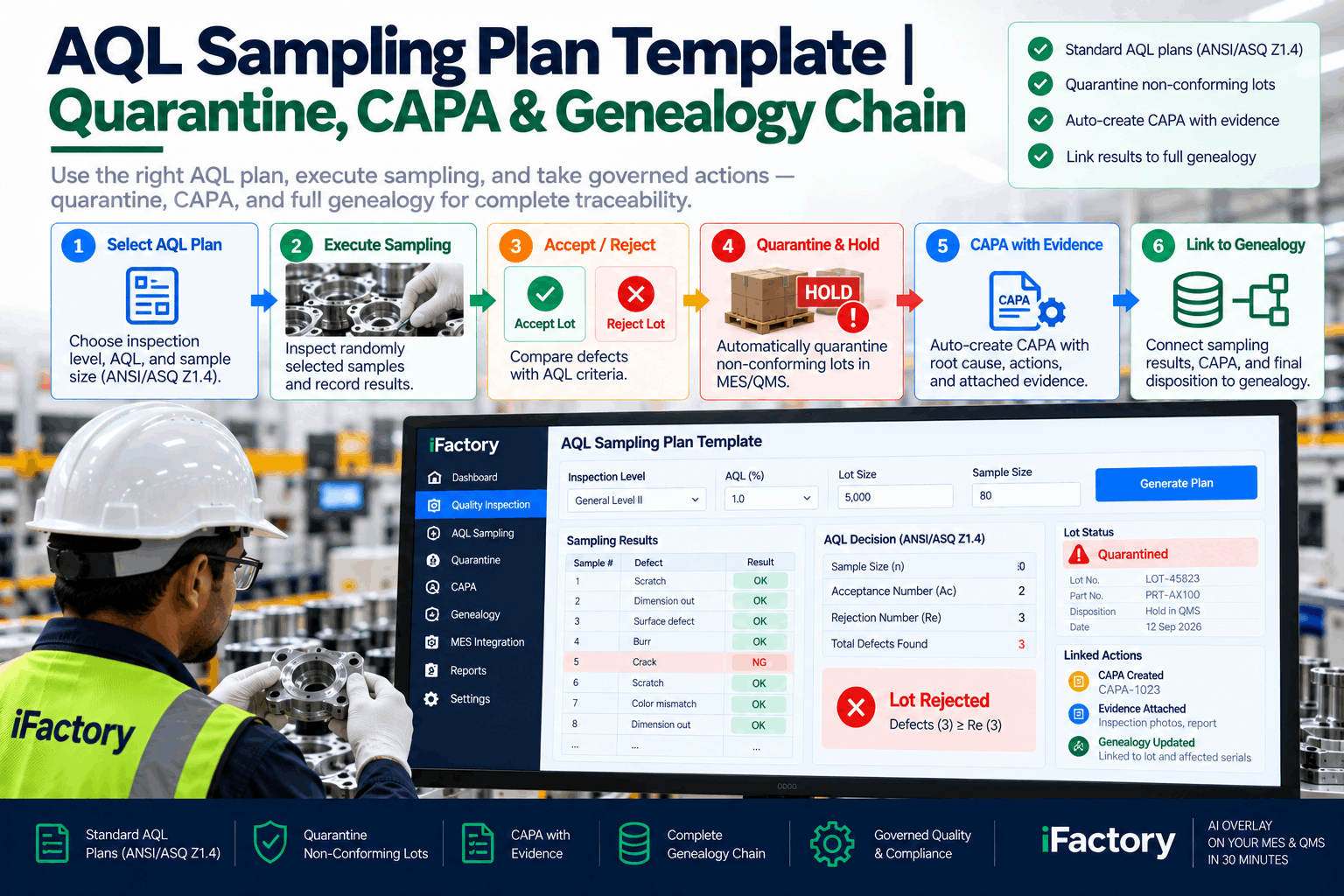
- Hold and containment rules
- Disposition criteria
- Root cause analysis
- Corrective action assignment
- Verification of effectiveness
Pillar 04
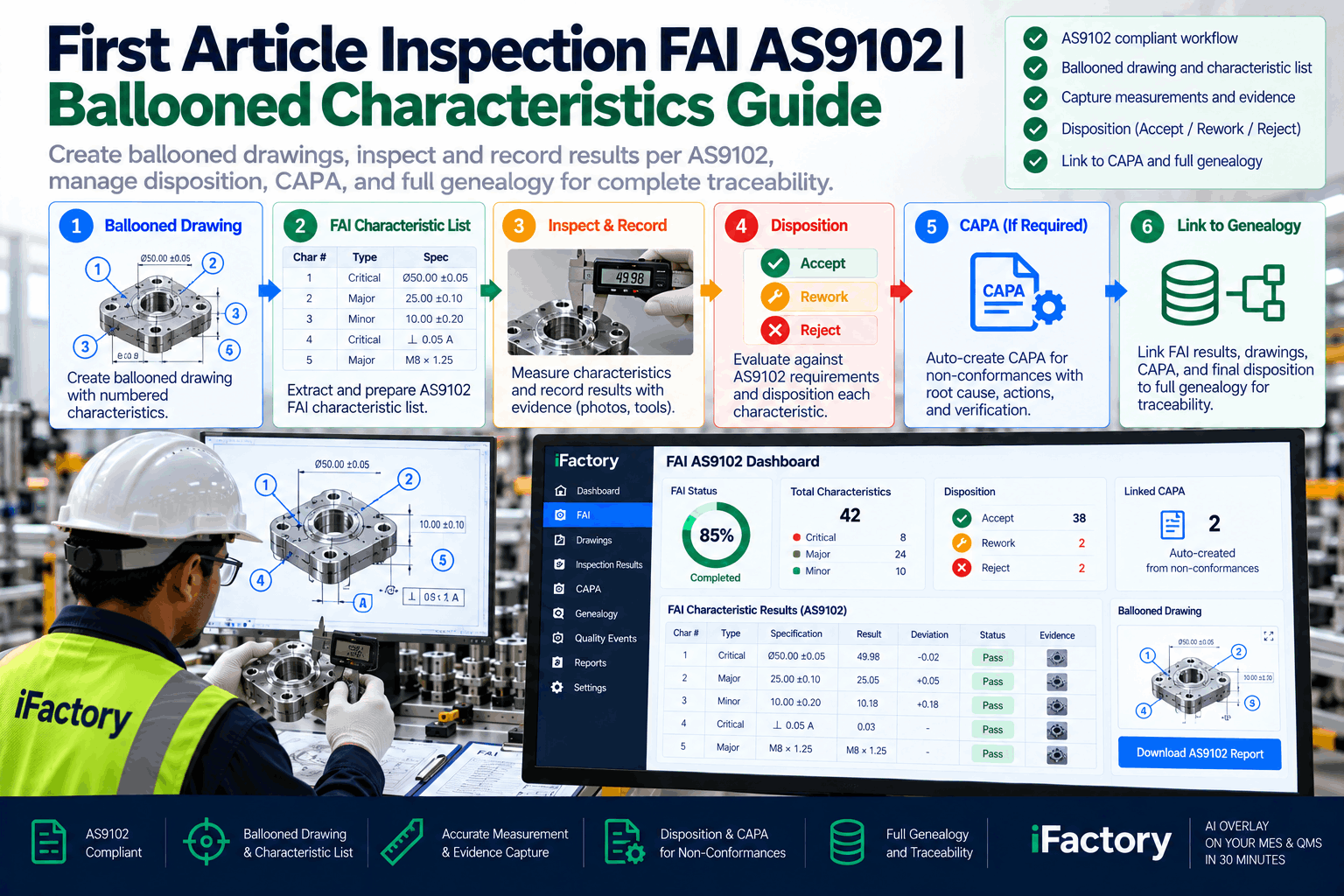
FAI and Control Plans
First article inspection is where the process is proven before volume. It should not sit outside the production system. It should feed the control plan, the sampling logic, and the release criteria for ongoing production. The core idea is straightforward: FAI validates the process, and the control plan keeps it valid.
FAI outputs should feed:
- Control plan characteristics
- Sampling logic and frequency
- Release criteria for production
- Reaction plan escalation paths
- Ongoing acceptance thresholds
Commissioning Checklist — Quality Logic Before Volume Ramp
This is the commissioning checklist that should exist before the plant enters volume production. It should be treated like a commissioning deliverable, not a future-state wish list. If the plant can build the equipment, it can also build the quality logic.
Control & Inspection Foundation
Finalize control plans for critical and high-risk characteristics
Complete first article inspection and define approval criteria
Build SPC rule sets, chart types, sampling plans, and alarm thresholds
Establish genealogy schema for product, material, equipment, and operator traceability
Response & Ownership Layer
Configure quarantine and hold logic
Route CAPA ownership and approvals
Define escalation ownership for process, quality, and operations
Confirm how rework and retest events are recorded in genealogy
Integration & Audit Layer
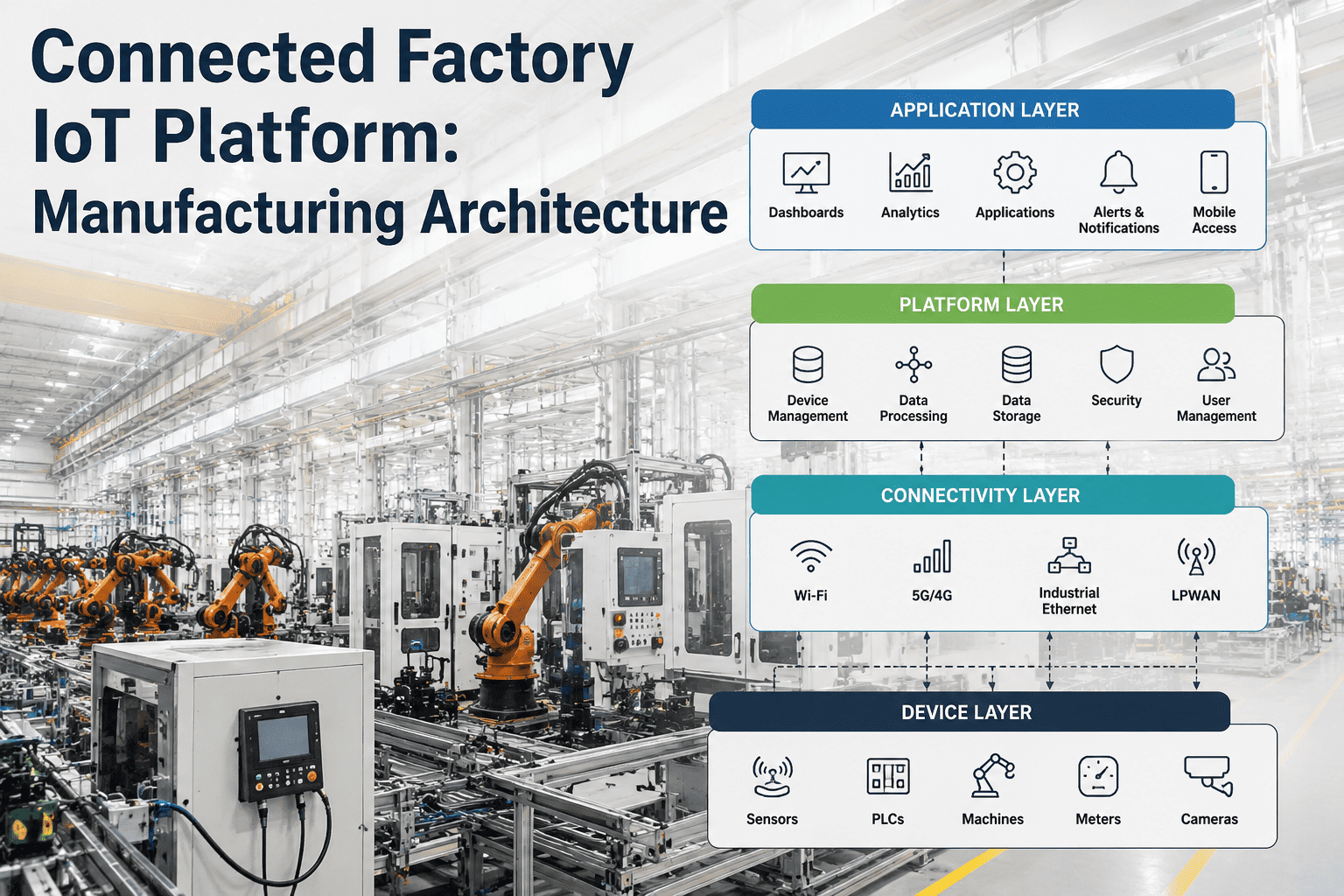
Validate data handoffs between MES, QMS, and inspection systems
Test audit trails, approval steps, and verification records
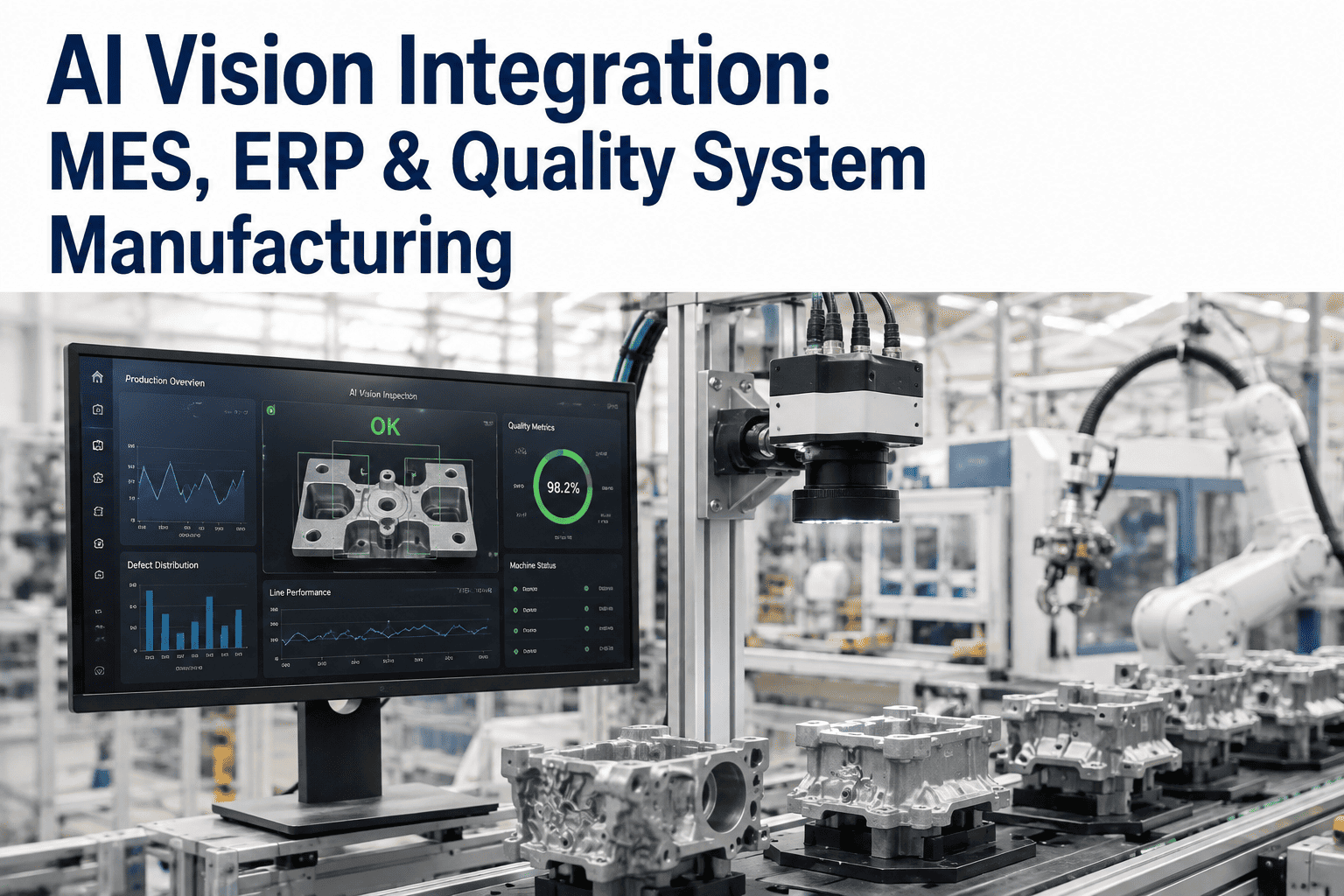
Decide where edge AI inspection adds value: appearance, defect screening, operator assist, image evidence
Launch-Time Quality Stack
A New Plant Should Not Inherit Quality Debt From Its First Lot
iFactory AI is positioned as a commercial quality stack layer for consulting teams building SPC, genealogy, and CAPA at launch. It sits beside MES and QMS and helps make the quality loop operational in real time so the plant can move from detection to action without waiting for manual handoffs.
Closed-Loop SPC Path — From Signal to Corrective Action
Closed-loop SPC means the process does not just measure variation; it responds to it. That response is what prevents the same issue from repeating. In greenfield work, this matters because the first months of production are where machine tuning, operator learning, material variation, and process discovery collide.
01
Data Capture
From inspection and process events
02
SPC Evaluation
Against the correct control logic
03
Hold / Quarantine
Automatic or guided when needed
04
CAPA Initiation
With clear ownership assigned
05
Verification
Of the fix before release
06
Genealogy Retention
So the plant can trace what happened
When that loop is in place, the plant does not have to choose between speed and control. It can ramp faster because the response model is already defined.
Market Signal — Edge AI Inspection as a Commissioning Accelerator
Vendor-reported market context suggests edge AI vision is becoming a practical commissioning accelerator. In Siemens and P&G Industrial Edge AI visual inspection examples reported by ManufacturingTomorrow on 2026-09-16, the message is not that AI replaces quality engineering. The message is that plants are using edge AI to shorten the time from installation to stable inspection performance.
Important Context
This is vendor-reported context, not a benchmark fact. It should not be read as a guaranteed ROI or a universal performance outcome. The useful takeaway is narrower: some vendor-facing commentary frames edge AI vision as a way to speed inspection setup and support startup defect screening. That can be relevant in a greenfield environment, but only when the basics are already in place: control plans, FAI, SPC, CAPA, and genealogy.
Why This Matters for Plant Leaders
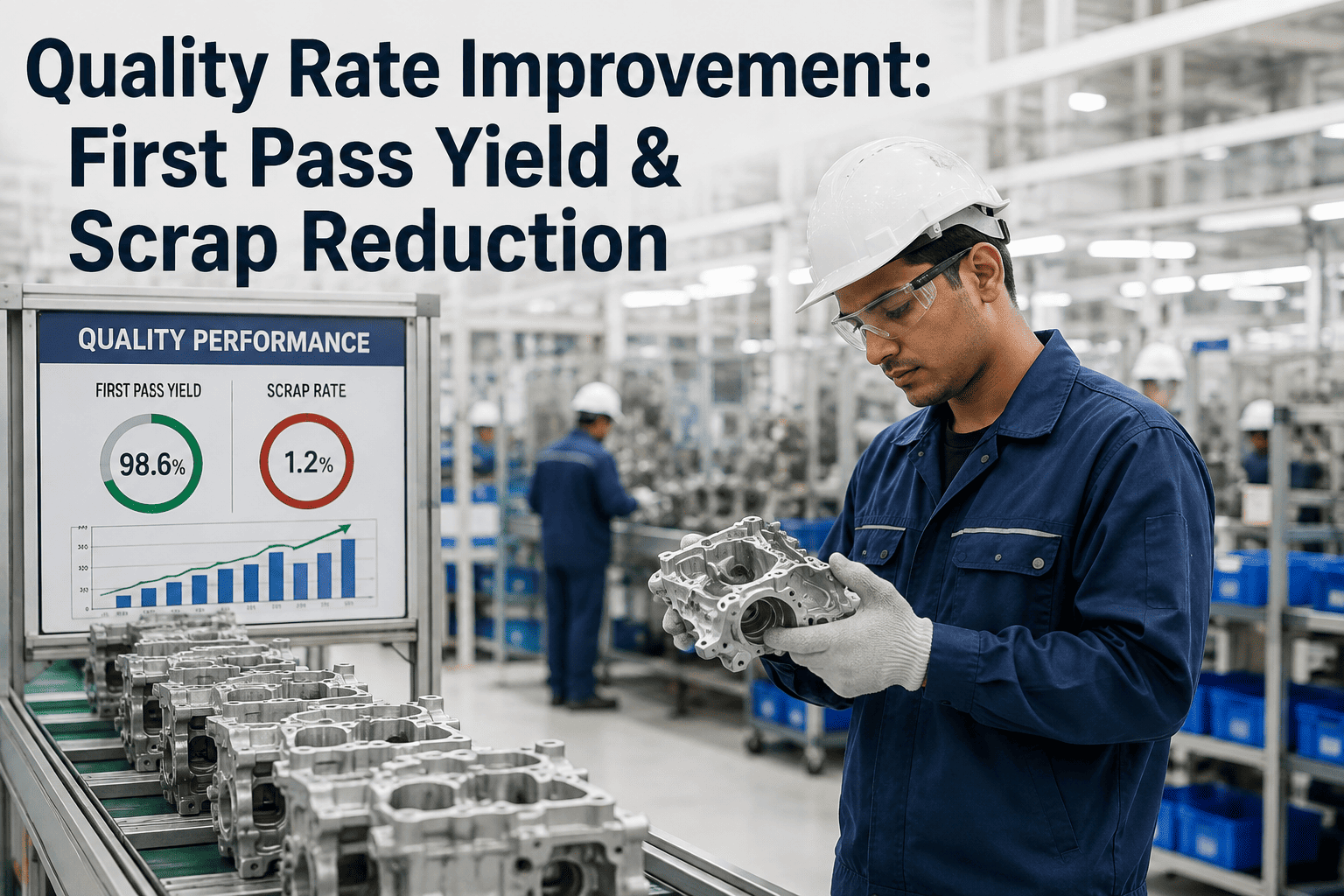
Plant leaders do not get rewarded for the first production lot. They get rewarded for stable ramp, predictable quality, and lower cost of poor quality. When the greenfield quality stack is ready before launch, the plant can move toward six measurable improvements.
↓
Fewer Launch Defects
Control plans and FAI catch process instability before it becomes recurring scrap.
↑
Faster Commissioning Readiness
Quality logic ready alongside equipment shortens the window from installation to stable production.
↓
Lower Containment Effort
Defined hold logic prevents the wide, defensive quarantines that come from unclear scope.
↑
Better Audit Readiness
Genealogy captured from serial one means audit questions are answered from records, not memory.
↑
Stronger Recall Readiness
Lot, tool, and operator lineage makes recall scope precise instead of broad.
↓
Less Firefighting After Startup
Defined reaction plans and CAPA ownership replace shift-by-shift improvisation.
30-Minute Demo Agenda
A useful demo walks through one production line or one launch phase. The agenda below keeps the conversation grounded in your actual quality gaps rather than a generic tour.
01
Review your greenfield ramp stage and current quality gaps
02
Map the control plan, FAI, SPC, and CAPA flow
03
Identify genealogy fields that must be live before first lot
04
Define where iFactory AI fits beside MES and QMS
05
Discuss whether edge AI inspection is worth accelerating at startup
Book the launch review session.
Frequently Asked Questions
What should be ready before the first production lot in a greenfield plant?
At minimum, control plans, FAI workflows, SPC rules, genealogy schema, hold logic, and CAPA routing should be defined before volume ramp. If those are missing, the plant is likely to create quality debt on day one that takes weeks or months to unwind.
Book a launch-readiness assessment.
How do SPC, genealogy, and CAPA work together?
SPC detects drift or instability, genealogy shows exactly which units, lots, tools, and operators were involved, and CAPA removes the root cause while verifying the fix. Together they create a closed-loop quality system that scales with volume ramp.
Walk the loop live with our team.
Does edge AI inspection replace control plans or FAI?
How does iFactory AI fit with MES and QMS?
iFactory AI sits beside MES and QMS to connect inspection, quarantine, CAPA, verification, and traceability. It helps make the response loop operational in real time without replacing core manufacturing or quality systems.
See the integration pattern in a demo.
Why is commissioning the right time to define traceability and hold rules?
Because the process is still being established. It is much easier to define data structures, hold logic, and reaction plans before production volume begins than to retrofit them after defects, audits, or escapes force the issue.
Book a launch review before ramp begins.
Launch With the Stack Ready
Greenfield Plants Do Not Win by Launching Fastest — They Win by Launching With a Quality System That Can Detect, Quarantine, Correct, Verify, and Trace From Day One
iFactory AI helps consulting teams and plant leaders build that stack before the first lot, with MES/QMS-aligned workflows and optional edge AI inspection to accelerate commissioning.
SPC Rules Live Day 1
Genealogy From First Serial
Closed-Loop CAPA
MES / QMS Aligned
Optional Edge AI Layer