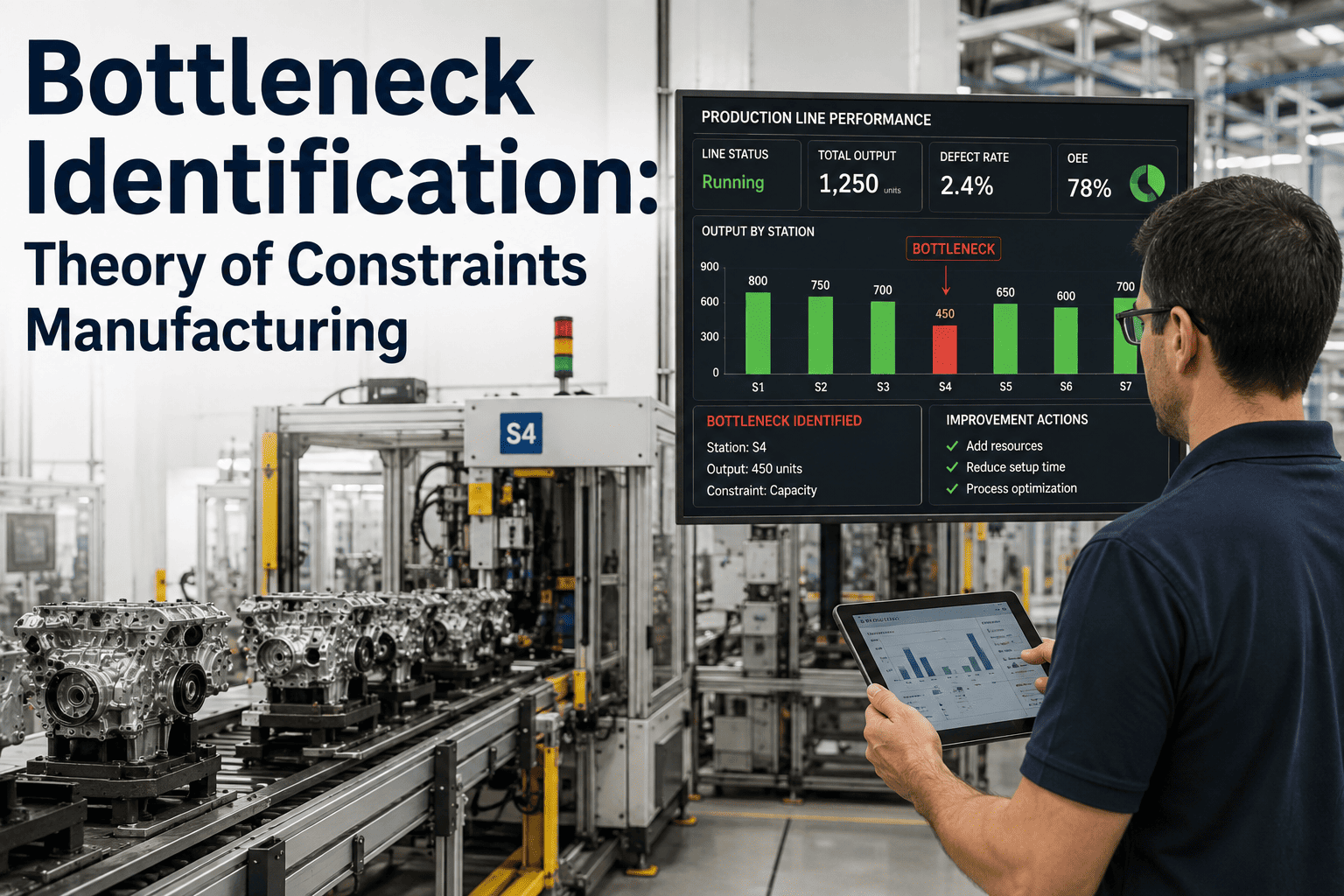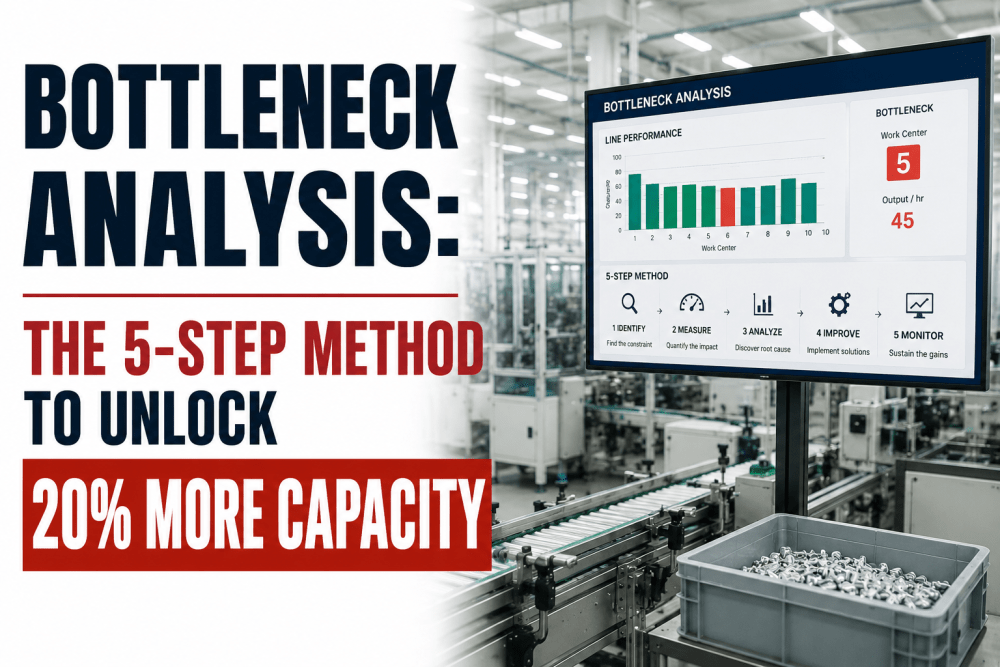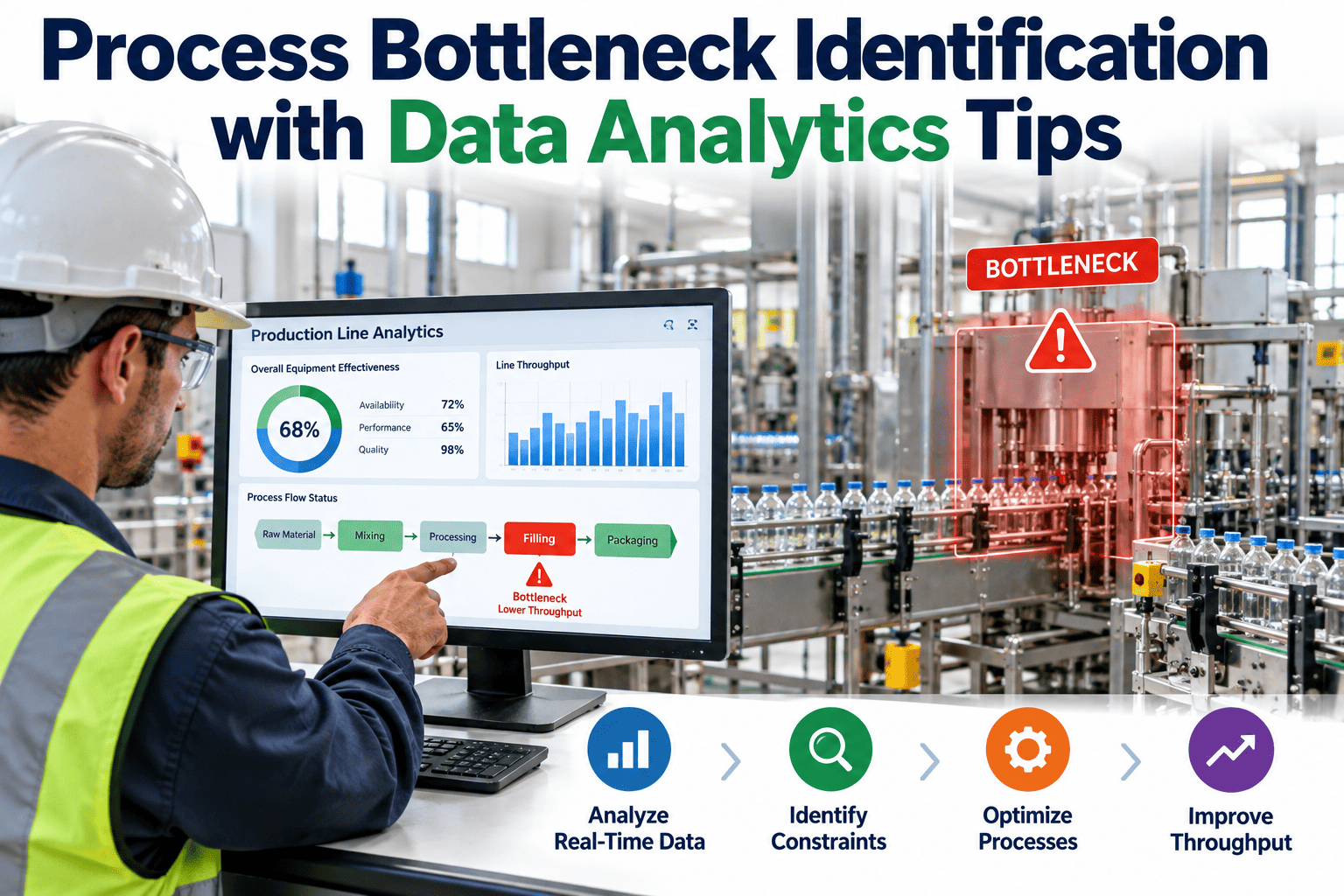
Ask five people on a production floor which station is the bottleneck and you'll often get five different answers, each one anchored to whichever station happened to look busiest the last time they walked past. The station that's actually constraining total throughput is frequently the one that looks calm and steady, quietly running at its ceiling while work piles up in front of it and every station downstream sits waiting for material that never arrives fast enough. Chasing the visibly busiest station instead of the actual constraint means capital and attention go to a station that was never limiting the line to begin with, while the real bottleneck keeps capping output exactly where it always has. See which station is actually constraining your line's throughput.
The Bottleneck Is Rarely the Station That Looks the Busiest
WIP accumulation and throughput data reveal the actual constraint, which is often a quiet, steady station rather than the one everyone assumes is the problem.
the true constraint on total line throughput, no matter how many stations appear busy at any given moment
of plants misidentify their actual bottleneck when relying on visual observation instead of throughput data
the clearest data signature of a true constraint — inventory accumulating just ahead of it, every single shift
Spotting the Constraint in a Real Process Line
Work-in-process inventory tells the real story: it builds up directly ahead of the actual constraint and stays thin everywhere else, regardless of which station looks the most active.
Station 1
Cutting
Low WIP
Station 2
Forming
Low WIP
Station 3
Heat Treat
High WIP Buildup
Station 4
Finishing
Starved, Waiting
Station 5
Packaging
Starved, Waiting
Find Your Actual Constraint, Not the Busiest-Looking Station
iFactory analyzes throughput and WIP data across your line to show exactly which station is genuinely limiting output today.
Three Data Signals That Actually Reveal a Constraint
Reliable bottleneck identification depends on combining these three signals rather than trusting any single one on its own.
Throughput Analysis
Comparing each station's actual output rate against total line output identifies which station is capping the line's overall pace, regardless of how busy any individual station appears.
WIP Accumulation Tracking
Inventory building up steadily ahead of one specific station, while downstream stations sit starved, is the clearest and most direct signature of a genuine constraint.
Constraint Correlation
Correlating downtime, changeover frequency, and cycle time variability at the suspected constraint confirms whether it's a capacity limit or a separate reliability issue disguised as one.
Identification Signal Compared
Each signal has a different tendency toward false positives, which is why combining them produces a far more reliable answer than any single measure alone.
Confirming a Constraint Before Investing to Fix It
Capital and attention aimed at the wrong station don't just waste resources — they leave the real constraint capping throughput exactly where it was before.
Map WIP levels across every station
Continuous WIP tracking at each station boundary identifies exactly where inventory piles up and where downstream stations sit starved, the clearest signature a constraint leaves behind.
Compare throughput rates, not activity levels
A station running constantly isn't necessarily the constraint if its actual output rate exceeds the rate of the station actually capping the line — busy and constrained are not the same thing.
Validate before committing capital
Before investing in additional capacity at a suspected bottleneck, confirm the constraint holds across different product mixes and shifts, since a constraint that shifts under different conditions needs a different kind of fix.
What Changes When the Real Constraint Gets Found
Figures reflect typical outcomes within the first two quarters after correctly identifying and addressing a line's actual throughput constraint.
An Industrial Engineer's View on Constraint Analysis
We were about to invest in a second forming machine because that station always looked like it was running flat out, until WIP data showed heat treat two stations downstream was actually the one throttling the whole line, with forming just keeping up with what heat treat could absorb. Redirecting that same capital toward heat treat capacity instead delivered a throughput gain the extra forming machine never would have touched.
The Bottom Line on Bottleneck Identification
The station that looks busiest and the station that's actually constraining throughput are frequently two different places, and acting on the wrong assumption sends capital and attention exactly where they'll do the least good. WIP accumulation and throughput rate comparison reveal the real constraint with far more reliability than visual observation ever can, turning a debate that used to take weeks into a data-backed answer in days.
Frequently Asked Questions
Why does WIP accumulation reveal a bottleneck better than watching which station looks busy?
A station can appear constantly active simply because it processes small batches quickly, while the true constraint might run steadily at a slower pace without ever looking dramatic to an observer. Inventory naturally piles up directly ahead of whichever station is actually limiting the flow, which is a physical, measurable signature rather than a subjective impression. Book a review to see this pattern mapped against your own line's data.
Can the bottleneck shift between different stations depending on the product being run?
Yes — a line running a high-mix product portfolio often has a different effective constraint depending on which product's process requirements dominate a given run, which is exactly why constraint identification needs to be validated across the actual product mix rather than assumed to be fixed at a single station permanently.
Is downtime always the right thing to look at when hunting for a bottleneck?
Downtime is a useful signal but not a complete one — a station with frequent downtime might still not be the actual constraint if its net throughput, even accounting for stoppages, still exceeds the rate of a quieter but steadily slower station elsewhere on the line.
How quickly can this kind of analysis be done on an existing line?
With existing throughput and WIP data already being captured, an initial constraint analysis can often be completed within days, though confirming the finding across different shifts, product mixes, and operating conditions typically takes a few weeks to build genuine confidence before committing capital.
What happens after the real constraint is identified — is more capacity always the answer?
Not always — sometimes the fix is reducing changeover time, improving reliability, or rebalancing work rather than adding raw capacity, and understanding which type of constraint you're dealing with is exactly what the correlation step in identification is meant to clarify. Talk to a specialist about the right next step once your constraint is confirmed.
Stop Guessing Which Station Is Actually the Problem
Book a 30-minute assessment. iFactory reviews your throughput and WIP data and shows exactly which station is genuinely constraining your line.