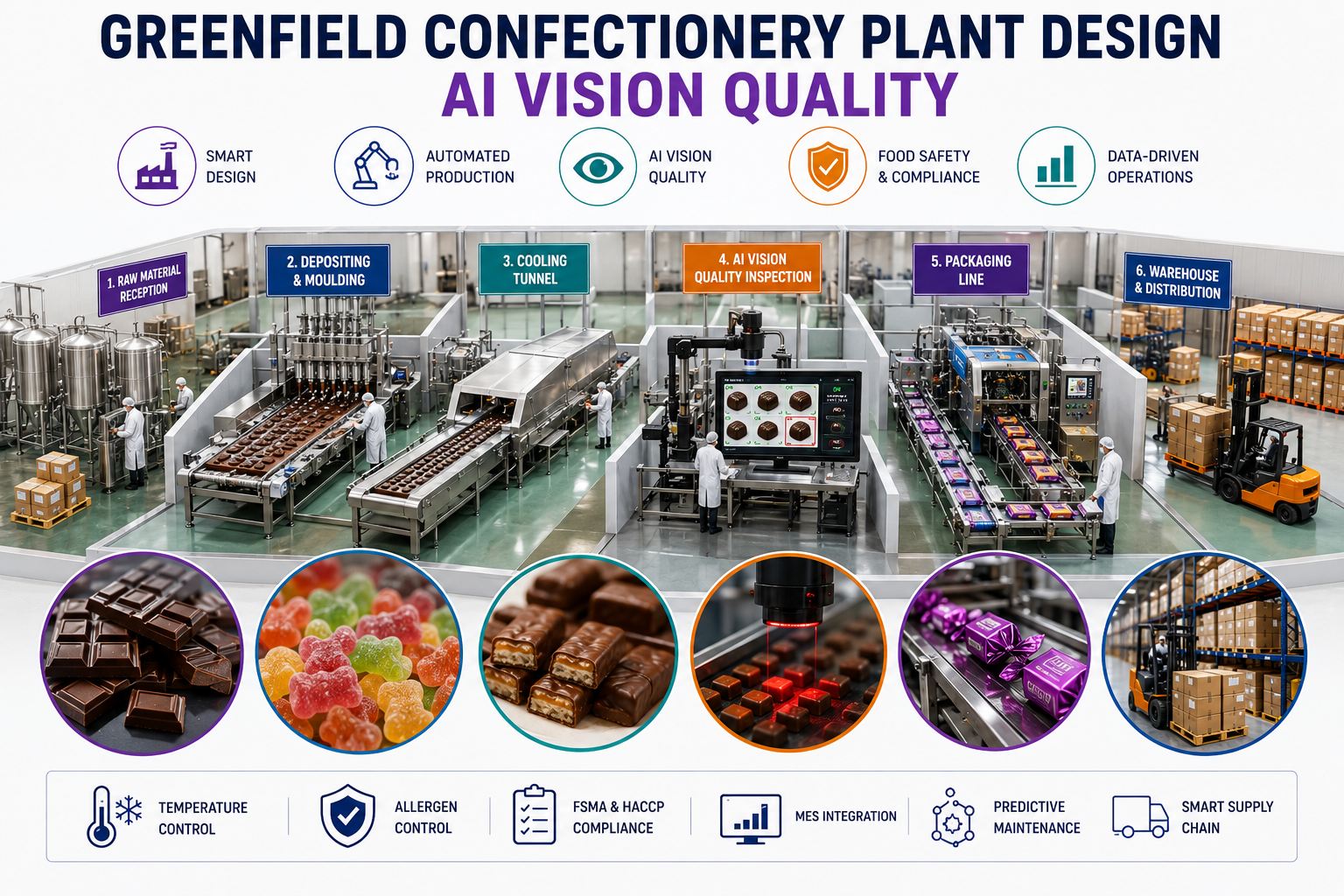
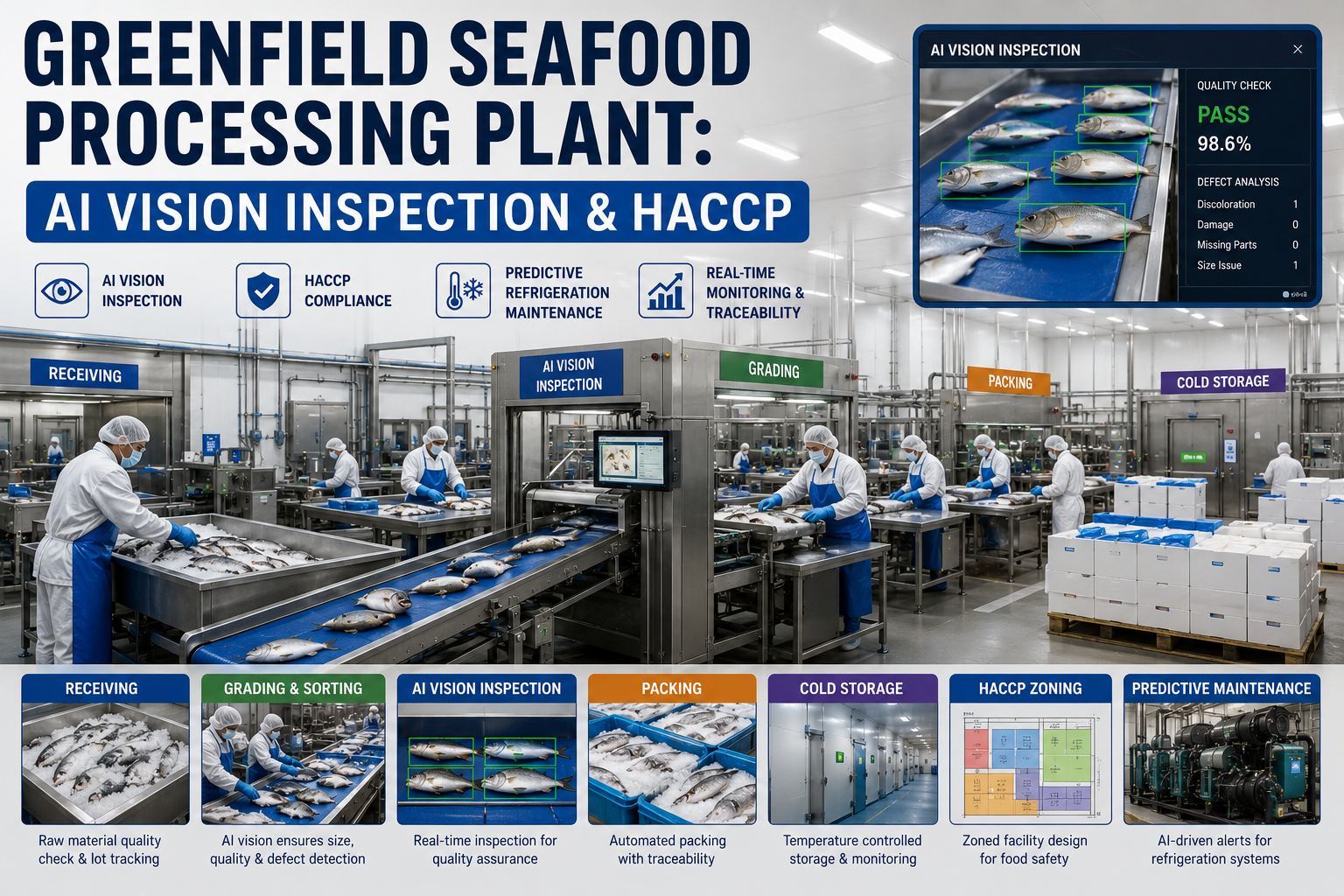
A single undeclared allergen incident can trigger a multi-million dollar recall — and undeclared allergens remain the leading cause of confectionery recalls in 2026. Add wrapper defects, fill-level errors, chocolate bloom, and broken pieces, and cost of poor quality in confectionery climbs to 5–8% of revenue. Nestlé documented an 80% reduction in manual inspection checks after deploying AI vision on KitKat wrapper integrity. Greenfield confectionery plants designed around AI vision, allergen segregation, and FSMA 204 from day one capture 20–40% throughput gains, 25% reject reduction, and audit-ready compliance. Book a confectionery plant consultation to map your facility design.
Greenfield Confectionery Plant Design · AI Vision Quality 2026
4 Confectionery Categories · 4 Production Lines · 1 AI Quality Platform
Category 1
2,000–5,000/hr
Chocolate (Moulded & Enrobed)
Tempering · enrobing · moulding · cooling tunnel
AI Vision Catches:
Bloom · cracks · mould defects · enrobing coverage · coating thickness
Hard Candy · Lollipops · Toffee
Sugar cooking · depositing · cooling · wrapping
AI Vision Catches:
Twist-wrap integrity · fill level · piece count · cracks · color shade
Gummies · Jellies · Pectin Sweets
Starch mogul · pectin/gelatin cooking · conditioning
AI Vision Catches:
Shape conformance · color match · gelation defects · cluster/twin pieces
Marshmallow · Nougat · Cream
Aeration · whipping · extrusion · enrobing optional
AI Vision Catches:
Density variation · surface texture · enrobing coverage · seal integrity
80%Manual inspection reduction · Nestlé KitKat AI vision deployment
25%Reject reduction with ML crystallization control (3-month pilot)
20–40%Throughput gain with computer vision QA vs manual inspection
5–8%Of revenue lost to confectionery cost of poor quality
The 9-Stage Confectionery Production Line — Where AI Vision Lives
Confectionery manufacturing flows through nine distinct stages from raw ingredient to packaged product. AI vision inspection plugs into each stage where defects are most likely to occur — catching them within meters of where they're created, before they reach the next process step.
Ingredient Receipt & Storage
Cold/dry warehouse · allergen-segregated racking · supplier COA review
AI catches: Pallet condition · supplier COA verification · allergen label scan
Melting / Tempering or Sugar Cooking
Chocolate temper machines · sugar dissolving kettles · cooking columns
AI catches: Temperature deviation · viscosity drift · crystallization state
Depositing & Moulding
Starch mogul · candy depositors · chocolate moulding lines (2,000-5,000/hr)
AI catches: Shape conformance · fill level · cluster/twin defects
Cooling Tunnel
Controlled-temperature tunnel · 5–25 minute residence time
AI catches: Cooling curve adherence · bloom risk · gelation completion
Enrobing & Coating
Servo-controlled enrobers · panning drums · spray coating
AI catches: Coating coverage · thickness variation · streaking · footprint
Conditioning
Climate-controlled conveyor · setting · final crystallization
AI catches: Surface bloom · cracks · structural defects pre-pack
Wrapping & Primary Packaging
Flow-wrap · twist-wrap · pillow-pack · multipack
AI catches: Wrapper integrity · seal quality · alignment · print accuracy
Inspection & Verification
Metal detection · checkweighing · X-ray · vision station
AI catches: Foreign body · underweight · overweight · missing piece
Cartoning & Case Pack
Cartoner · case packer · palletizer · FSMA 204 KDE capture
AI catches: Case count · lot code OCR · FSMA traceability handshake
Want this 9-stage AI inspection sequence designed against your specific confectionery product mix? Book a confectionery plant consultation — we will produce the production line architecture before procurement.
The 8 Confectionery Defect Categories AI Vision Catches
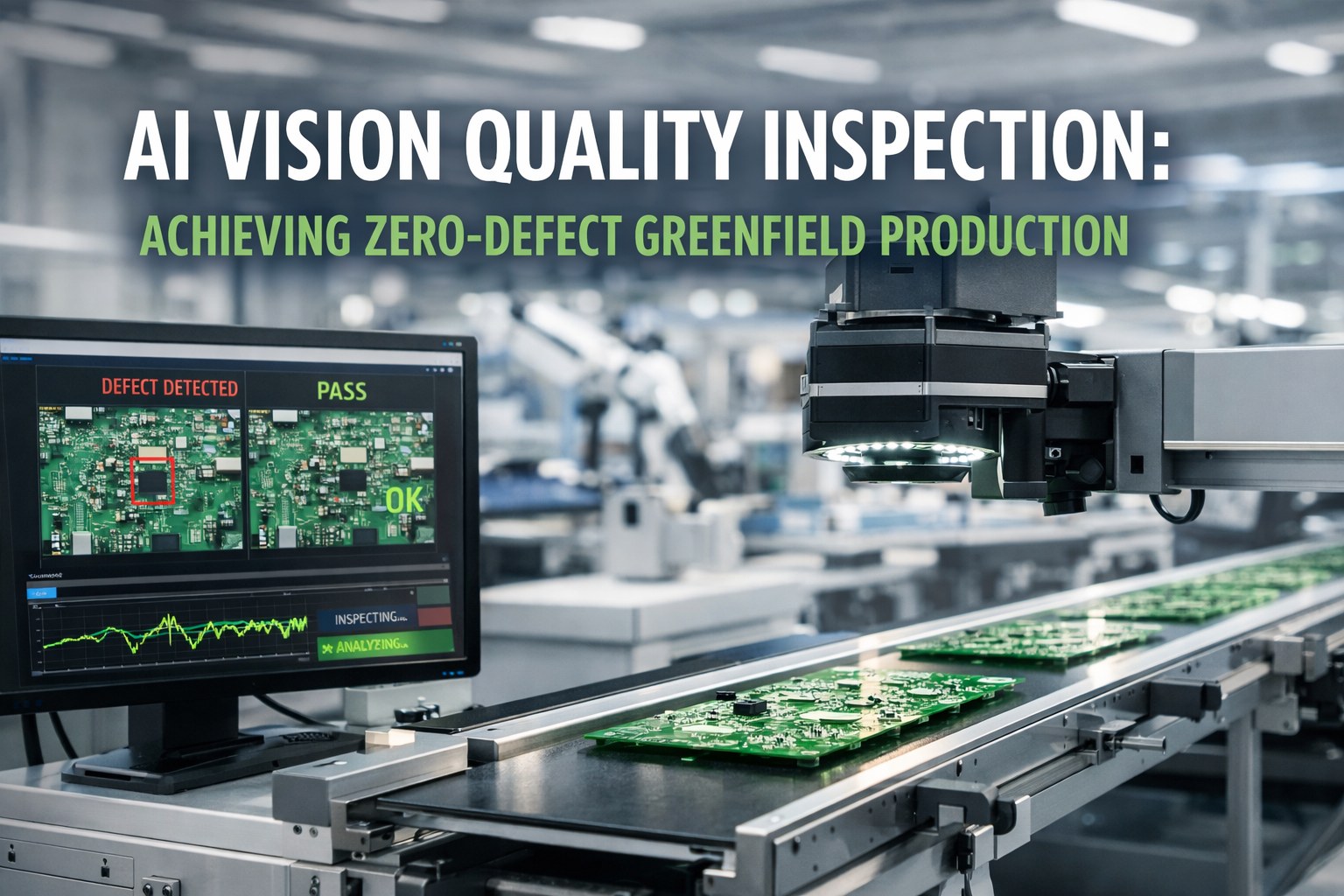
Eight defect categories cover virtually every quality failure mode in confectionery manufacturing. AI vision systems catch all eight simultaneously at full line speed — without sampling, every piece inspected.
01
Wrapper Integrity
Stage 7
Torn, misaligned, open-seal wrappers. Nestlé's KitKat AI vision deployment reduced manual integrity checks by 80% with real-time defect flagging.
02
Fill Level & Weight
Stage 7 · 8
Underfill in pillow packs, overfill giveaway, missing pieces in multipacks. Direct compliance and revenue impact at high line speeds.
03
Chocolate Bloom & Surface
Stage 4 · 6
Fat bloom, sugar bloom, white streaks, surface cracks. AI distinguishes acceptable matte finish from cosmetically defective bloom.
04
Color & Print Accuracy
Stage 7
Pantone-level color matching, lot code OCR, expiration date verification, allergen warning text legibility. Critical for regulated markets.
05
Foreign Body Detection
Stage 8
Vision + X-ray + metal detection layered. Hair, plastic, metal, glass, raw material contamination caught before cartoning.
06
Shape & Cluster Defects
Stage 3 · 5
Twin pieces stuck together, misshapen mouldings, broken pieces, incorrect decorative pattern. Specific to gummies, hard candy, and moulded chocolate.
07
Coating & Enrobing Coverage
Stage 5
Bare spots, streaking, footprint defects, thickness variation. Servo-controlled enrobers + AI vision cut coating waste 10–20%.
08
Seal Integrity
Stage 7
Cold seals, hot seals, twist seals, fin seals — every closure verified. Failed seals drive 30%+ of confectionery returns and shelf-life claims.
The Allergen Cross-Contamination Risk Map — Where Recalls Actually Start
Undeclared allergens remain the leading cause of confectionery recalls in 2026. The risk concentrates in four zones of the plant. Greenfield builders win when they design segregation, scheduling, and visual identification into the facility from day one — not retrofit it after the first recall.
Risk Zone 1
Raw Material Storage
Allergenic ingredients (milk powder, peanuts, tree nuts, soy, wheat, sesame, egg) require physically separated racking with color-coded zones and verified supplier COAs.
Control: Dedicated allergen warehouse · color-coded pallets · AI label scan at receipt
Risk Zone 2
Shared Equipment Lines
Depositors, enrobers, and conveyors used across product runs accumulate residue. Without verified cleaning, peanut residue from one run contaminates the next.
Control: CIP validation · ATP swab + AI vision verification · scheduling segregation
Risk Zone 3
Packaging & Labeling
Wrong label on right product = recall. Missing "Contains: peanuts, milk" statement on a peanut-containing product is the #1 confectionery FDA recall trigger.
Control: OCR label verification · allergen statement check · pre-shipment audit
Risk Zone 4
Operator Movement
Operators moving between allergen and non-allergen lines transfer cross-contamination via PPE, hands, and uniforms. Zone-restricted operator movement eliminates this vector.
Control: Color-coded PPE · zone-restricted badging · AI camera traffic monitoring
Want this 4-zone allergen architecture designed into your facility plan? Talk to our confectionery compliance team — we will produce the segregation strategy alongside your line layout.
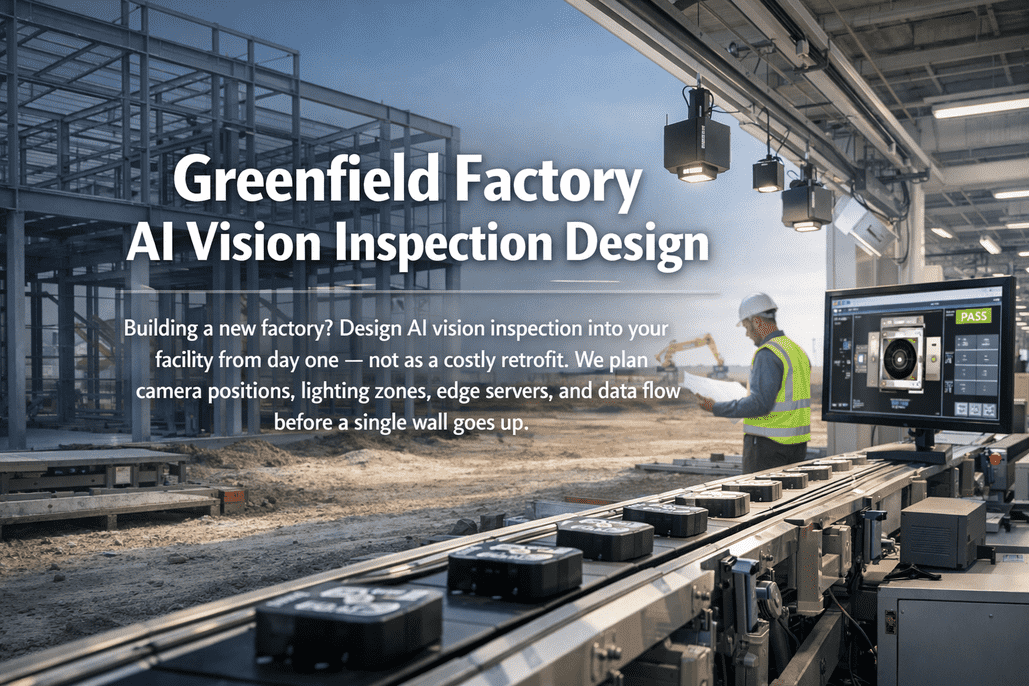
Design AI Vision & Allergen Control Into the Plant — Not After Commissioning
iFactory's confectionery plant consultation maps your product categories to the 9-stage line architecture, places AI vision inspection at each defect-prone stage, designs the 4-zone allergen segregation, integrates FSMA 204 traceability, and produces the full deployment plan before construction documents close.
Compliance Framework Coverage — One Plant, Every Standard
Confectionery plants serving global markets face overlapping regulatory frameworks. The matrix below maps every major standard to the design feature that meets it. Paper-based plants fail multiple rows by definition.
Framework
Key Requirement
Plant Design Feature
FSMA 204 (effective Jan 2026)
Batch-level traceability · 24hr FDA response
KDE-CTE capture at each stage
FSSC 22000 v6 (April 2023)
Labeling · allergen · environmental monitoring
AI OCR label verify + zone monitoring
FDA FALCPA + Sesame (2023)
Top 9 allergen declaration on label
Allergen statement OCR verification
HACCP (21 CFR Part 117)
Critical control point monitoring
Auto-logged CCP at temper, cook, cool
SQF Edition 9
Food safety + quality system audit
Immutable audit trail · e-signed records
EU 1169/2011
Consumer information on labeling
14 EU allergen check + nutrition verify
ISO 22000:2018
Food safety management system
Integrated FSMS dashboard + KPIs
Expert Perspective: Why Confectionery Plant Quality Now Means AI Vision, Not Manual Inspection
Three forces have made AI vision quality the default rather than the upgrade in confectionery manufacturing. First, line speeds at modern moulding and depositing equipment now run 2,000 to 5,000 pieces per hour — human inspectors cannot sample meaningfully at that rate. Second, allergen recall economics have shifted from "expensive inconvenience" to "company-defining event" — a single undeclared peanut statement on a $4 chocolate bar can cost $20M+ in recall, brand damage, and litigation. Third, the documented results have crossed the threshold where leadership cannot rationally argue against deployment: Nestlé's 80% reduction in manual checks, 25% reject reduction from ML crystallization control, 20-40% throughput uplift from computer vision QA, 10-20% coating waste reduction. The greenfield plants that win the next decade build vision cameras, edge inference, allergen segregation, and FSMA 204 traceability into the line frame and panel layout from day one. Retrofitting these systems after commissioning costs 3 to 5 times more — and rarely achieves the same defect coverage because cameras get bolted into accessible positions rather than the positions that catch defects earliest.
— iFactory Greenfield Consulting, Confectionery AI Practice 2025 to 2026
$20M+
Cost of a single undeclared allergen recall event
3–5×
Retrofit cost vs greenfield AI vision deployment
2,000–5,000/hr
Line speeds where human inspection breaks down
FSMA 204 Is Live · Allergen Recalls Cost $20M+ — Build the AI Layer Into the Plant
iFactory's confectionery plant consultation covers product category mapping, 9-stage line architecture, AI vision camera placement, allergen 4-zone segregation, FSMA 204 KDE-CTE traceability, and predictive maintenance — delivered before construction documents close.
Frequently Asked Questions
What are the main stages of a confectionery production line?
Confectionery manufacturing flows through nine stages: ingredient receipt, melting or sugar cooking, depositing/moulding, cooling tunnel, enrobing, conditioning, wrapping, inspection (metal/X-ray/vision/checkweigh), and cartoning. Different categories — chocolate, hard candy, gummies, marshmallow/nougat — use different equipment at each stage but share the same logical flow. Modern lines run 2,000-5,000 pieces per hour.
What defects can AI vision actually catch in confectionery manufacturing?
AI vision catches eight categories simultaneously at line speed: wrapper integrity (Nestlé documented 80% manual check reduction), fill level and weight, chocolate bloom and surface defects, color and print accuracy, foreign body detection, shape and cluster defects, coating and enrobing coverage, and seal integrity. Every piece inspected without sampling. Computer vision quality inspection delivers 20-40% throughput gains over manual inspection in confectionery applications.
How does a greenfield plant handle allergen cross-contamination?
Allergen control concentrates in four risk zones: raw material storage (physically separated racking with color-coded zones), shared equipment lines (CIP validation, ATP swab + AI verification), packaging and labeling (OCR allergen statement verification), and operator movement (color-coded PPE, zone-restricted badging). Undeclared allergens remain the top cause of confectionery recalls in 2026. Designing segregation into the facility from day one prevents the first recall event.
What compliance frameworks apply to a confectionery plant in 2026?
Confectionery plants serving global markets must meet FSMA 204 (effective January 20, 2026, batch-level traceability with 24-hour FDA response), FSSC 22000 v6 (labeling, allergen, environmental monitoring), FDA FALCPA plus sesame (top 9 allergen declaration), HACCP (21 CFR Part 117), SQF Edition 9, EU 1169/2011 (14 EU allergens), and ISO 22000:2018. Paper-based systems fail multiple frameworks by definition.
How does iFactory's confectionery plant consultation work?
iFactory's consultation maps your product categories to the 9-stage line architecture, places AI vision inspection cameras at each defect-prone stage, designs the 4-zone allergen segregation strategy, integrates FSMA 204 KDE-CTE traceability capture, scopes predictive refrigeration maintenance, and produces the full deployment plan with ROI projection. All delivered before construction documents close.
Book your confectionery plant consultation here.