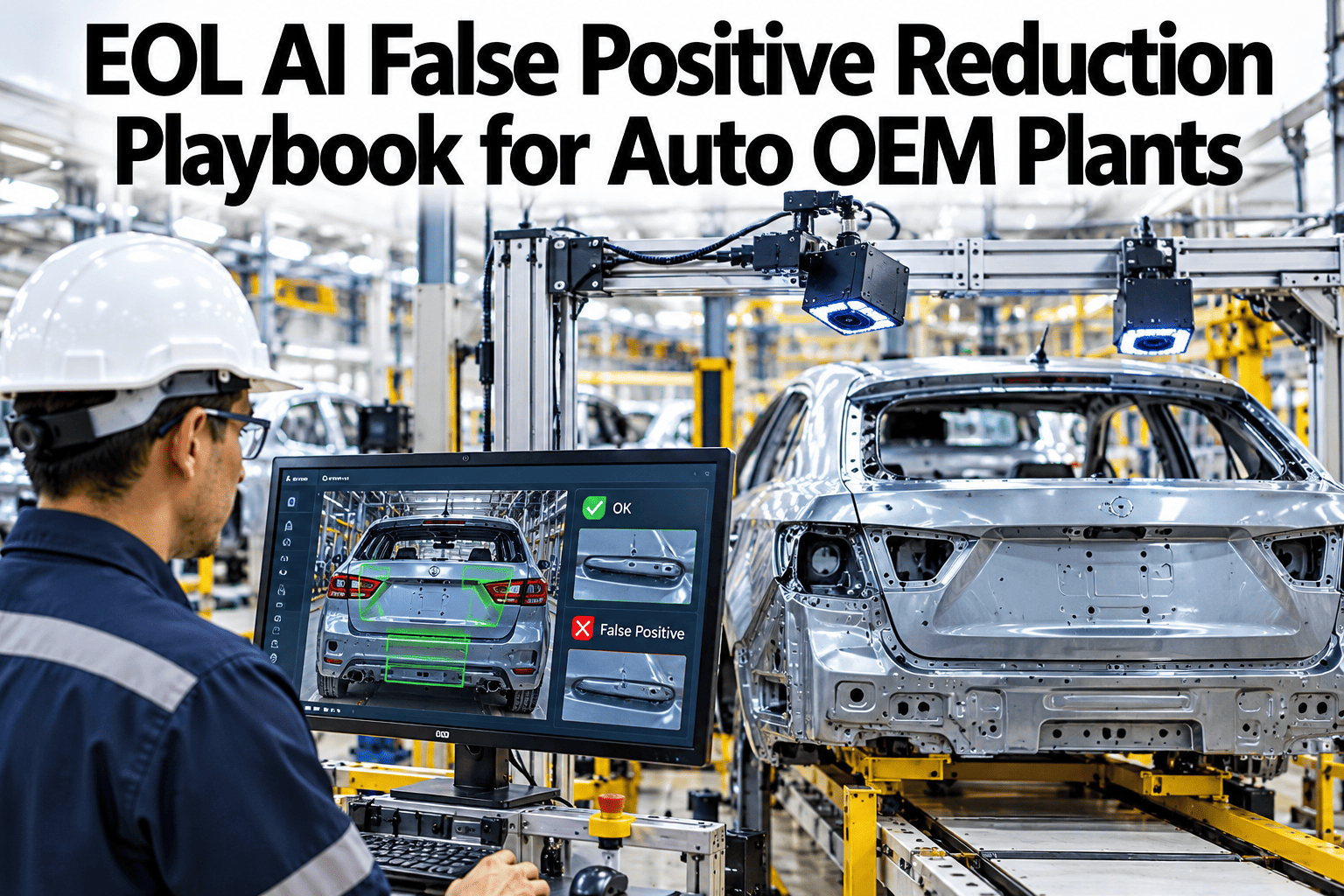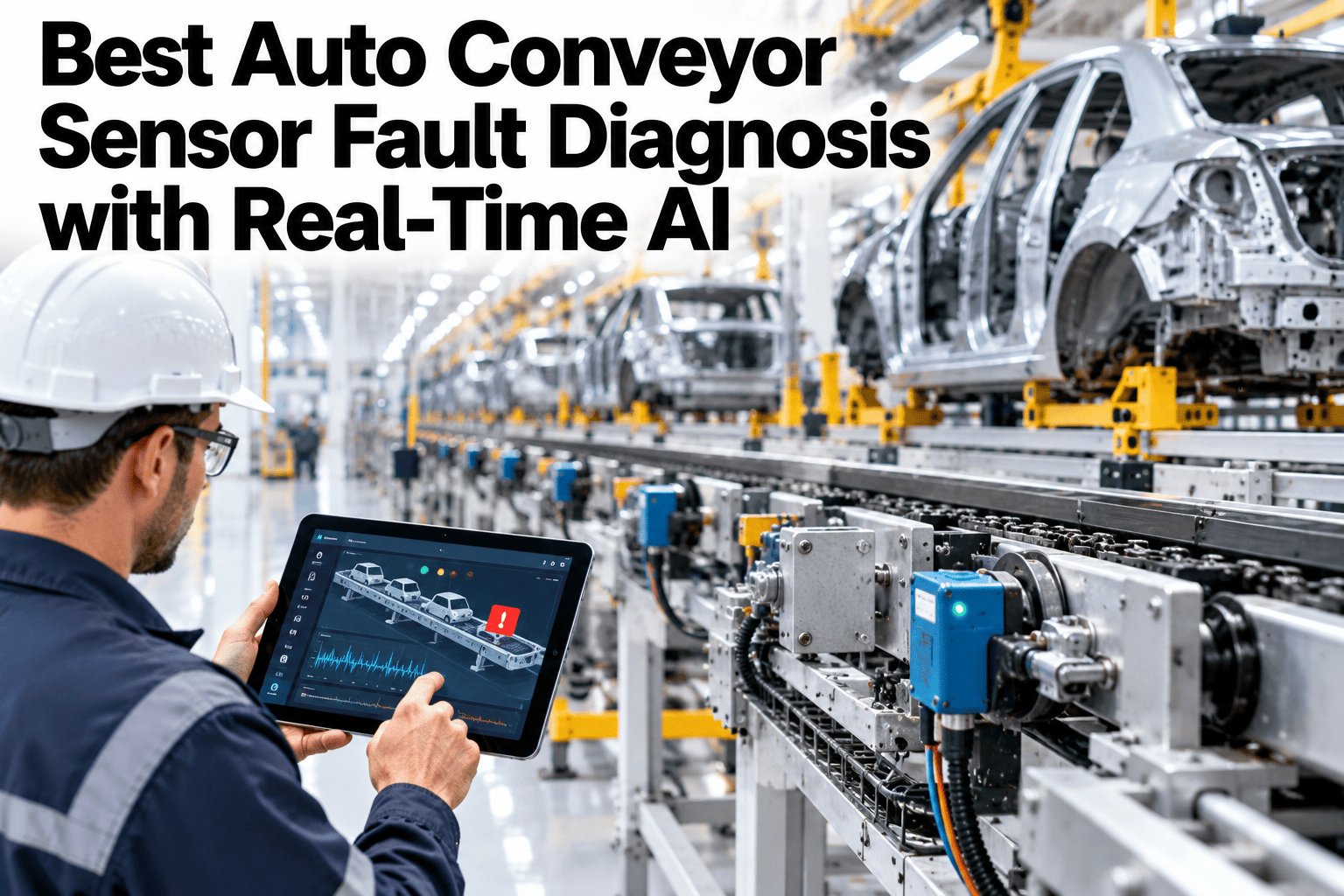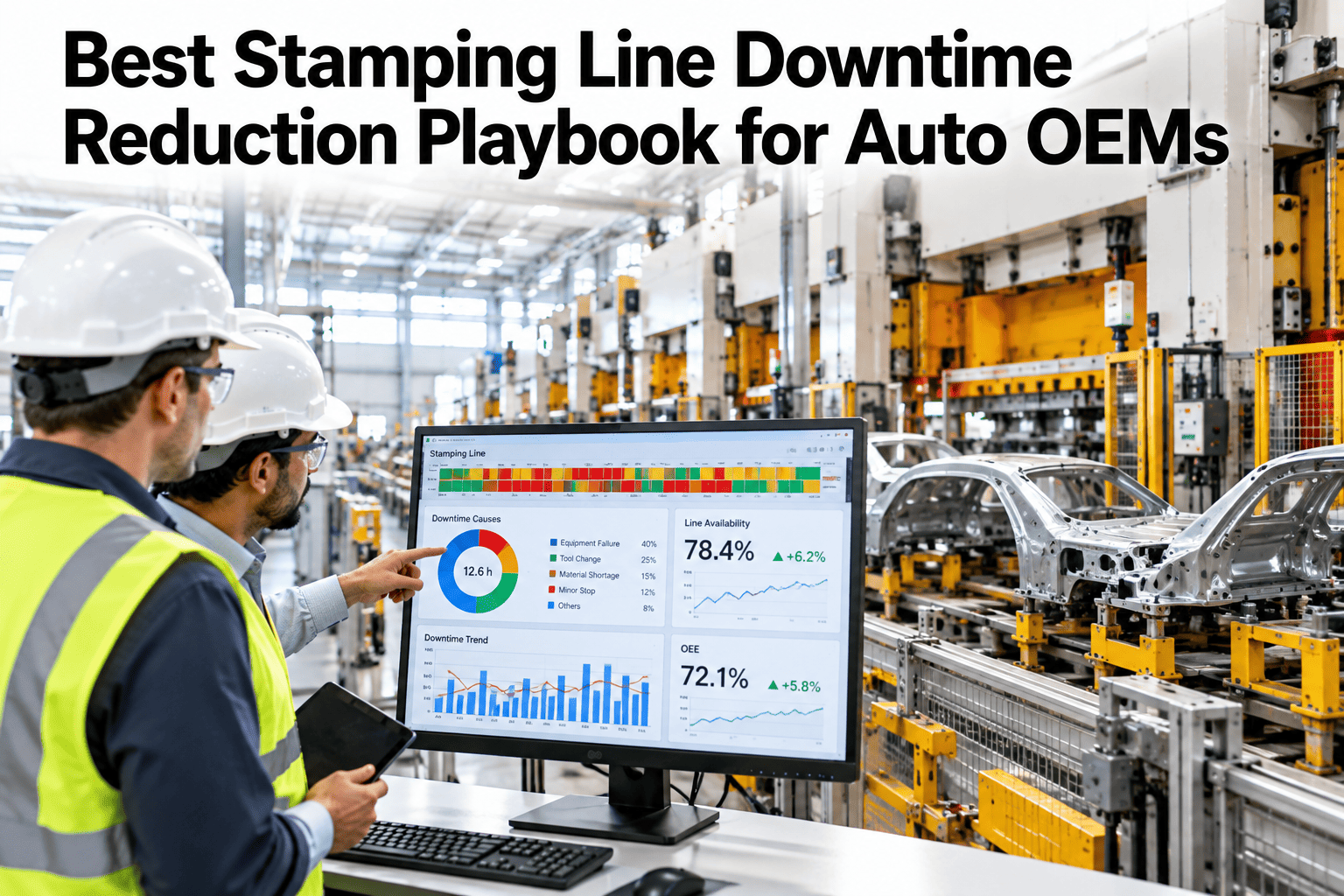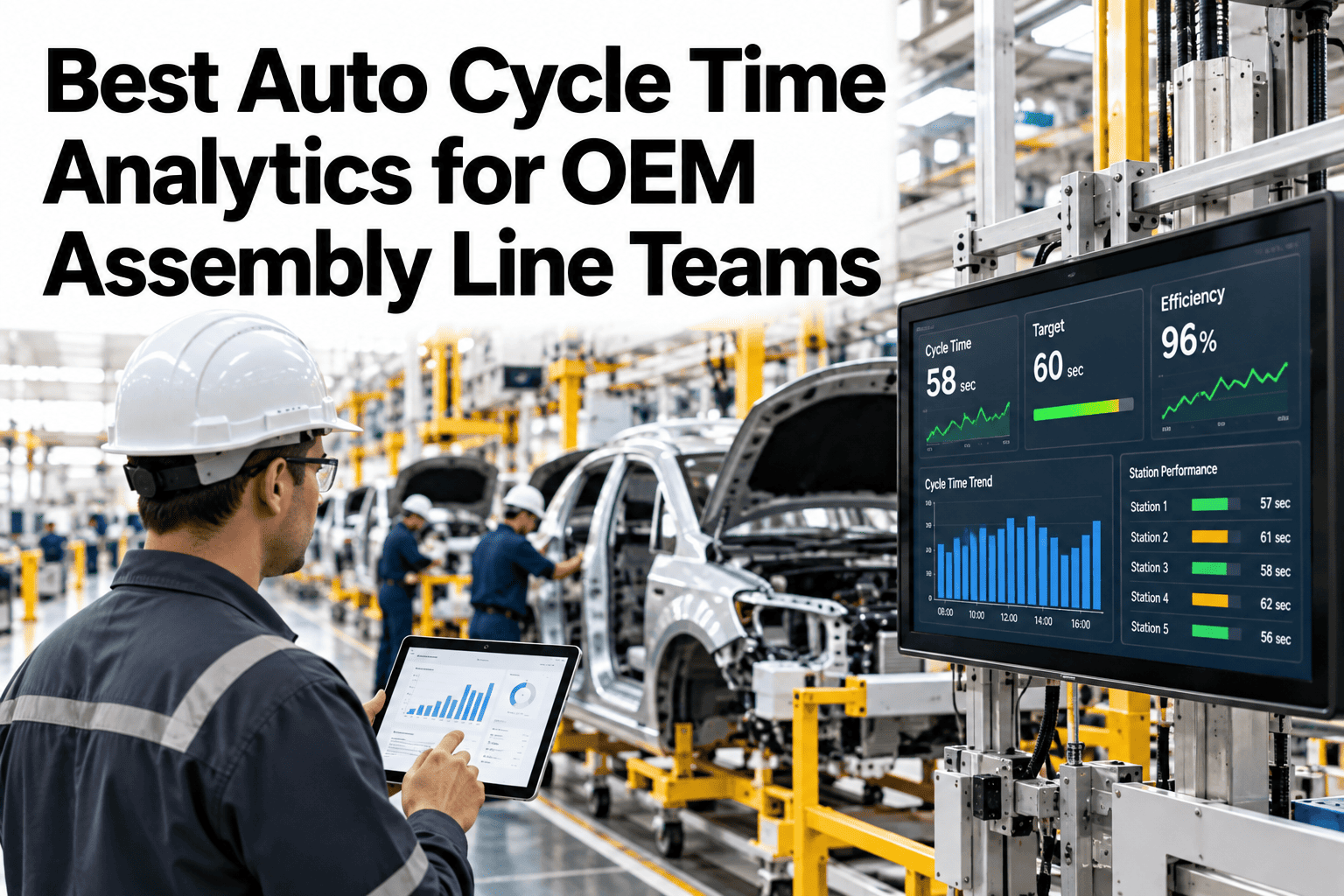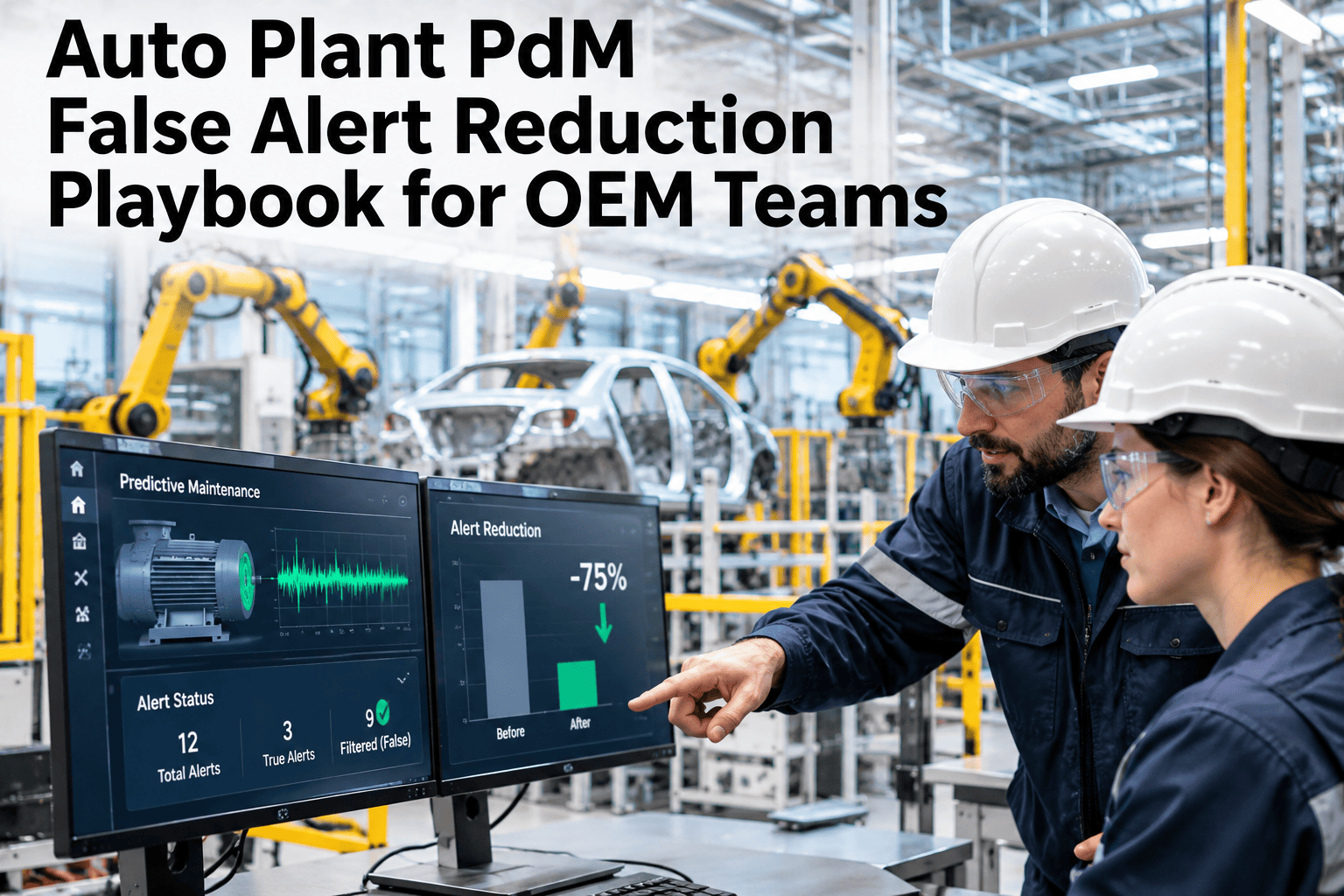
False positives and alert fatigue are the single most common reason predictive maintenance fails in automotive plants, and the failure mode is almost always the same: a model tuned on one normal condition starts flagging every deviation from it as risk. Technicians investigate a few false alarms, find nothing wrong, and quietly stop trusting the system, which is a harder problem to reverse than a missed detection. This playbook sets out threshold tuning, alarm rationalization and operator-feedback loop design for OEM maintenance teams, and iFactory AI's PdM specialists can review your current false-alert rate against this checklist in a 30-minute session.
A Model That Cries Wolf Gets Ignored Right When It's Finally Correct
iFactory AI combines threshold tuning, alarm rationalization and an operator-feedback loop to cut false-alarm rates without quietly suppressing the real ones, protecting the technician trust a PdM program depends on.
Why "One Normal" Breaks in Automotive Production
Automotive lines run different product variants, shift patterns and ambient conditions throughout a single week, and a model that assumes one static normal will flag every legitimate variance as a potential fault. The result is not a model that is wrong about equipment health, but a model that is right about variance and wrong about what variance means. Fixing that requires the alert pipeline to understand context, not just the raw signal.
Fixed limits ignore legitimate shift-to-shift and product-mix variation.
The model can't tell a changeover from a developing fault.
Old thresholds carried forward from commissioning never get revisited.
Technicians who dismiss a false alert have no way to tell the model why.
The Checklist: Six Steps to a Trustworthy Alert Pipeline
Work through these in order. Skipping the rationalization step before tuning thresholds is the most common mistake, since it tunes noise the alarm list should have removed in the first place. Our PdM specialists can run this checklist against your live alarm log.
You cannot tune what you haven't measured — start with a baseline false-alert rate per asset class.
Remove duplicate, redundant and permanently-nuisance alarms first, so tuning effort targets real signal.
A changeover, a product switch and steady-state running each need their own baseline.
A dismissed alert should feed the model a labeled false positive, not disappear silently.
Drift shows up gradually; a monthly review catches it before trust erodes again.
A chronically noisy sensor needs hardware attention, not endless threshold adjustment.
Threshold Tuning vs Alarm Rationalization
| Approach | What It Fixes | What It Doesn't Fix |
|---|---|---|
| Alarm rationalization | Duplicate and redundant alarms cluttering the list | A legitimately noisy signal that remains |
| Threshold tuning | Limits set too tight for normal variance | An alarm that should not exist at all |
| Operator feedback loop | Model drift over time as conditions change | A sensor that is simply miscalibrated |
Run This Checklist Against Your Own Alarm Log
Bring 90 days of alert history to a session with our PdM specialists and leave with a prioritized tuning plan for your highest false-alert asset classes.
How the Operator Feedback Loop Actually Works
A predictive alert reaches the technician's device with context on why it triggered.
One tap labels it confirmed, false, or unclear — no written report required.
False positives become training examples, not discarded noise.
Patterns across many labeled responses inform the next tuning pass.
A Composite Scenario: Rebuilding Trust After a Noisy Launch
Picture a plant where a PdM rollout generated so many false alerts in its first month that technicians began dismissing every notification without investigation — including the one that would have caught a real bearing failure.
Rationalizing the alarm list, setting context-aware thresholds for changeover versus steady-state running, and adding a one-tap feedback path brought false alerts down and technician response times back up as trust rebuilt. The figures here describe the pattern typically seen in this kind of recovery, not a guaranteed result for every plant.
What an Eight-Week Tuning Pass Typically Looks Like
False-alert reduction is not a one-time switch flip — it follows a curve as rationalization, threshold tuning and feedback labeling compound week over week. Plants that expect an overnight fix often abandon the process before the curve bends, right around the point where it would have started paying off.
Context Thresholds: One Limit Is Never Enough
A single global threshold forces a choice between catching real faults during steady-state running and drowning in false alerts during every changeover. Separate limits per operating context remove that trade-off entirely.
| Operating Context | Typical Variance | Threshold Approach |
|---|---|---|
| Steady-state running | Low | Tight threshold, high sensitivity |
| Changeover / product switch | High, expected | Wider threshold, time-boxed to the changeover window |
| Startup after a stop | Moderate, transient | Grace period before the standard threshold applies |
Where iFactory AI Fits
iFactory AI's PdM specialists run alarm rationalization and context-aware threshold tuning as a structured pass against live alert history, then build the one-click operator feedback loop directly into the technician's existing workflow.
A pass against live alert history, not a one-time threshold guess.
One tap turns a dismissed alert into labeled training data.
False-alert rate by asset class, flagged before trust erodes again.
Frequently Asked Questions
There is no single universal number, since it depends on asset class and alarm maturity, but a program with an unreviewed alarm list typically has substantial room for reduction through rationalization alone. Get your current rate benchmarked against similar asset classes.
Rationalize first. Tuning thresholds on an alarm list that still contains duplicate and permanently noisy alarms wastes effort on alarms that should have been removed entirely. Ask for the rationalization-first checklist.
Keep it to a single tap with no written justification required, and show technicians periodically how their labels improved alert accuracy, since visible impact is what sustains participation. See a sample feedback workflow in a walkthrough.
It can if tuning is done carelessly, which is why rationalization and context-aware thresholds are preferred over simply raising a global limit, and why a monthly review tracks both false and missed-alert trends together. Discuss a balanced tuning approach with our team.
A first pass against 90 days of alert history for a pilot asset group is typically completed within a few weeks, with ongoing monthly review afterward to catch drift as conditions change. Book a session to scope your timeline.
Stop the Alerts Nobody Trusts Anymore
iFactory AI rationalizes alarms, tunes thresholds by context and closes the operator feedback loop, so predictive alerts earn attention instead of being dismissed.