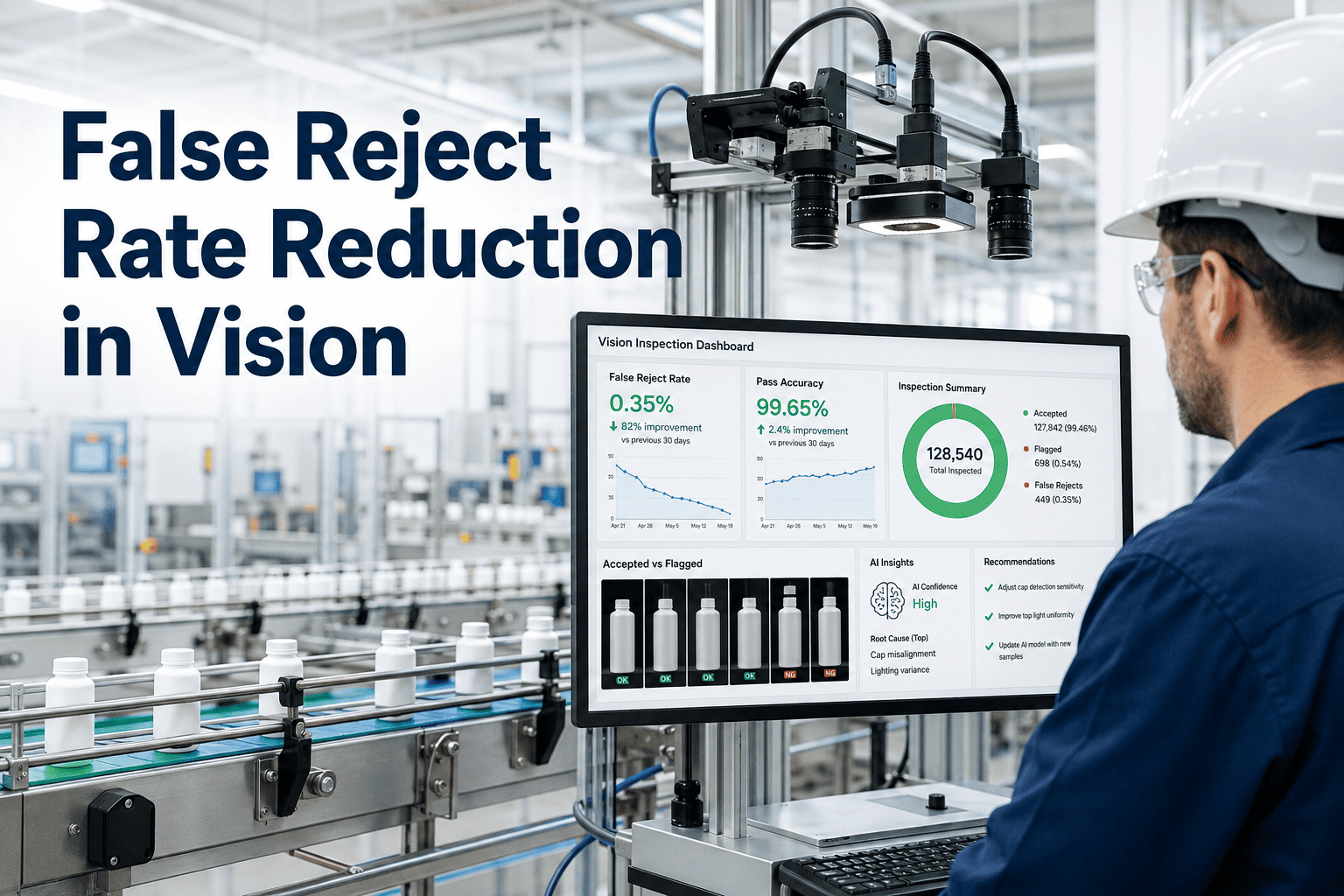
A vision system that rejects good parts quietly costs more than the scrap it creates. Documented automotive cases show false-reject rates of 25 to 34 percent on glass and fabric lines before tuning, and a single untuned station scrapping thousands of good units a month on a Tier‑1 brake line. The fix is rarely a new camera. It is confidence tuning, cost-weighted thresholds and a feedback loop that teaches the model from every operator override, explained in this false reject review.
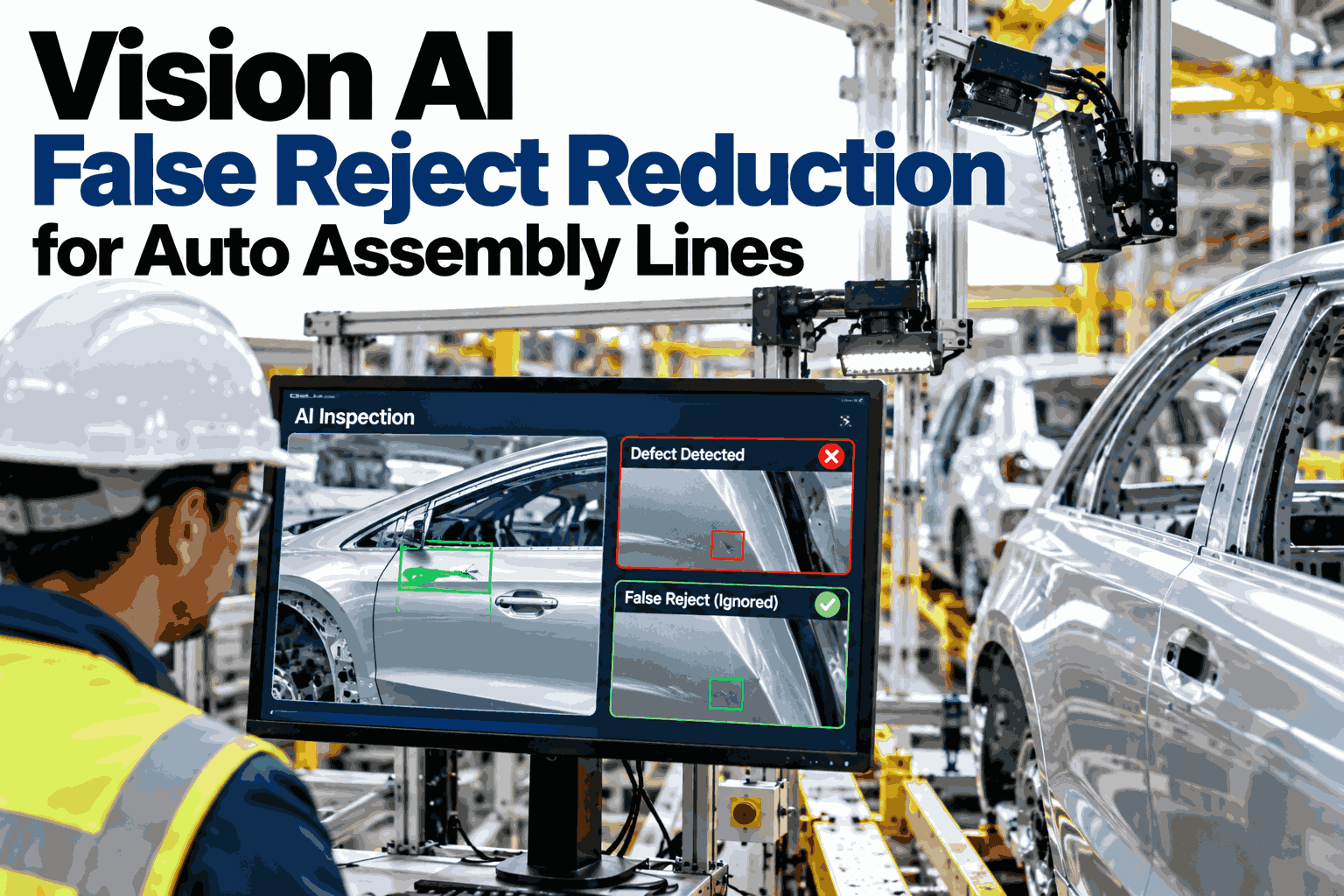
Vision AI False Reject Reduction for Auto Assembly Lines
Keep the detection rate that protects safety-critical parts, and stop the good units, operator hours and line trust that over-cautious thresholds burn every shift.
- Why a stricter threshold is not a safer one
- How cost-weighted confidence tuning works
- A human-in-the-loop setup that lowers false rejects monthly
Where False Rejects Actually Come From
Almost none of it is the model being "wrong" in the way people assume.
A camera reads a shadow as a scratch. A threshold set after one bad escape never gets loosened again. A model trained on last year's part revision flags a harmless tooling mark as new. Each cause has a different fix, and lumping them together is why plants end up turning the whole system down instead of fixing the one station that needs it. Our vision team can walk your reject log station by station.
Lighting drift
A fixture dims or a shift changes ambient light, and the same part reads differently to the camera.
One threshold for every defect class
A cosmetic scuff and a structural crack get judged against the same confidence cutoff.
Fear-driven thresholds
After one escaped defect, the cutoff gets raised and nobody schedules a date to revisit it.
Stale training data
A part revision, supplier change or new tooling mark appears, and the model has never seen it as acceptable.
Raising a threshold to stop one escape usually creates dozens of new false rejects elsewhere on the same class. Paint shop data shows false rejects falling from 15 to 22 percent under manual rules to around 2 percent once thresholds were tuned by defect class, with detection rate still rising.
What teams usually assume
- "Tighter is always safer." Only for the one defect class it was set for.
- "The model is wrong." Often the lighting or the threshold is wrong, not the model.
- "Operators will just double-check it." They stop trusting alarms within days.
What the reject log usually shows
- One or two stations carry most of the false rejects
- False rejects cluster by shift, fixture or part revision
- Escape rate holds steady even as the threshold is lowered
Confidence Thresholds Aren't One Number
A safety-relevant crack and a cosmetic mark should never share a cutoff.
Every vision model scores a part with a confidence number, and a threshold decides pass or reject. Set one threshold for the whole station and you are either letting defects through on the class that needed a tighter number, or rejecting good parts on the class that needed a looser one. Cost-weighted tuning sets that number per defect class, using the price of a miss against the price of a false reject. To map thresholds for your part mix, book a threshold workshop.
Signs a threshold is too tight
- False reject rate climbing on one defect class
- Operators overriding the same alarm repeatedly
- Rework queue filling with parts that pass re-check
- Reject rate spikes tied to shift or lighting changes
Signs a threshold is too loose
- Escape rate rising on audits or customer returns
- Confidence scores clustering near the cutoff line
- Defect class recently changed and never re-scored
- No recorded date for the last threshold review
Four levers, not one
Lighting
Fixing drift and glare resolves most false rejects before any threshold is touched.
Threshold
Set per defect class against the cost of a miss, never as one number for the station.
Model refresh
Retrain on confirmed overrides so the model stops repeating the same false call.
Human review
A fast second check on borderline scores, feeding data back instead of just clearing the part.
Move one lever and watch the escape rate, not just the reject count. A false reject fix that lets a defect through was never a fix.
One Station's False Reject Bill, Before and After
A single underbody-bracket station, 10,000 units a shift, tracked for four weeks before and after cost-weighted thresholds replaced one static cutoff.
What Good False-Reject Reduction Software Does
Not a vendor ranking. A checklist to judge any option against.
Plenty of tools promise fewer false alarms. Few of them show the one thing that actually proves it: a lower reject count with an escape rate that never moved. Use the seven points below on any vision platform, including whatever you already run. If you want a second opinion on a shortlist, our team can review it with you.
Scores confidence per defect class
Not one number for the whole station, but a threshold tuned to each defect's real cost.
Learns from operator overrides
Every confirmed false reject becomes a labeled training example, not a dismissed alarm.
Tracks escape rate beside reject rate
So a falling false reject count can never quietly hide a rising miss rate.
Flags lighting and fixture drift
Separates a camera problem from a part problem before a threshold gets blamed.
Turns false rejects into money
Converts scrapped good units and rework minutes into a cost per station, per shift.
Proposes threshold changes, never applies them alone
Suggested cutoffs go to quality engineering for sign-off before they go live.
Keeps an audit trail
Every threshold change, approval and retrain logged with a date and a reason.
Can confidence thresholds be set per defect class, not per station? How are operator overrides captured and fed back into the model? Can you show escape rate and false reject rate on the same screen? Who approves a threshold change, and where is it recorded? What happens to our labeled images if we switch vendors?
Three tiers of vision tooling
Rule-based AOI
Fast and proven, but a fixed rule set with little room to weigh one defect's cost against another's.
Vendor vision software
Good at the camera's own defect classes, with limited visibility across other stations or lines.
Plant-wide AI review
Sits behind existing cameras and AOI, scoring every reject and learning from every override. This is where iFactory sits.
Running a False Reject Audit
Four weeks of reject images beats a year of scrap reports.
A false reject audit compares what a station rejects against what a second check confirms is actually defective. It needs no new hardware on most lines, just a careful look at images you already capture and discard. Most audits find one or two stations carrying most of the cost, with a clear, fixable cause. To run one on a single station, book an audit kick-off.
The audit, step by step
- Pull four weeks of rejects. Image, confidence score and defect class for every unit.
- Re-check a sample. Quality engineering confirms defective or false, by hand.
- Split the cost. Price false rejects and missed defects separately, by class.
- Re-tune by class. Move the threshold only on the classes the data points to.
- Watch escape rate. Hold the new threshold only if the miss rate stays flat.
False reject rate by class
Not a station-wide number. Tracked separately for every defect class in the model.
Operator override rate
How often a flagged part is overturned on re-check, and by which operator or shift.
Escape rate
The guard rail. If it moves, the threshold goes back and the cause gets found first.
How iFactory Cuts False Rejects
Every reject, scored, explained and tracked against the defect it was meant to catch.
iFactory sits behind the cameras and AOI stations you already run, scoring every reject against defect-class thresholds instead of one station-wide number. It learns from every operator override, flags lighting and fixture drift before a threshold gets blamed, and keeps escape rate and false reject rate on one screen. Changes go to quality engineering as proposals, never straight to the line. Questions on fit go to our support desk.
Connect
Read-only links to existing cameras, AOI controllers and reject bins. The current system keeps deciding until your team approves a change.
Score
Every reject re-scored by defect class, with confidence and likely cause attached.
Learn
Confirmed overrides become training data, so the same false call stops repeating.
Prove
Escape rate tracked alongside every threshold change, so a saving never costs you a miss.
Documented deployments on automotive vision lines show false reject reductions in the 40 to 60 percent range once thresholds are tuned per defect class, with detection rate holding or improving. Lines running one threshold for every defect typically see the largest cut.
Turnkey AI: Delivered, Connected and Live in 6–12 Weeks
You do not build this. It arrives ready to score your first reject.
iFactory ships as a pre-configured NVIDIA AI server, racked and ready, with the vision review software pre-loaded. Rack it, connect to your camera network, and scoring begins without touching your existing AOI configuration.
Our team handles camera and PLC integration, defect-class threshold mapping, operator training and 24×7 remote monitoring. The server runs inside your own network, so part images and quality data never leave your plant. For a scope matched to your lines, request a turnkey quote.
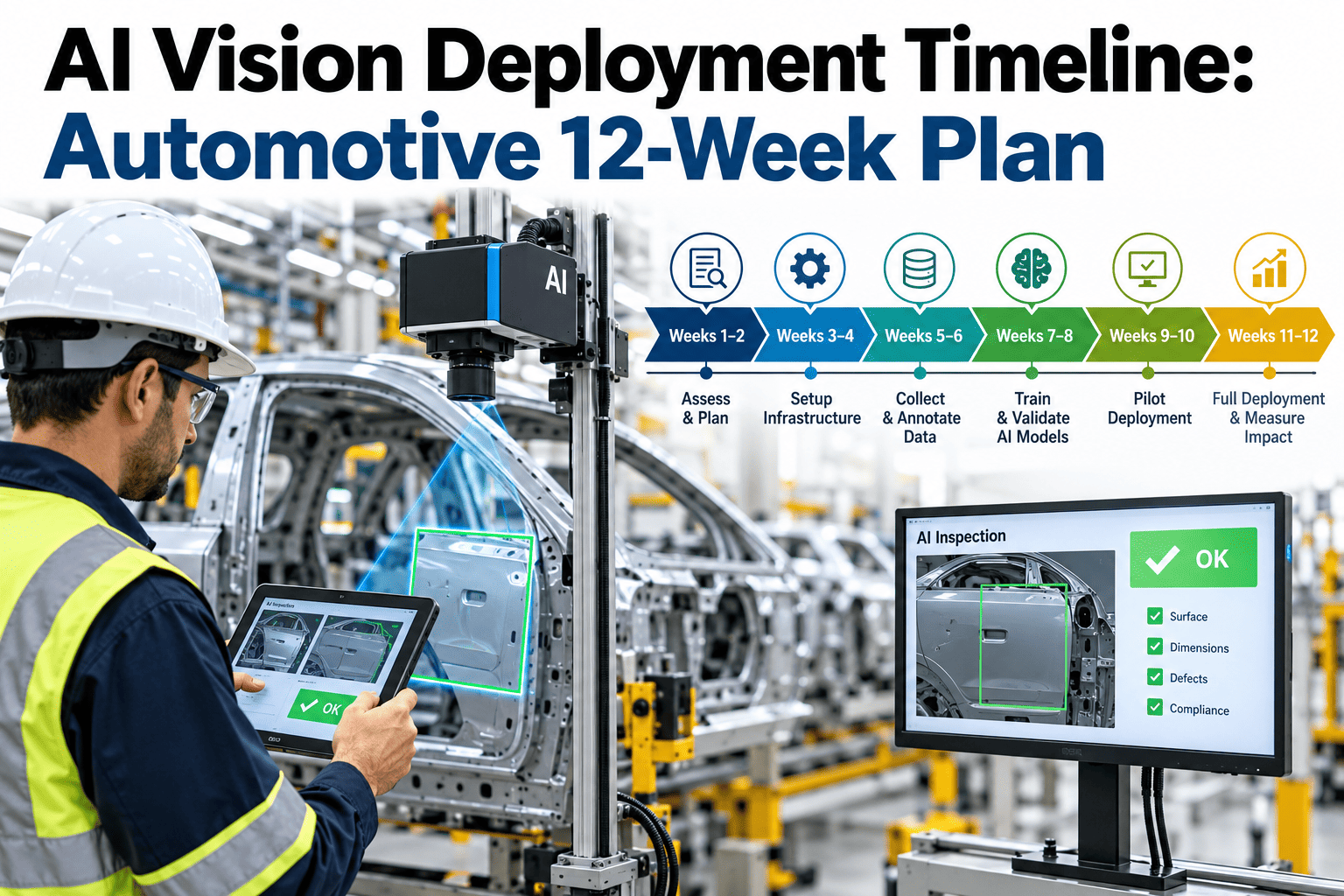
Connect and baseline
Server installed. Cameras and AOI reject logs connected. Defect classes and current thresholds mapped.
Tune and pilot
Cost-weighted thresholds proposed by class. First pilot station live, checked by quality engineering.
Scale and train
Thresholds tuned across every station. Operators trained on the override workflow. 24×7 monitoring begins.
Frequently Asked Questions
What is a false reject rate in vision AI inspection?
It is the share of genuinely good parts a vision system flags as defective. On untuned automotive lines, documented rates have run from 25 to 34 percent on glass and fabric inspection, well above the rate most plants would accept once they see the scrap cost attached to it.
Does lowering a threshold increase the risk of missed defects?
Not when it is done per defect class and checked properly. Paint shop data shows false rejects falling from the 15 to 22 percent range to around 2 percent while detection rate rose, because the threshold moved only on classes where missing one was cheap, not where it was dangerous.
How much does a high false reject rate actually cost?
More than most plants track. A 3 percent false reject rate on a 50,000-unit-a-day line can scrap thousands of dollars of good product daily, before counting operator re-check time, rework queue delays and the trust the line loses in the alarm.
Can we reduce false rejects without replacing our existing AOI?
Yes, in most cases. An AI review layer can sit behind existing AOI and camera hardware, re-scoring what gets flagged rather than replacing the capture system. One documented electronics-automotive deployment cut false calls from 30 percent to 3 percent this way, with escape rate unchanged.
How do we start reducing false rejects on our line?
Start with the reject log, not a new camera. Pull four weeks of rejected images, confirm which were genuinely defective, and price the gap by defect class. That usually points straight at the one or two stations worth fixing first. Reach out to our team to run that audit with you.
Find Out What Your False Rejects Really Cost
In thirty minutes we go through your reject log, your defect classes and your current thresholds, and point to where good parts are most likely being scrapped. You keep the findings whether or not you go further with iFactory.
- 1Four weeks of reject images by station
- 2Current confidence thresholds, if logged
- 3Defect class list with miss-cost notes
- 4Any recent escape or audit findings
- 5Operator override counts, if tracked