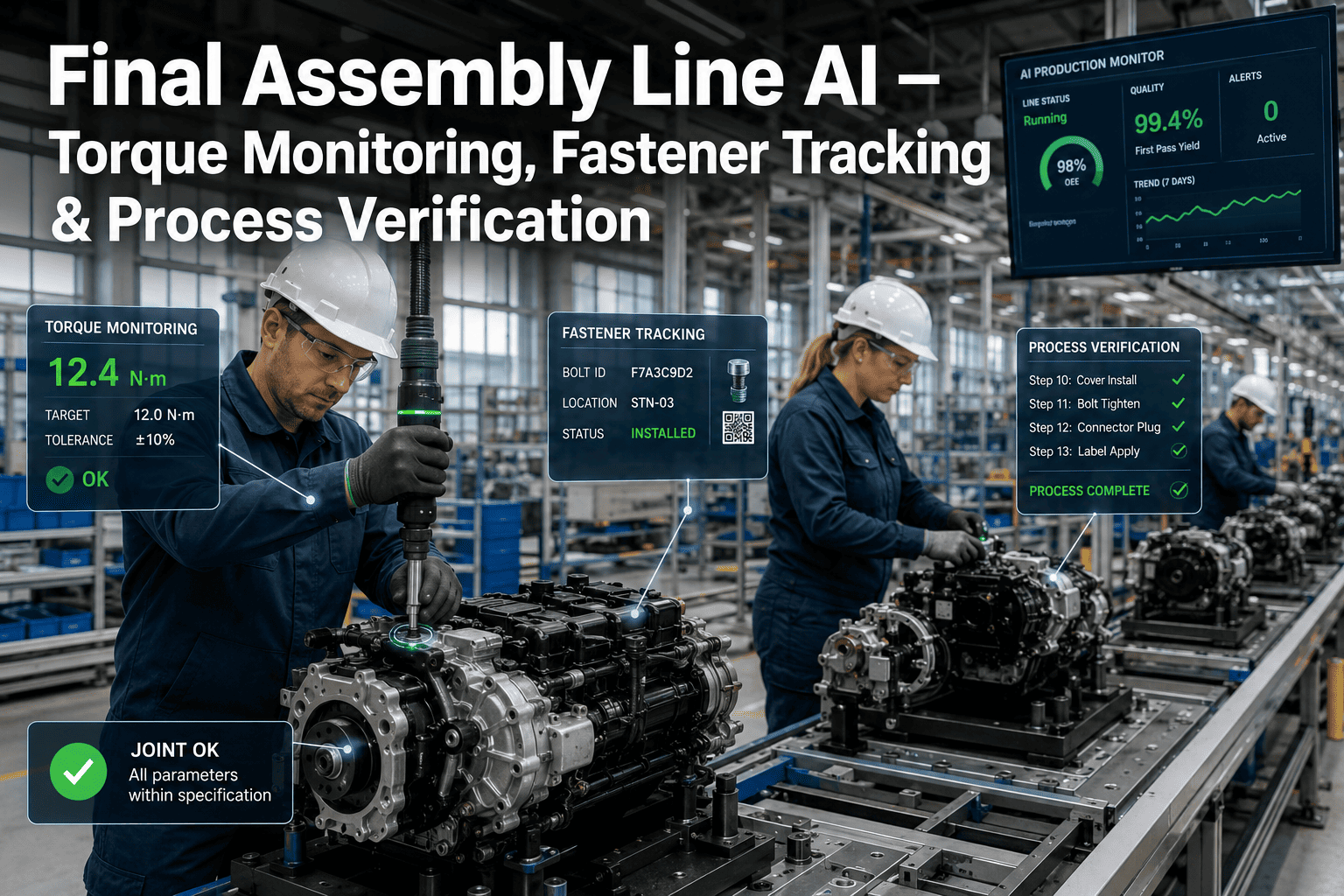
A vehicle leaves final assembly with five to seven different fluid systems filled, sealed, and tested — brake, coolant, fuel, refrigerant, and washer fluid among them — and every one of them carries real safety and warranty consequences if the fill is wrong. A brake system under-filled by even a small margin can mean a soft pedal and a field complaint months later. A refrigerant charge outside tolerance shows up as a warranty claim, not a line-stop. Process engineers are expected to hold fill accuracy and leak-free connections across every station, every shift, with little room for drift. AI process verification closes that gap by catching fill and leak anomalies at the station, before the vehicle moves on. See how iFactory verifies your fluid fill stations in real time — book a demo.
Fluid Fill + AI Process Verification
Every Fluid Fill, Verified Before the Vehicle Moves On.
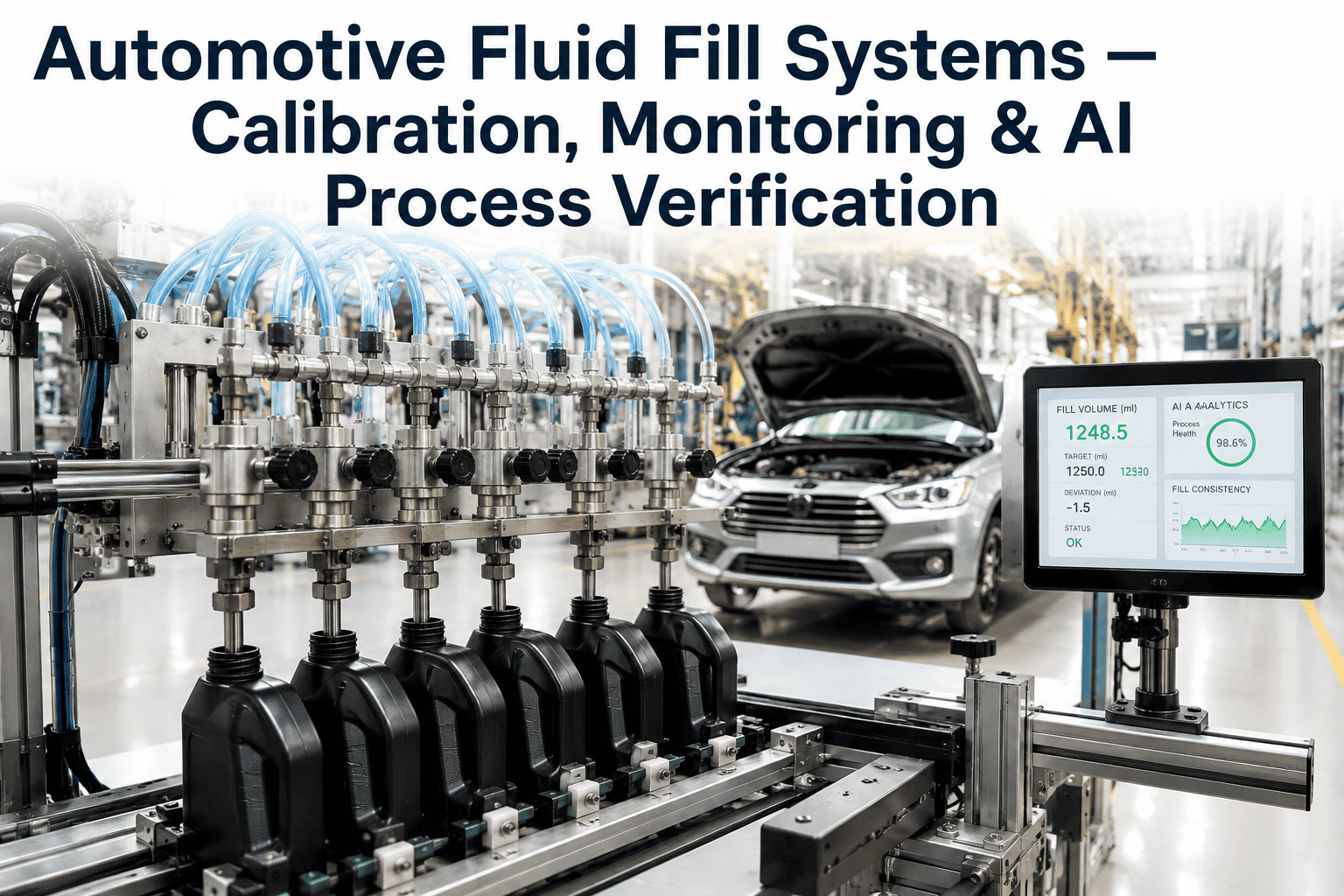
iFactory monitors and calibrates brake, coolant, fuel, refrigerant, and washer fluid fill systems with AI process verification — catching volume and leak anomalies at the station.
Five Fluid Systems, Five Different Failure Modes
Brake Fluid
Safety-critical hydraulic system. Under-fill or trapped air causes a soft pedal and reduced stopping performance — a warranty and safety issue at once.
Coolant
Incorrect glycol concentration or air pockets in the cooling system lead to overheating and premature water pump or radiator failure.
Fuel System
Fill volume and leak integrity at every connection point are non-negotiable — a missed leak here is the highest-severity failure mode on the line.
Refrigerant Charge
Charge weight must sit within a tight tolerance band — overcharge and undercharge both degrade climate system performance and trigger comebacks.
Washer Fluid
Lowest safety severity, but still a common source of customer-reported defects when reservoirs are under-filled at the line.
How AI Process Verification Works at the Fill Station
01
In-Line Volume Measurement
Flow meters and load cells capture actual dispensed volume against target, in real time, at every fill cycle rather than periodic sampling.
02
Pressure Decay Leak Testing
Sealed systems are pressurised and monitored for pressure decay, flagging leaks at connection points before the vehicle leaves the station.
03
AI Anomaly Detection
Fill patterns are compared against historical baselines, catching gradual sensor drift or dispensing equipment wear before it produces an out-of-spec fill.
04
Automatic Traceability Logging
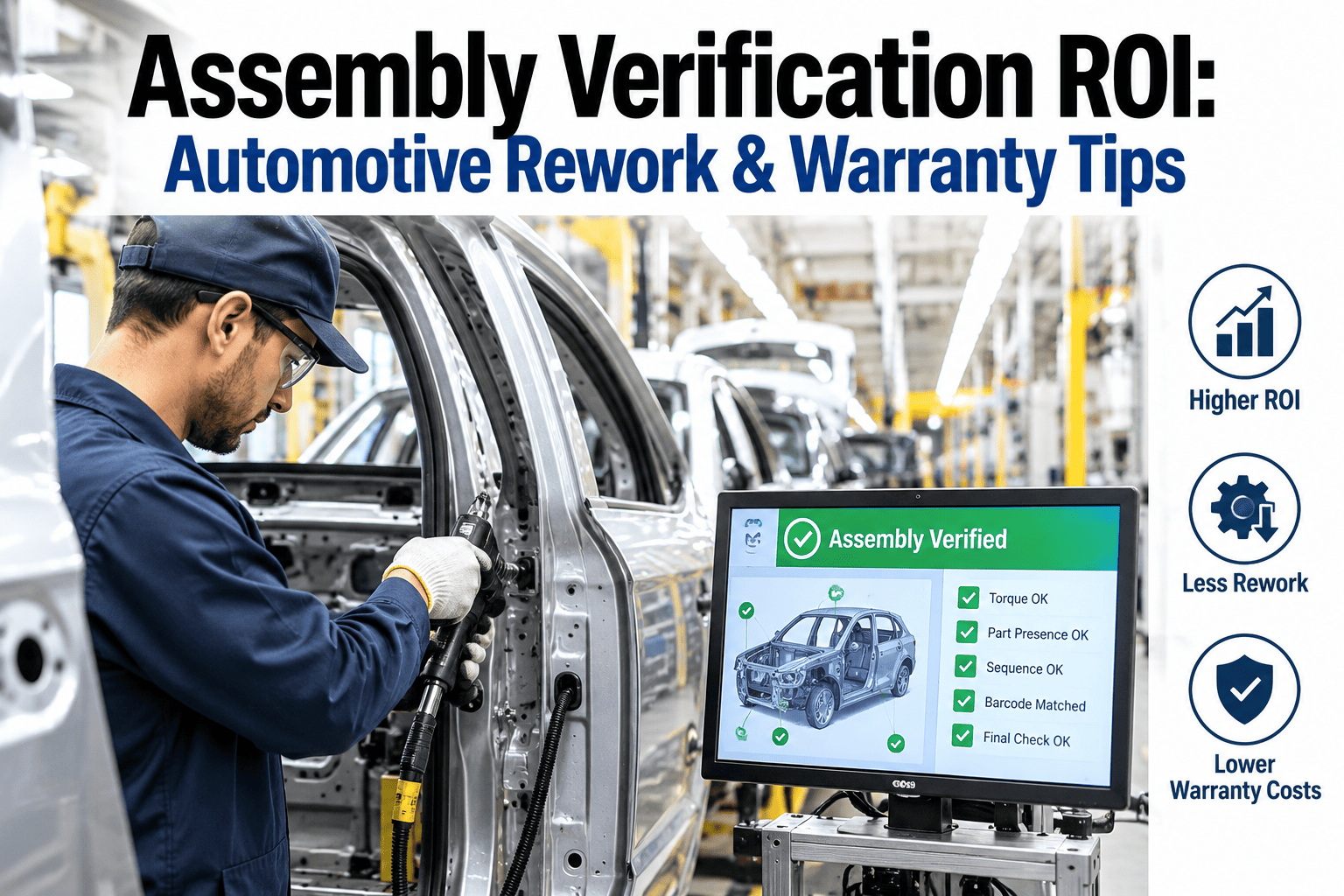
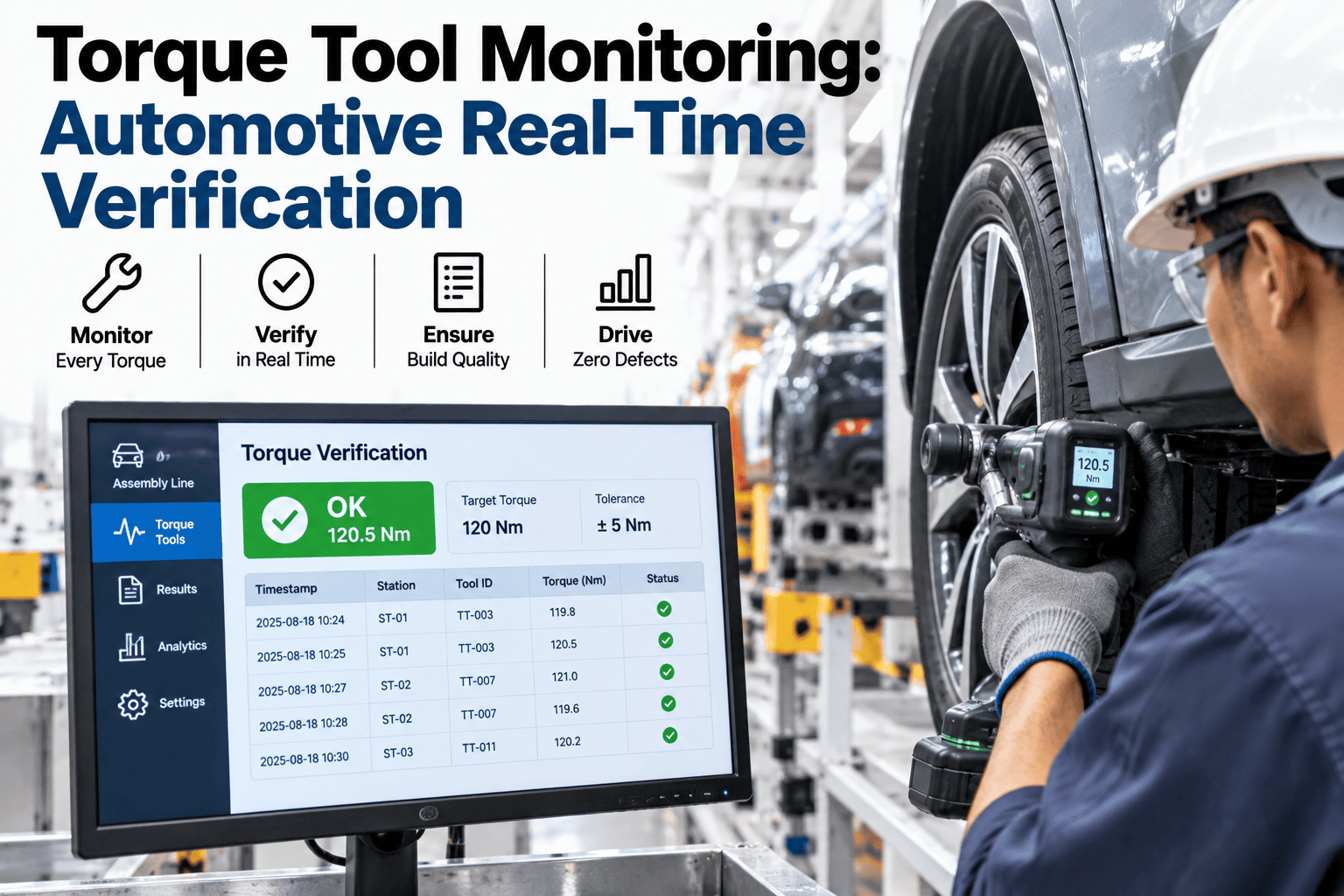
Every fill and leak test result is linked to the VIN, station, and operator, building the traceability record required for warranty investigation.
Leak Test Methods Compared
| Method | Best For | Detection Sensitivity |
|---|
| Pressure decay | Sealed brake and fuel lines | High — detects micro-leaks |
| Mass flow leak testing | High-throughput fill stations | High — continuous measurement |
| Vacuum decay | Refrigerant and closed-loop systems | Very high — sub-gram sensitivity |
| Visual / dye inspection | Final verification pass | Low — manual, operator-dependent |
Book a Demo — Verify Your Fill Station Accuracy
Bring your current fill tolerance specs and comeback data. iFactory will show you where AI process verification would have caught the issue before the vehicle shipped.
Why Fill Accuracy Matters Beyond the Line
Warranty Exposure
A fill or leak issue that reaches the customer is far more expensive to resolve than one caught at the station, and it damages brand trust in a way rework never does.
Safety-Critical Systems
Brake and fuel fill accuracy are not quality preferences — they are safety requirements that regulators and OEM audits scrutinise directly.
Line Rate Protection
Catching anomalies in real time avoids the batch rework and line stoppages that come from discovering a fill problem downstream.
FAQ: Fluid Fill Systems & AI Process Verification
What causes fluid fill accuracy to drift over time on a production line?
Dispensing equipment wears gradually — nozzle seals degrade, flow meters lose calibration accuracy, and pressure regulators drift outside their original tolerance band. Because this happens slowly, a fixed periodic calibration check can miss the window where fills are already trending out of spec. AI process verification compares every fill cycle against a historical baseline, so gradual drift is flagged as a trend long before any individual fill fails a hard tolerance limit.
Can AI process verification work with our existing fill and leak test equipment?
Yes. iFactory connects to existing flow meters, load cells, and pressure decay leak testers through standard industrial protocols, adding the AI anomaly detection and traceability layer without requiring new fill hardware. Where a station lacks digital output today, non-intrusive sensor retrofit is typically sufficient to bring it into the monitored system.
Ask our team what your current fill stations already support.
How does this help with warranty investigations months after the vehicle ships?
Every fill and leak test result is logged against the vehicle's VIN, the station, the operator, and the timestamp automatically. When a warranty claim arrives referencing a fluid system issue, the exact fill and leak test data for that specific vehicle is available immediately, rather than requiring an estimate based on typical process performance. This turns a warranty investigation that could take days into one that takes minutes.
Which fluid system carries the highest priority for AI process verification?
Brake and fuel systems carry the highest severity, since fill or leak errors there are both a safety issue and a warranty issue simultaneously. Refrigerant charge is a close second given the tight tolerance bands required for climate system performance. Most plants start AI verification on these highest-severity systems first, then extend coverage to coolant and washer fluid as the rollout matures.
How quickly can AI verification be deployed on an existing fill line?
A single fill station with existing digital flow meters and leak testers can typically be connected and generating baseline data within one to two weeks. Establishing the AI-driven anomaly baseline takes a further few weeks of production data before drift detection reaches full sensitivity, after which the system operates continuously without manual recalibration cycles.
Book a demo to scope your specific fill stations.
Fluid Fill Verification + iFactory
Don't Let a Warranty Claim Be the First Time You Hear About It.
iFactory verifies every fluid fill and leak test in real time, at the station, with full VIN-level traceability built in from day one.