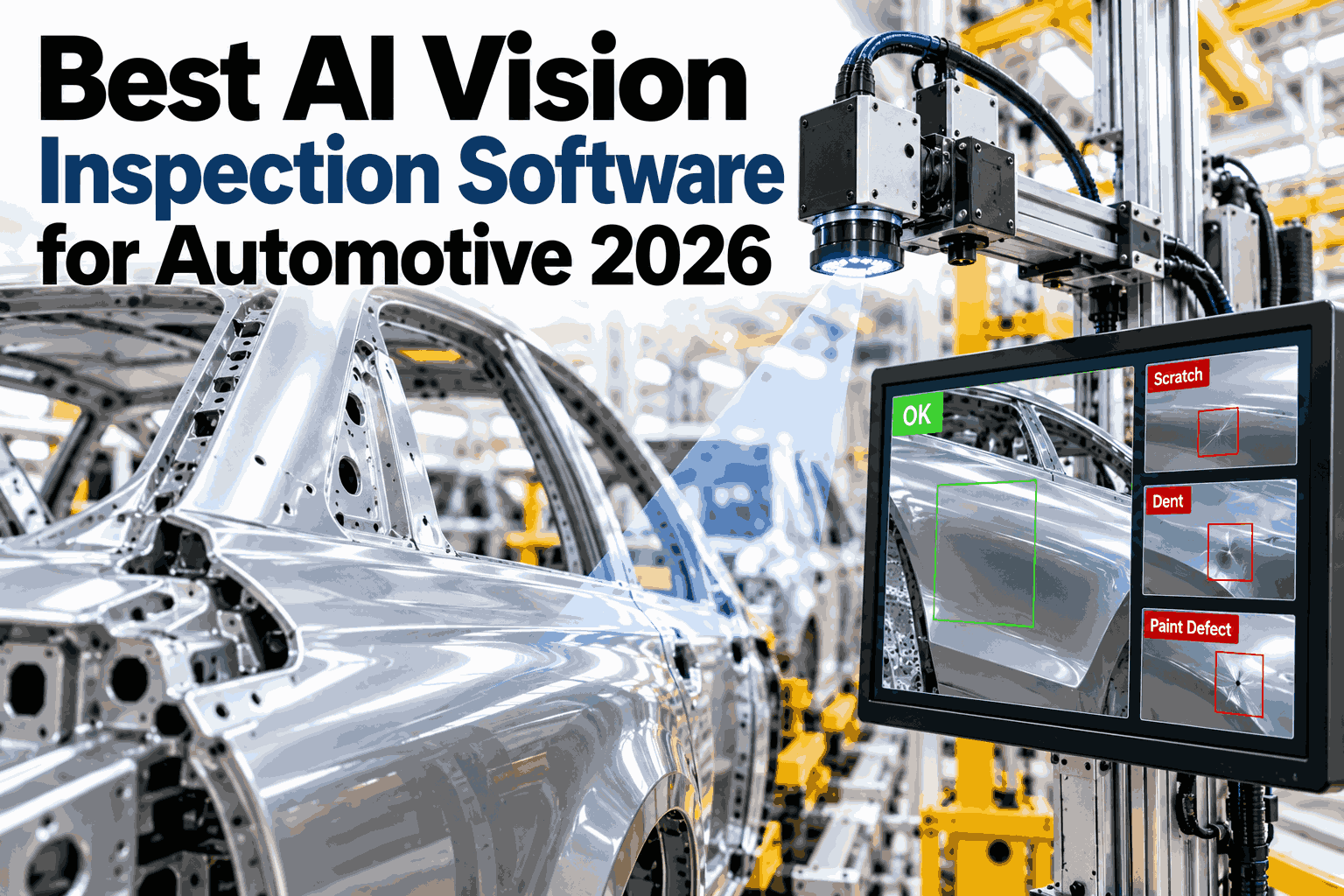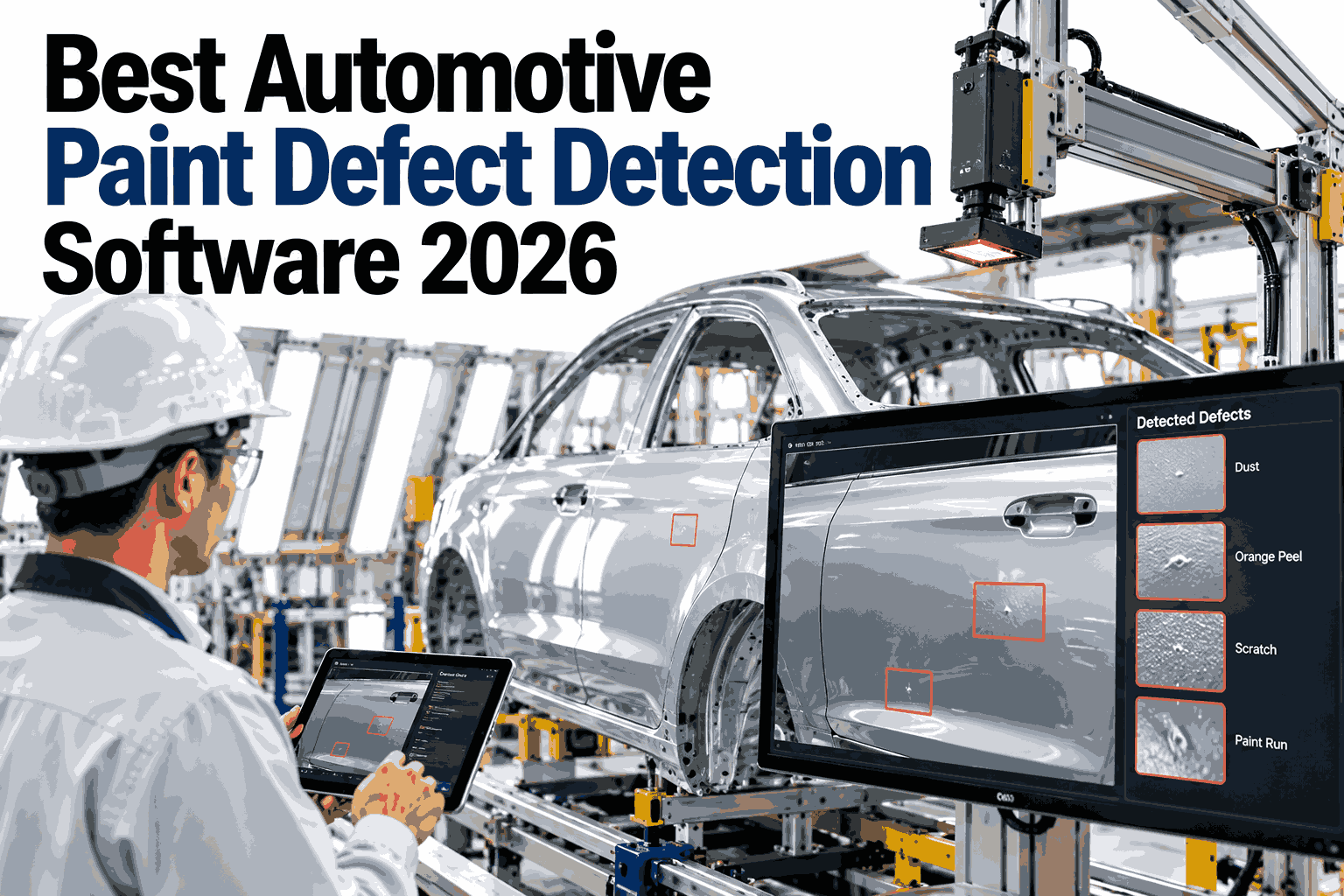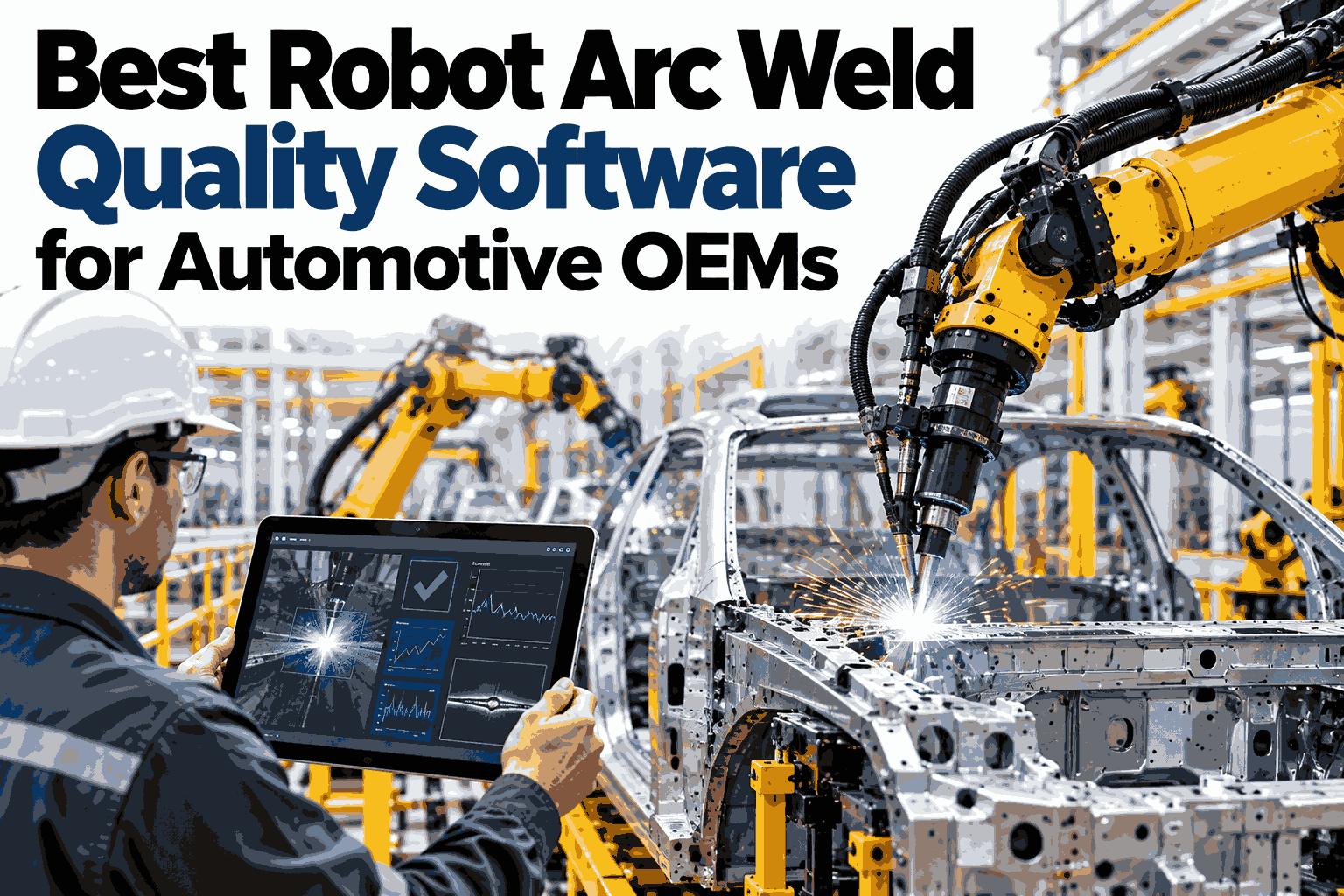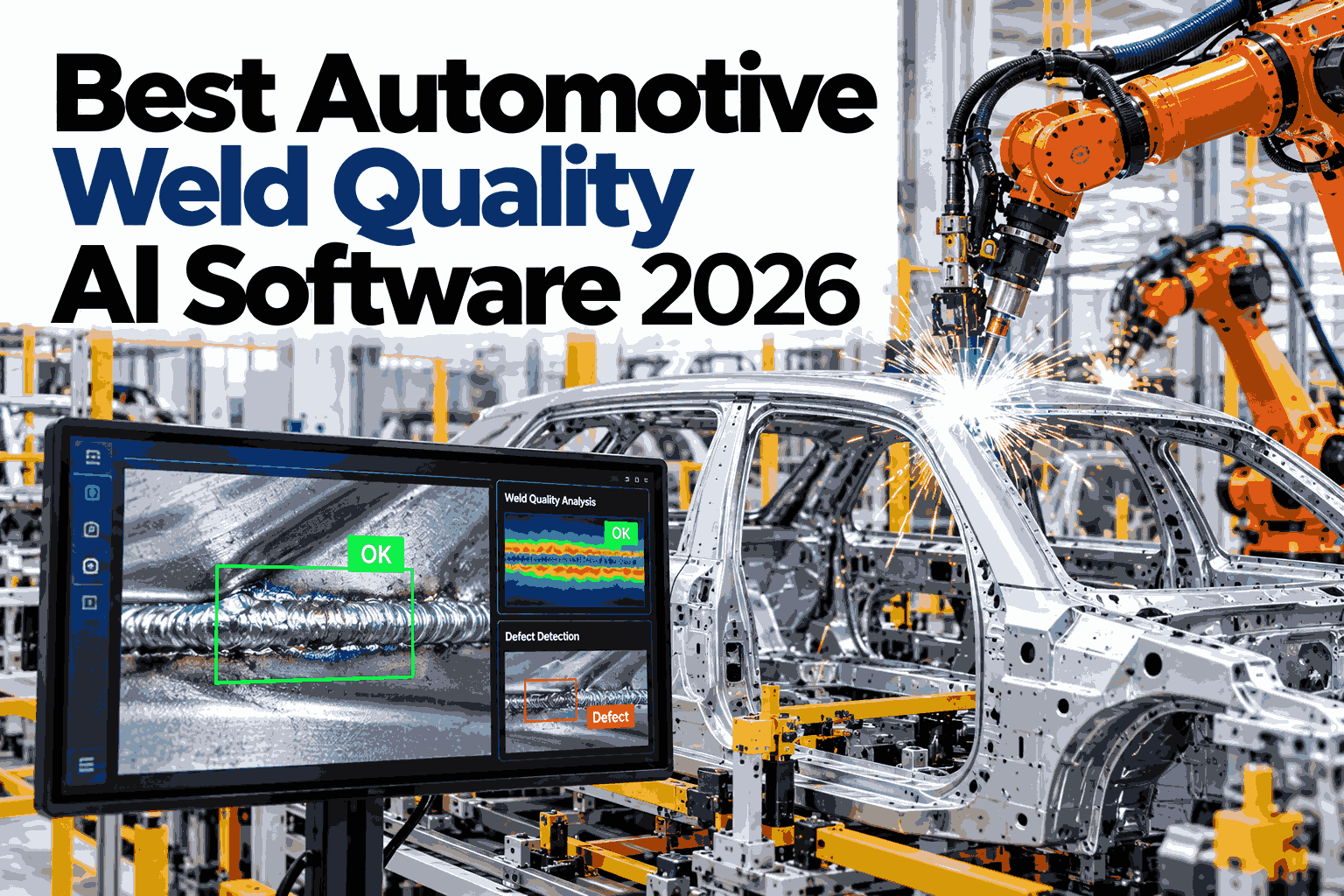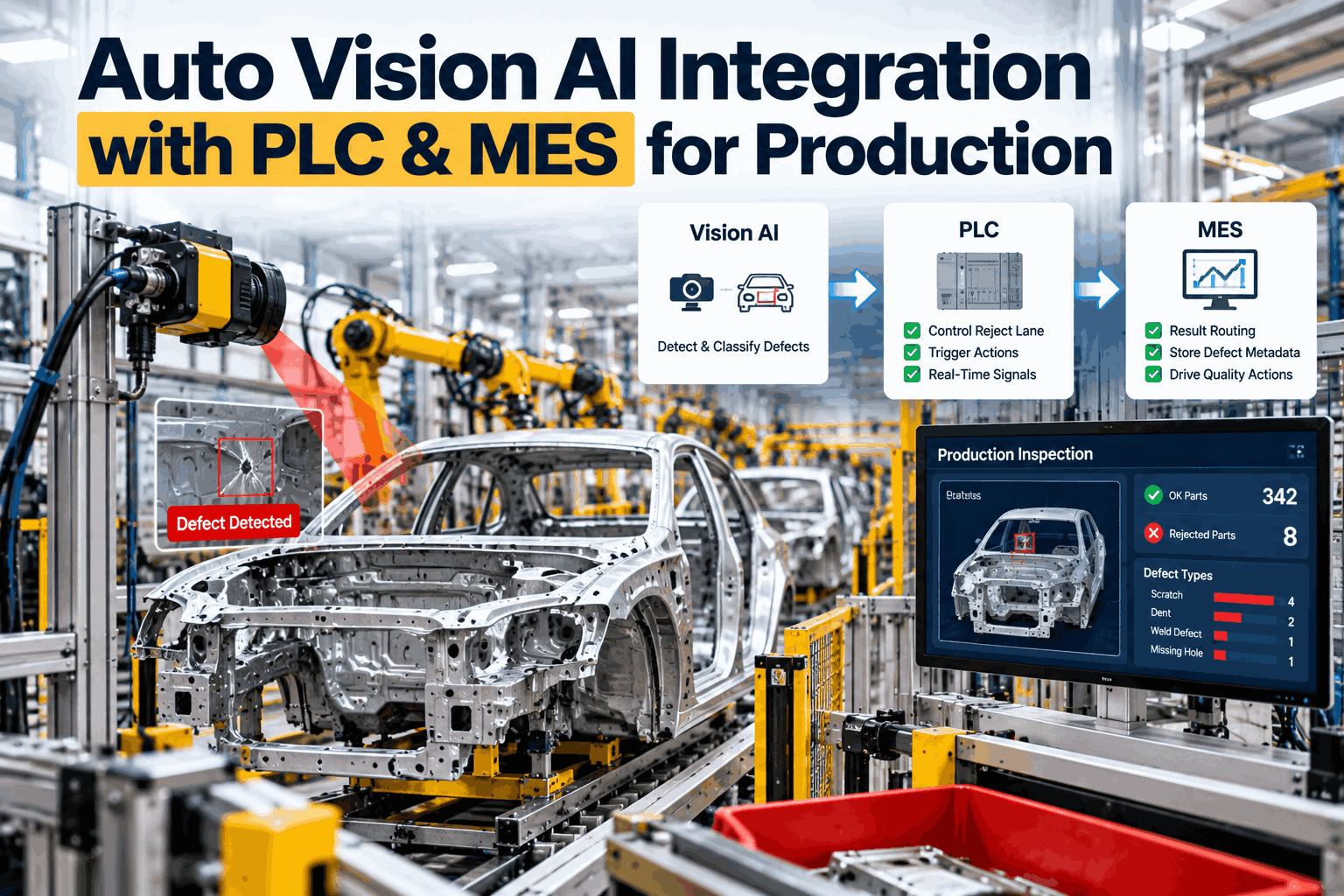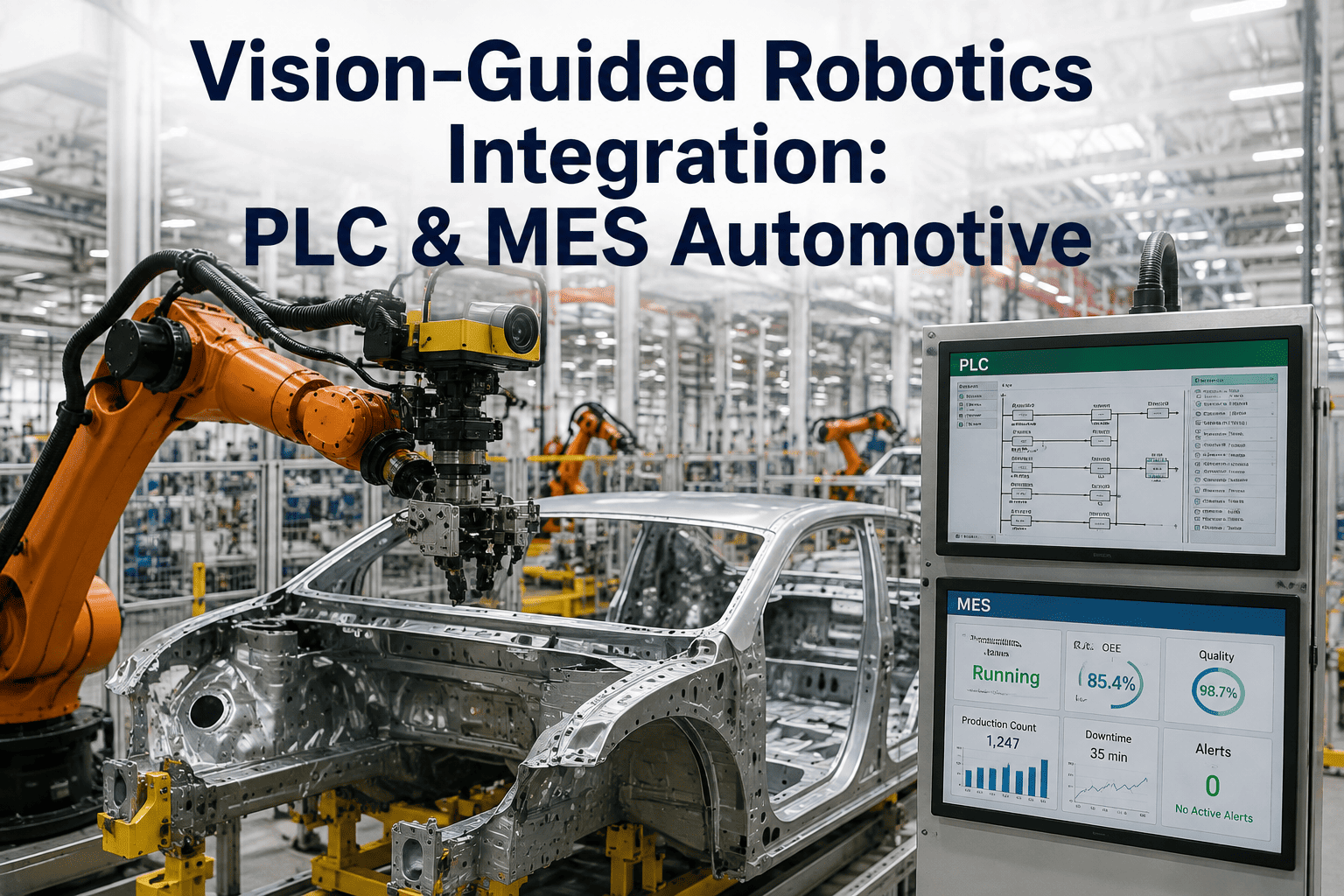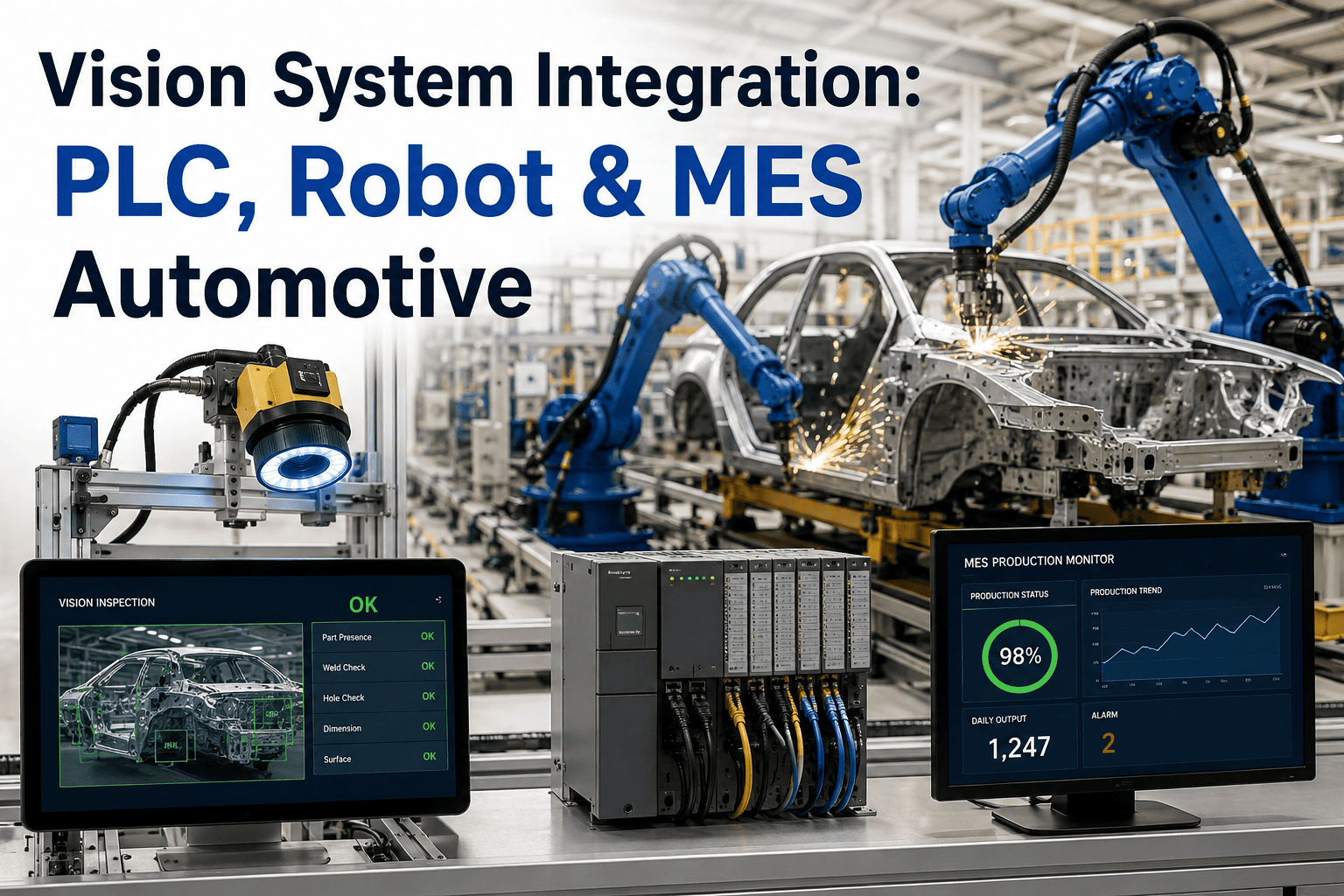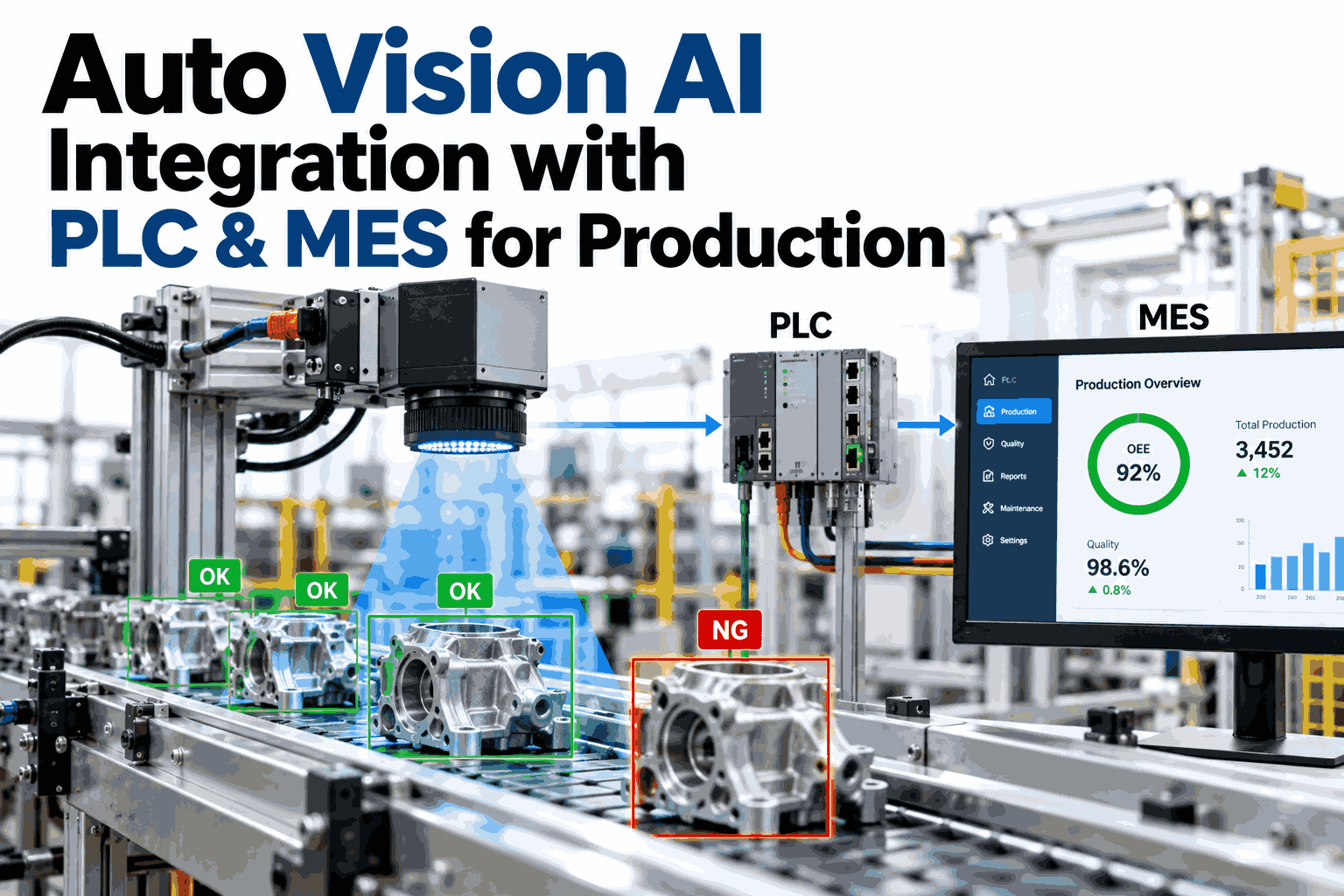
A vision AI model can spot a weld defect or a scratch in milliseconds, but detection alone changes nothing on the floor. The part still has to be diverted before the next station, the reject still needs a reason code, and quality still needs a traceable record tied to the right batch. Plants running vision as a standalone screen often catch the defect and still ship it, because nothing told the PLC to act or the MES to record. Closing that loop is what turns an inspection camera into an actual quality control system. Teams can map their current vision-to-PLC signal path with the iFactory AI team before the next line review.
Turn Every Vision AI Detection Into an Automatic Line Action
iFactory AI connects camera inference to PLC actuation and MES records in real time, so a detected defect becomes a diverted part and a traceable quality event without an operator in the loop.
The Signal Chain and Where It Breaks
Most vision programs that fail to deliver value have working cameras and working models. The failure sits in the handoffs between systems, where a result has to become a signal and a signal has to become a record.
| Stage | What Should Happen | Common Failure | Result Without Integration |
|---|---|---|---|
| Detection to Decision | Model output maps instantly to a defined action code | Output sits in a log file nobody reads in real time | Defect is detected but the part keeps moving |
| Decision to PLC | Decision triggers a discrete signal to the reject actuator | Signal mapping relies on a script run periodically | Reject lane fires late or not at all |
| Decision to MES | Defect type and location attach to the batch record | Vision system and MES use different part identifiers | A record exists but cannot be traced to the part |
| PLC to Line Control | Reject confirmation feeds back to the line controller | No handshake confirms the part actually left the line | The same defective part can re-enter the queue |
| MES to Quality Dashboard | Defect trends roll up for SPC and shift reporting | Data arrives in a nightly batch instead of live | A trend is visible a full day after it mattered |
Each row above is a place where a plant can own excellent cameras and an excellent model and still fail to act on what the system already knows.
PLC and MES Do Different Jobs on the Same Signal
A single defect detection needs to go two places at once, and each destination exists for a different reason. Confusing the two is a common design mistake in early vision deployments.
The PLC's Job: Physical Action, Now
The MES's Job: The Record That Lasts
A plant that wires the PLC action but skips the MES record can still divert bad parts, but it can never answer why the same defect keeps recurring.
The Reject-Lane Control Sequence
A reject lane firing correctly is the end of a short, strict sequence, and skipping or slowing any step is how a defective part slips past the diverter.
The timing budget between steps three and five is usually the tightest part of the whole chain, since the diverter has only the distance between stations to fire and confirm.
Watch a Defect Travel From Camera to Reject Lane
Book a 30-minute session and see iFactory AI carry one detection from inference through PLC actuation to a finished MES record, end to end.
Defect Metadata MES Needs for Traceability
A reject code alone is not a traceable record. MES needs enough detail attached to each event to answer a supplier audit or a warranty claim months later.
| Field | Example Value | Why MES Needs It |
|---|---|---|
| Defect Type | Weld porosity | Maps to a disposition code and root cause category |
| Location on Part | Door seam, left rear | Pinpoints a recurring issue to a fixture or station |
| Confidence Score | 0.92 | Separates high-confidence rejects from cases needing review |
| Station and Camera ID | Station 14, camera 2 | Shows whether a pattern is a part issue or a camera issue |
| Timestamp | Captured at point of inspection | Links the defect to shift, operator, and upstream conditions |
| Part or Serial Identifier | Linked to the vehicle body | Carries the record into the vehicle's full build history |
Teams can 8review which fields their current MES already expects before mapping a new vision data feed into it.
Open-Loop vs Closed-Loop Vision Systems
Many plants start with vision running open-loop, watching the line without acting on it. The difference shows up the moment a defect actually needs a response.
Open-Loop Vision
Closed-Loop Vision
Open-loop vision still has value for early pilots and operator training, but it rarely survives contact with a high-speed line running unattended for long stretches.
What Closing the Loop Changes
The figures below are an illustrative composite from a body shop that moved three inspection stations from open-loop monitoring to fully closed-loop PLC and MES integration.
The largest gain came from the handshake step between the PLC and the line controller, which removed the small but repeated risk of a diverted part quietly re-entering the queue.
What iFactory AI Adds to Vision, PLC, and MES Integration
iFactory AI is smart manufacturing and industrial software built to connect inspection results to the systems that act on them and the systems that remember them.
Real-Time Result Routing
Every inference result maps to a defined action and record the moment it is generated, with no batch job or manual script in between.
Native PLC Signaling
Discrete signals reach the PLC within the timing budget the line requires, tuned to the physical distance between inspection and diverter.
Structured MES Handoff
Defect type, location, confidence, station, and part identifier attach to a single event record that matches your MES schema.
Divert Confirmation
A confirmation signal closes the loop back to the line controller, so a diverted part is verified gone rather than assumed gone.
Live SPC Feed
Defect trends update as events arrive instead of overnight, so a drifting process shows up on the quality dashboard the same shift.
Connected to the Wider Plant
Vision events sit alongside maintenance, traceability, and scheduling data, so a defect pattern is never isolated from its likely cause.
iFactory AI arrives pre-configured on an NVIDIA server that ships racked and ready with software pre-loaded. Rack it, connect power and Ethernet, and the vision-to-PLC-to-MES loop starts running. Scope covers cabling, network, PLC and MES integration, team training, and 24x7 remote monitoring.
Vision-to-PLC-to-MES Self-Check
Use these ten checks to find where your vision program still depends on a person noticing a screen instead of a system acting on a signal.
Each unchecked box is a place where a correctly detected defect could still ship, or where a quality trend could stay invisible a shift longer than it should.
Frequently Asked Questions
Why does a vision AI detection need to reach both the PLC and the MES?
The PLC handles the physical response, diverting or stopping the line before the part advances, while the MES keeps the record that makes the event traceable later. Skipping either one leaves a gap. See both signal paths working together on a live demo.
What happens if the PLC signal arrives too late?
If the signal arrives after the part has passed the diverter point, the reject lane cannot act, and the defective part continues down the line. Timing budgets are set per station based on line speed and physical distance. Review timing requirements for your line layout.
Can this integrate with an MES we already run?
Yes. Integration maps vision event fields to your existing MES schema rather than replacing it, so defect records land in the same traceability system your quality team already uses. Ask how your current MES fields get mapped.
Does closed-loop control remove the need for an operator?
No. Closed-loop control removes the need for an operator to catch every individual event in real time, but operators still review flagged cases, confirm dispositions, and handle exceptions the system surfaces.
How long does implementation take?
iFactory AI is delivered turnkey and is typically live in 6 to 12 weeks. The server arrives pre-configured, and scope covers cabling, network, PLC and MES integration, training, and remote monitoring. Plan a rollout timeline for your stations in a 30-minute call.
Close the Loop Between Detection, Action, and the Record
iFactory AI routes every vision result to the PLC and the MES in real time, so a detected defect becomes a diverted part and a traceable event. Book a walkthrough on your own line.