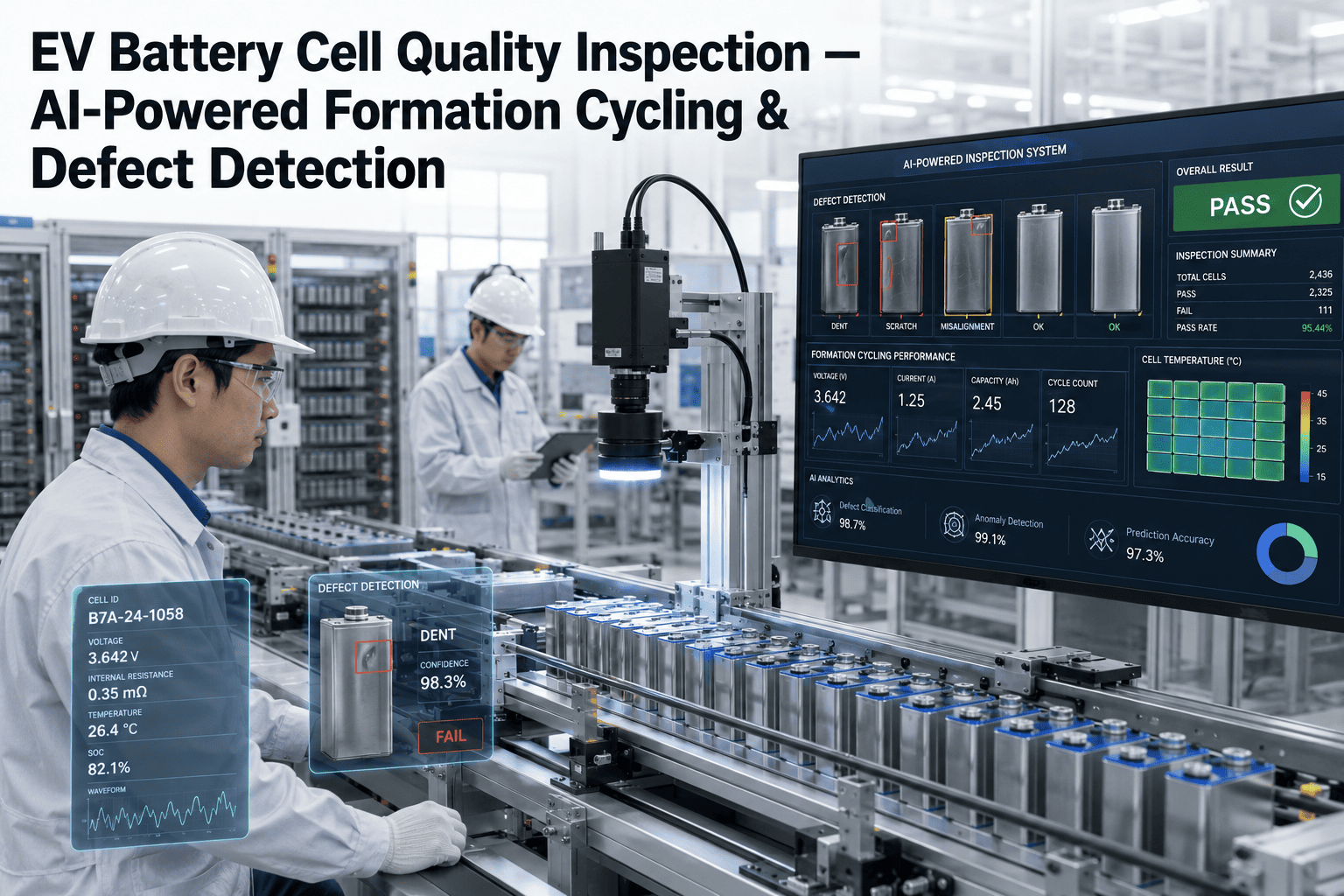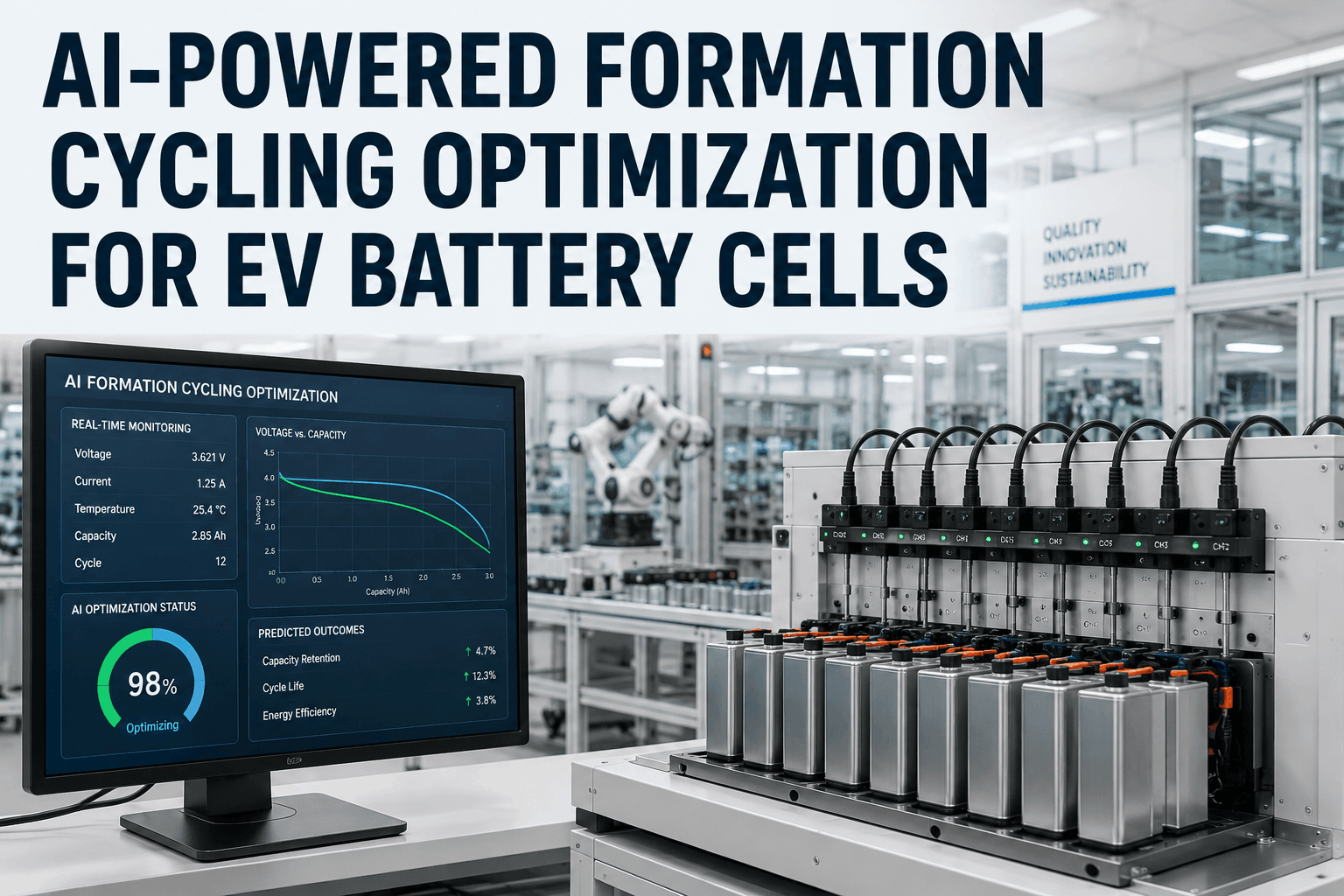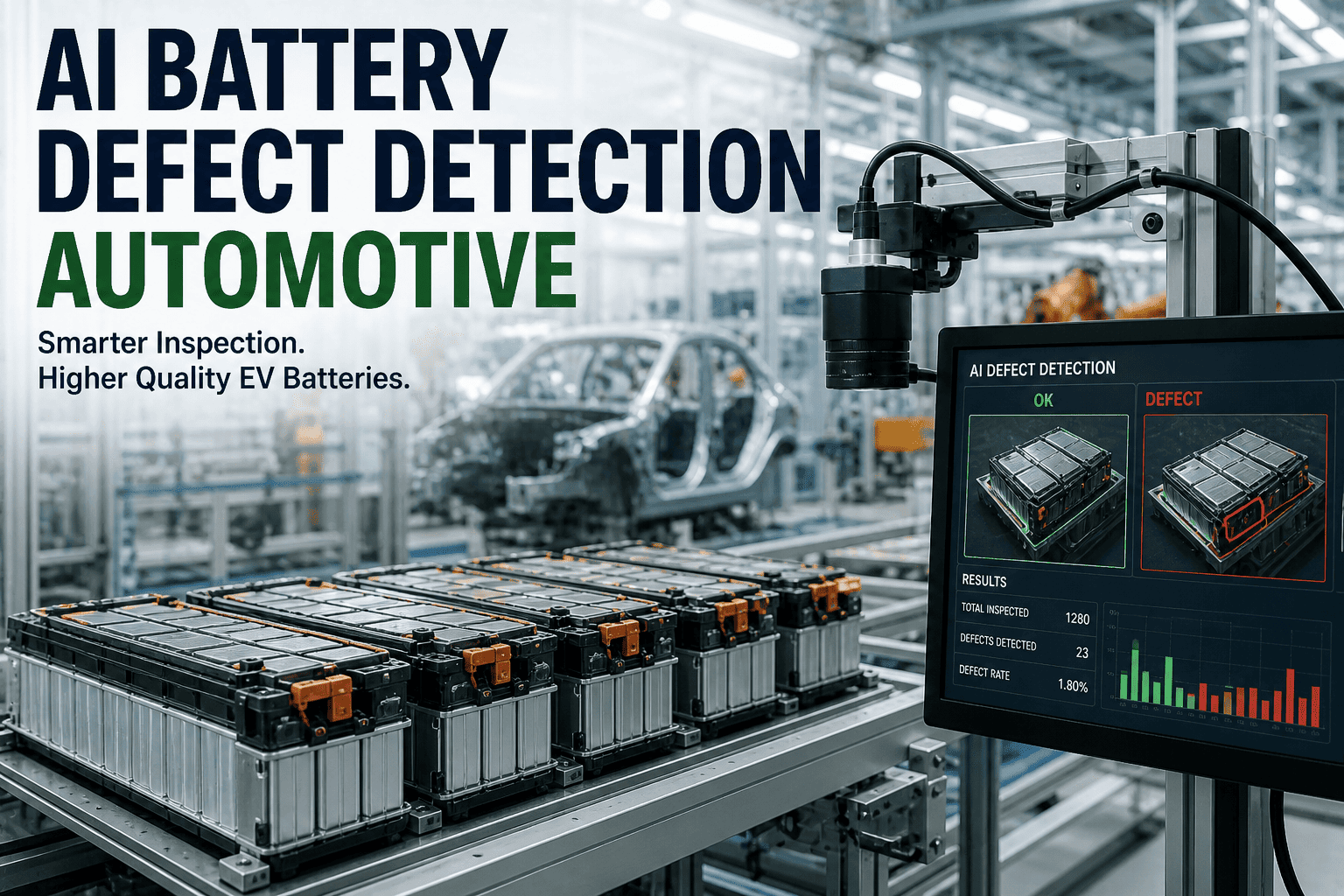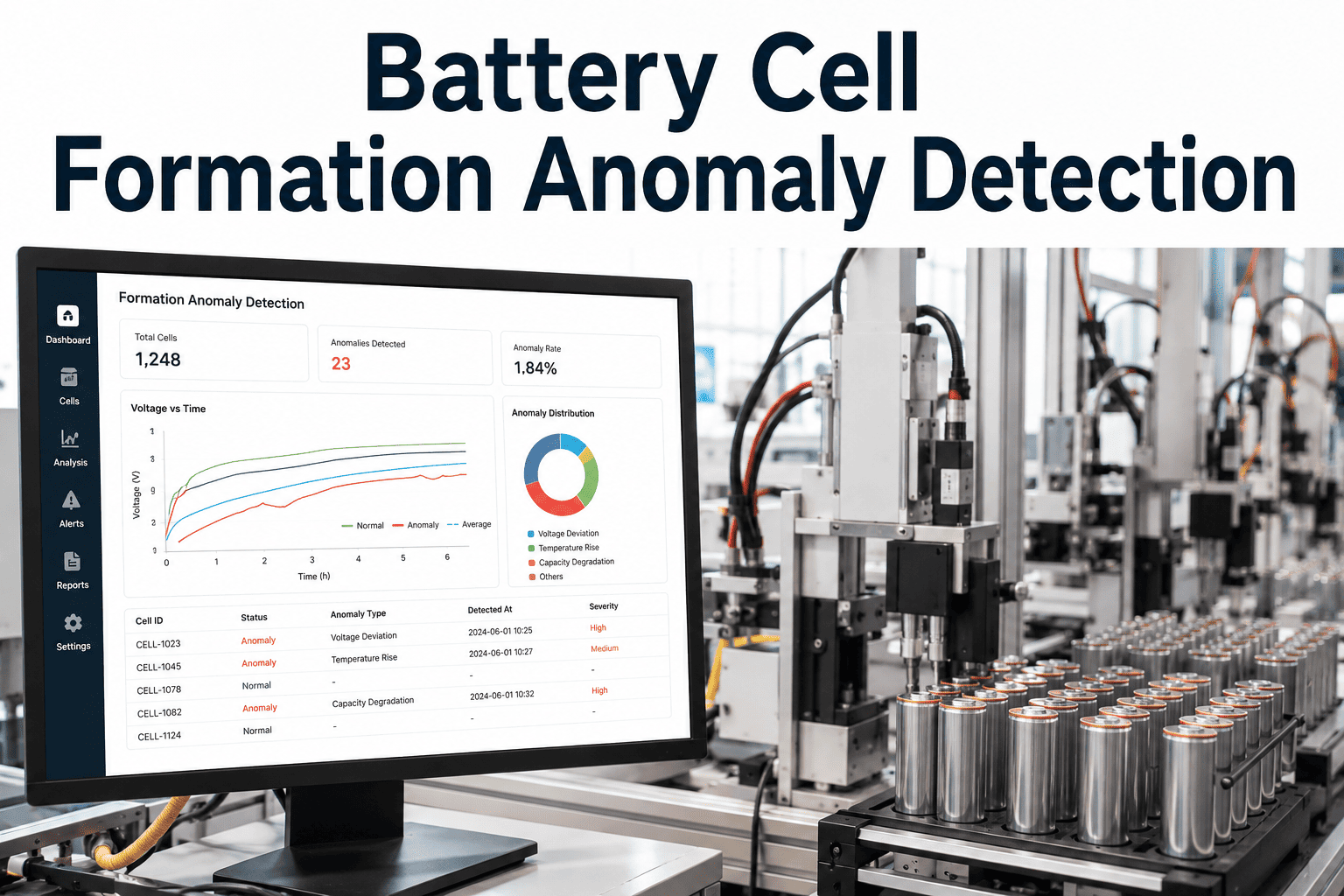
In the high-stakes world of electric vehicle battery production, the formation step remains the longest and most capital-intensive phase of cell manufacturing. During formation, cells undergo precisely controlled charge-discharge cycles to activate the electrochemical materials and stabilize the solid electrolyte interphase (SEI) layer. This process can take days to weeks, and any subtle anomaly in voltage or resistance can lead to reduced capacity, accelerated degradation, or catastrophic failure in the field. Traditional quality control relies on end-of-line testing, but by then, significant value has already been invested in defective cells. AI-driven anomaly detection offers a paradigm shift, enabling real-time monitoring of formation data to identify deviations early, optimize cycle parameters, and dramatically improve yield. For battery QC leads and plant managers, integrating machine learning into formation is no longer optional—it is a competitive necessity. Book a Demo to see how our platform transforms your formation line.
Transform Your Formation Line with AI
Real-time anomaly detection reduces scrap and increases yield. Learn how leading EV manufacturers are cutting formation costs by 30%.
The Formation Bottleneck: Why Traditional QC Falls Short
Formation is the most time-consuming step in cell production, often lasting 12 to 48 hours per cycle, and multiple cycles are required. During this period, cells are held at specific voltage and temperature windows to allow the SEI layer to form properly. Any deviation—such as a voltage spike, resistance drift, or thermal runaway precursor—can render the cell unusable. Traditional quality control relies on periodic sampling or end-of-line electrical testing, which means defective cells often proceed through the entire formation process, wasting energy, time, and materials. Furthermore, subtle anomalies that do not manifest as immediate failures may still cause early-life degradation, leading to warranty claims and brand damage. The formation step is also a data-rich environment: every cell generates thousands of voltage, current, and temperature readings per second. Yet most manufacturers only store aggregated averages, discarding the granular data that could reveal hidden defects. AI-driven anomaly detection changes this by ingesting high-frequency formation data, learning the normal patterns for each cell chemistry and format, and flagging outliers in real time. This enables operators to intervene mid-cycle, adjust parameters, or remove defective cells before further investment.
Voltage Anomaly Detection
Monitors cell voltage during formation cycles, identifying spikes, drops, or plateau deviations that indicate internal shorts or electrolyte issues.
Resistance Monitoring
Tracks DC internal resistance (DCIR) trends over formation cycles. Sudden increases signal poor SEI formation or contamination.
Thermal Pattern Analysis
Correlates temperature gradients with electrical data to detect thermal runaway precursors or uneven current distribution.
Cycle-to-Cycle Consistency
Compares formation cycles across cells and batches to identify gradual drifts in process parameters before they cause yield loss.
Key Formation Parameters for AI Monitoring
| Parameter | Normal Range | Anomaly Threshold | Impact of Anomaly |
|---|---|---|---|
| Open Circuit Voltage (OCV) | 3.0 - 4.2 V | > ±50 mV deviation | Capacity loss, SEI instability |
| DC Internal Resistance (DCIR) | 5 - 15 mOhm | > 20% increase over baseline | Reduced power output, heating |
| Charge/Discharge Current | 0.5C - 1C | > 10% deviation from setpoint | Incomplete formation, lithium plating |
| Cell Temperature | 20 - 45 °C | > 5 °C above ambient | Thermal runaway risk, SEI damage |
| Cycle Time | 12 - 48 hours per cycle | > 15% longer than nominal | Process inefficiency, equipment wear |
How AI Transforms the Formation Workflow
Data Ingestion & Normalization
High-frequency voltage, current, and temperature data from formation cyclers are ingested in real time. The AI normalizes data across different cell formats and chemistries to build a unified baseline.
Unsupervised Learning of Normal Patterns
Using autoencoders and clustering algorithms, the system learns the expected voltage and resistance trajectories for each formation step. Any deviation from these learned patterns is flagged as an anomaly.
Real-Time Alerting & Root Cause Analysis
When an anomaly is detected, operators receive an alert with the specific parameter, severity score, and probable cause (e.g., electrolyte contamination, separator defect). This enables immediate corrective action.
Feedback Loop for Process Optimization
The AI continuously retrains on new data, improving its detection accuracy. It also recommends optimal formation cycle parameters (e.g., current rate, temperature) to reduce cycle time without compromising quality.
Stop Wasting Time on Defective Cells
AI detects anomalies during formation, not after. Reduce scrap, lower costs, and accelerate time-to-market.
Real-World Impact: A Tier 1 Cell Manufacturer
A leading EV battery manufacturer integrated our AI anomaly detection system into their formation line for NMC pouch cells. Within three months, they achieved a 28% reduction in scrap, saving over $2.5 million annually. The system detected voltage anomalies an average of 4.2 days earlier than traditional end-of-line testing, allowing operators to remove defective cells before they consumed further formation resources. Additionally, the AI identified a subtle resistance drift pattern linked to a specific electrolyte batch, enabling the procurement team to reject a contaminated shipment before it affected thousands of cells. The manufacturer also used the AI's process optimization recommendations to reduce formation cycle time by 12%, increasing overall production throughput without capital expenditure.
Higher Yield
Early detection of anomalies increases first-pass yield by 15-25%, reducing rework and scrap costs.
Faster Ramp-Up
AI-driven insights accelerate new product introduction by optimizing formation parameters for new chemistries.
Lower Warranty Risk
Catching latent defects during formation prevents field failures and reduces warranty claims by up to 40%.
Energy Savings
Optimized formation cycles reduce energy consumption per cell by 10-15%, supporting sustainability goals.
Frequently Asked Questions
What types of anomalies can AI detect during cell formation?
AI can detect a wide range of anomalies including voltage spikes, voltage plateaus that deviate from expected curves, sudden increases in DC internal resistance (DCIR), abnormal temperature gradients, and cycle time variations. These anomalies often indicate issues such as electrolyte contamination, separator defects, lithium plating, or incomplete SEI formation. By analyzing high-frequency data from formation cyclers, the AI identifies subtle patterns that human operators or traditional statistical process control might miss. For a detailed technical discussion, contact our support team or book a demo to see the system in action.
How does the AI handle different cell chemistries (NMC, LFP, etc.)?
The AI uses a modular architecture that allows it to learn the unique voltage and resistance profiles for each cell chemistry. For example, LFP cells have a flatter voltage plateau than NMC, so the anomaly detection thresholds are automatically adjusted. The system is trained on historical formation data for each chemistry and can be fine-tuned with as few as 1,000 cells. It also adapts to different cell formats (pouch, cylindrical, prismatic) by normalizing the data based on cell capacity and geometry. This flexibility ensures high accuracy across diverse production lines. Book a demo to see how we configure the system for your specific chemistry.
What is the typical ROI for implementing AI anomaly detection in formation?
Our customers typically see a payback period of 6 to 12 months, driven by scrap reduction (20-30%), increased throughput (10-15% faster formation cycles), and lower warranty costs. For a mid-volume plant producing 10 million cells per year, a 25% scrap reduction can save over $3 million annually. Additionally, the AI reduces the need for manual inspection and rework, freeing up skilled operators for higher-value tasks. The exact ROI depends on your current yield, cell value, and production volume. Contact our team for a personalized ROI analysis.
Can the AI be integrated with existing formation cyclers and MES?
Yes, the AI platform is designed for seamless integration with most formation cyclers (e.g., Arbin, Maccor, Neware) and manufacturing execution systems (MES) via standard protocols like OPC UA, Modbus, or REST APIs. Data ingestion is real-time and non-intrusive, requiring no changes to your existing hardware. The system can also output alerts and recommendations directly to your MES dashboard or operator HMI. We provide full API documentation and dedicated support for integration. Contact support to discuss your specific equipment.
How does the AI ensure data security and IP protection?
Data security is a top priority. The AI platform can be deployed on-premises or in a private cloud, ensuring that your formation data never leaves your network. All data is encrypted in transit and at rest using AES-256 encryption. Role-based access control (RBAC) ensures that only authorized personnel can view or modify models. Additionally, the AI does not share your data with third parties; all learning is confined to your own production environment. We are ISO 27001 certified and comply with GDPR and CCPA where applicable. Contact our security team for more details.
Ready to Revolutionize Your Formation Line?
Join industry leaders who have already transformed their battery cell production with AI. Schedule a personalized demo today.