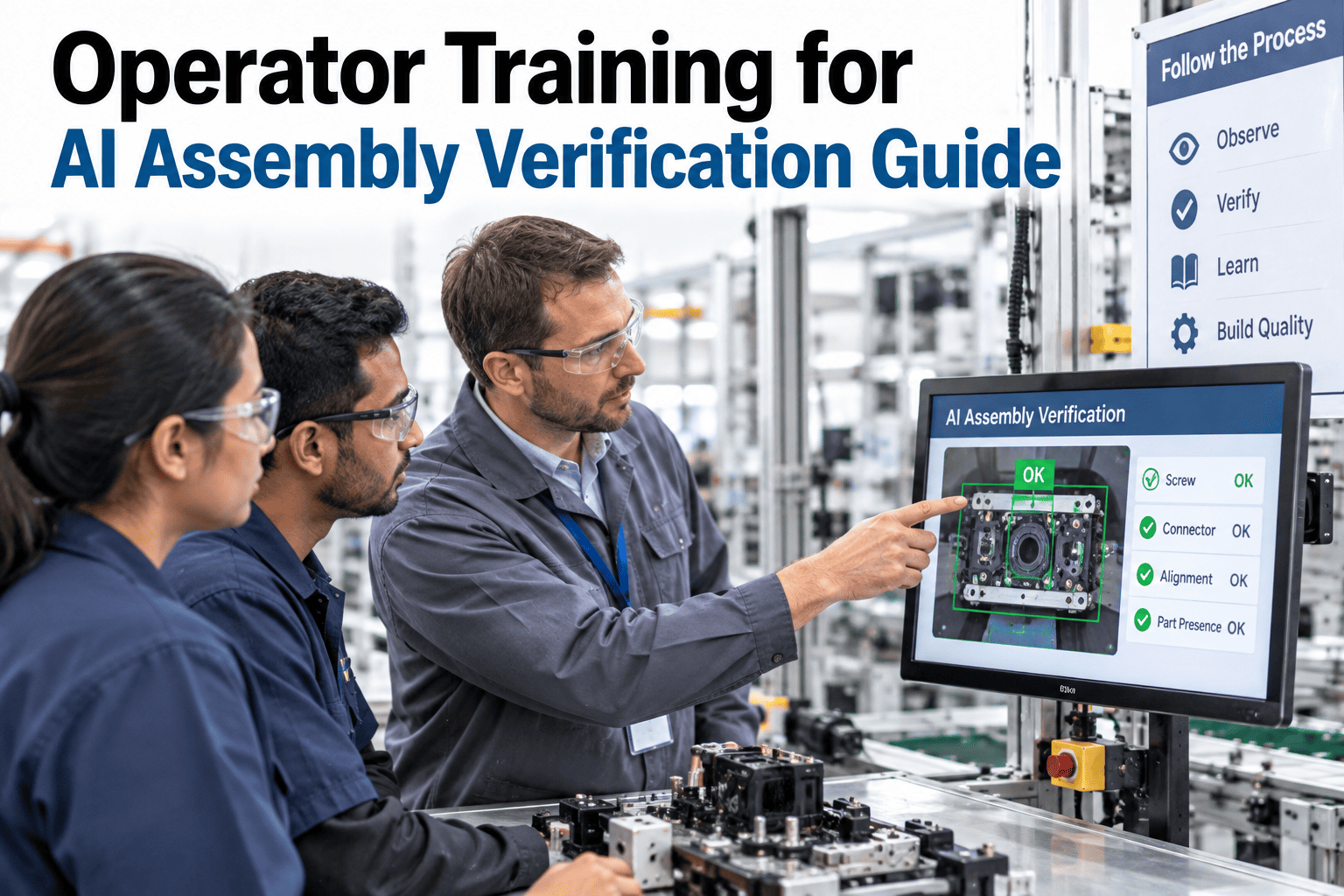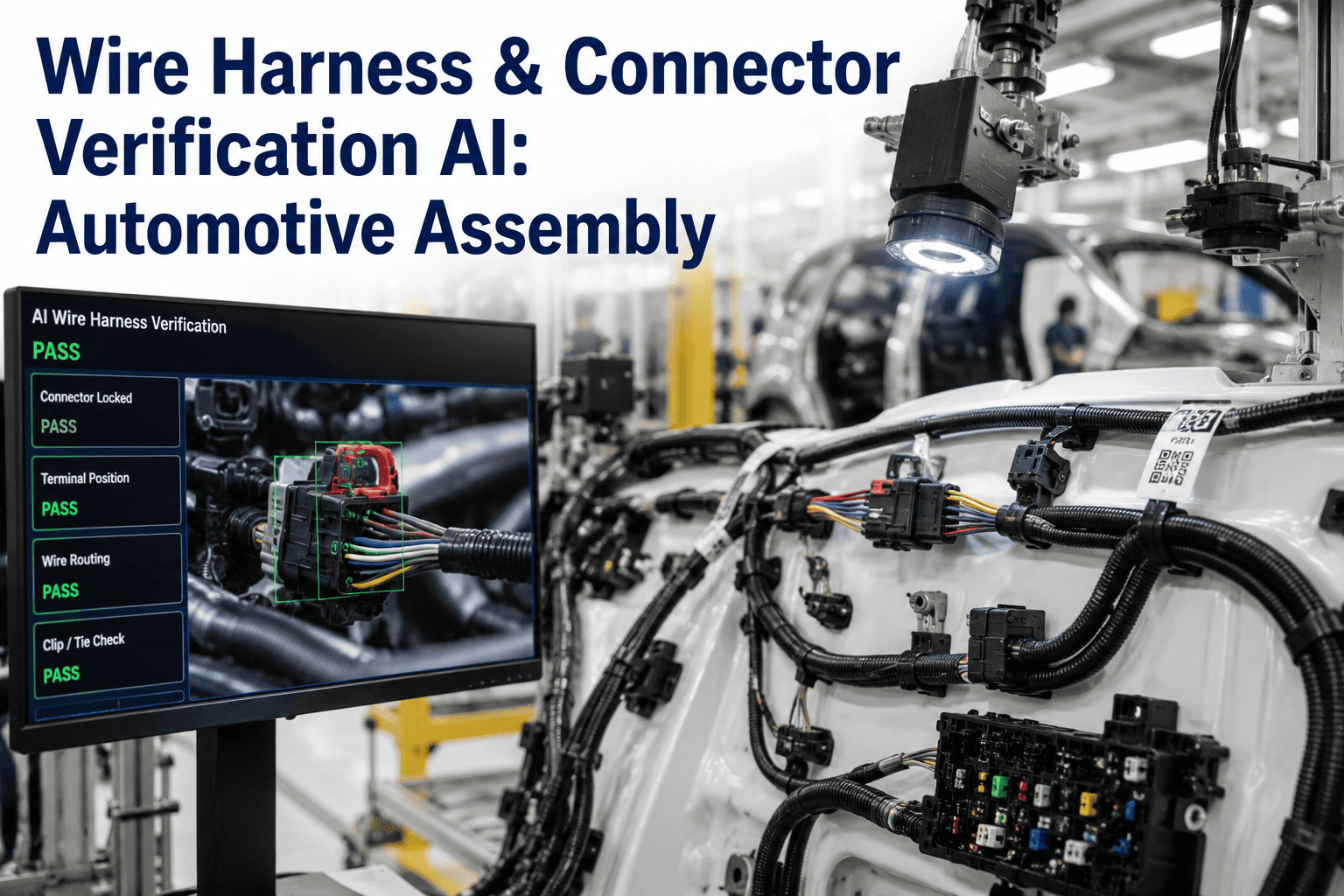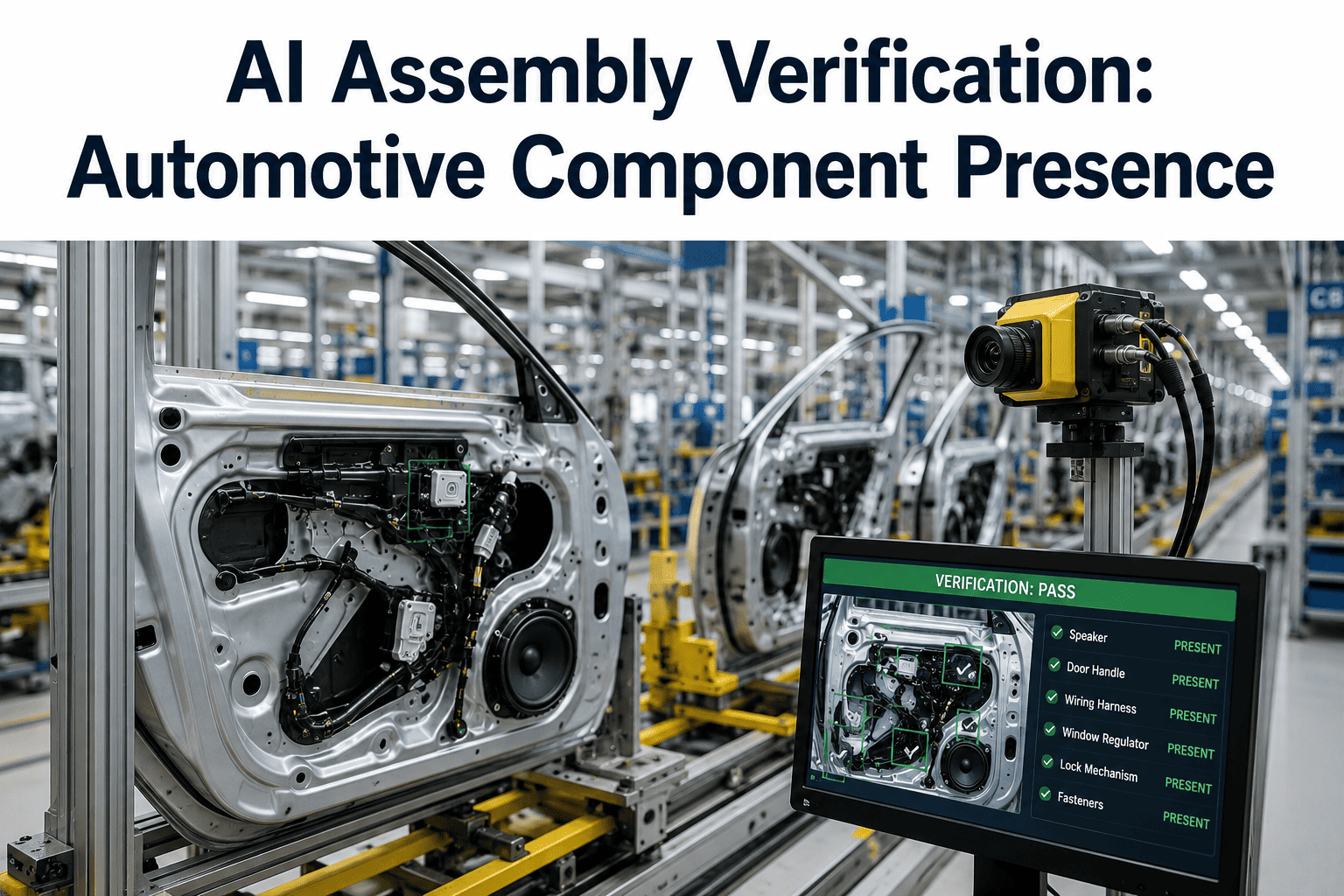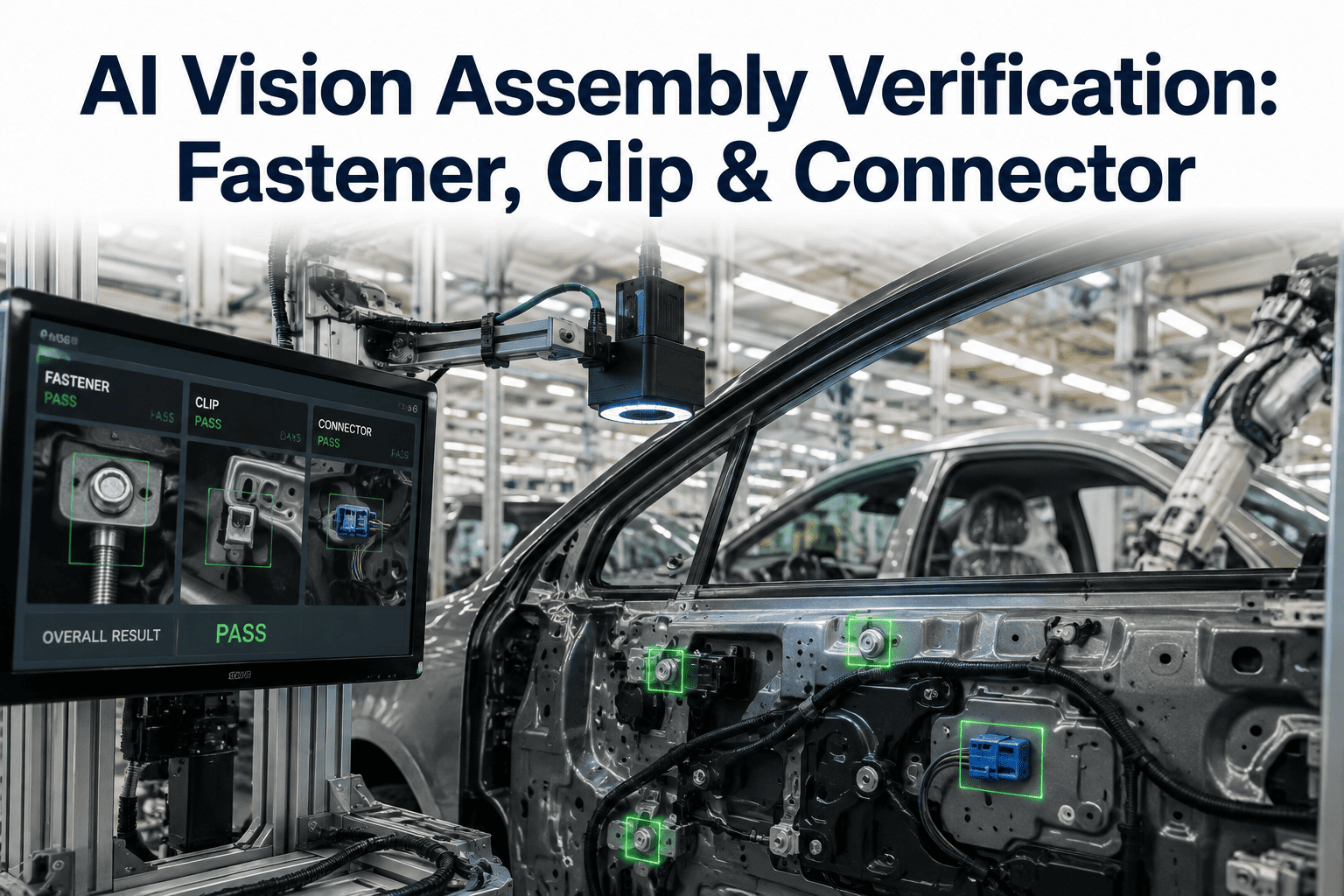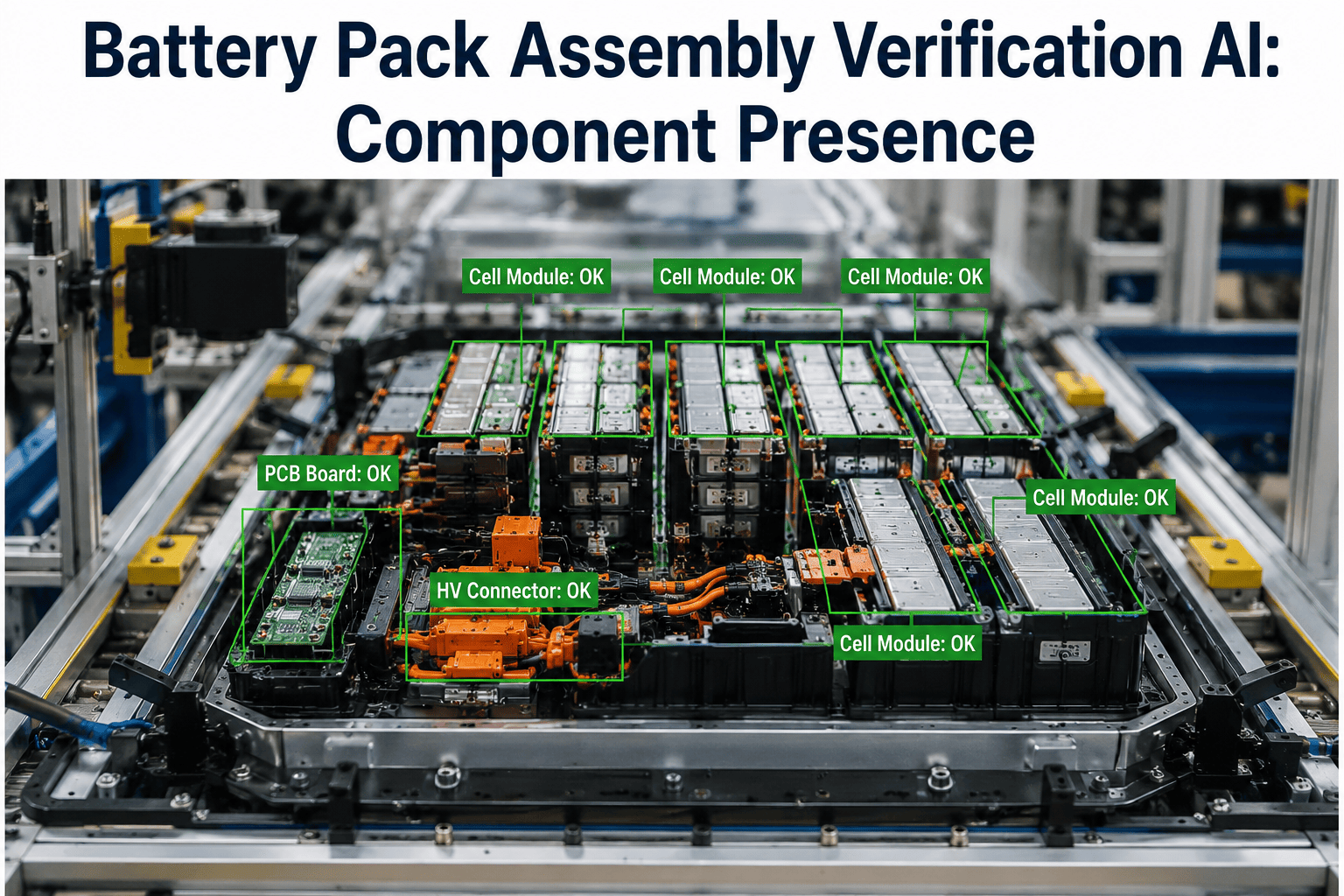
A battery pack can pass every cell-level and module-level inspection and still leave the line with a missing bracket, an unseated connector, or a fastener torqued below specification — assembly defects that have nothing to do with cell quality and everything to do with whether a human or a machine caught a step someone skipped under production pressure. Pack assembly involves dozens of discrete components, connectors, and fasteners, and a single missed step can mean a loose high-voltage connection, a coolant leak, or an enclosure that fails ingress protection standards. AI vision verification checks every component, every connector, and every fastener against the pack's bill of materials before it ever leaves the assembly line. Manufacturers ready to close the gap between "should have been installed" and "verified installed" can Book a Demo to see component verification running inline.
Verify Every Component Before the Pack Leaves the Line, Not After a Field Failure
iFactory's AI vision verifies component presence, connector seating, and fastener engagement against your pack's exact bill of materials — catching assembly omissions that cell-level and module-level inspection would never see.
Three Verification Checks That Matter Most at Pack Assembly
Pack assembly defects rarely come from a single failure mode — they come from three distinct categories of missed or incomplete steps, each requiring a different verification method to catch reliably.
Component Presence
Confirms every bracket, shield, gasket, and thermal interface pad specified in the bill of materials is physically present on the pack before it moves to the next station.
Connector Seating
Verifies high-voltage and low-voltage connectors are fully seated and latched, catching the partial connections that pass a visual glance but fail under vibration.
Fastener Engagement
Confirms fasteners are present, correctly seated, and where integrated with torque data, engaged to specification — critical for enclosure sealing and structural integrity.
What Happens When a Verification Step Is Skipped Manually
Manual final assembly checks rely on an operator following a checklist under production pace pressure, and checklist fatigue is a well-documented failure mode in high-repetition assembly work. The consequences of a missed step at pack assembly are disproportionate to how small the miss often is.
| Missed Step | Downstream Consequence | Typical Discovery Point |
|---|---|---|
| Missing thermal interface pad | Localized hotspot under load, accelerated degradation | Field failure or warranty claim |
| Unseated HV connector | Intermittent power loss or arcing risk | Vehicle assembly or field failure |
| Under-torqued enclosure fastener | Compromised ingress protection, coolant or moisture entry | Field failure, often months later |
| Missing ground strap | Electrical safety non-compliance | End-of-line electrical test, if caught at all |
Catch the Missing Step Before the Pack Leaves the Station
AI vision compares every assembled pack against its bill of materials in real time, flagging any missing, misplaced, or unseated component before the unit advances.
How Verification Adapts Across Pack Variants
Most manufacturers build several pack configurations on the same line — different capacity tiers, regional variants, or model-specific mounting hardware — which means a static verification checklist quickly becomes unreliable. AI vision verification is configured per build variant, automatically applying the correct component list to each unit based on its production order.
Build Order Identified
The system reads the pack's build variant from the production order or scanned identifier at the station.
Correct BOM Applied
The variant-specific bill of materials and component checklist loads automatically for that specific unit.
Verification Against Variant
AI vision checks the assembled pack against the correct component list, not a generic one shared across all variants.
What Manufacturers Gain From Verified Assembly Data
Component verification data does more than catch individual defects — it builds an assembly-level quality record that closes gaps traditional final inspection could never reliably cover.
Reduced Field Failures
Assembly omissions caught before shipment eliminate the specific defect category most likely to surface as a warranty claim months later.
Full Assembly Traceability
Every pack carries a verified, timestamped record of exactly which components were confirmed present at build time.
Consistent Multi-Variant Coverage
Verification accuracy does not degrade as build variants multiply, unlike a manual checklist process managed across shifts.
Faster Root Cause on Escapes
If a defect does escape, verified assembly records rule component omission in or out immediately, focusing investigation elsewhere.
Frequently Asked Questions
How does AI vision verify a connector is fully seated, not just present?
The model is trained to recognize the specific visual signature of a fully latched connector versus a partially seated one, since many connector designs show a visible gap, misalignment, or incomplete latch mechanism when not fully engaged even though the connector appears present in the frame. This trained distinction is what separates true seating verification from a simpler presence check that would miss a connector that looks installed but isn't actually locked in place. Teams can Book a Demo to see connector seating verification on their specific connector types.
Can this system verify fastener torque, or only presence?
Vision-based verification confirms a fastener is present and appears correctly seated, but torque value itself requires integration with torque-controlled tooling data rather than vision alone, since torque is a mechanical measurement not a visual one. iFactory's deployment can integrate torque tool data alongside vision verification so that both presence and torque compliance are checked and logged together for each fastener point, giving a complete verification record rather than a partial one.
How does the system handle multiple pack variants on the same line?
The system reads the build variant from the production order or a scanned unit identifier at the verification station, then automatically loads the correct component checklist and bill of materials for that specific variant before running verification. This means a single verification station can reliably cover a mixed-model line without requiring separate stations or manual reconfiguration between build variants. Contact iFactory Support for details on multi-variant configuration for your specific pack lineup.
What happens when a component is flagged as missing?
The unit is automatically flagged and held at the station or routed to a rework queue, with the specific missing or misplaced component identified so the assembly operator can correct it immediately rather than the pack advancing further down the line with an unresolved omission. This immediate feedback loop is what prevents a missed step from compounding into a larger rework job once the pack has moved through several additional assembly stations.
How long does deployment take for a pack assembly verification station?
A typical single-station deployment runs 6 to 10 weeks, covering camera placement for full pack coverage, bill of materials mapping for each build variant, and a validation run comparing AI verification results against manual final inspection before full handover. Lines running many pack variants may extend this timeline slightly to ensure each variant's component checklist is properly configured and validated during the assessment phase.
Don't Let a Checklist Fatigue Miss Become a Recall
iFactory verifies component presence, connector seating, and fastener engagement on every pack against your exact bill of materials — turnkey, variant-aware, and integrated with your quality systems.