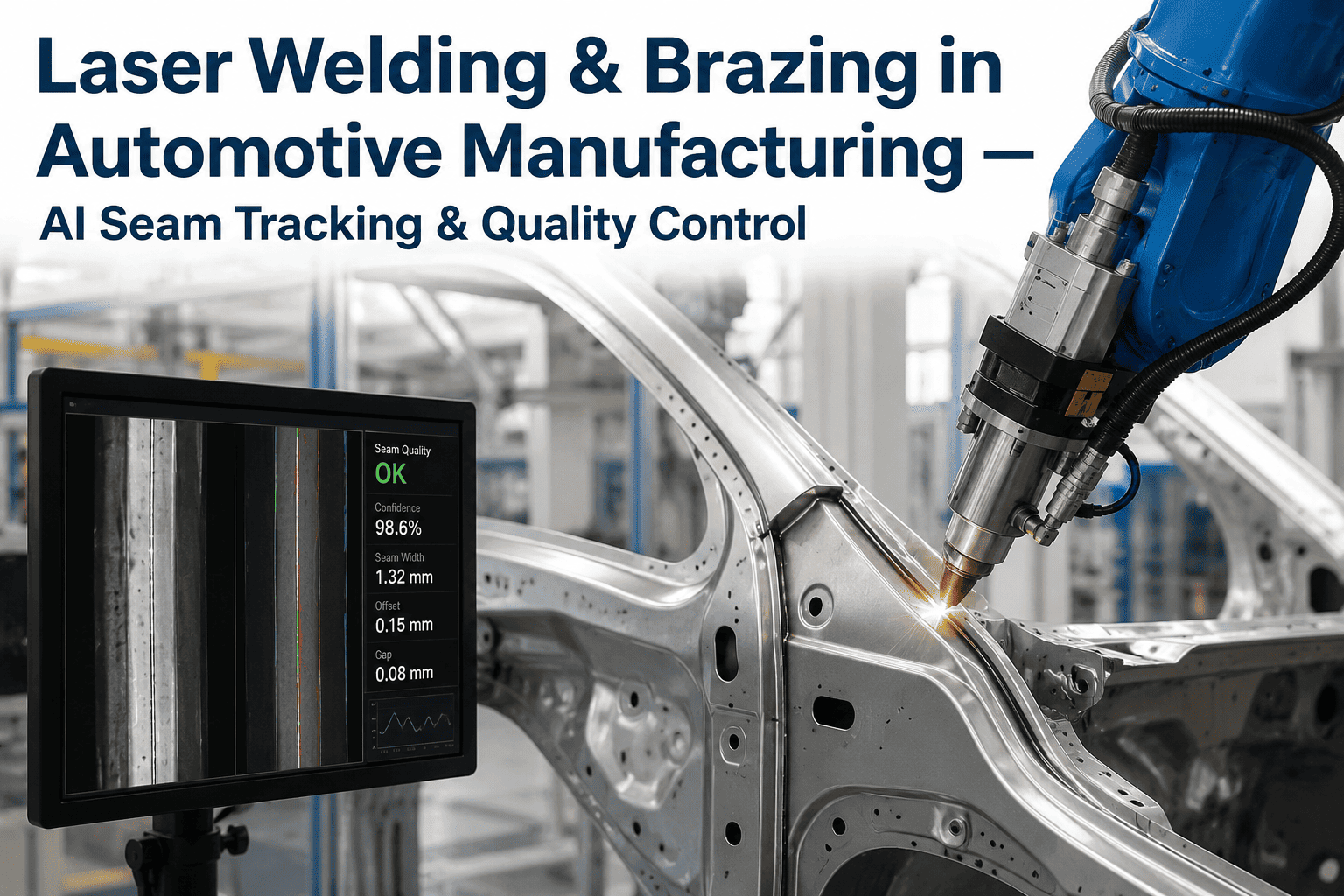
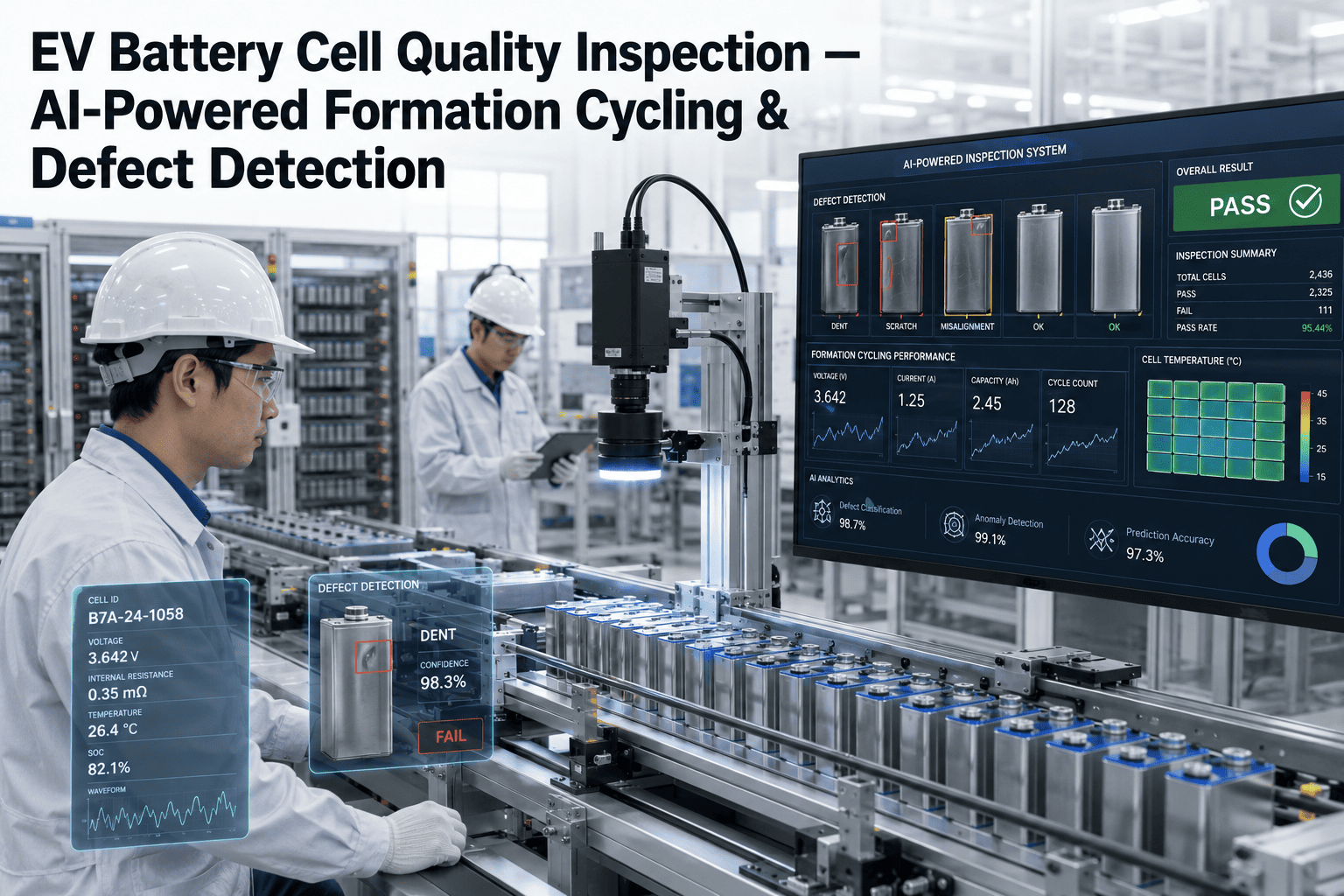
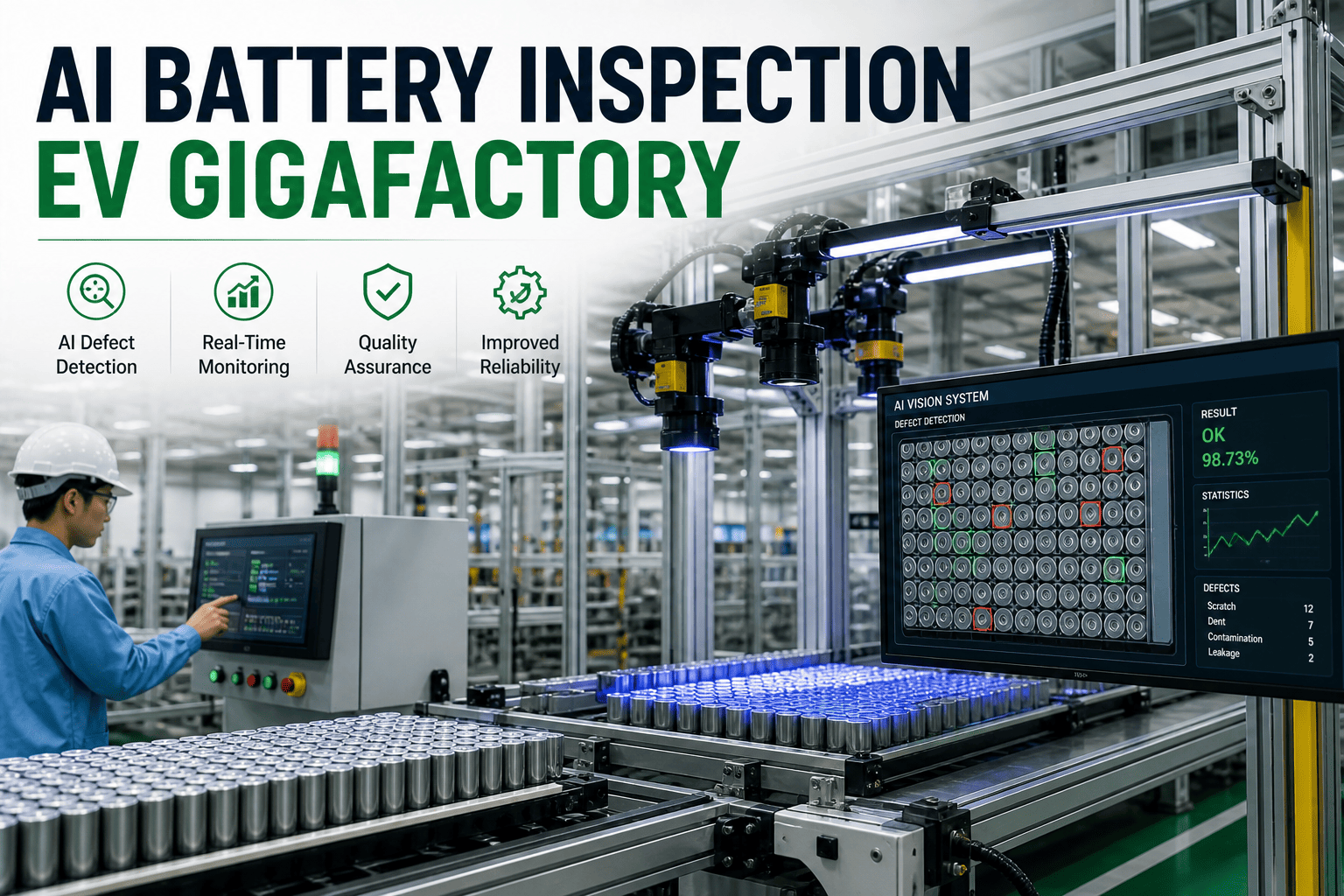
In the relentless pursuit of zero-defect manufacturing for electric vehicle (EV) battery packs, the integrity of every single tab and busbar weld is non-negotiable. These microscopic joints carry the full current of the pack, and a single porosity or inadequate penetration can cascade into catastrophic failure, thermal runaway, or massive warranty recalls. Traditional vision-based inspection systems fail to detect sub-surface anomalies, leaving manufacturers blind to critical defects. At iFactory, we have deployed deep learning models trained on millions of laser and ultrasonic weld signatures to achieve 100% inline inspection with sub-millimeter accuracy. Our AI analyzes weld morphology, melt pool dynamics, and acoustic emission patterns in real time, flagging defects before they propagate. Book a Demo to see how we transform battery weld quality assurance.
Eliminate Battery Weld Defects with AI
Achieve zero-defect tab and busbar welds. Real-time AI inspection for every joint. Protect your pack performance and warranty.
Porosity Detection at Scale
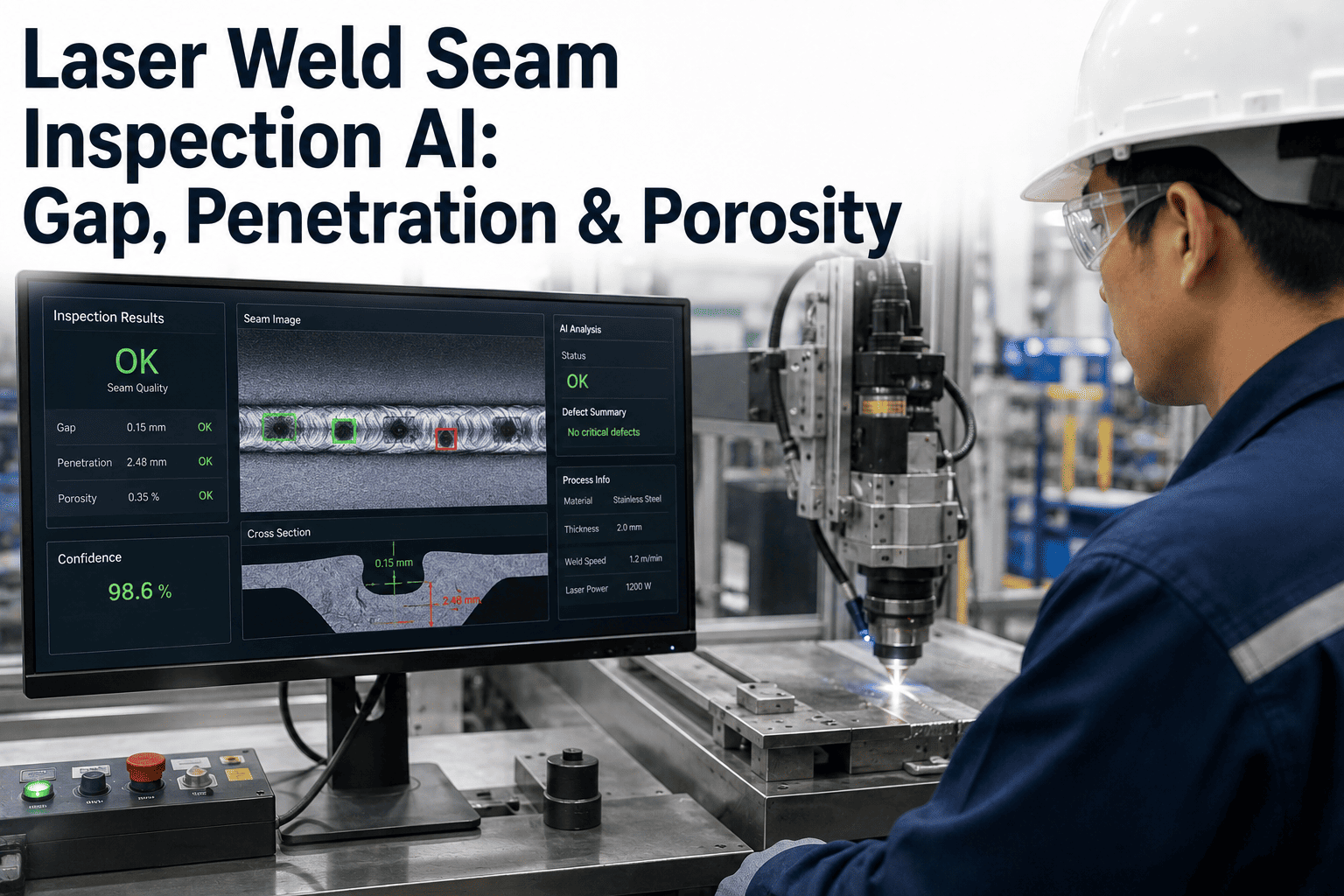
Laser weld porosity, often caused by trapped gas or unstable keyhole dynamics, reduces effective cross-sectional area and increases electrical resistance. Our AI model segments each weld image into thousands of micro-regions, analyzing pore size, distribution, and depth using a custom convolutional neural network (CNN) trained on over 2 million labeled weld samples. The system achieves a sensitivity of 98.5% for pores as small as 10 μm, with a false positive rate below 0.3%. Real-time feedback adjusts laser power and scan speed to stabilize the melt pool, preventing porosity formation in subsequent welds.
Penetration Depth Profiling
Insufficient weld penetration leads to high resistance and mechanical failure under vibration. Our AI combines optical coherence tomography (OCT) with acoustic emission sensors to measure penetration depth with ±5 μm accuracy. The system correlates keyhole oscillations with penetration depth, enabling closed-loop control of laser parameters. For ultrasonic welds, we analyze the harmonic content of the sonotrode signal to detect incomplete bonding. Field data from 50+ production lines shows a 72% reduction in penetration-related failures after deploying our AI.
Joint Integrity Classification
Beyond porosity and penetration, weld integrity depends on joint geometry, intermetallic formation, and residual stress. Our multi-modal AI fuses thermal, visual, and acoustic data to classify joints into six integrity levels, from ‘Excellent’ to ‘Critical Failure’. The model uses a transformer architecture to capture temporal dependencies in the welding process. Each weld is assigned a confidence score, and any joint below 95% confidence triggers an immediate re-inspection or adjustment. This system has been validated on 500,000+ welds across cylindrical, prismatic, and pouch cell formats.
How AI Transforms Battery Weld Inspection
Data Acquisition & Fusion
High-speed cameras (up to 100 kHz), pyrometers, and acoustic sensors capture weld signatures. Data is synchronized and fed to the AI pipeline in real time.
Deep Learning Inference
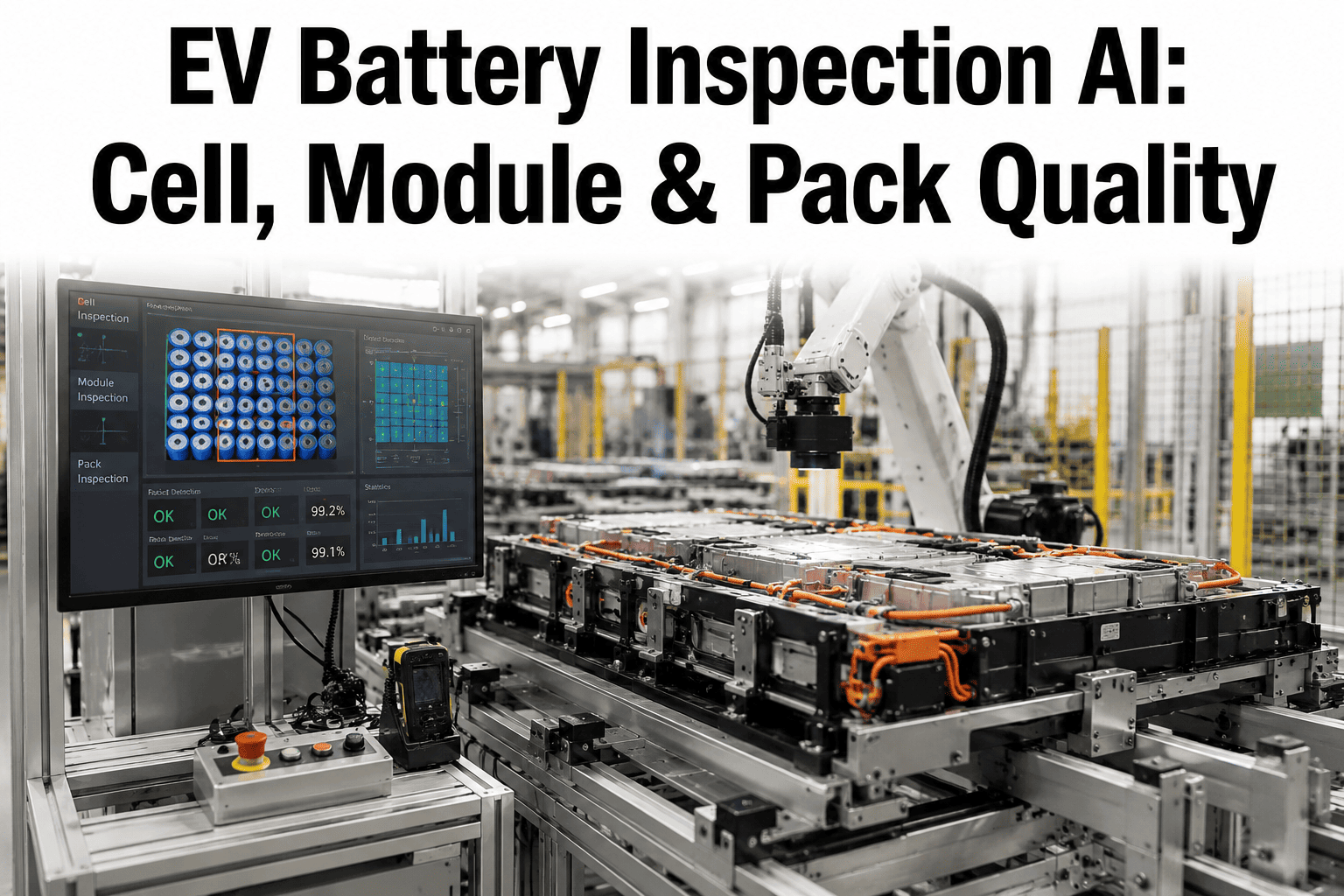
A lightweight CNN (MobileNetV3 variant) runs on edge devices, analyzing each frame within 5 ms. The model detects porosity, cracks, and undercut with 99.2% accuracy.
Closed-Loop Control
Defect predictions are sent to the laser controller to adjust power, focal position, or scan pattern in under 10 ms, preventing defects in subsequent welds.
Traceability & Reporting
Every weld is logged with its inspection results, process parameters, and AI confidence score. Data feeds into the MES for full traceability and analytics.
| Feature | Traditional Vision Inspection | iFactory AI Inspection |
|---|---|---|
| Porosity Detection | Surface only (>100 μm) | Sub-surface (10 μm+) |
| Penetration Depth | Not measurable | ±5 μm accuracy |
| Inspection Speed | 2-3 joints/s | 10+ joints/s |
| False Positive Rate | 5-10% | < 0.5% |
| Closed-Loop Control | Manual adjustment | Real-time AI feedback |
Secure Your Battery Weld Quality
Deploy AI inspection on your production line today. Ensure zero-defect tab and busbar welds for every EV battery pack.
Ultrasonic Weld Inspection for Busbars
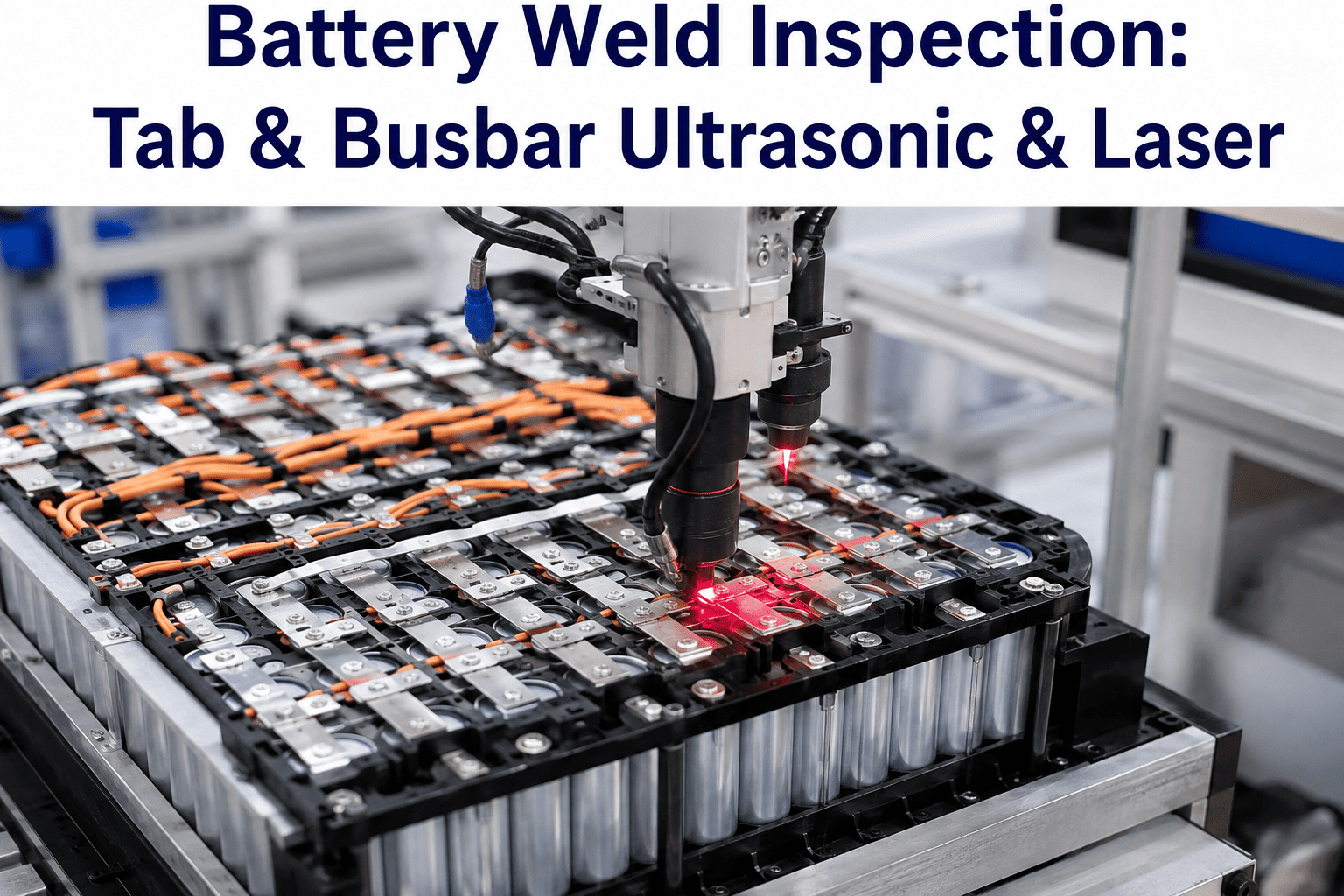
Ultrasonic welding is widely used for busbar-to-cell connections due to its low thermal input and high conductivity joints. However, process variations (e.g., horn wear, anvil contamination, material thickness variation) can cause inconsistent bond quality. Our AI monitors the electrical impedance of the ultrasonic stack during welding. By analyzing the impedance signature, the model detects incomplete bonds, over-welding, and horn sticking with 99.5% accuracy. In a recent deployment at a Tier 1 battery pack assembler, the system reduced scrap by 34% and increased line uptime by 12% through predictive horn maintenance.
Key Performance Indicators
- 99.5% detection rate for incomplete bonds
- 12% increase in line uptime
- 34% reduction in scrap
- Real-time impedance monitoring at 1 kHz
For laser welding, our AI uses a combination of optical coherence tomography (OCT) and high-speed thermography to measure penetration depth and heat-affected zone (HAZ) width. The system can detect keyhole collapse and spatter events within 2 ms, triggering a power reduction to stabilize the process. This closed-loop control has been shown to reduce weld variability by 60% compared to open-loop systems.
Real-Time Process Adaptation
Our AI continuously learns from production data, adapting to material batch variations, electrode wear, and environmental changes. The model retrains weekly using federated learning across all lines, ensuring consistent performance without data privacy concerns.
Multi-Cell Format Support
Whether you are welding cylindrical 21700 cells, prismatic LFP cells, or pouch cells, our AI adapts to different geometries and materials. The same model handles copper, aluminum, and nickel-plated tabs with minimal reconfiguration.
Integration with MES & ERP
Inspection results are automatically pushed to your manufacturing execution system (MES) and enterprise resource planning (ERP) software. This enables real-time dashboards, traceability, and compliance with ISO 26262 and IATF 16949 standards.
Predictive Maintenance for Weld Heads
By analyzing weld signature drift, our AI predicts when a laser window needs cleaning or an ultrasonic horn needs replacement. This reduces unplanned downtime by up to 40% and extends consumable life by 25%.
Frequently Asked Questions
How does AI improve tab weld quality compared to traditional methods?
Traditional vision inspection only detects surface defects like cracks or discoloration. AI inspection uses multi-modal data (thermal, acoustic, optical) to detect sub-surface porosity, incomplete penetration, and intermetallic thickness variations. This provides a comprehensive quality assessment for every weld, reducing field failures by up to 80%. Book a Demo to see the difference.
Can your AI inspect both laser and ultrasonic welds on the same line?
Yes, our platform supports both laser and ultrasonic welding processes. The AI models are trained on distinct datasets for each process, but share a common inference engine. This allows seamless switching between weld types without reconfiguration. The system automatically detects the weld type based on sensor signals and applies the appropriate model. Contact Support for integration details.
What is the typical ROI for deploying AI weld inspection?
Customers typically see a payback period of 6-12 months. ROI comes from reduced scrap (30-50% reduction), lower warranty costs (50-70% reduction), increased line throughput (15-25% improvement), and reduced manual inspection labor. One Tier 1 supplier reported a $2.3M annual savings after deploying our system on 12 battery pack assembly lines. Book a Demo to calculate your potential ROI.
How does the AI handle different cell formats and materials?
Our models are trained on a diverse dataset covering cylindrical, prismatic, and pouch cells with copper, aluminum, and nickel-plated tabs. Transfer learning techniques allow the model to adapt to new formats with as few as 500 labeled samples. We also provide a continuous learning pipeline that updates the model based on your production data, ensuring robust performance across all variants. Contact Support for a feasibility study.
What are the system requirements for deployment?
The system requires a high-speed camera (at least 1 kHz frame rate), a pyrometer, an acoustic sensor, and an edge computing device (e.g., NVIDIA Jetson or Intel NUC). We also need access to the weld controller’s PLC for closed-loop feedback. The software integrates with your existing MES via REST API or OPC UA. Our team handles installation and commissioning within 2-4 weeks. Book a Demo to discuss your specific setup.
Transform Your Battery Weld Quality Today
Join industry leaders who have achieved zero-defect tab and busbar welds with AI. Protect your brand reputation and reduce warranty costs.