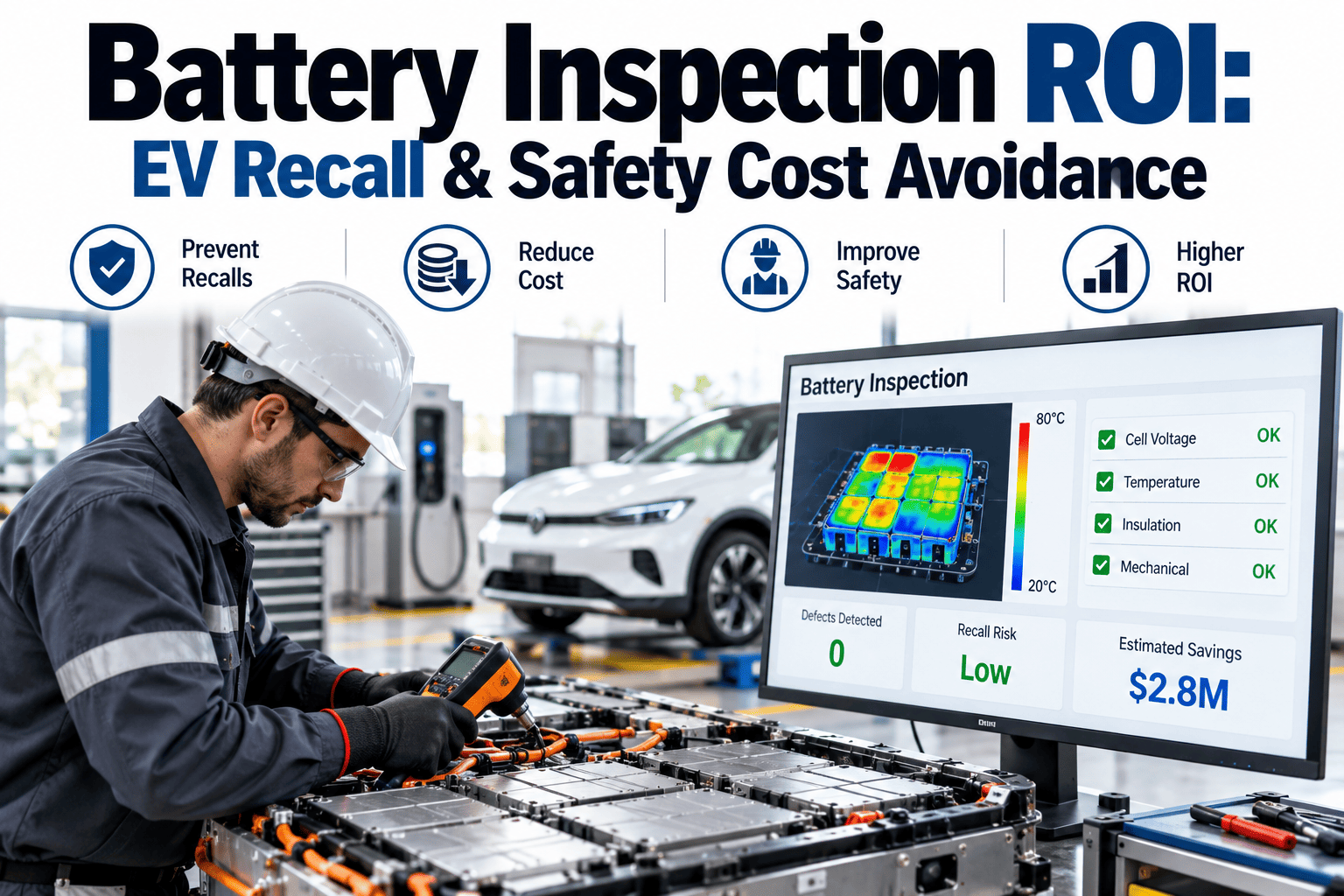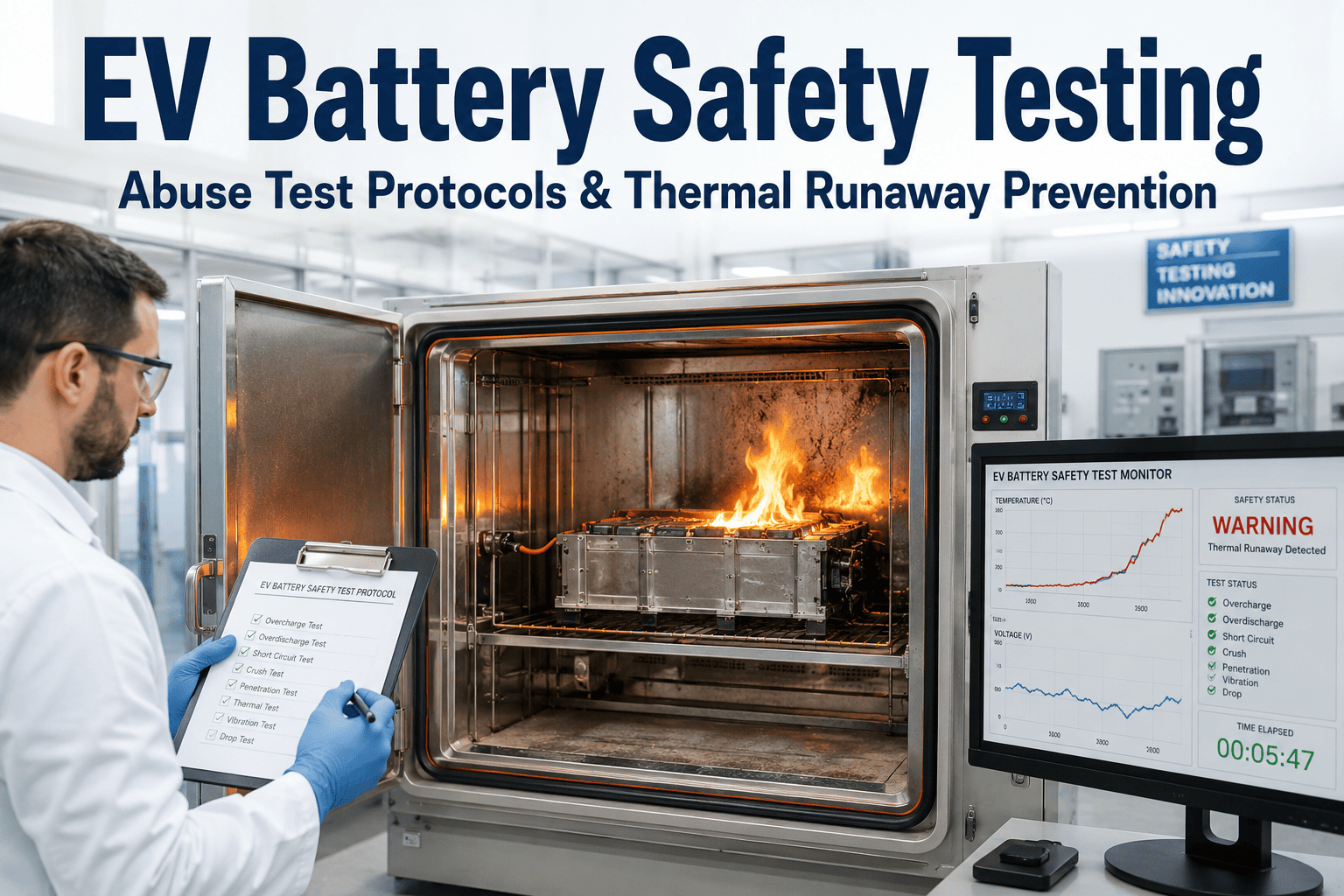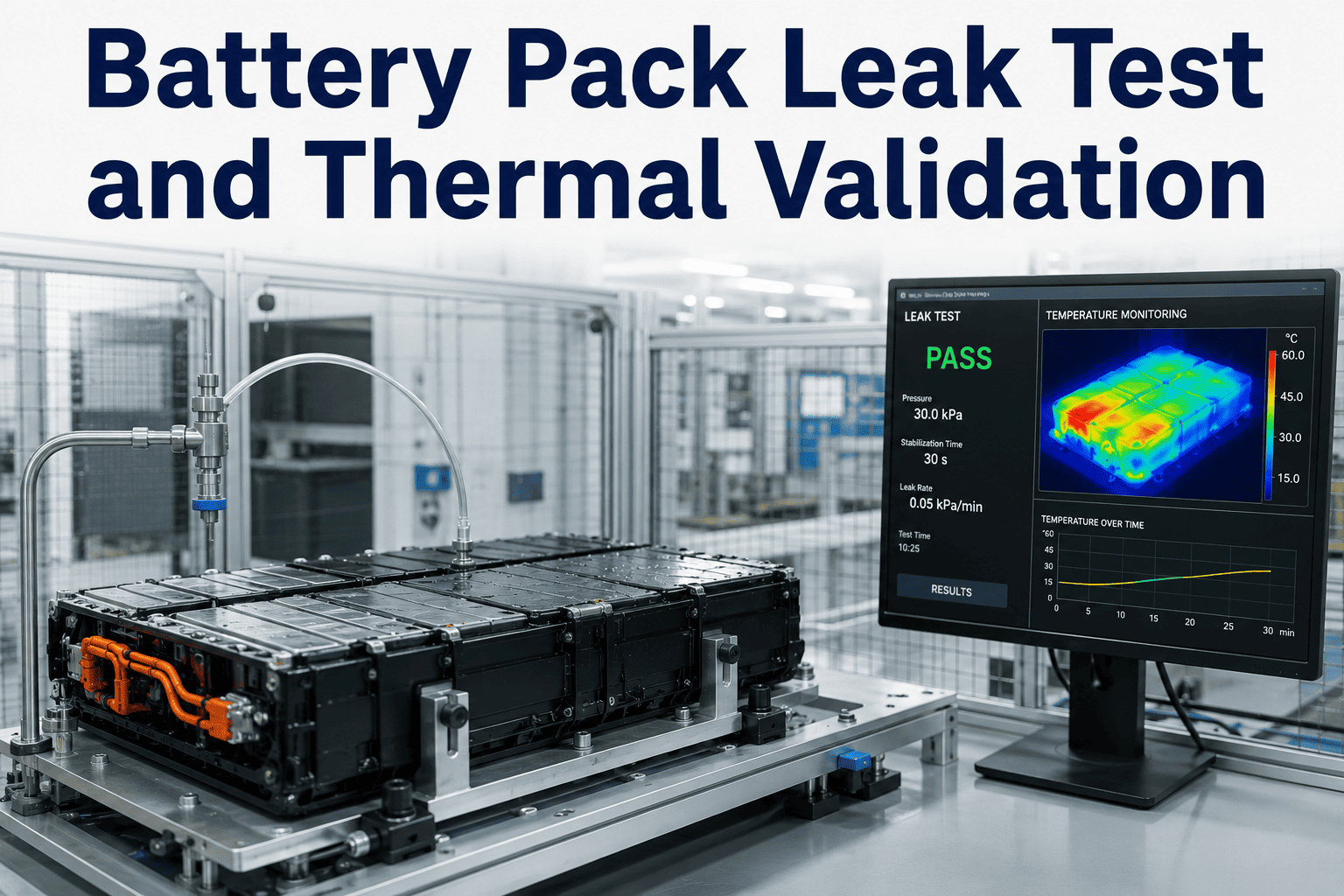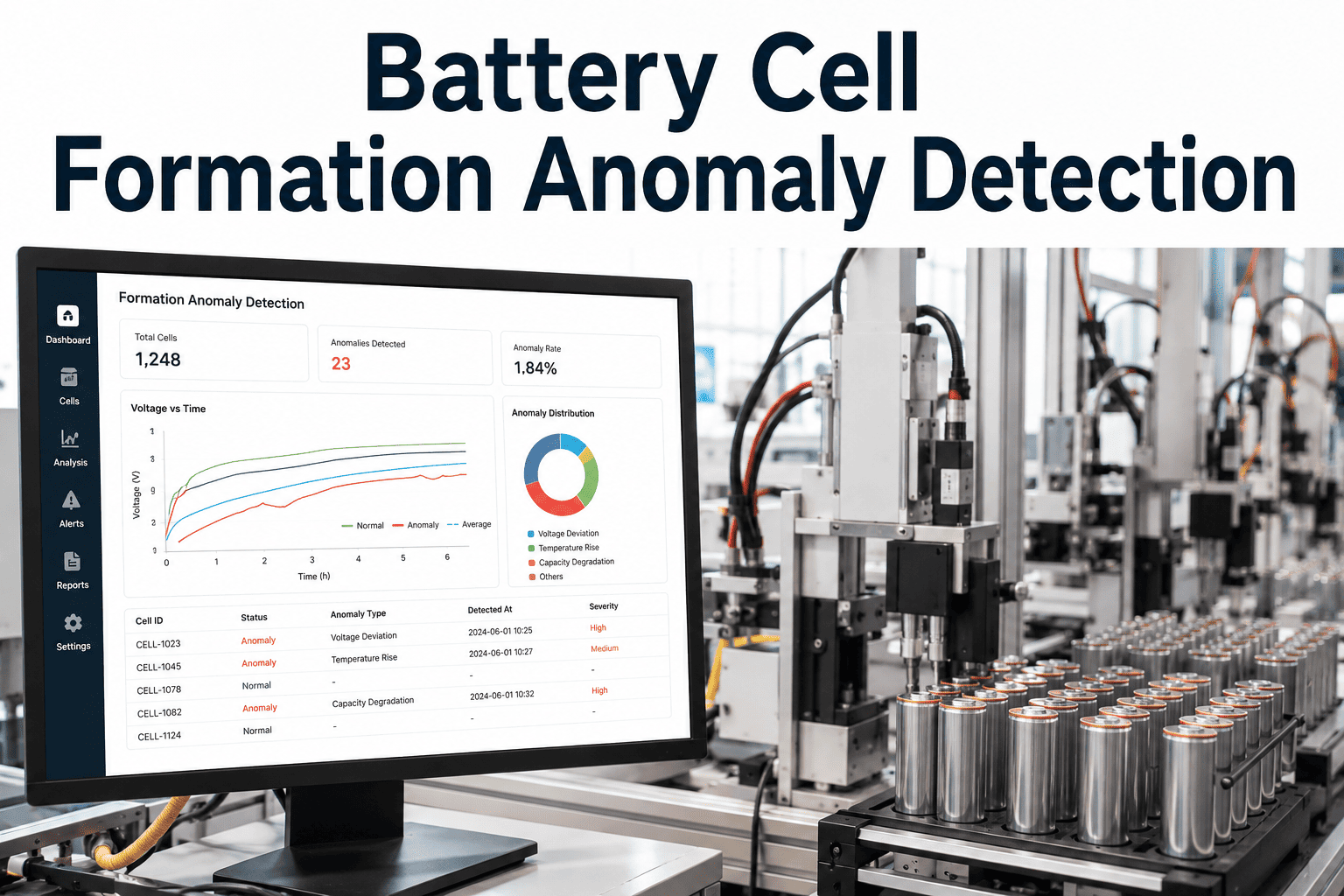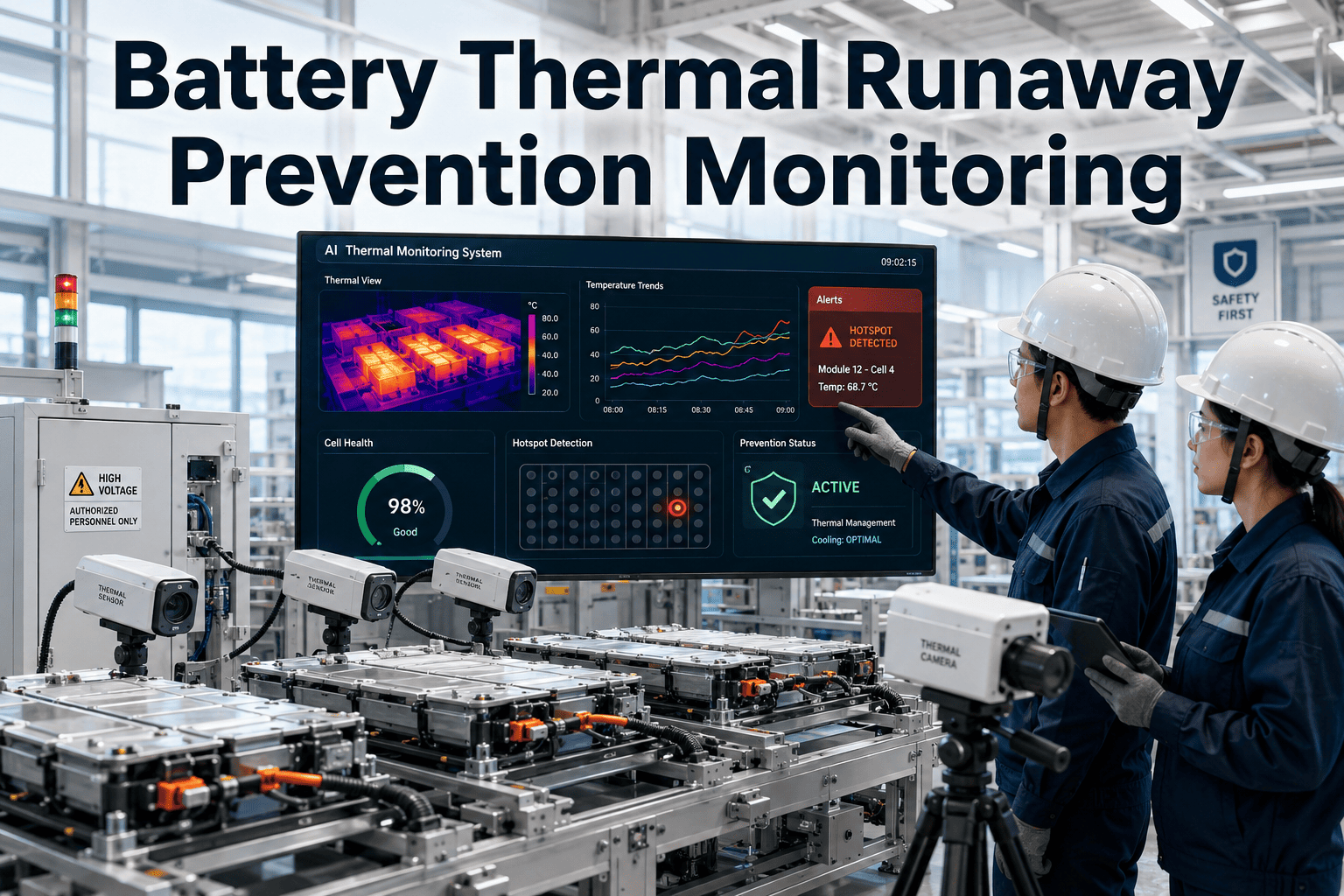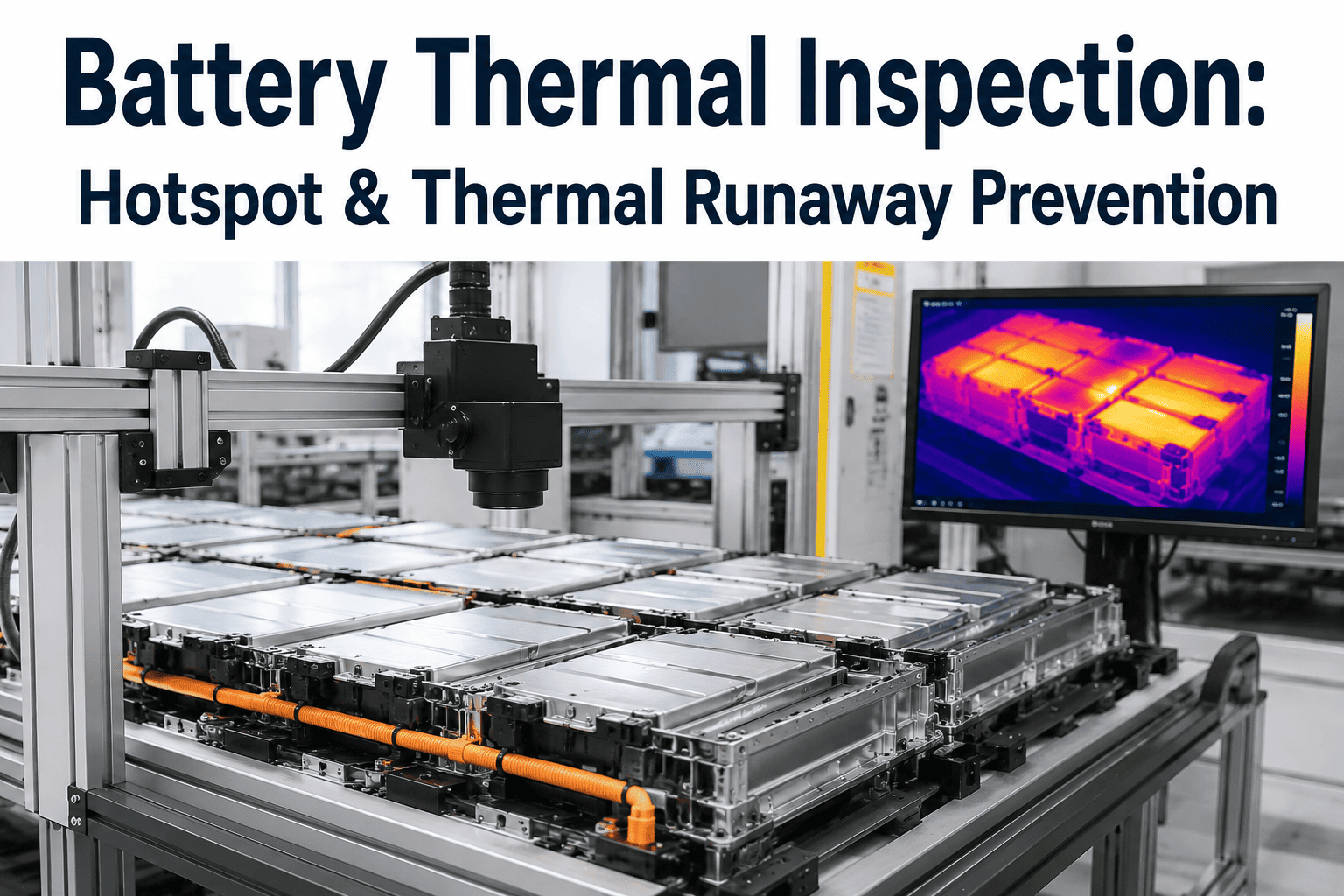
By the time a battery cell shows a visible hotspot on a thermal camera, the underlying defect has usually existed since manufacturing — a cold weld, a coating pinhole, or an internal short precursor that created a resistance imbalance long before heat became measurable. Thermal inspection catches that imbalance at the point of manufacture, tracking temperature signatures across cell, module, and pack levels to flag anomalies hours or days before they could ever develop into a field-level thermal event. Traditional quality control samples a fraction of production and relies on post-formation testing that only reveals problems after a cell has already been charged. Thermal monitoring changes that timeline entirely, evaluating every weld and every cell in real time. Battery manufacturers ready to see hotspot detection running inline can Book a Demo for a live thermal inspection walkthrough.
See the Heat Signature Before It Becomes a Field-Level Thermal Event
iFactory deploys thermal inspection across cell, module, and pack production, detecting hotspots and abnormal temperature signatures in real time — flagging risk long before a formation test or field failure would.
The Thermal Risk Gradient — From Precursor to Field Event
Thermal runaway does not begin as a fire — it begins as a manufacturing defect that creates a resistance imbalance, which develops into a measurable heat signature long before it ever becomes a safety incident. Understanding this gradient is what makes early inline detection so much more valuable than post-production testing.
Manufacturing Defect
Cold weld, coating pinhole, or particle contamination creates a hidden resistance imbalance at the point of production.
Thermal Signature Emerges
The defect begins generating localized heat during formation cycling or early charge cycles, detectable by thermal imaging.
Hotspot Develops
Without intervention, the localized heat concentrates further, accelerating degradation of surrounding cell material.
Thermal Runaway Risk
Under sustained load or damage, the hotspot can cascade into thermal runaway — the event AI thermal inspection exists to prevent.
Where Thermal Monitoring Deploys Across Production
Thermal signatures matter differently at each stage of battery manufacturing, and inspection coverage is designed around the specific risk each stage carries.
| Production Stage | Thermal Risk | Detection Approach |
|---|---|---|
| Tab and busbar welding | Cold weld / incomplete fusion resistance heating | Real-time thermal signature during and post-weld |
| Formation cycling | Voltage instability, thermal drift precursors | Continuous thermal monitoring during charge/discharge |
| Module assembly | Cell-to-cell resistance imbalance | Thermal imaging across module surface post-assembly |
| Pack-level burn-in | System-level thermal distribution anomalies | Full-pack thermal mapping under load |
Why Thermal Monitoring Outperforms Sampling-Based Testing
Traditional quality control relies heavily on post-process inspection — sampling welds for destructive testing, X-ray analysis, or ultrasonic evaluation — methods that are valuable for statistical process control but share a fundamental limitation: they detect defects after production, when rework is costly or impossible. Thermal monitoring evaluates every weld and every cell, not a sample.
100% Weld Coverage
Unlike sampling-based destructive testing, thermal monitoring evaluates every single weld as it's made, not a statistical fraction.
In-Process Detection
Quality issues are identified at the moment of welding, when intervention and correction are still possible on the current unit.
Process Drift Trending
Thermal signature drift across many welds identifies process degradation — a wearing weld horn, for example — before it causes defects.
Preventive Maintenance Trigger
Rising equipment temperature anomalies trigger maintenance alerts before thermal events cause unplanned downtime or safety incidents.
From 4–6 Hours of Downtime to 15–30 Minutes of Preventive Action
Thermal precursor detection catches rising temperature anomalies before a formation line reaches thermal runaway or electrical fault — turning reactive shutdown into planned intervention.
Formation Cycling: The Highest-Risk Stage for Thermal Anomalies
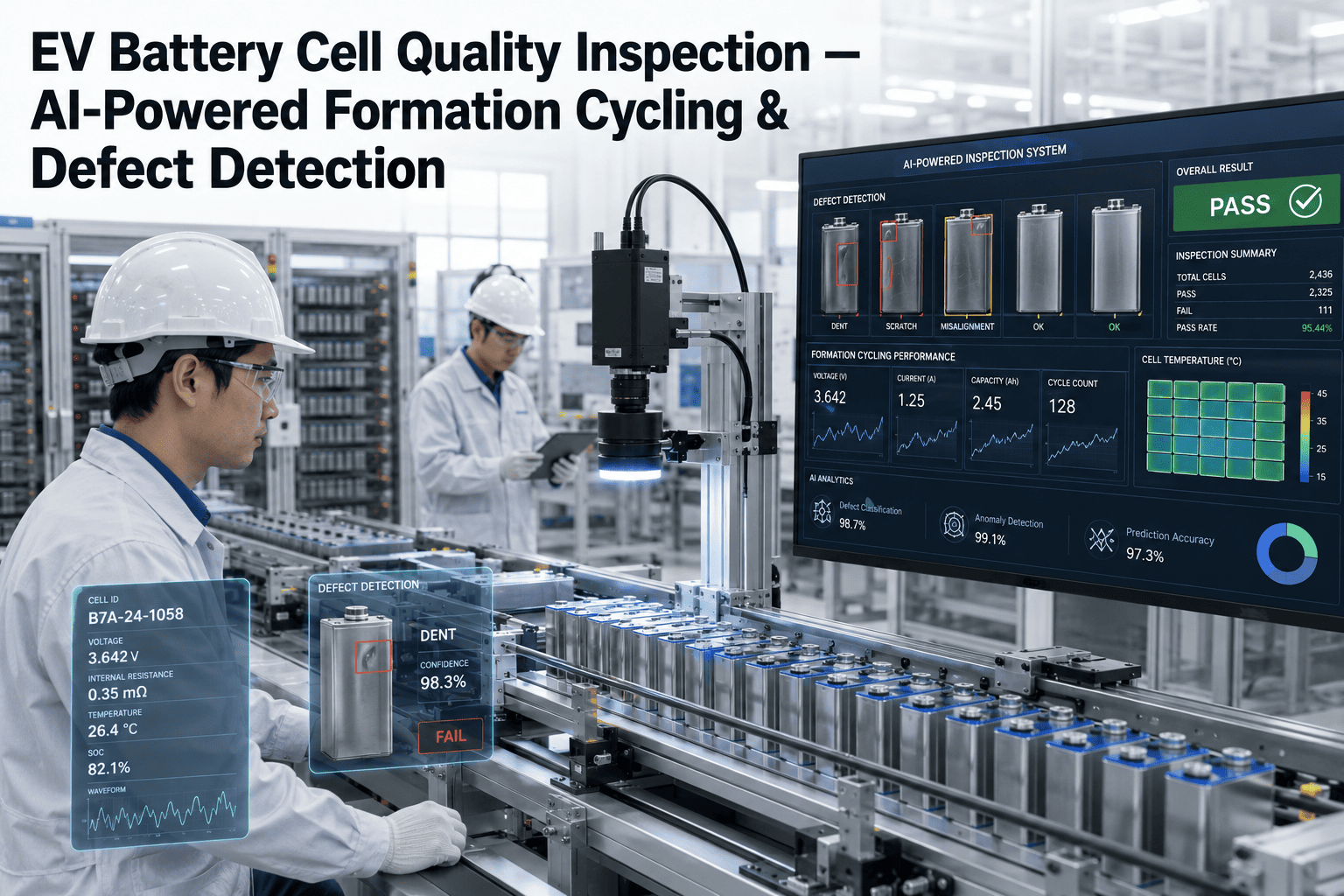
Formation cycling — the first charge and discharge that activates a cell — is widely recognized as the most failure-prone process in battery manufacturing. Voltage anomalies, thermal drift, and impedance spikes during formation are direct precursors to field-level thermal events, and defects invisible to post-formation testing frequently manifest here first as a subtle thermal signature.
Voltage Instability
Unstable voltage curves during formation often correlate with a thermal drift signature detectable minutes before a visible fault.
Impedance Rise
Rising internal impedance is a direct precursor to thermal events that might not otherwise surface until months after delivery.
Current Draw Anomalies
Unexpected current draw patterns during formation flag cells for diversion to rework before completing the cycle.
Frequently Asked Questions
How early can thermal inspection detect a defect before it becomes dangerous?
Thermal signature drift is typically detectable at the weld or formation stage, well before a cell has undergone enough charge cycles to develop into a field-level thermal event that could take months or years to manifest after delivery. Real-time monitoring during welding catches cold welds and incomplete fusion the moment they occur, while formation-stage monitoring catches voltage and impedance precursors during the cell's very first charge cycle — both stages sit far earlier in the risk timeline than field discovery or even destructive sample testing. Teams can Book a Demo to see detection timing on a live formation line.
Does thermal monitoring replace visual AI vision inspection?
No — thermal and visual inspection are complementary, catching different defect signatures. Visual inspection identifies geometric and surface defects like coating pinholes or weld spatter, while thermal monitoring catches the resistance and heat-generating consequences of defects that may not be visually obvious, such as a cold weld that looks acceptable under a camera but generates abnormal heat under load. Most production-grade deployments run both inspection types together at critical stations for full defect coverage.
What causes false positives in thermal hotspot detection?
Ambient temperature variation, normal process heat from adjacent equipment, and expected thermal signatures from a properly functioning weld can all be misread as anomalies if the detection thresholds are not calibrated to your specific process baseline. iFactory's deployment process establishes a thermal baseline specific to your equipment and environment during the assessment phase, tuning detection sensitivity to minimize false positives while maintaining reliable coverage of genuine anomalies. Reach iFactory Support for details on baseline calibration for your line.
Can thermal monitoring data trigger automatic maintenance work orders?
Yes — when integrated with a CMMS, gradual thermal signature drift at a specific weld station or piece of equipment can automatically generate a preventive maintenance work order before the drift causes a defect or unplanned downtime. This shifts equipment maintenance from a fixed schedule to a condition-based trigger driven by actual thermal performance data, catching issues like weld horn wear before they affect production quality.
How is thermal monitoring deployed without disrupting existing welding equipment?
Thermal cameras are typically deployed as a retrofit addition positioned to capture the weld pool and surrounding material during and immediately after the welding process, without requiring modification to the existing welder itself. This non-invasive integration approach means thermal monitoring can be added to an existing production line without the downtime associated with replacing or reconfiguring welding equipment.
Turn Heat Signatures Into an Early Warning System
iFactory deploys real-time thermal monitoring across welding, formation, and assembly stages — catching the precursor signals of thermal runaway while intervention is still possible.