Clear Coat Orange Peel and Appearance Control

By James Smith on July 15, 2026

clear-coat-orange-peel-appearance-ai

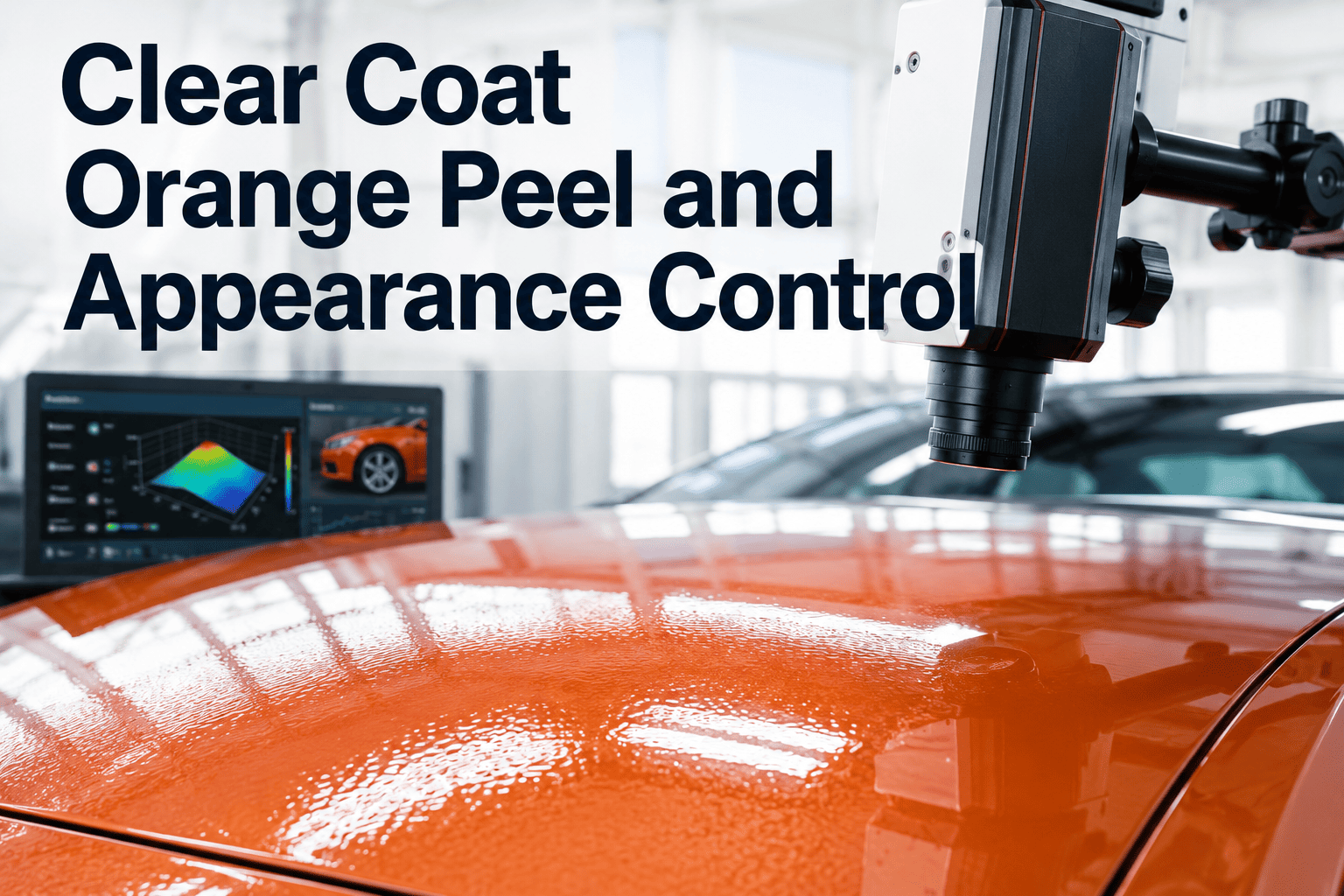
Two vehicles can come off the same paint line with identical color, identical film build, and zero visible defects, yet one will look noticeably more premium than the other. The difference is appearance quality: orange peel texture, distinctness of image, and gloss, the metrics that determine whether a clear coat surface looks like glass or like a slightly bumpy plastic panel. These metrics are notoriously hard to grade consistently because two experienced inspectors can disagree on the same panel under different lighting, and a wave meter only samples a handful of points across an entire body. iFactory's AI vision platform grades appearance metrics continuously across every panel on every body, giving paint engineers the objective data needed to hold a class-A finish standard, and you can book a demo to see it grading appearance on your own paint line.

CLEAR COAT · APPEARANCE GRADING · ORANGE PEEL · DOI CONTROL

Grading the Look of Your Paint, Not Just the Defects On It

iFactory's AI vision platform continuously measures orange peel texture, distinctness of image, and gloss across every panel, turning subjective appearance judgment into consistent, repeatable process data your paint shop can actually control.

ORANGE PEEL
88
CLASS-A PASS
DOI SCORE
91
CLASS-A PASS
GLOSS (60°)
94
CLASS-A PASS
THE GRADING PROBLEM

Why Appearance Quality Is So Hard to Hold Consistent

Appearance defects don't show up as a hole or a scratch that any inspector can spot instantly. They show up as a subtle texture difference that depends on viewing angle, lighting, and how tired the inspector's eyes are by the tenth vehicle of the hour. The issues below explain why appearance grading drifts even in well-run paint shops.

Subjective Human Judgment
Two trained inspectors grading the same panel under the same lighting can still disagree by a full grade point, because appearance perception varies from person to person and hour to hour.
Wave Meter Point Sampling
A handheld wave scan device measures a small patch of the panel, leaving the rest of the surface, including corners and complex curves, completely ungraded on most bodies.
Lighting-Dependent Results
Orange peel and DOI both change visibly under different lighting angles, so a panel that passes inspection under the booth's fluorescent lighting may look different entirely in daylight on the dealer lot.
Slow Feedback to the Booth
By the time a manual quality audit identifies an appearance trend, dozens or hundreds of bodies with the same drifting defect have already moved past the point where the booth settings could have been corrected.

Stop Guessing Whether Today's Finish Matches Yesterday's Standard

iFactory's AI vision platform grades orange peel, DOI, and gloss the same way on every panel, every body, every shift, removing the inspector-to-inspector variation that makes appearance quality so difficult to hold steady over time. Book a demo to see consistent grading on your own line.

ORANGE PEEL TEXTURE

Reading Surface Texture the Way a Trained Eye Would, at Every Point

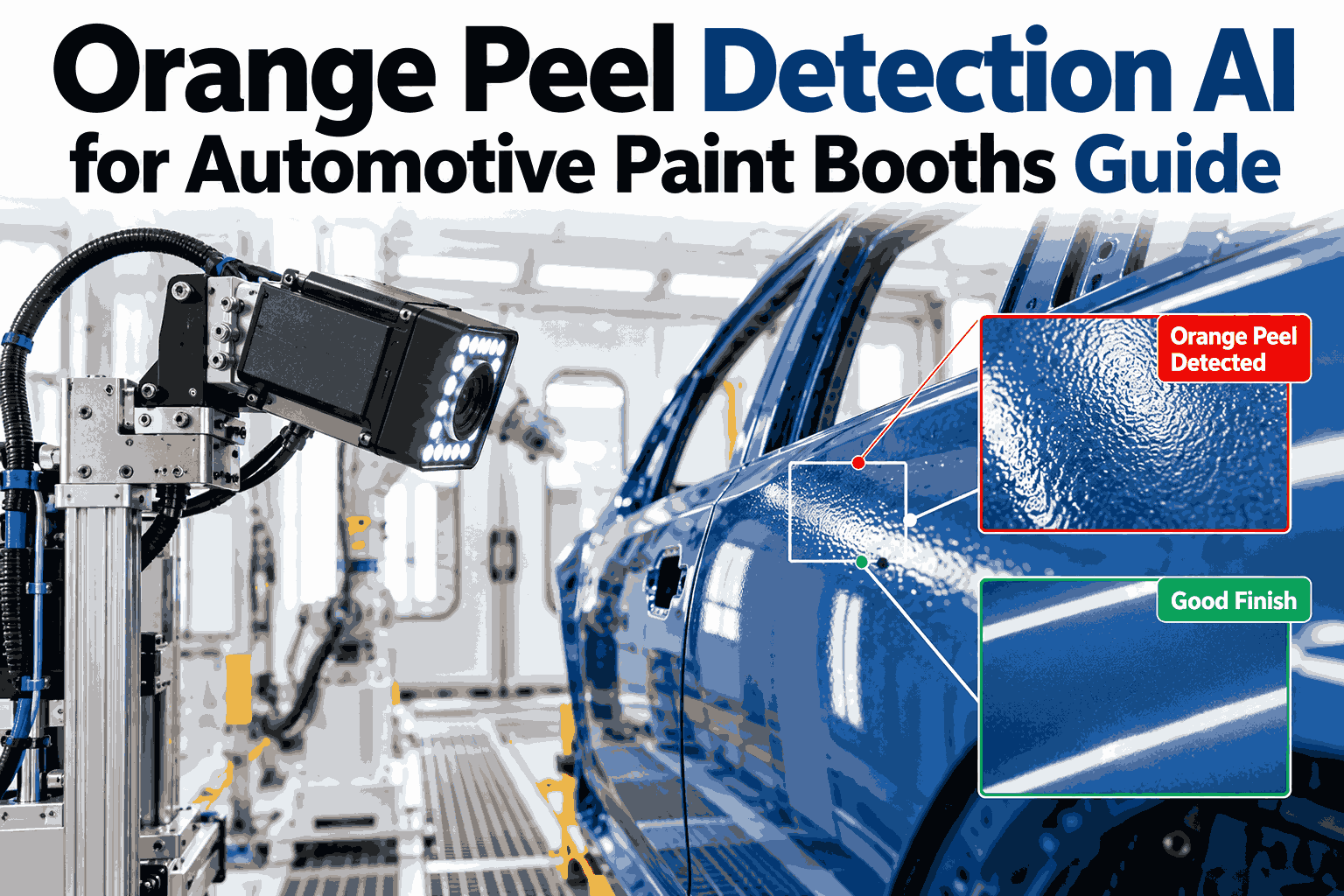
Orange peel is the wavy texture that forms as clear coat levels during cure, and its severity is graded on a numeric scale where a higher number means a smoother, more mirror-like surface. AI vision analyzes the reflected light pattern across the panel surface to calculate this score continuously rather than at a handful of sampled points.


SMOOTH
Score: 90-100

MODERATE
Score: 70-89

COARSE
Score: 50-69

SEVERE
Score: Below 50
PANEL-BY-PANEL MAPPING

Seeing Which Zones of the Body Drift First

Appearance defects rarely appear uniformly across a whole vehicle. Roof panels, hoods, and door skins each have different clear coat flow behavior due to their orientation in the booth, so tracking scores by zone reveals problems that a single whole-body average would hide.

Roof
92
Hood
89
Doors
85
Fenders
68
Bumpers
83
HEAD TO HEAD

Manual Wave Scan vs AI Vision Appearance Grading

The comparison below covers the dimensions that matter most when a paint shop is deciding how to hold a class-A appearance standard across every body it produces.

Grading Dimension Manual Wave Scan and Visual iFactory AI Vision Grading
Panel Coverage A handful of sampled points per body, chosen by inspector routine Continuous grading across every visible panel surface
Consistency Between Inspectors Varies by individual inspector experience and fatigue level Identical grading criteria applied regardless of shift or inspector
Trend Visibility Trends surface only during periodic quality audits Zone-level trends visible in real time as bodies move through the line
Feedback Speed to Booth Settings Hours to days depending on audit schedule Minutes, allowing booth adjustment before drift affects more bodies
MEASURED OUTCOMES

Results From AI Appearance Grading Deployments

These outcomes reflect paint shops where iFactory's platform was deployed for continuous appearance grading and tracked over a minimum six-month production period.

2.4x
More Consistent
Appearance Grading Compared to Manual Inspector Scoring
38%
Reduction
In Class-A Finish Rejections at Final Inspection
100%
Panel Coverage
Graded on Every Body Instead of Sampled Points
$165K
Annual Savings
From Reduced Rework and Faster Booth Correction
FREQUENTLY ASKED QUESTIONS

Questions From Top Coat Leads About AI Appearance Grading

How does the AI grading correlate with the wave scan devices we already use for spec compliance?
iFactory's models are calibrated against your existing wave scan device during setup so that the AI-derived orange peel and DOI scores track closely with the readings your quality team already trusts and reports against your specification. This calibration process typically involves scanning a representative set of panels with both methods and tuning the model until the scores align within an agreed tolerance. Book a demo to see this correlation process explained for your specific wave scan equipment.
Does the appearance grading work on metallic and pearlescent paint finishes as well as solid colors?
Yes, though metallic and pearlescent finishes require additional lighting configuration since the flake orientation in these paints affects how light reflects off the surface compared to a solid color. iFactory's deployment team assesses your specific color portfolio during the pilot phase and tunes lighting angles to ensure accurate grading across every finish type in your production mix.
Can this system replace our final quality inspectors entirely?
Most facilities keep final inspectors in place but shift their role from routine grading to handling the exceptions and edge cases the AI flags, since human judgment remains valuable for unusual or ambiguous appearance issues. The AI system handles the repetitive, full-coverage grading work that is difficult for a person to sustain consistently across a full shift, freeing inspectors to focus where their judgment adds the most value. Contact our support team to discuss how this fits your current inspection workflow.
How quickly can appearance data be linked back to a specific booth setting or clear coat batch?
Appearance scores are logged against the vehicle identification number and timestamp, which allows correlation with booth temperature, humidity, clear coat batch number, and bell cup settings recorded at the same time. This makes it possible to trace a developing appearance trend back to the specific process parameter that shifted, often within the same shift rather than after a delayed quality audit.
What camera and lighting setup does a typical clear coat appearance station require?
A standard installation uses fixed high-resolution cameras positioned at multiple angles around the inspection zone along with controlled directional lighting designed to reveal texture variation the way a trained inspector's angled flashlight would. The exact configuration depends on your booth layout, body types, and existing lighting infrastructure. Book a demo to review a camera and lighting plan for your specific paint shop layout.

Turn Appearance Quality From a Judgment Call Into a Measured Number

iFactory's AI vision platform gives your paint shop a consistent, repeatable way to grade orange peel, DOI, and gloss across every panel and every body, so class-A finish becomes a controllable process rather than a matter of which inspector happened to check that day. Book a demo to see it in action.

Share This Story, Choose Your Platform!