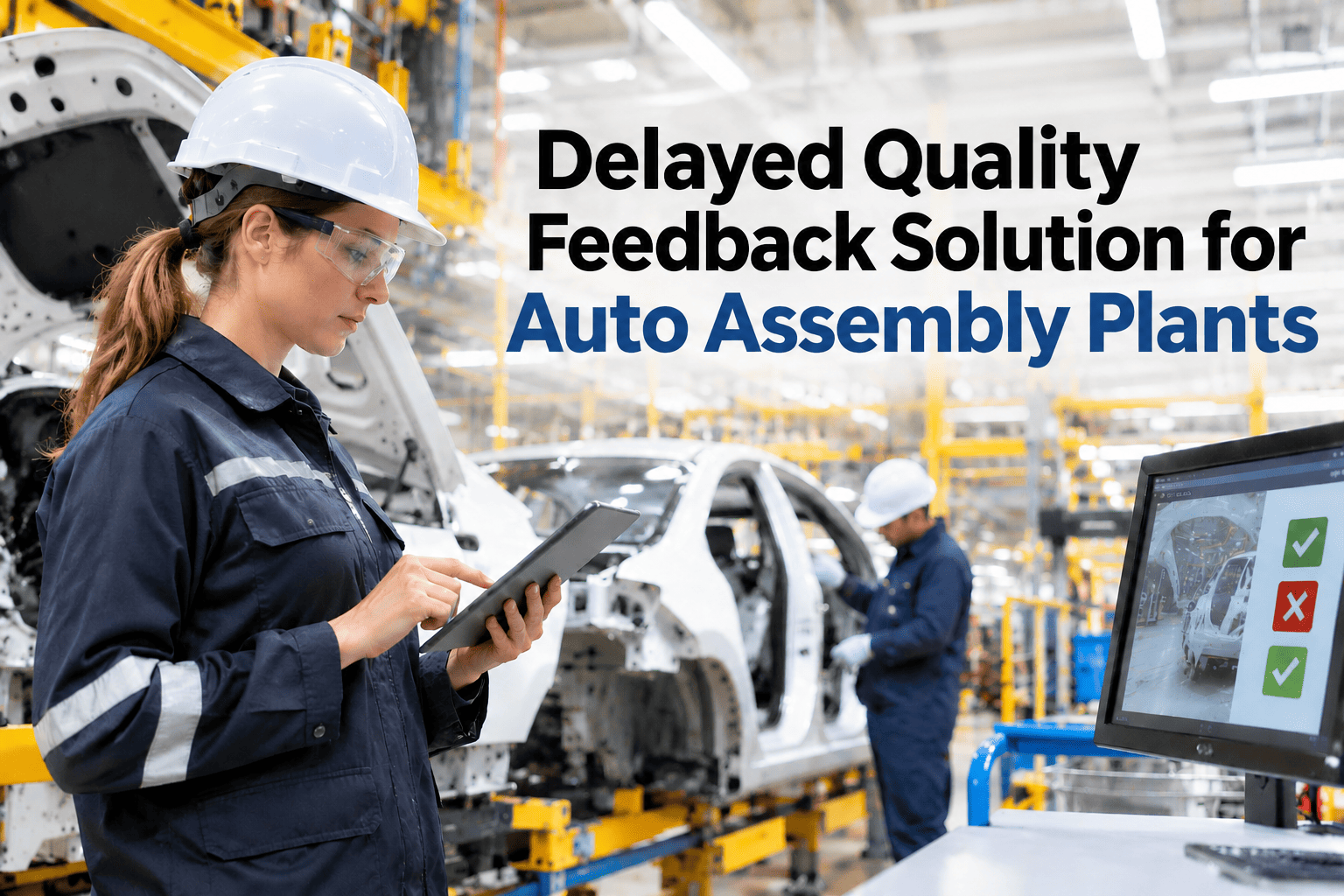
By the time a shift-end quality report reaches the station that actually caused a defect, that station has usually already built several hours' worth of parts under the same bad condition. The delay between a defect being caught and the responsible station finding out is where avoidable scrap quietly accumulates, even in plants with otherwise solid inspection coverage. Auto assembly teams who want to see how long their own feedback loop actually takes can trace a recent defect from detection to notification with iFactory AI.
The Gap Between Catching a Defect and Telling the Station That Caused It
iFactory AI routes defect alerts straight to the upstream station in near real time and closes the containment loop automatically, cutting a shift-long delay down to minutes.
How Long Feedback Actually Takes Today
Most plants have never measured this directly — they know inspection happens and they know a shift report goes out, but the actual elapsed time between a defect being caught and the responsible station hearing about it is rarely tracked as its own number.
What Changes With Near Real-Time Routing
Measure Your Own Feedback Delay Before Fixing It
Trace a recent defect record from detection to notification and see exactly where the delay in your own plant sits.
Closing the Loop, Not Just Speeding Up the Alert
A faster alert alone is only half the fix. Closed-loop containment means the notification automatically identifies every unit made at that station since the last confirmed good check, flags them for review, and tracks the corrective action until it is verified — rather than relying on someone remembering to check the right range of parts.
A Composite Scenario: The Delay Nobody Had Measured
A plant assumed its quality feedback was fast because inspectors logged defects immediately at the point of detection. Tracing one actual case showed the defect sat in a queue until the shift-end report compiled, then waited another two hours for a quality reviewer to identify the likely source station, for a total delay of just under five hours. Routing the same type of defect directly to the responsible station's display as soon as it was logged, bypassing the shift-end compilation entirely, cut that same delay to under ten minutes — a change iFactory AI's team can help design around your own existing alert systems.
Which Defects Deserve Instant Routing Versus a Standard Report
Not every defect needs a real-time alert — a rare cosmetic issue caught once a week can wait for a routine report without real cost. The defects worth routing instantly are the ones likely to repeat quickly if the upstream condition does not change, where every additional unit built under the same condition adds directly to the eventual rework or scrap bill.
Frequently Asked Questions
Stop Letting a Shift Pass Before the Station Finds Out
iFactory AI routes defect alerts to the source station in near real time and closes the containment loop automatically. Book a walkthrough with your own feedback data.