A torque station on a wire harness line has roughly forty milliseconds to catch a bad crimp before the carrier moves on, and a cloud round trip for that decision alone can eat most of that window before the model even starts thinking. Sending every frame and signal up to a data center and waiting for an answer works fine for a dashboard, but it does not work for a control loop that has to act inside the same cycle the sensor fired in. That is the gap edge AI closes, and you can book a demo to see inference running directly at the station on your own line.
EDGE AI · REAL-TIME CONTROL · SUB-50MS INFERENCE · STATION-LEVEL COMPUTE
Your Line Control Loop Moves Faster Than the Cloud Ever Can — Edge AI Closes That Gap
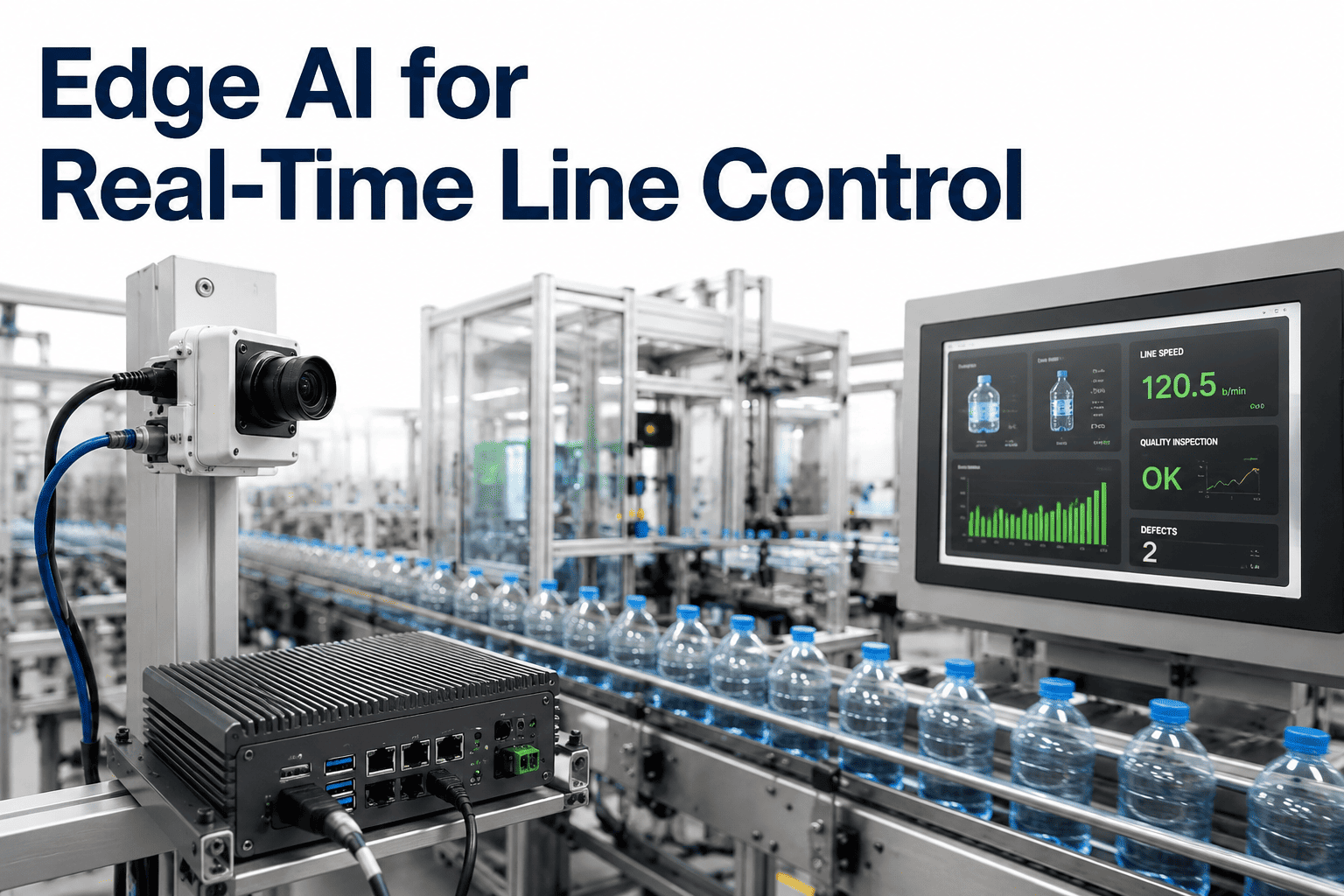
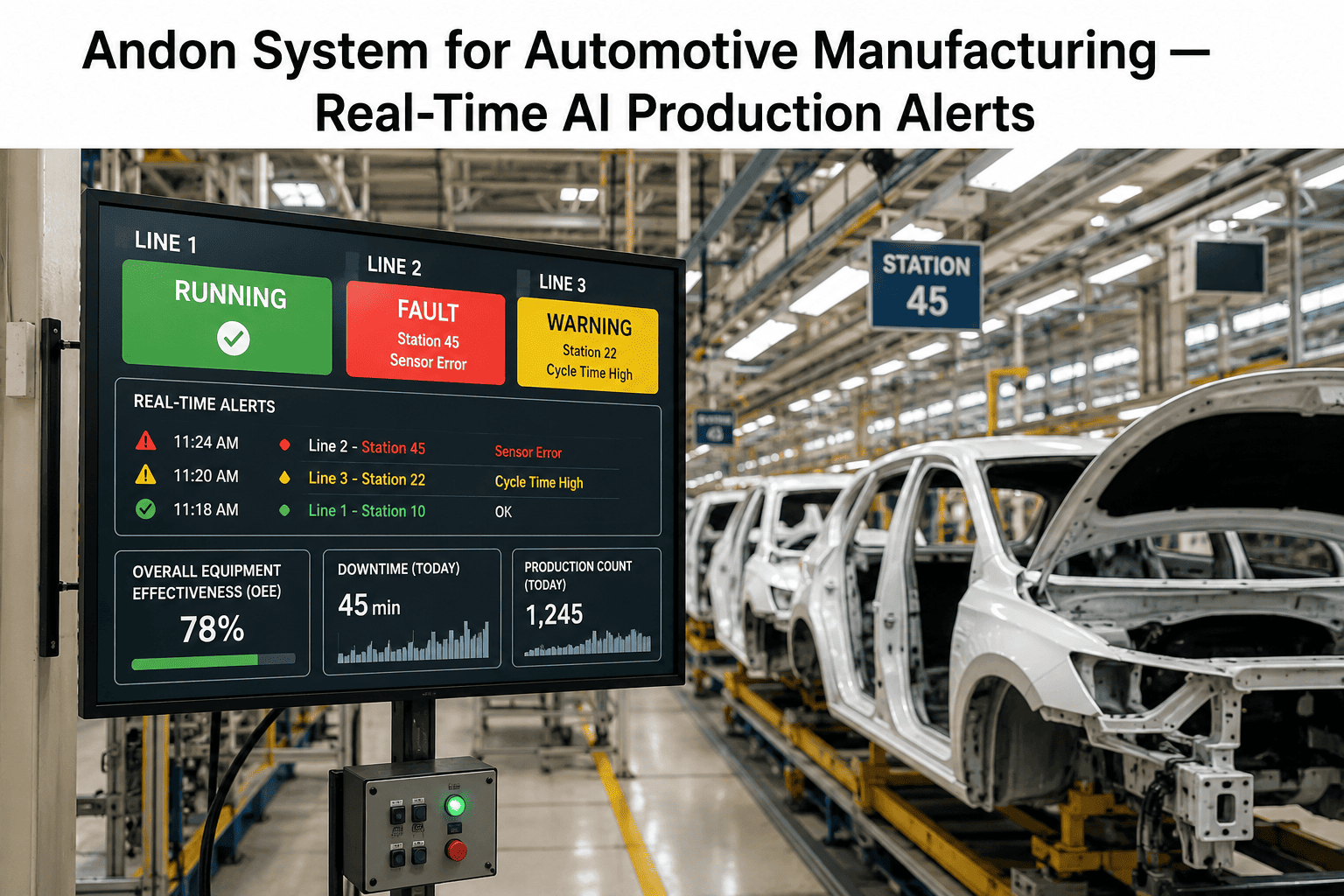
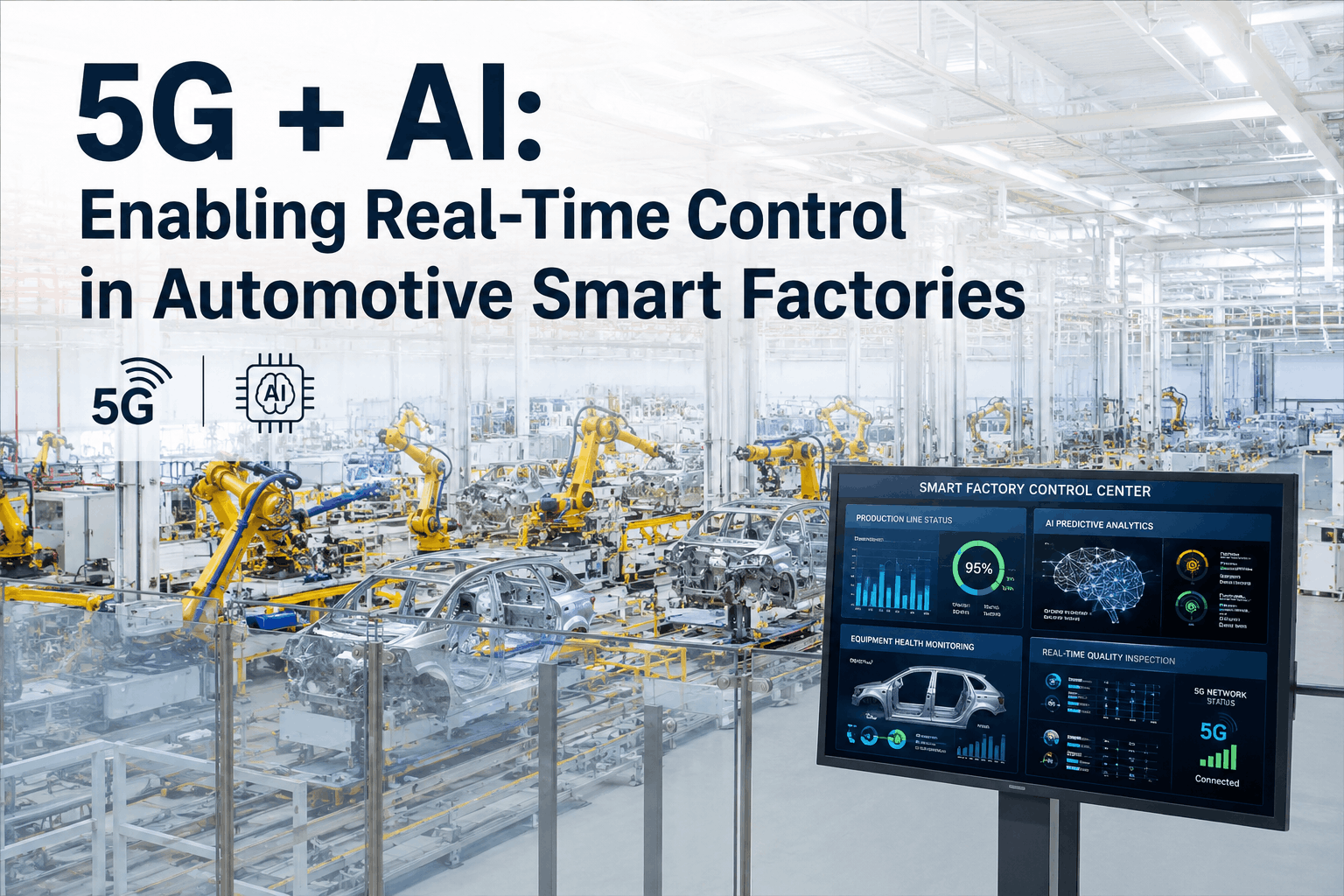
iFactory runs inference directly on compute at the station, delivering the 10-50ms response a control loop actually needs instead of the 200-500ms round trip a cloud call requires.
Cloud Round Trip
200-500ms
THE LATENCY PROBLEM
A Control Loop Cannot Wait for a Network That Was Never Built for It
Cloud infrastructure is excellent at the things it was designed for: batch analytics, dashboards, and training large models on historical data. It was never designed to guarantee a response inside a single machine cycle, because internet and even local network paths introduce variable delay that a control loop cannot tolerate. When a station needs to reject a part, stop a spindle, or adjust a parameter before the next cycle starts, that decision has to be made where the data is generated, not several network hops away.
10-50ms
Required Response Window
Typical cycle-time budget a station-level control decision has to fit inside on a modern assembly line
200-500ms
Typical Cloud Round Trip
Average latency for a frame or signal to travel to a cloud model and return a decision under normal network conditions
4-10x
Too Slow for the Loop
How much slower a typical cloud round trip is compared to the window a real-time station decision actually has available
CLOUD VS EDGE FOR LINE CONTROL
Where Each Architecture Actually Belongs on the Plant Floor
The right answer is not cloud instead of edge or edge instead of cloud, it is matching each workload to where it can actually meet its deadline. Training and fleet-wide analytics belong in the cloud where compute is abundant, while the split-second decisions that keep a line moving belong at the station where they are made.
Cloud-Dependent Inference
Frame or signal sent over the network to a remote model server
Response time varies with network conditions and server load
A network outage stops inference entirely at every connected station
Well suited to periodic analytics, trending, and model retraining
Edge AI at the Station
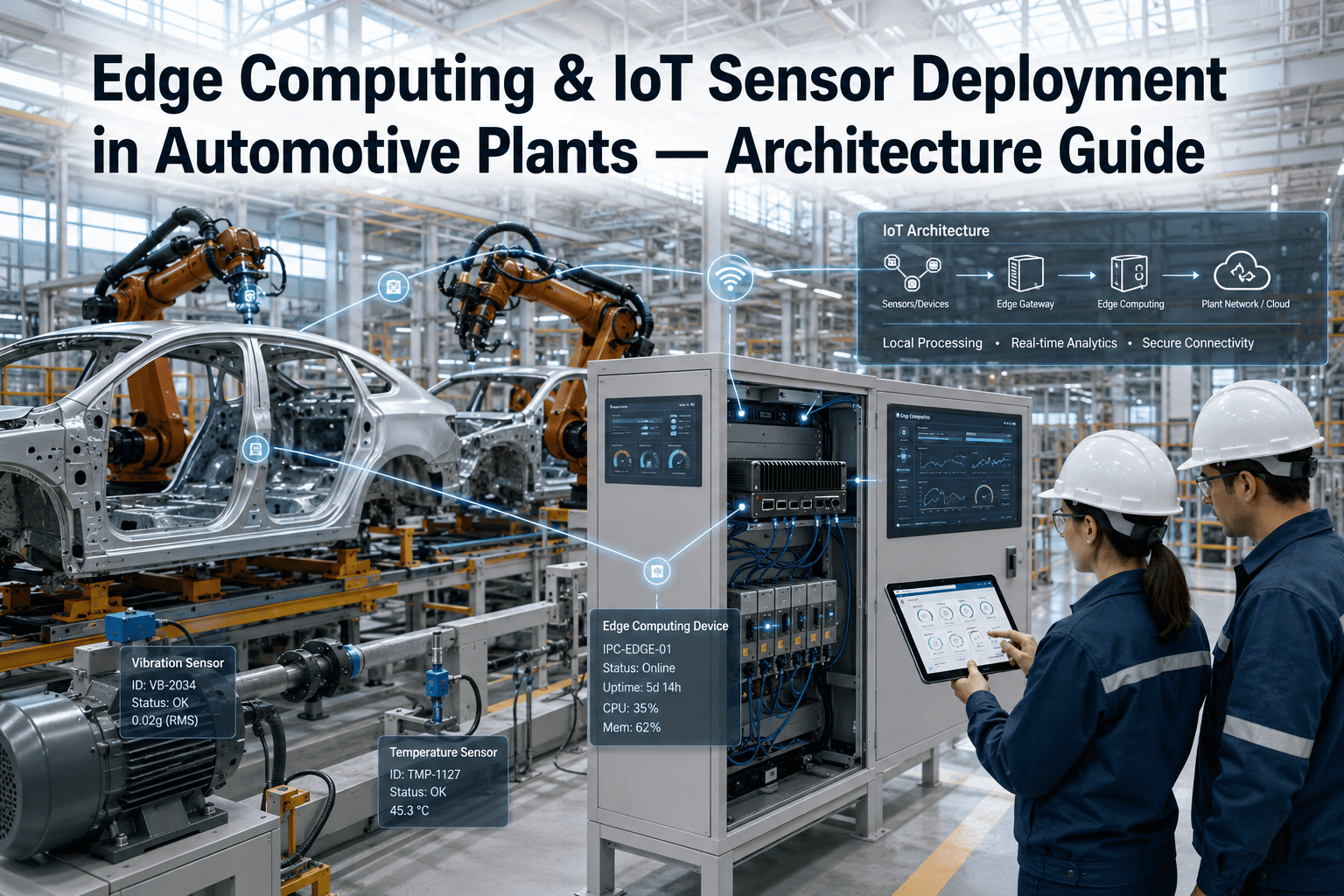
Inference runs on local compute physically located at the station
Response time is deterministic and independent of network conditions
Station keeps operating even if the plant network connection drops
Well suited to real-time defect rejection, torque verification, and safety interlocks
See Sub-50ms Inference Running on Your Own Station
iFactory deploys edge compute directly at the line, so decisions that need to happen inside a single cycle actually can.
WHAT RUNS AT THE EDGE
The Workloads That Belong on Local Compute, Not in a Data Center
Not every AI task needs to run at the edge, but the ones that gate a physical action on the line cannot run anywhere else. These are the categories iFactory typically deploys directly onto station-level hardware.
Real-Time Defect Rejection
Vision inspection models run locally so a bad part is flagged and diverted before it reaches the next station, with no dependency on network availability.
Torque and Fastening Verification
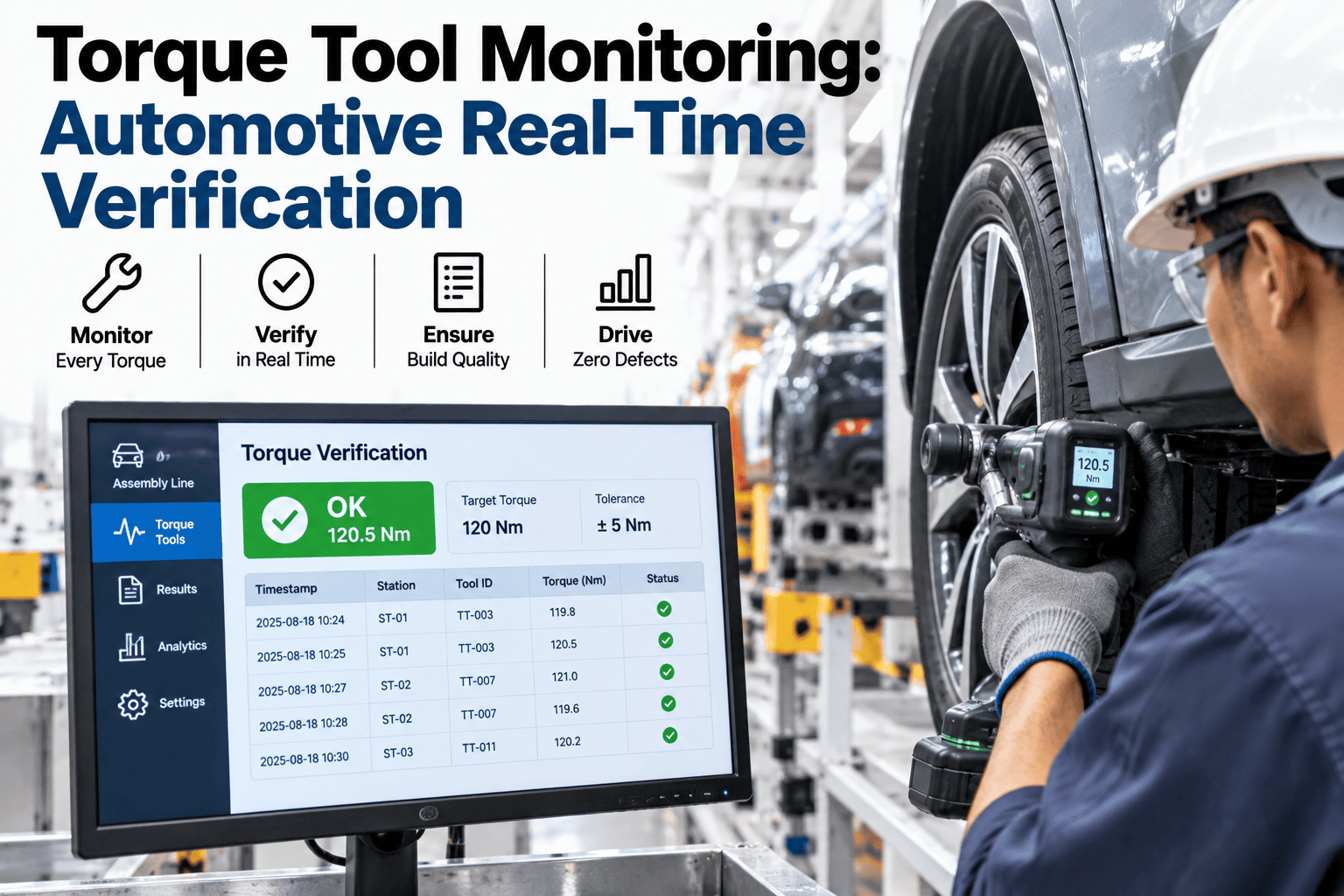
Torque curve analysis happens at the driver itself, catching a cross-threaded or under-torqued fastener within the same cycle it occurred.
Safety Interlock Decisions
Presence detection and light curtain logic that gates a robot's motion runs on local compute, since a safety-critical stop cannot wait on a network hop.
Local Buffering and Sync
Results and raw data are buffered locally and synced to the historian and cloud layer on a normal schedule, so nothing is lost if connectivity drops.
DEPLOYMENT TIERS
Matching Compute Location to How Fast a Decision Actually Needs to Happen
| Tier |
Typical Latency |
Example Workload |
| Station Edge |
10-50ms |
Defect rejection, torque check, interlock |
| Line Edge Server |
50-150ms |
Multi-station coordination, line balancing signal |
| Plant Fog Layer |
150-500ms |
Cross-line OEE aggregation, shift dashboards |
| Cloud |
Seconds to minutes |
Model training, fleet-wide trend analysis |
MEASURED RESULTS
Outcomes Reported After Moving Real-Time Decisions to the Edge
9x
Faster average decision latency compared to the prior cloud-dependent setup
31%
Fewer defective parts reaching downstream stations before rejection
99.8%
Station uptime maintained even during plant network maintenance windows
22%
Reduction in false rejects from more consistent, lower-latency scoring
GETTING STARTED
Rolling Edge Compute Onto a Line Without Disrupting Production
Step 1
Identify Latency-Critical Decisions
Stations where a decision gates a physical action within one cycle are prioritized for edge deployment first.
Step 2
Install Station Compute
Compact edge hardware is installed at the station, sized to the specific model and camera or sensor load involved.
Step 3
Validate Against Line Speed
Inference is tested against full line speed and worst-case cycle timing before it is allowed to gate any physical action.
Step 4
Sync to Plant Systems
Local results are synced to the historian and cloud layer on a normal schedule, feeding OEE and trend reporting without adding latency to the loop.
FREQUENTLY ASKED QUESTIONS
Questions Engineers Ask About Deploying Edge AI on the Line
Does edge deployment mean we lose the benefits of cloud-based analytics entirely?
No, edge and cloud work together rather than replacing one another, since the edge layer handles the split-second decision while results, images, and metadata are still synced to the cloud on a normal schedule for trending, reporting, and model retraining. The station never has to choose between real-time response and long-term analytics, it simply performs each task where that task can actually meet its own deadline.
Book a demo to see how edge and cloud data flow together in practice.
What happens to a station's edge model if the plant network goes down entirely?
The station keeps running exactly as before, since inference happens entirely on local compute and does not depend on any network connection to make its decision. Data is buffered locally during the outage and automatically synced once connectivity returns, so no production decisions are lost and no station has to pause simply because the broader network is unavailable.
Contact support to review the local buffering configuration for your line.
How much compute hardware does a single station actually need?
Sizing depends on the model complexity and the number of camera or sensor streams at that station, but most single-station deployments run comfortably on compact industrial edge hardware rather than a full server rack. The assessment phase measures your specific workload before any hardware is recommended, so you are not paying for more compute than the station actually requires.
Book a demo to get a sizing estimate for your specific stations.
Can edge models be updated once they are deployed on the floor?
Yes, models are retrained centrally as more data comes in and pushed out to station hardware through a controlled update process, so improvements made from fleet-wide data reach every station without requiring anyone to physically visit each one. Updates are validated in a staging step before rollout to avoid disrupting a running line with an unverified change.
Contact support to review the model update and rollback process.
Is edge AI only useful for vision-based inspection, or does it apply elsewhere on the line?
Vision inspection is the most common starting point, but the same principle applies to any decision that has to happen inside a machine cycle, including torque curve analysis, safety interlocks, and multi-sensor fusion for process control. Any workload where the round trip to a remote server would exceed the available time budget is a candidate for edge deployment.
Book a demo to discuss which of your processes would benefit most.
Stop Asking a Control Loop to Wait on the Cloud
iFactory puts inference where the decision actually happens, at the station, inside the cycle time your line already runs on.