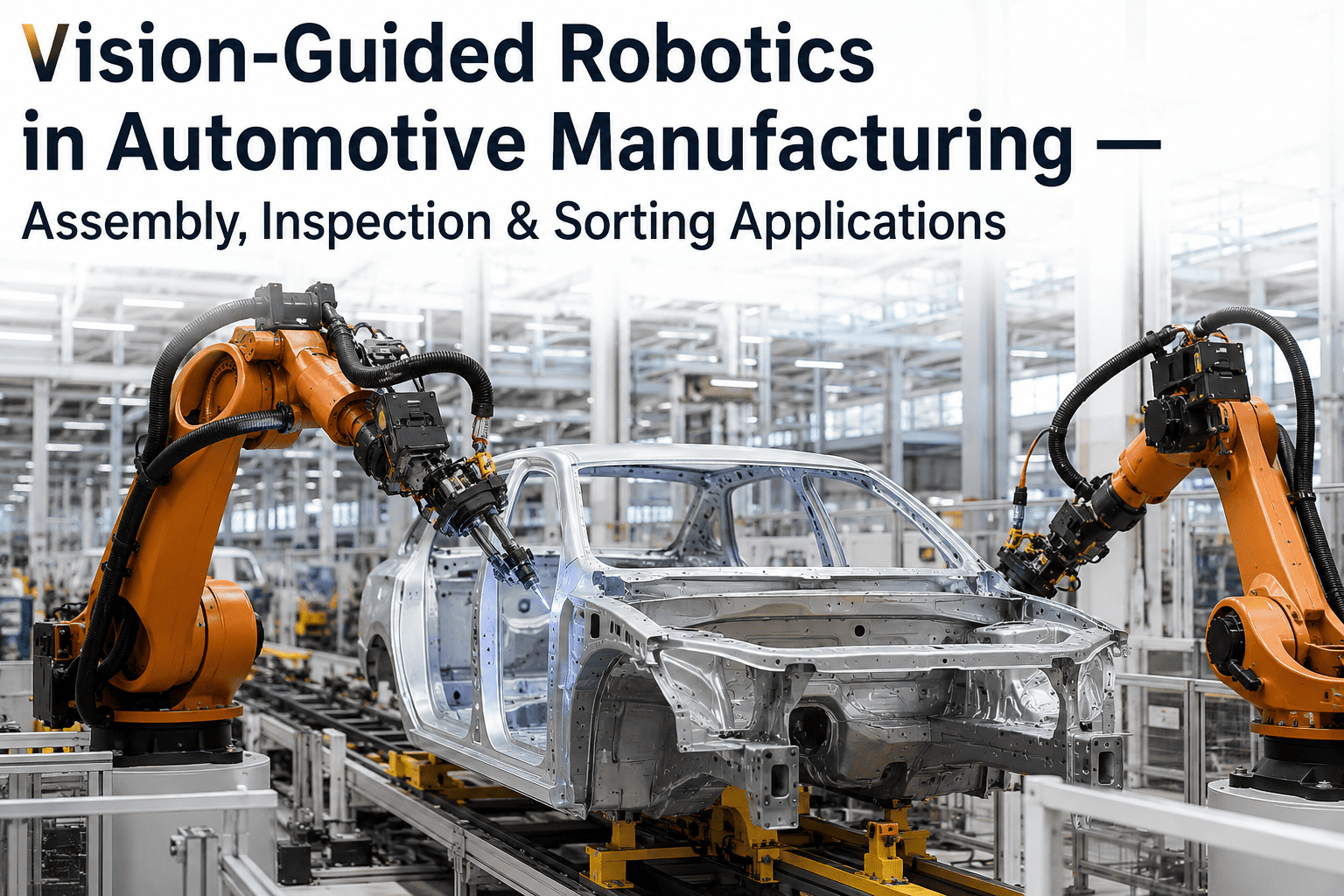
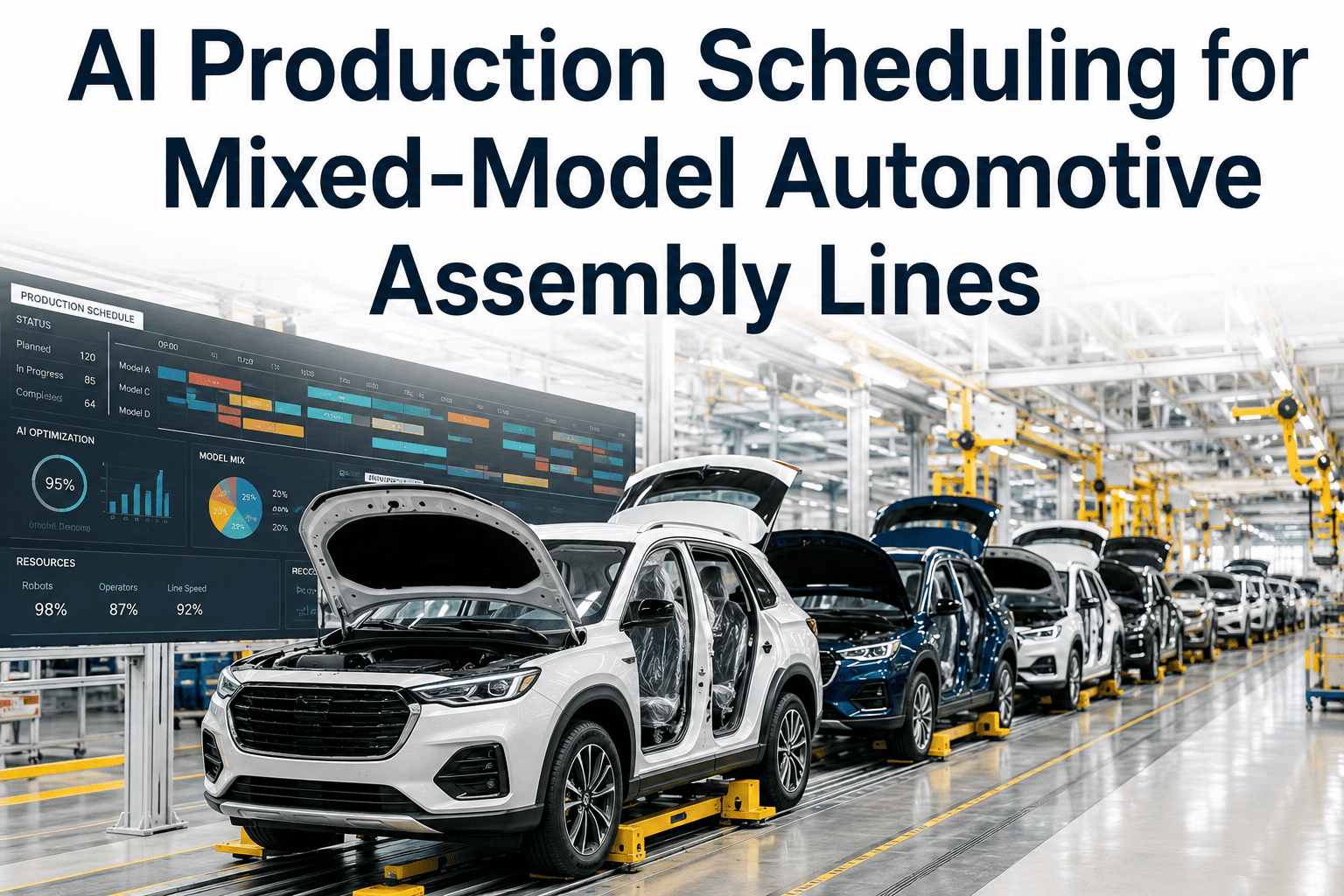
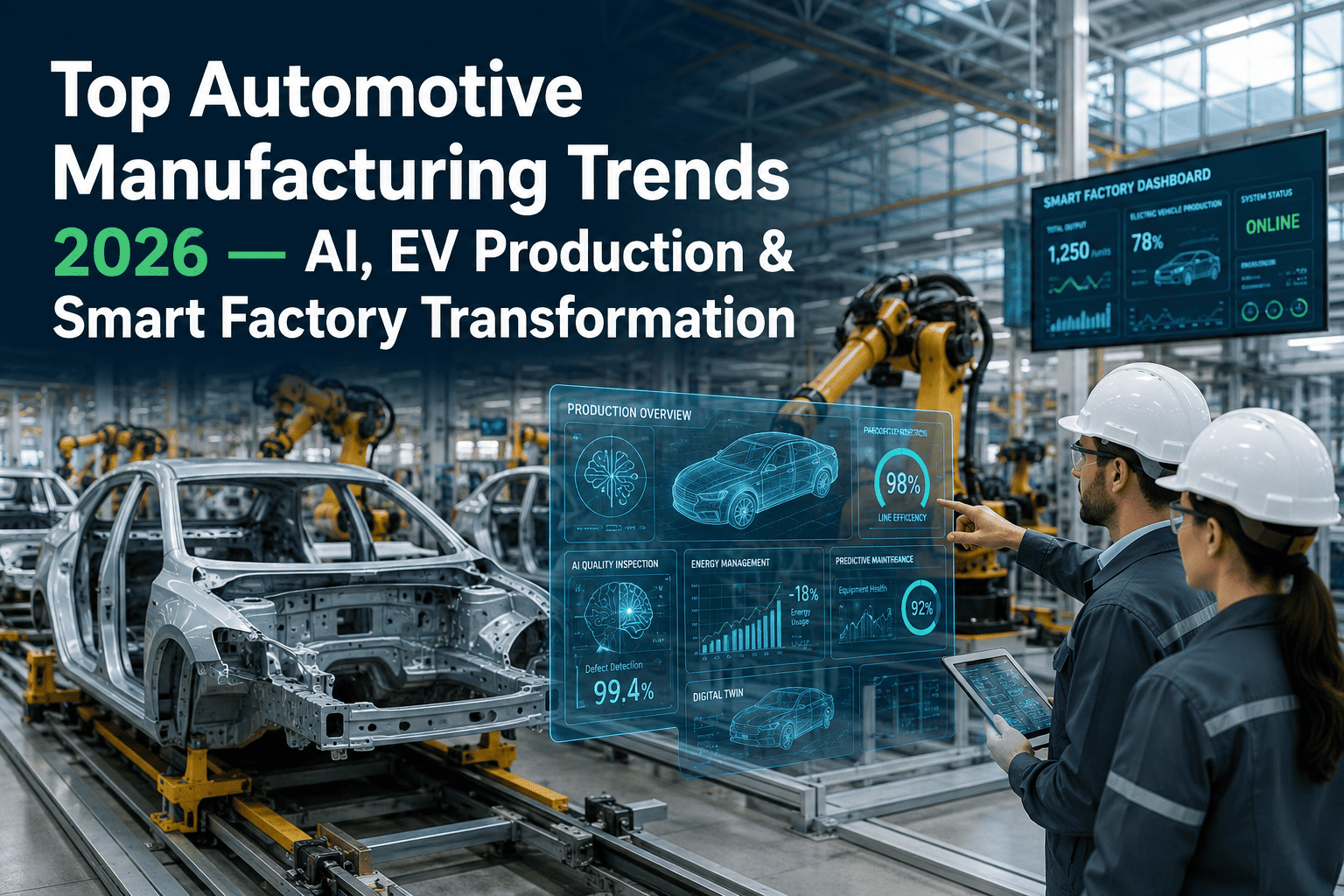
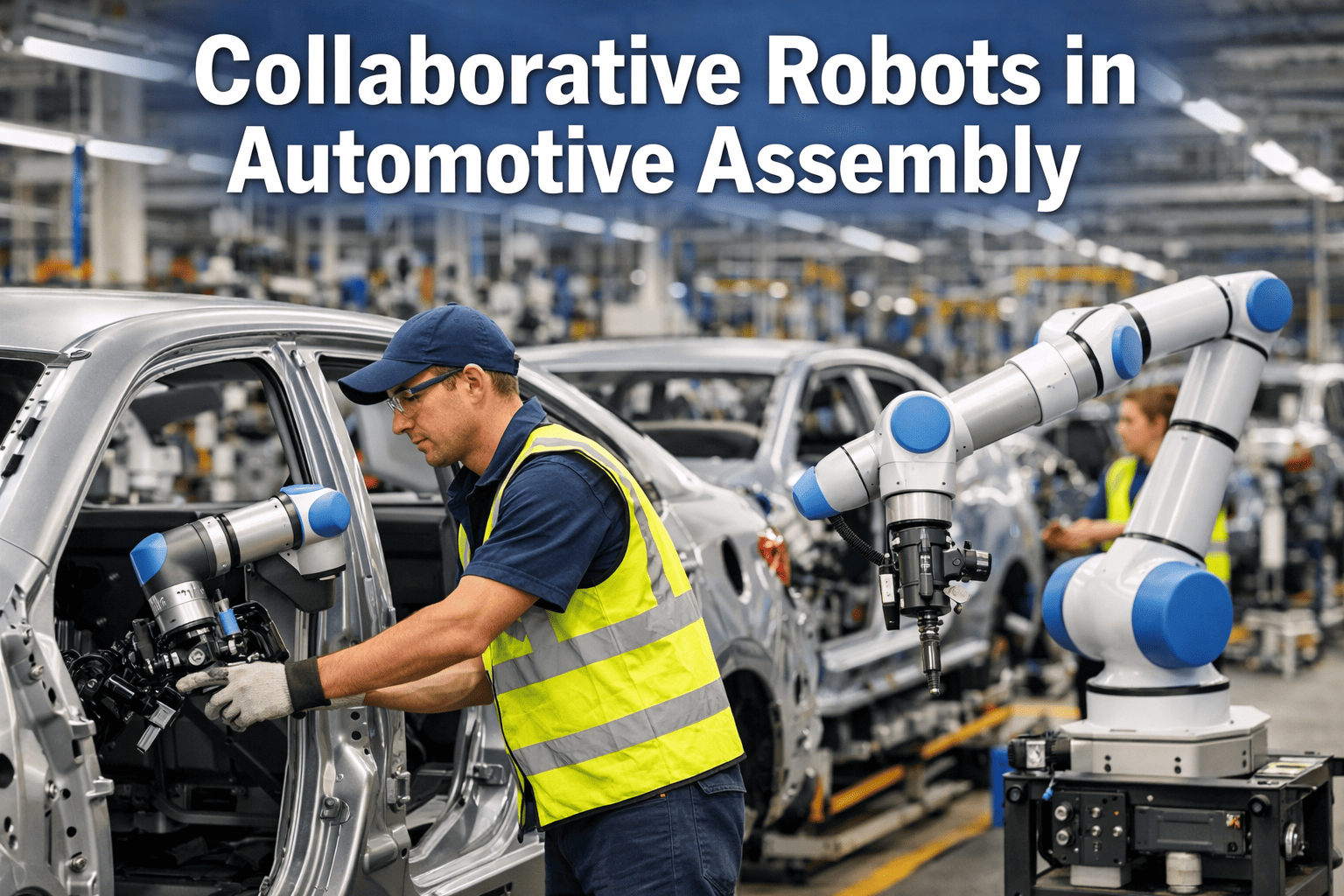
Automotive assembly plants lose 22-38% of potential production flexibility to fixed automation that cannot adapt when model mix changes. Traditional industrial robots excel at repetitive tasks but fail when part geometry varies, fixture positions shift, or assembly sequences change between models — forcing expensive line changeovers, dedicated automation per variant, and manual fallback operations that bottleneck throughput. By the time production teams realize a new model introduction requires six months of robot reprogramming, the market window has closed. iFactory's AI-powered robotic assembly platform changes this — enabling robots to handle unstructured tasks through computer vision, adaptive motion planning, and real-time part recognition across mixed-model production lines without reprogramming. Book a Demo to see how iFactory deploys AI robots in mixed-model assembly within 8 weeks.
87%
Reduction in model changeover time vs. traditional fixed automation reprogramming
$8.2M
Average annual flexibility value from eliminating dedicated automation per variant
92%
First-time placement accuracy on unseen part geometries without manual teach
8 wks
Full deployment from pilot cell to production-scale multi-model assembly
The Complete AI Platform for Manufacturing Operations
iFactory's AI vision system enables robots to identify parts, adapt grasp strategies, and execute assembly sequences across model variants — without human intervention or offline programming. Predict Failures Before They Stop Production. Real-Time Visibility Into Every Production Line.
How iFactory AI Solves Mixed-Model Assembly Automation
Traditional robotic assembly relies on fixed teach points, dedicated fixtures, and model-specific programs — all of which break when part geometry or assembly sequence changes. iFactory replaces this with adaptive AI that learns assembly constraints from demonstration, not exhaustive programming. Built for Manufacturing Plants, Not Generic CMMS. See a live demo of iFactory robots handling simulated model changeover without reprogramming.
01
Computer Vision Part Recognition
iFactory's 3D vision system identifies incoming parts by geometry, orientation, and surface features — eliminating dedicated fixtures and part-present sensors. Robots adapt grasp strategy per part variant in real time. Works across 50+ part families without retraining.
02
Adaptive Motion Planning
AI motion planner generates collision-free assembly trajectories on the fly based on detected part position and workspace obstacles. No offline teach programming required. Robots handle ±15mm part position variation and ±8° orientation misalignment automatically.
03
Force-Feedback Assembly Control
Robots use torque sensing and compliance control to detect mating errors, insertion resistance, and thread engagement — stopping before damage occurs. AI learns successful force signatures per assembly operation, rejecting out-of-spec parts at point of assembly.
04
Model Sequence Intelligence
iFactory integrates with MES and production scheduling systems to anticipate model transitions, preload part recognition models, and adjust cycle time targets per variant. Connects to Your Existing SCADA/PLC Systems. No manual mode switching required between production runs.
05
Digital Assembly Knowledge Capture
Eliminate Manual Logs with AI Digital Shift Logbooks. Every successful assembly — detected part variant, applied force profile, cycle time — auto-populates process knowledge base. New operators train by demonstration, not tribal knowledge transfer from retiring workers.
06
Predictive Robot Maintenance
AI That Turns Downtime Into Planned Maintenance. iFactory monitors robot joint torque, servo temperature, and motion accuracy degradation — predicting gripper wear, belt tension loss, and encoder drift 48-72 hours before quality impact. Maintenance scheduled during model changeover windows.
How iFactory Is Different from Traditional Robot Programming Platforms
Most robot vendors offer offline programming tools or basic vision-guided pick-and-place. iFactory is purpose-built for mixed-model assembly where part geometry, mating forces, and sequence logic vary unpredictably across production shifts. Talk to our robotics AI specialists and compare your current approach.
| Capability |
Traditional Robot Systems |
iFactory AI Platform |
| Part Recognition |
Fixed fixtures and part-present sensors. Requires dedicated tooling per variant. Cannot handle position variation beyond ±2mm. |
3D vision-based part identification with adaptive grasping. Handles ±15mm position variation and ±8° orientation error without fixtures. Recognizes 50+ part families from single camera view. |
| Programming Method |
Manual teach pendant or offline CAD programming. 40-120 hours per new model variant. Requires robotics specialist for every assembly sequence change. |
Learning from demonstration. Operators show correct assembly once; AI generalizes motion constraints. New variant integration in under 4 hours without programmer involvement. |
| Assembly Compliance |
Rigid position control. Cannot detect insertion errors or thread cross-threading. Parts damaged before quality system detects mating failure. |
Force-torque feedback with AI-learned assembly signatures. Detects cross-threading, incomplete insertion, and mating errors at point of assembly. Parts rejected before damage, not after. |
| Model Changeover |
Manual program load and fixture swap. 45-90 minutes downtime per model transition. Dedicated automation cells per high-volume variant to avoid changeover loss. |
Automatic model recognition from MES integration. Vision system adapts to new part geometry in real time. Changeover downtime under 6 minutes with no fixture swap required. |
| System Integration |
Standalone robot controller. Limited integration with MES or quality systems. Assembly data captured manually or not at all. |
Native MES, SCADA, and quality system integration via OPC-UA and REST APIs. Every assembly event auto-logged with part variant, force profile, cycle time, and quality status. |
| Deployment Timeline |
6-12 months from concept to production-ready automation. Extensive simulation, fixture design, and safety validation required. |
8-week deployment program. Pilot cell operational in week 4. Full multi-station integration by week 8. Pre-validated safety protocols for collaborative operation. |
AI Robot Implementation Roadmap for Mixed-Model Assembly
iFactory follows a structured 6-stage deployment methodology designed for automotive and discrete manufacturing environments — delivering pilot results in week 4 and production-scale deployment by week 8. One Platform for Smart Manufacturing with AI-Powered Maintenance, OEE, and Operations.
01
Assembly Audit
Task analysis & part family variability assessment
02
Cell Design
Robot placement, vision system, safety integration
03
Model Training
Part recognition & assembly constraint learning
04
Pilot Operation
Single-station validation on 2-4 model variants
05
Expansion
Multi-station integration & MES connection
06
Production
Full-scale mixed-model assembly live, 24/7
8-Week Deployment and ROI Plan
Every iFactory robot deployment follows an 8-week program with measurable flexibility and throughput improvements appearing from week 4 pilot operation. Request the full deployment scope document for mixed-model assembly applications.
Weeks 1-2
Cell Setup
Assembly task breakdown and part family geometry catalog across all active model variants
Robot cell design with vision system placement, collaborative safety zones, and MES integration architecture
Historical production data ingestion for model mix forecasting and cycle time baseline
Weeks 3-4
AI Training & Pilot
Vision models trained on part family geometries with operator demonstration of assembly constraints
Pilot cell operational on 2-4 highest-volume model variants with real production parts
First model changeover executed without reprogramming — ROI evidence begins here
Weeks 5-6
Calibration & Scale
Force feedback thresholds refined based on pilot mating error detection accuracy
Part recognition expanded to full model catalog with edge case geometry training
Multi-station integration and production line balancing with upstream/downstream processes
Weeks 7-8
Production Go-Live
Full mixed-model assembly cell live with automatic model recognition from MES schedule
Digital assembly knowledge capture activated with auto-logged force profiles and cycle times
Baseline flexibility report — changeover time reduction, OEE improvement, labor redeployment data
ROI IN 6 WEEKS: MEASURABLE RESULTS FROM WEEK 4
Plants completing the 8-week program report an average of $420,000 in avoided changeover downtime and quality scrap within the first 6 weeks of production operation — with model flexibility improvements of 3.8-6.2x detected by week 4 pilot validation.
$420K
Avg. savings in first 6 weeks
3.8-6.2x
Model flexibility improvement
87%
Reduction in changeover time
Full AI Robot Assembly. Live in 8 Weeks. ROI Evidence in Week 4.
iFactory's fixed-scope deployment means no open timelines, no dedicated fixtures per variant, and no months of offline programming before you see production throughput improvements.
Use Cases and KPI Results from Live Robot Deployments
These outcomes are drawn from iFactory AI robot deployments at automotive and discrete manufacturing facilities. Each use case reflects 6-month post-deployment performance data. Request the full case study report for your assembly application type.
An automotive OEM operating a mixed-model assembly line producing 8 door variants was experiencing 40-65 minute changeover downtime per model transition due to fixture swaps and robot teach point updates. Legacy automation required dedicated cells per high-volume variant to avoid changeover losses. iFactory deployed vision-guided robots with adaptive grasping across all door geometries. Within 6 weeks of go-live, changeover time dropped to under 6 minutes with zero fixture changes required.
6 min
Model changeover time — down from 40-65 minutes with fixture swaps
$3.2M
Annual production flexibility value from eliminated dedicated automation
94%
First-time assembly success rate across all 8 door variants
An electronics manufacturer assembling 24 enclosure variants was rejecting 180-240 units per week due to cross-threaded inserts that legacy torque-controlled robots failed to detect until quality inspection — 3 stations downstream. iFactory's force-feedback AI detected thread engagement errors at point of assembly, rejecting parts before damage. Cross-threading defect rate dropped from 4.2% to under 0.3% within 8 weeks of deployment.
0.3%
Cross-threading defect rate — down from 4.2% with torque control
$680K
Annual scrap and rework cost eliminated from inline defect detection
96%
Early detection accuracy on mating errors before quality station
An engine manufacturer was losing 12-18 hours per week to manual part kitting for 14 powertrain variants across a shared assembly line. Manual kitting errors resulted in 40-60 line stops per month from wrong-part installations discovered at torque verification. iFactory vision robots performed automated kitting with real-time part verification. Wrong-part line stops dropped to under 2 per month within 10 weeks.
2
Wrong-part line stops per month — down from 40-60 with manual kitting
$1.4M
Annual downtime and labor value from automated part verification
99.8%
Part identification accuracy across 14 powertrain variant families
Results Like These Are Standard. Not Exceptional.
Every iFactory robot deployment is calibrated to your specific part geometries, assembly forces, and model mix — delivering results tuned to your production environment, not generic benchmarks.
What Manufacturing Teams Say About iFactory AI Robots
The following testimonials are from plant managers and automation engineers at facilities currently running iFactory's AI robotic assembly platform.
We went from 90 minutes of changeover downtime to under 8 minutes without touching a fixture. The robot just sees the new part geometry and adapts. Our production scheduling flexibility improved overnight.
Plant Manager
Automotive Assembly, USA
The force feedback changed everything. We were scrapping parts three stations downstream because torque control could not feel cross-threading. Now the robot rejects bad assemblies at insertion, not after $200 of value-add.
Director of Quality
Electronics Manufacturing, India
Integration with our Rockwell PLC and SAP MES took 12 days. I budgeted three months. The iFactory team understood production line timing and MES protocols at a level I have never seen from automation suppliers.
Automation Engineer
Engine Manufacturing, UAE
We deployed across 18 part variants in the pilot and the vision system handled every geometry without retraining. Our operators now teach new assemblies by demonstration in under two hours. No programmer required.
Manufacturing Manager
Aerospace Components, UK
Frequently Asked Questions
Which robot brands and models does iFactory AI integrate with?
iFactory integrates with Universal Robots, ABB, FANUC, KUKA, and Yaskawa Motoman collaborative and industrial robots via native SDK and protocol support. Vision and force control layers are robot-agnostic and deploy on existing hardware without replacement. Integration architecture is confirmed during the Week 1-2 cell design phase.
Book a demo to see robot compatibility.
Does iFactory require dedicated fixtures or part presentation systems?
No. iFactory's 3D vision system eliminates dedicated fixtures by identifying part geometry and orientation in unstructured bin-pick or conveyor-fed scenarios. Robots handle ±15mm position variation and ±8° orientation error without fixture constraints. Existing material handling infrastructure is reused where compatible. Fixture elimination savings alone often justify deployment cost.
How does iFactory handle new model introductions or engineering changes?
New part geometries are added to the vision recognition library by operator demonstration — showing correct part orientation, grasp points, and assembly constraints. AI generalizes assembly logic from demonstration without offline programming. Typical new variant integration takes under 4 hours including vision training and force profile validation. No robotics specialist required.
What safety certifications does iFactory support for collaborative robot deployments?
iFactory deploys with ISO 10218, ISO/TS 15066 collaborative safety protocols pre-validated for power-and-force-limited operation. Force feedback system enforces collision detection and safe speed limits per workspace zone. Safety documentation packages are included for CE marking and OSHA compliance. Regional safety validation is completed during Week 1-2 cell design.
Can iFactory robots handle high-cycle-time assembly operations under 10 seconds?
Yes. Vision processing and motion planning execute in parallel with robot movement — adding under 200ms overhead to total cycle time. High-speed pick-and-place, fastener driving, and insertion operations at 8-12 second takt times are fully supported. Cycle time validation is performed during Week 3-4 pilot operation with production parts at line speed.
How does iFactory integrate with MES and production scheduling systems?
iFactory connects to SAP MII, Rockwell FactoryTalk, Wonderware MES, and Siemens Opcenter via REST APIs and OPC-UA. Model sequence data from MES auto-triggers part recognition model preload and cycle time target adjustment per variant. Every completed assembly auto-logs to MES with part ID, cycle time, and quality status. Integration is completed during Week 1-2 setup phase.
Request MES integration assessment.
Stop Losing Flexibility to Fixed Automation. Deploy AI Robots for Mixed-Model Assembly in 8 Weeks.
iFactory gives manufacturing teams adaptive robotic assembly, vision-based part recognition, force-feedback quality control, and automatic model changeover — fully integrated with your existing MES and production systems in 8 weeks, with ROI evidence starting in week 4.
87% reduction in model changeover time
92% placement accuracy without manual teach
MES and SCADA integration in under 2 weeks
No dedicated fixtures or offline programming required