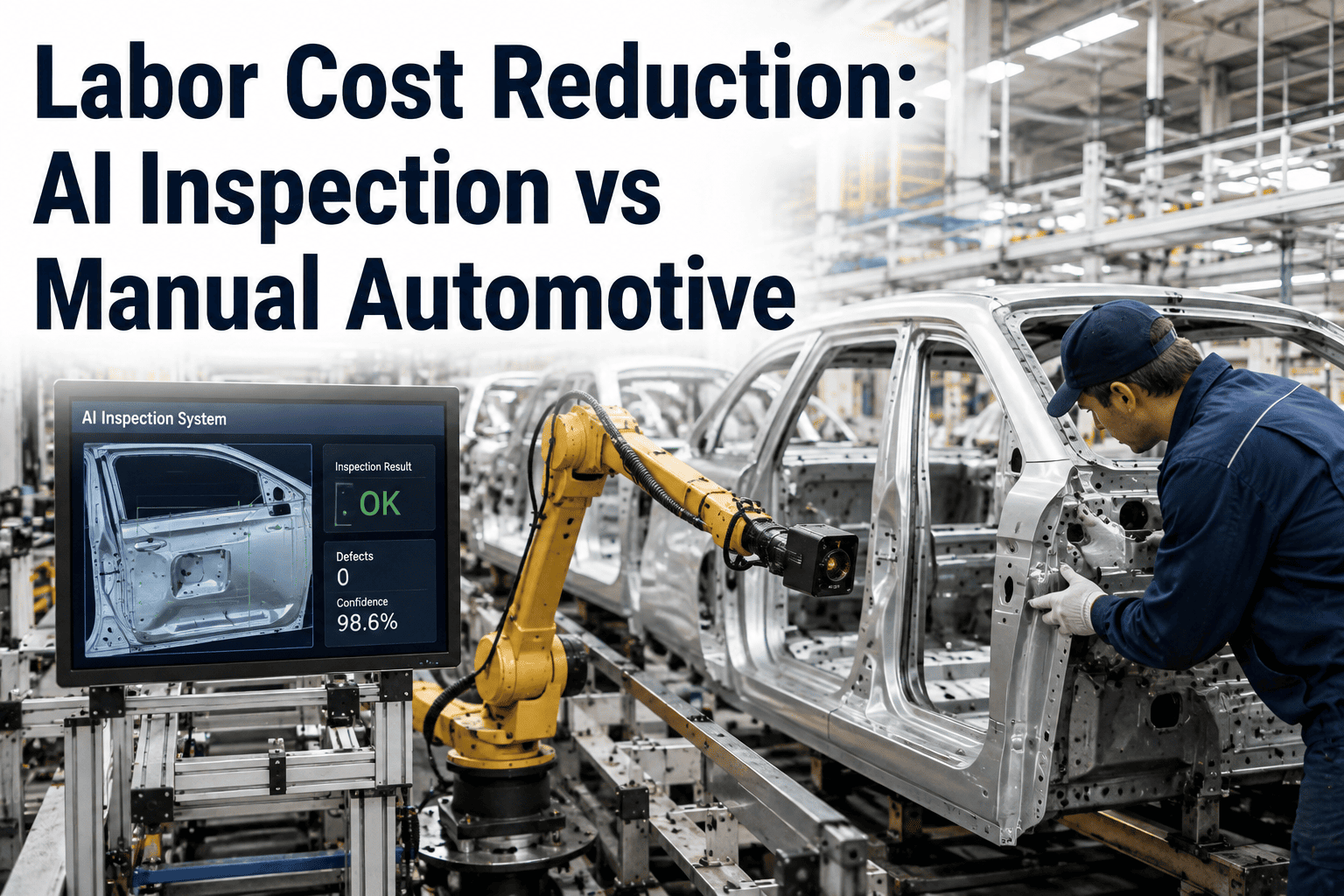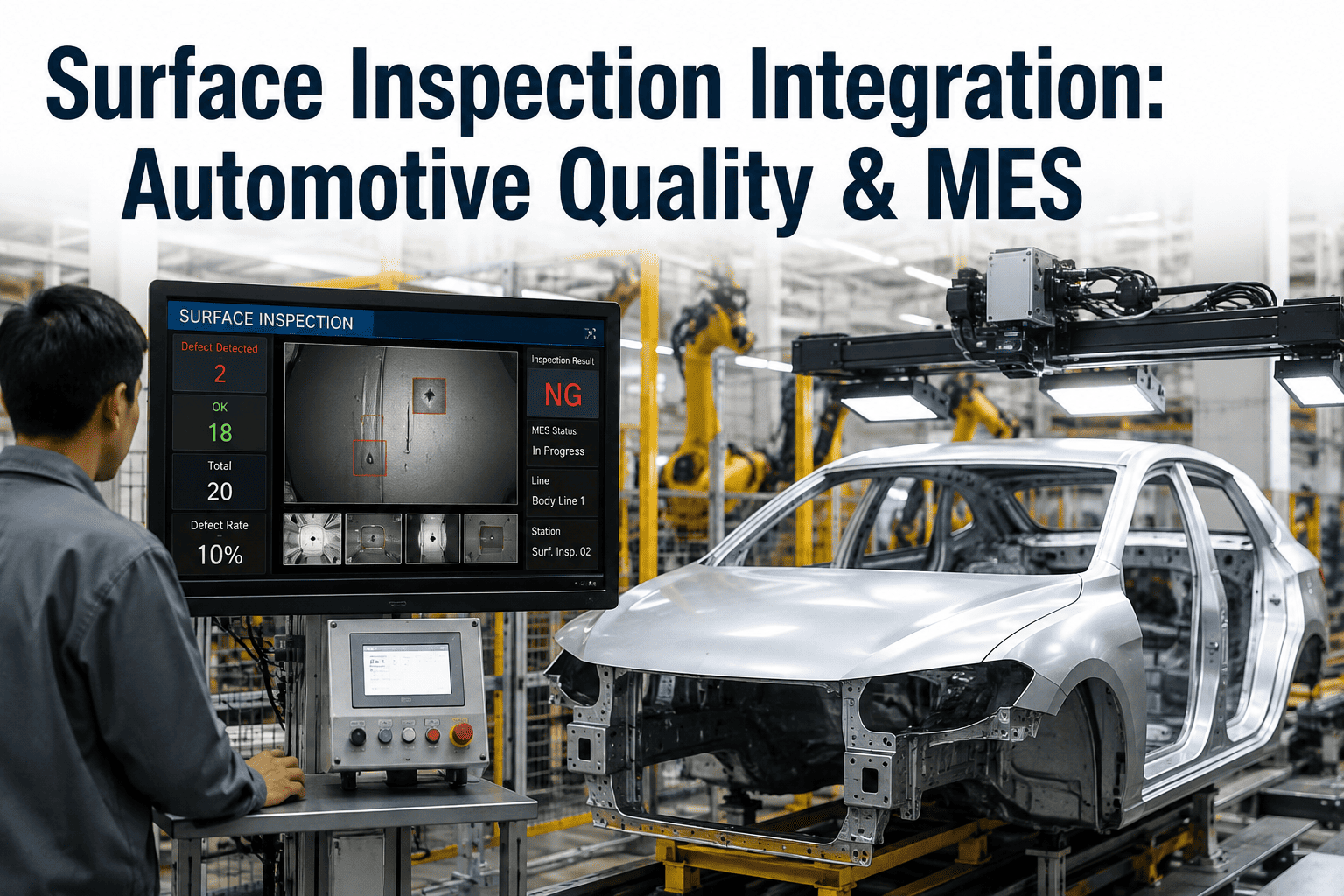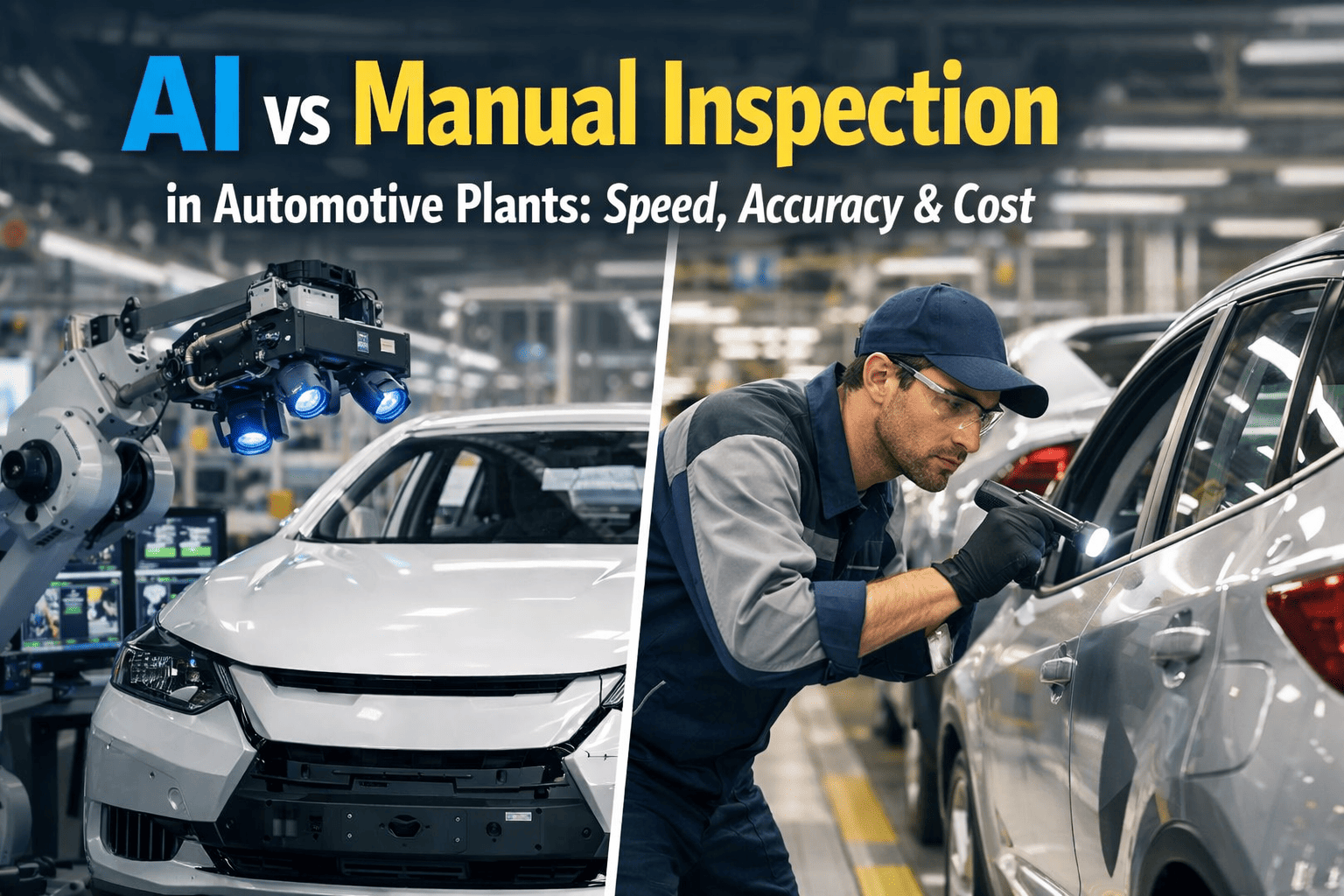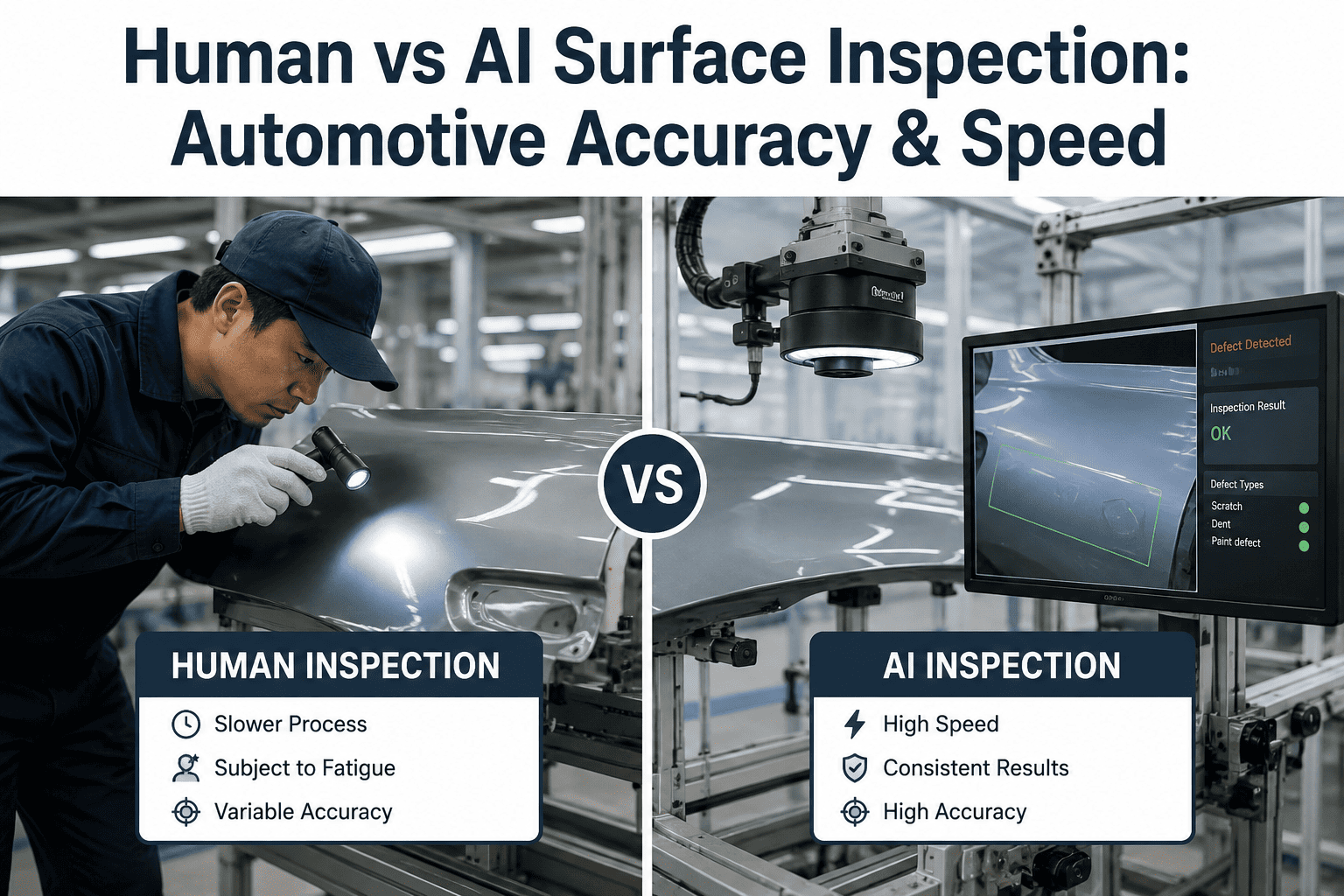
A human inspector staring at reflective body panels under fluorescent lighting for eight hours a shift will miss real defects — not because they lack skill, but because sustained visual attention degrades measurably after roughly two hours, with accuracy dropping 15 to 25% as fatigue sets in. AI surface inspection systems do not get tired, do not blink at the wrong moment, and score every panel against the same standard on hour eight that they applied on hour one. The comparison is not close on paper, yet many plants still run manual final inspection as their last line of defense against a paint defect reaching a customer. The honest answer to how human and AI inspection actually compare on accuracy, consistency, speed, and total cost requires looking past the marketing claims on both sides — teams planning an automated transition can Book a Demo to see a side-by-side accuracy run on their own panels.
Human Eyes or AI Vision — What Actually Wins on Your Line?
iFactory ran the comparison the honest way: detection accuracy, inspector-to-inspector agreement, inspection speed, and fully loaded cost, measured against real automotive surface defects — not vendor demo conditions.
Human Inspection
AI Vision Inspection
Why Human Inspection Struggles With Modern Surface Defects
The limitations are not about inspector competence — they are structural. Surface defects like waviness, orange peel, and micro-scratches are subtle enough that detecting them consistently requires precise, repeatable viewing angles and lighting that a human head and eyes cannot reproduce exactly the same way panel after panel. Add production pressure, shift rotation, and the sheer visual monotony of scanning similar panels for hours, and even highly trained inspectors develop blind spots specific to certain defect types and panel zones.
Visual Fatigue
Accuracy measurably declines after roughly two continuous hours of visual inspection, regardless of inspector experience or training level.
Inconsistent Standards
Different inspectors — and the same inspector at different times of day — apply subtly different thresholds for what counts as a defect.
Lighting Dependency
Defects visible under one lighting angle disappear under another, and floor lighting rarely matches the controlled conditions inspectors are trained under.
Sampling Gaps
High-volume lines often force statistical sampling rather than 100% inspection, leaving a percentage of panels completely unchecked.
How AI Vision Closes Each Gap
AI surface inspection does not eliminate the need for skilled quality staff — it changes what they spend their time doing. Instead of scanning every panel for eight hours, quality teams review flagged exceptions, tune model thresholds, and investigate root causes using data no manual process could generate.
Consistent Lighting and Angle
Multi-angle industrial cameras with fixed, calibrated lighting reproduce identical viewing conditions on every single panel, eliminating the variability human viewing angle introduces.
100% Inspection Coverage
Every panel is inspected at line speed rather than a statistical sample, closing the gap where defective units previously passed through unchecked.
Fixed Detection Threshold
The model applies the exact same classification standard to panel one and panel ten thousand, removing the shift-to-shift and inspector-to-inspector drift that erodes consistency.
Continuous Learning Loop
Flagged edge cases reviewed by quality staff feed back into model retraining, so accuracy improves over time rather than degrading with fatigue.
Cost Comparison: Manual Inspection Team vs AI Vision System
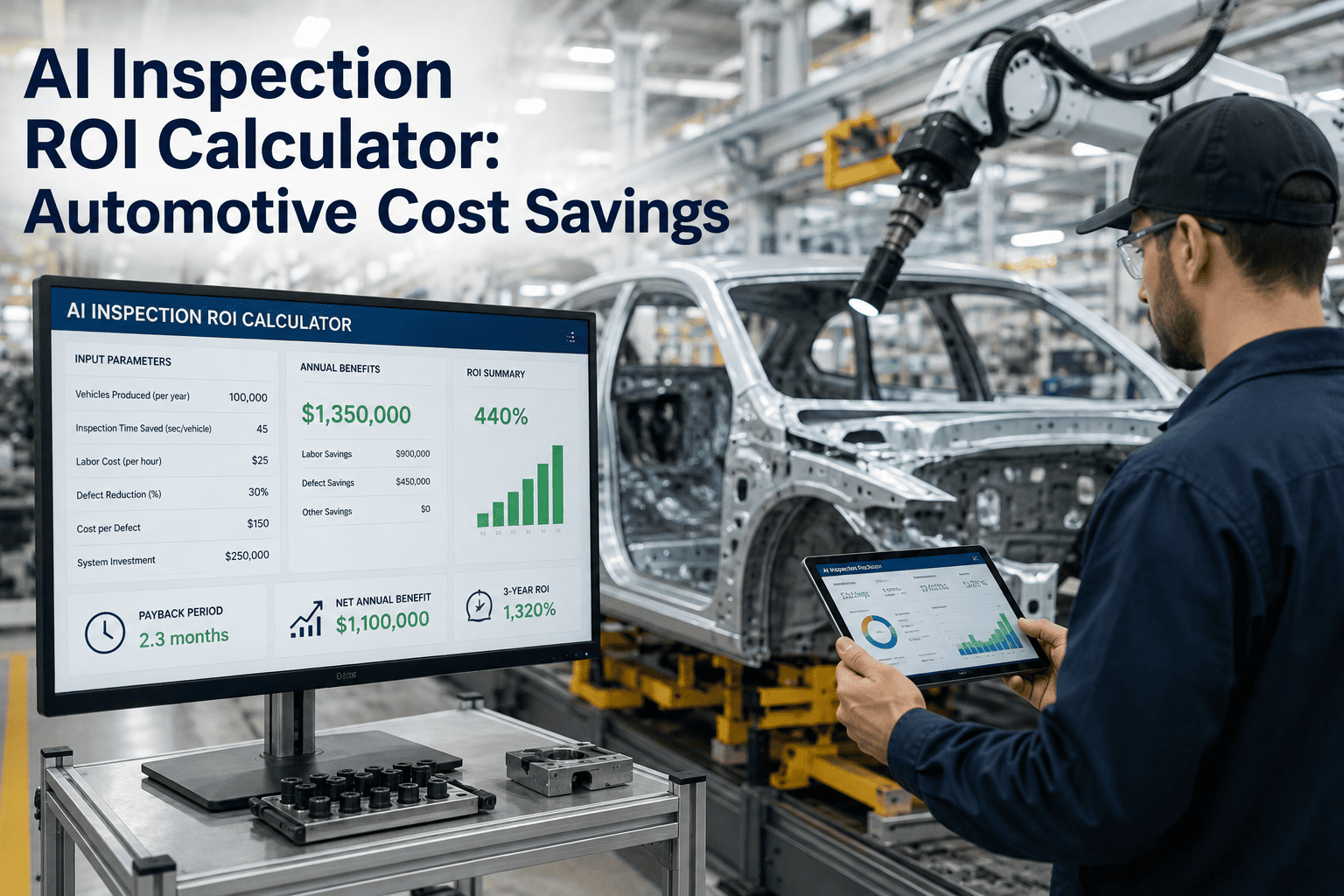
The cost comparison extends well beyond headcount. Manual inspection carries hidden costs in training, turnover, and the escapes that make it through despite best effort — while AI vision carries an upfront investment offset by ongoing accuracy that does not degrade.
| Cost Factor | Manual Inspection | AI Vision Inspection |
|---|---|---|
| Annual labor cost (3 shifts, 2 inspectors) | $270K–$330K | $0 direct labor |
| Training and ramp-up per inspector | 4–8 weeks | One-time model training, 3–8 weeks |
| Turnover impact | Recurring retraining cost | No retraining required |
| Detection accuracy | 70–80% | 95–99% |
| Coverage | Sampling common on high-volume lines | 100% of units inspected |
Run the Comparison on Your Own Panels, Not a Vendor Demo Reel
iFactory shadow-runs AI vision alongside your current manual inspection process for a full week, comparing detection results panel by panel before any handover decision is made.
Frequently Asked Questions
Does AI vision inspection eliminate the need for quality inspectors?
No — it changes their role rather than eliminating it. Inspectors shift from scanning every panel for defects toward reviewing AI-flagged exceptions, validating edge cases the model is uncertain about, and using defect trend data to investigate root causes on the line. Most deployments redeploy one to two inspectors per shift to higher-value quality engineering work rather than eliminating headcount outright, while the remaining team gains tools that make their judgment more targeted and effective. Teams can Book a Demo to see how the workflow changes in practice.
How much more accurate is AI vision than trained human inspectors?
Validated deployments typically show AI vision achieving 95 to 99% detection accuracy at production speed, compared to 70 to 80% for human inspection under real floor conditions rather than controlled test settings. The gap widens further on consistency — inter-inspector agreement between shifts often falls between 55 and 70%, meaning two trained inspectors reviewing the same panel can reach different conclusions a meaningful share of the time. AI vision applies an identical detection threshold to every panel, removing that variability entirely.
What happens when the AI system flags a false positive?
Flagged panels route to a review queue where quality staff confirm or reject the classification, and rejected false positives feed directly back into model retraining to reduce recurrence of that specific pattern. Well-tuned production models typically converge to a false positive rate low enough that review queue volume stays manageable for a small quality team, and this rate continues improving over the first several weeks of production as the model learns your specific panels and lighting conditions.
How long does it take to transition from manual to AI inspection?
A typical transition runs 6 to 12 weeks, including camera and lighting installation, model training on 500 to 2,000 labeled images from your production, and a shadow-run period where AI results are compared against manual inspection in real time before full handover. This phased approach means manual inspection continues running throughout validation, so there is no coverage gap or added risk during the transition period. Contact iFactory Support for a transition timeline specific to your line.
Can AI inspection handle the same defect types our inspectors currently catch?
Yes, and typically more consistently — AI vision models are trained on your specific defect catalog, including scratches, dents, orange peel, waviness, and coating inconsistencies that your current inspectors are trained to identify. The training process uses real defect examples from your production, so the model learns to recognize the specific failure modes that matter on your line rather than a generic defect set. Any defect type your inspectors can consistently identify by eye becomes a candidate for the model's training data.
Stop Betting Panel Quality on an Inspector's Eighth Hour
iFactory deploys AI vision inspection that matches your current defect catalog, shadow-runs against your manual process, and hands over only once accuracy is proven on your own panels.