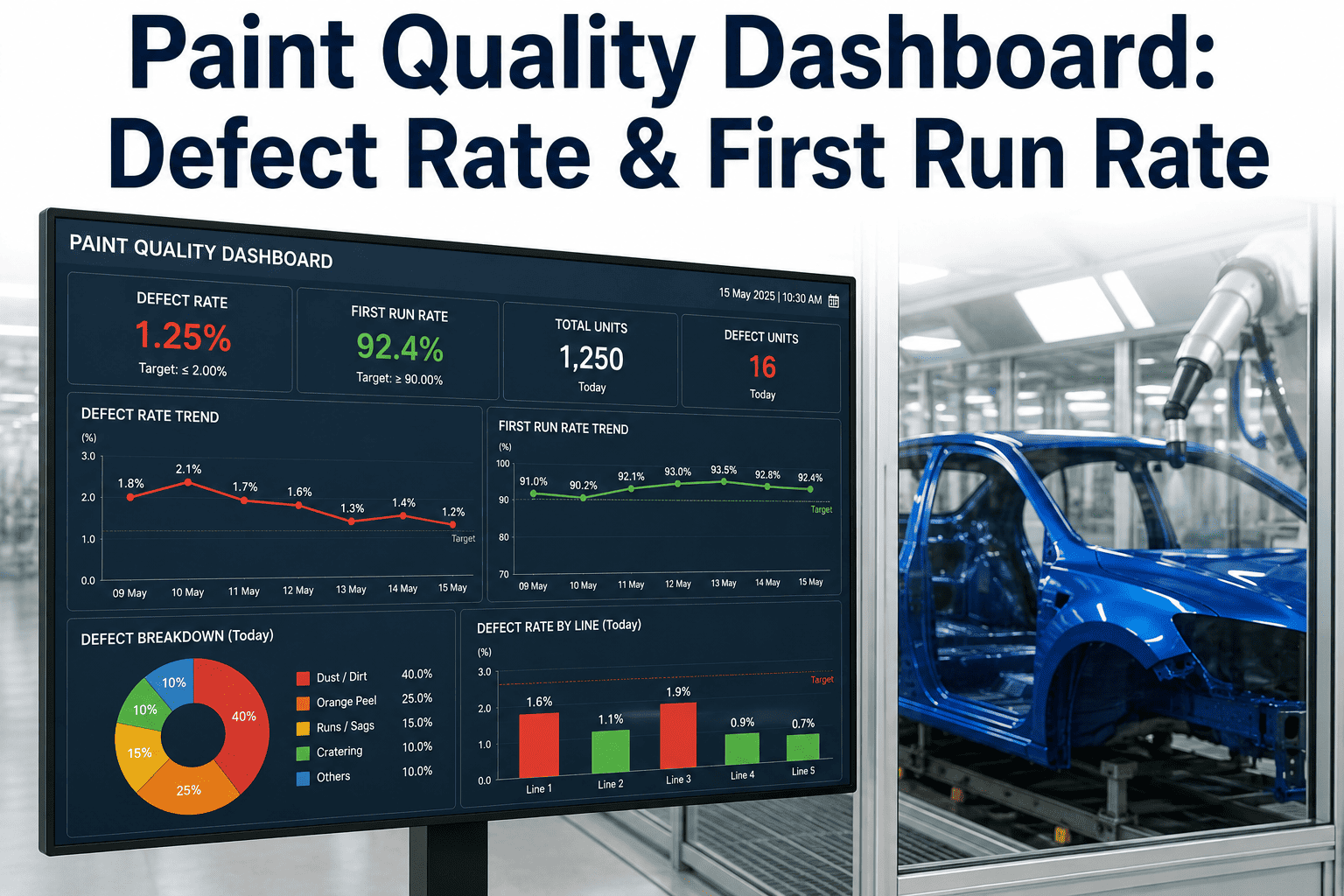
Finding a paint defect is only useful if the plant knows what to do about it, and that is where a lot of inspection systems quietly fall short. A camera can flag a mark on a fender, but unless that mark is sized, classified, and matched to a clear rework decision, it just becomes another item on a growing punch list that a human still has to sort through by eye. The difference between a defect detection system and a defect management system is severity scoring and routing logic — the part that decides whether a panel needs a five-minute buff, a full respray, or nothing at all. Plants that skip this step tend to end up either over-reworking cosmetic variance that met spec or under-reworking defects that should have been caught, and a walkthrough of your own severity thresholds is a fast way to see where that line should sit.
AI Classification · Severity Scoring · Rework Routing
Turning a Flagged Defect Into a Routed Rework Decision, Automatically
Severity scoring separates cosmetic variance from a customer-visible flaw, and routing logic sends each body to buff, respray, or pass without a manual sort step.
Severity Framework
Four Severity Tiers That Drive the Rework Decision
Every defect is scored against size, depth, and location before a routing decision is made. Location matters as much as size — a mark on a visible door panel and the same mark on an underbody bracket carry very different consequences.
Tier 1 — Pass
Within specification tolerance. No visible impact under standard viewing conditions. No action required, logged for trend tracking only.
Tier 2 — Buff
Surface-level defect correctable with polishing or minor touch-up. Typically minor scratches or light dirt nibs in low-visibility zones.
Tier 3 — Spot Respray
Defect penetrates the clearcoat or basecoat, requiring localized sanding and repaint of the affected panel section rather than a full respray.
Tier 4 — Full Respray
Extensive coverage, deep defects, or damage across multiple adjacent zones that a spot repair cannot correct without a visible blend line.
Routing Logic
How a Defect Moves From Detection to Work Order
Routing is not a single decision — it runs through several checks that together determine where the body physically goes next on the line.
Size and Depth Measurement
The camera system measures the defect's physical dimensions and, where possible, estimates depth based on how it distorts reflected light.
Visibility Zone Check
The same defect size is scored differently depending on whether it sits on a highly visible panel like a hood or a low-visibility zone like a rocker panel.
Severity Tier Assignment
Size, depth, and visibility combine into a tier score that maps directly to a rework action rather than leaving the call to whoever is standing at the station.
Work Order Generation
A routing instruction and work order are generated automatically, directing the body to the buff station, respray bay, or straight through to the next process.
Set Severity Thresholds That Match Your Own Spec
iFactory's classification model is tuned against your defect library and rework standards, not a generic threshold that treats every plant the same.
Before vs. After
Manual Sorting vs. Automated Routing
Step
Manual Sorting
Automated Routing
Defect measurement
Visual estimate, varies by inspector experience
Precise measurement from calibrated camera data
Rework decision
Judgment call, inconsistent between shifts
Consistent tier assignment against fixed thresholds
Work order creation
Written or entered manually after inspection
Generated automatically at point of detection
Trend visibility
Limited to periodic manual reports
Continuous data on defect type by station and shift
From the Field
What Changed When Routing Became Automatic
Before this, our buff station was backed up constantly because every questionable mark got sent there just to be safe, and the respray bay would sit idle some days and get slammed the next. Once severity scoring started routing automatically, buff station volume dropped by a third because marks that met spec stopped getting sent there out of caution, and the respray bay got a predictable, steady flow instead of surprise pileups. Our rework supervisor now spends time managing the queue instead of re-deciding severity on marks inspectors already looked at once.
— Rework Operations Manager, Automotive Paint Shop
Frequently Asked Questions
Classification and Routing — Common Questions
Can severity thresholds be adjusted for different vehicle programs?
Yes, thresholds are configurable per program since a premium trim line and an entry-level trim may carry different acceptable tolerances for the same physical defect size. This flexibility matters because a single fixed threshold across an entire plant either over-reworks the budget trim or under-reworks the premium one, and neither outcome serves the business well over time.
What happens when the system is unsure about a defect's severity tier?
Borderline cases near a tier threshold are flagged for human review rather than auto-routed, which keeps the system conservative on edge cases instead of forcing a confident decision on ambiguous data. Over time, these reviewed cases feed back into the training set, gradually narrowing the range of situations that need manual confirmation.
Contact support to see how the review queue is typically configured.
Does the routing system integrate with our existing MES or work order system?
Yes, work order generation is designed to plug into existing manufacturing execution systems rather than operate as a standalone tool that requires double entry. This keeps the defect record, the routing decision, and the downstream repair status all tied together in one traceable chain instead of living in separate paper or spreadsheet systems that drift out of sync.
How does location on the panel factor into severity scoring?
A defect's visibility zone — whether it sits on a hood, door, or rocker panel — carries significant weight in the severity score because the same physical size defect has very different customer impact depending on where it sits. High-visibility zones use tighter tolerance thresholds, while lower-visibility zones allow more variance before a defect is routed for rework, matching how experienced human inspectors have always made these calls, just applied consistently every time.
Can we see historical routing data to identify recurring defect sources?
Yes, every routed defect is logged with its type, tier, location, and originating station, which builds a dataset that quality teams can use to trace recurring problems back to a specific spray gun, booth zone, or shift pattern rather than treating each defect as an isolated event.
Book a demo to see a sample trend dashboard built from this data.
Turn Every Flagged Defect Into a Clear Rework Decision
Severity scoring and automated routing take the guesswork out of buff-versus-respray calls, matched to your own tolerance standards and fed directly into your existing work order system.