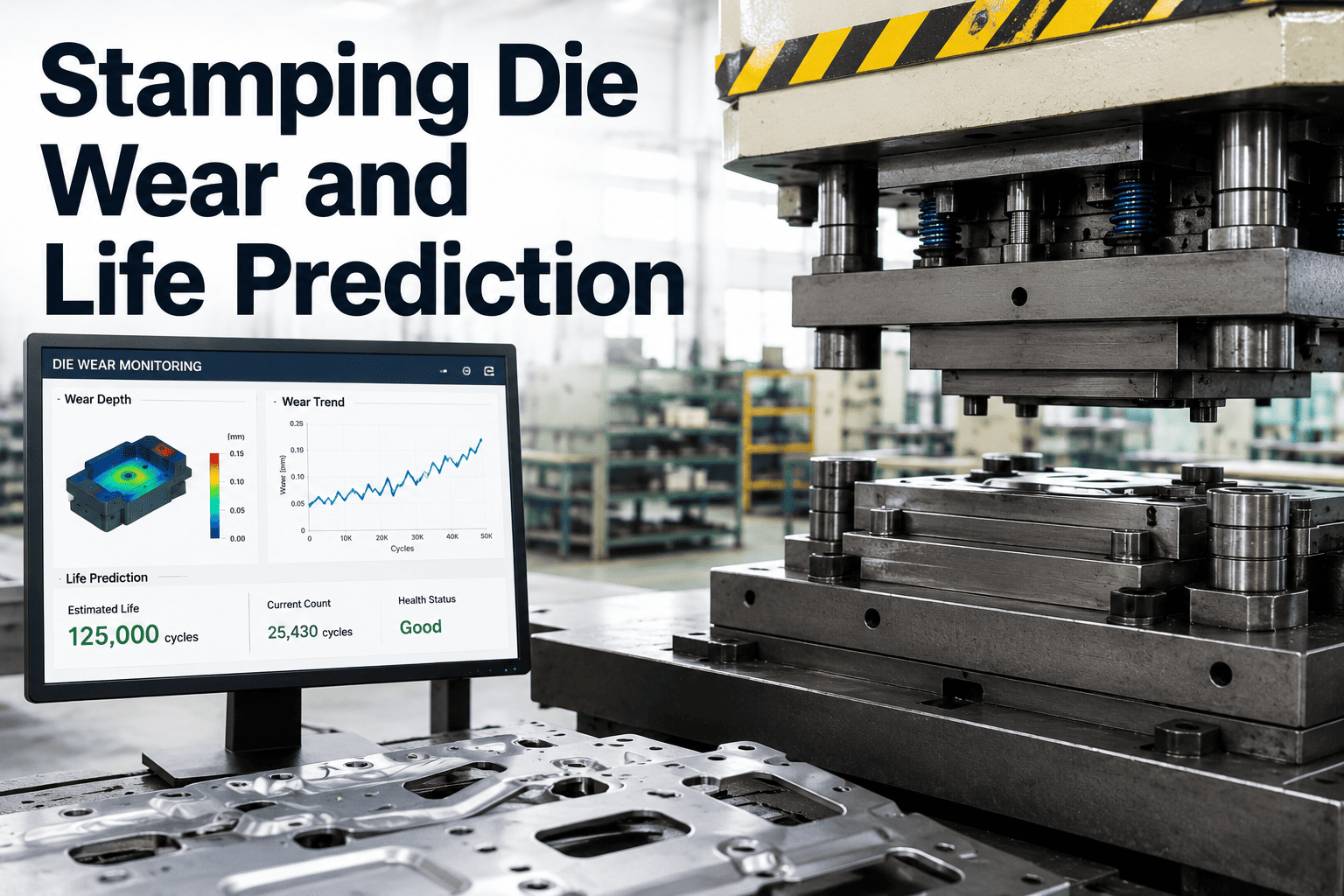
A stamping die does not fail all at once. Its cutting edges dull gradually across tens of thousands of strokes, its draw radii polish and then roughen, and its guide pins wear until clearance grows just enough to let the punch and die misalign by a fraction of a millimeter. Most press shops still schedule die maintenance based on a fixed stroke count, pulling a die for polish or repair on a calendar that has nothing to do with how that specific die has actually been running. A die pulled too early wastes remaining life and press downtime, while a die left in too long produces a burr, a crack, or an out-of-spec panel before anyone catches it. iFactory's AI platform predicts remaining die life from force and acoustic signals during actual production, and you can book a demo to see wear prediction running against your own dies.
STAMPING DIES · WEAR PREDICTION · TOOL LIFE · AI MONITORING
Know When a Die Needs Polish Before the Panel Shows a Burr
iFactory's AI platform tracks force and acoustic signatures from every stroke to predict remaining die life, letting your team schedule polish or repair on the die's actual condition instead of a fixed stroke count calendar.
Blanking Die A12
Remaining Life: 84%
Est. polish due: 38,000 strokes
Draw Die B07
Remaining Life: 22%
Est. polish due: 4,100 strokes
Trim Die C03
Remaining Life: 91%
Est. polish due: 61,000 strokes
THE CALENDAR MAINTENANCE PROBLEM
Why Stroke-Count Scheduling Gets Die Maintenance Timing Wrong
Two dies running the same part number, at the same press, under the same maintenance schedule can wear at meaningfully different rates depending on material batch variation, lubrication quality, and how they were reground the last time. The problems below explain why a shared calendar rarely fits any individual die well.
Material Batch Variation
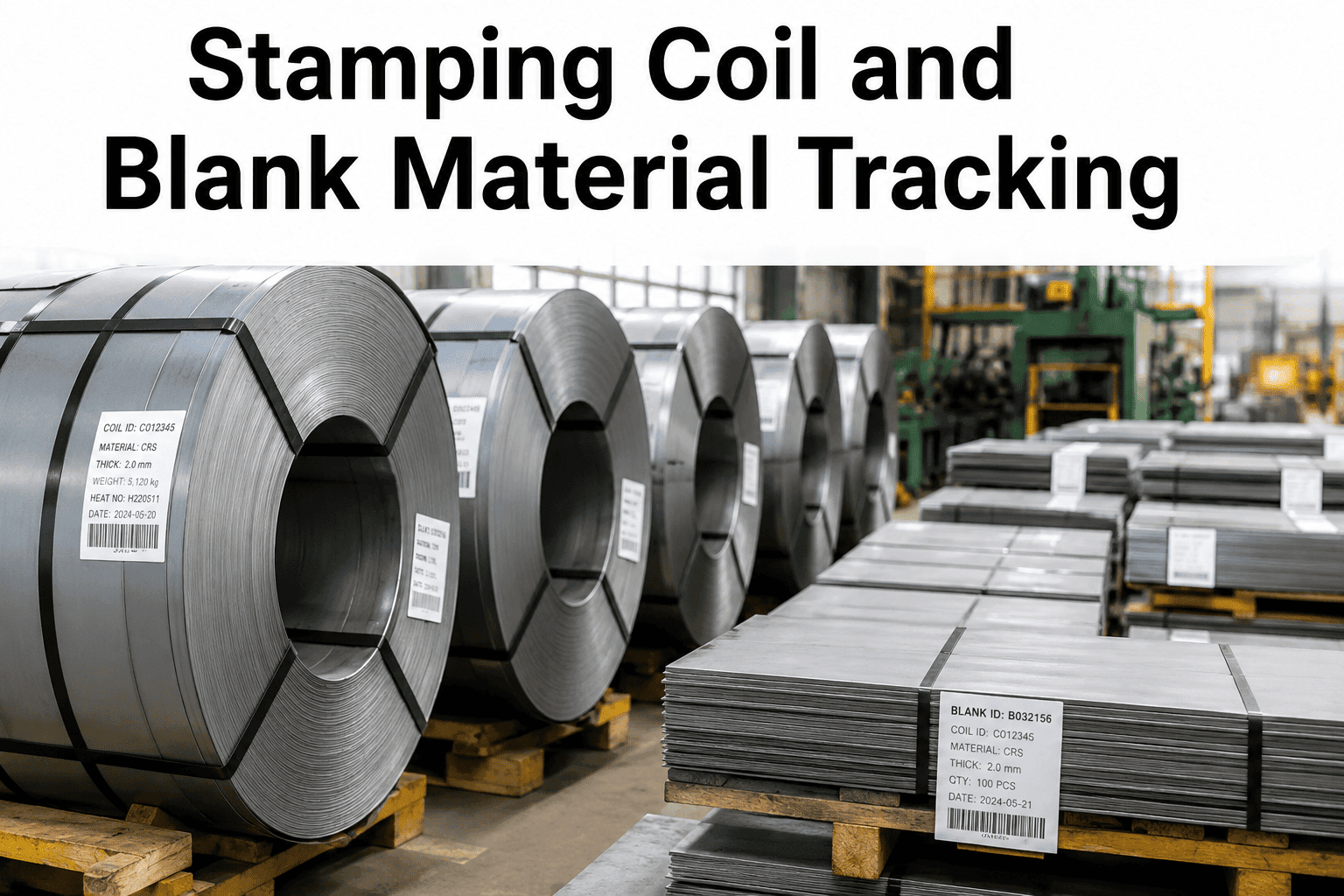
A harder or thicker coil batch accelerates edge wear compared to the batch the maintenance schedule was originally calibrated against, shortening actual usable die life without any schedule adjustment.
Regrind Quality Differences
A die that came back from an earlier regrind slightly under-sharpened starts its next run cycle with less usable edge than the schedule assumes, wearing out of tolerance earlier than planned.
No Early Warning Before Defects
Stroke-count scheduling has no way to react early if a die happens to wear faster than expected, so the first sign of trouble is often a burr or crack found during a routine part inspection.
Unnecessary Press Downtime
Pulling a die for polish before it actually needs it wastes both remaining tool life and a press changeover window that could have been used for a die that genuinely needed attention.
WEAR SIGNAL SOURCES
Reading Die Condition From Force and Sound, Not Just Stroke Count
As a die's cutting edge dulls or its draw surface roughens, the force required to complete the stroke and the acoustic signature of the punch-to-die contact both change in measurable, repeatable ways. iFactory's platform tracks both signal types continuously and combines them into a single wear estimate for each die.
Force Signature Drift
Gradual rise in peak shear force and change in curve shoulder shape as the cutting edge geometry degrades from its original sharpness.
Acoustic Emission Pattern
Shift in high-frequency sound signature at the moment of punch-to-material contact, which changes measurably as edge sharpness decreases.
Vibration Signature
Changes in press frame vibration pattern that correlate with increased clearance from pin and bushing wear inside the die set.
Cumulative Stroke Load
Historical stroke count weighted by actual measured force per stroke, rather than treating every stroke as equally wearing on the die.
Stop Guessing Die Life From a Stroke Counter Alone
iFactory's AI platform reads force and acoustic signals from actual production strokes to predict how much usable life each die has left, so your maintenance team can schedule polish and repair around real condition instead of a shared calendar. Book a demo to see it running on your dies.
WEAR PROGRESSION
Tracking a Die From Fresh Regrind to Scheduled Polish
A typical die follows a predictable wear curve after regrind: a short break-in period, a long stable middle life, and an accelerating final phase as edge degradation compounds. Watching where a specific die sits on this curve is what makes an accurate polish schedule possible.
Break-In
Stable Life
Accelerating Wear
Draw Die B07 is currently entering the accelerating wear zone, triggering the near-term polish recommendation shown above.
HEAD TO HEAD
Stroke-Count Scheduling vs AI Die Wear Prediction
The table below compares the two approaches across the factors that determine whether a die gets pulled for polish at genuinely the right time.
MEASURED OUTCOMES
Results From AI Die Wear Prediction Deployments
These figures reflect press shops where iFactory's platform was deployed for die condition monitoring and tracked over a minimum six-month production period.
44%
Reduction
In Scrap Caused by Undetected Die Wear
19%
More Usable Life
Extracted Per Die Before Scheduled Polish
100%
Stroke Coverage
Monitored Instead of Periodic Physical Die Checks
$175K
Annual Savings
From Reduced Scrap and Optimized Regrind Scheduling
FREQUENTLY ASKED QUESTIONS
Questions From Die Maintenance Leads About Wear Prediction
How does the platform learn the wear curve for a specific die if we don't have historical failure data?
The platform begins by establishing each die's baseline signature from its first strokes after a regrind, and prediction accuracy improves as it observes that die through at least one natural wear cycle, ideally including a confirmed polish or defect event to calibrate against. Dies with a similar geometry and material history can also share early model parameters to accelerate the learning period.
Book a demo to discuss onboarding for your specific die inventory.
Can this distinguish between wear on the cutting edge versus wear on the die's guide pins and bushings?
Yes. Edge wear and guide component wear produce different signal patterns, with edge wear showing primarily in the force signature's shoulder shape and guide wear showing more in the vibration signature and clearance-related timing shifts. The platform reports these as distinct wear indicators so maintenance teams know specifically what needs attention rather than a single undifferentiated health score.
Does the system account for scheduled die maintenance actions like spot polishing between full regrinds?
Yes, any maintenance action performed on a die is logged against that die's record, and the model resets or adjusts its wear baseline accordingly so a spot polish is reflected as a partial life extension rather than the system continuing to predict based on pre-maintenance condition.
Contact our support team to discuss how maintenance events are logged in your specific workflow.
How far in advance can the platform reliably predict when a die will need attention?
Typical lead time ranges from several days to a few weeks depending on the die type and how quickly its specific wear mode progresses, with slower-wearing dies like trim dies generally offering longer prediction windows than fast-wearing blanking dies on abrasive material. Prediction confidence is reported alongside the estimate so maintenance planners can weigh how much buffer to build into their scheduling.
Can die wear data be tied back to specific coil suppliers or material lots to identify a root cause?
Yes, wear signal data is timestamped and can be correlated with coil lot numbers and supplier records logged in your material tracking system, which makes it possible to identify whether a specific supplier's material batch is accelerating die wear compared to your typical baseline.
Book a demo to see this correlation applied to your own die and material data.
Your Dies Are Already Telling You How Much Life Is Left
iFactory's AI platform reads force and acoustic signals from every stroke to predict remaining die life, replacing a shared stroke-count calendar with a schedule built around each die's actual condition. Book a demo to see it running on your press shop dies.