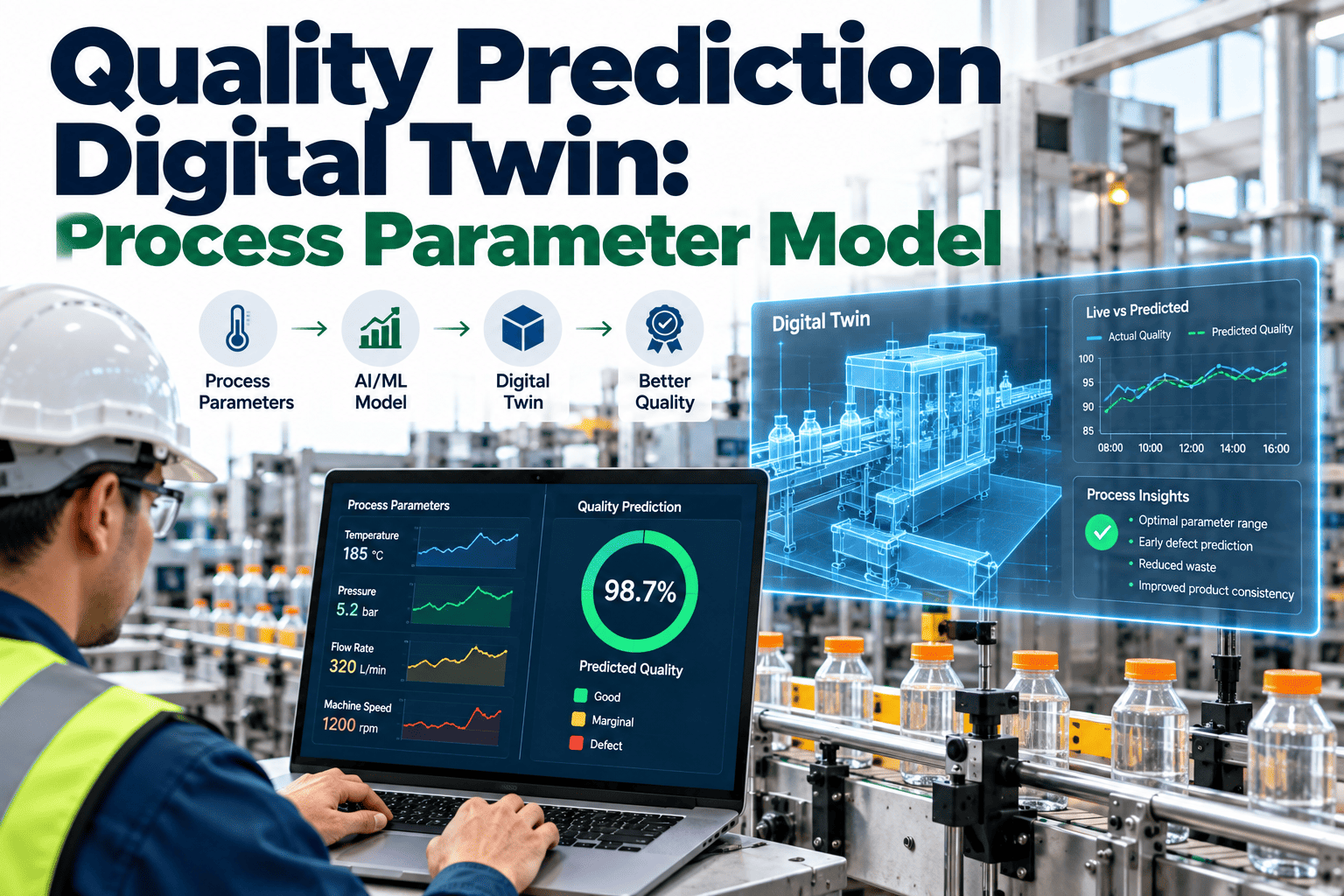
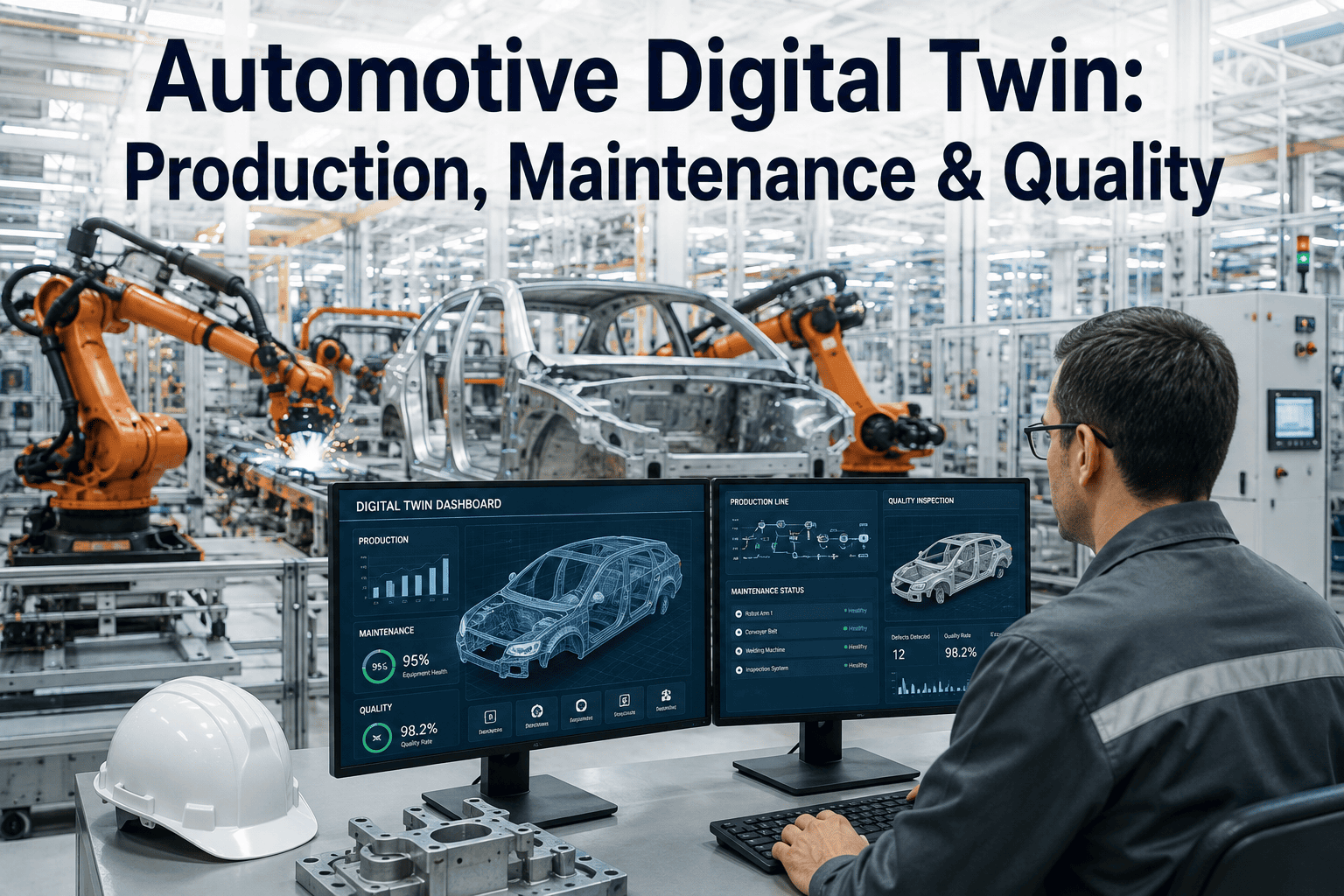
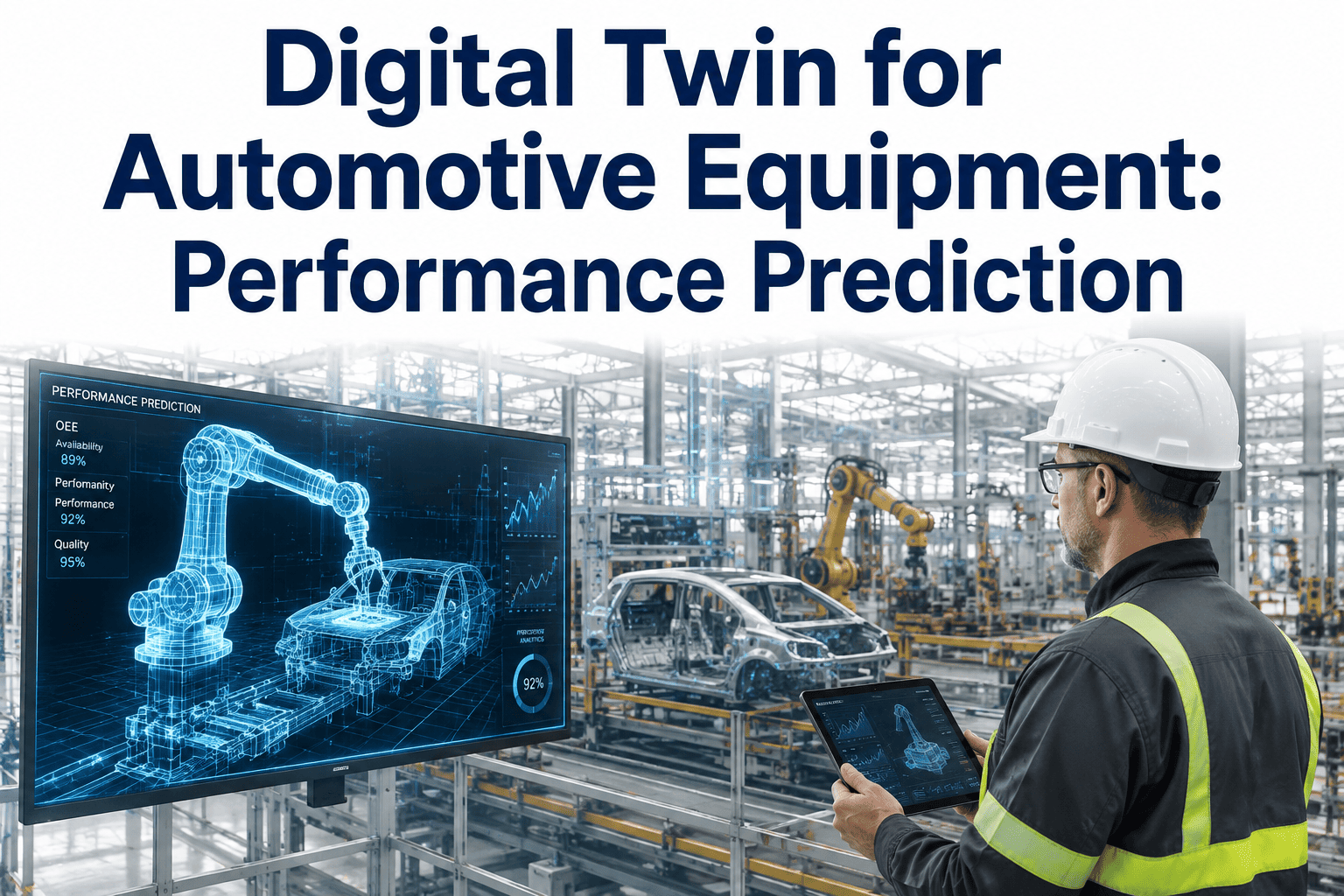
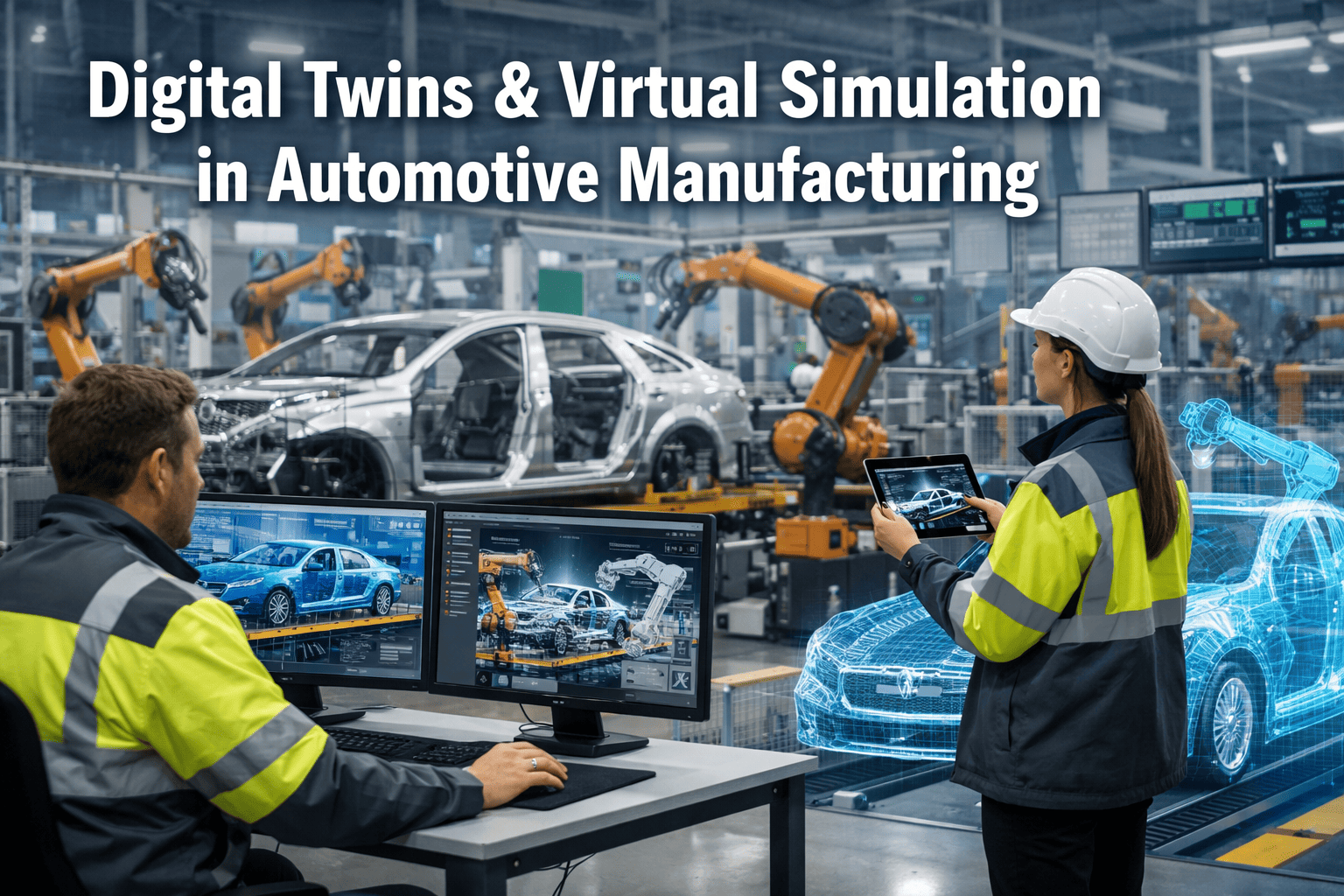
Every stamping press eventually tells you something went wrong — a die crash, a scrap spike, a bearing that fails mid-shift — but by the time it tells you, the cost is already locked in. A digital twin flips that sequence around. Instead of waiting for the physical press to reveal a problem, a continuously updated virtual model of that same press, fed by real sensor data, lets engineers simulate a new die, a faster cycle time, or a maintenance deferral before committing the physical machine to it. For a press shop running dozens of tool changes a month across multiple lines, that shift from reactive discovery to simulated validation is less a nice-to-have and more the difference between planned downtime and unplanned downtime, and between a scrap bin that fills up slowly instead of all at once. Building that model correctly from the start is what determines whether it actually earns that trust.
Stamping AI · Digital Twin Modeling
Stamping Press Digital Twins: Simulating Performance Before Committing the Physical Machine
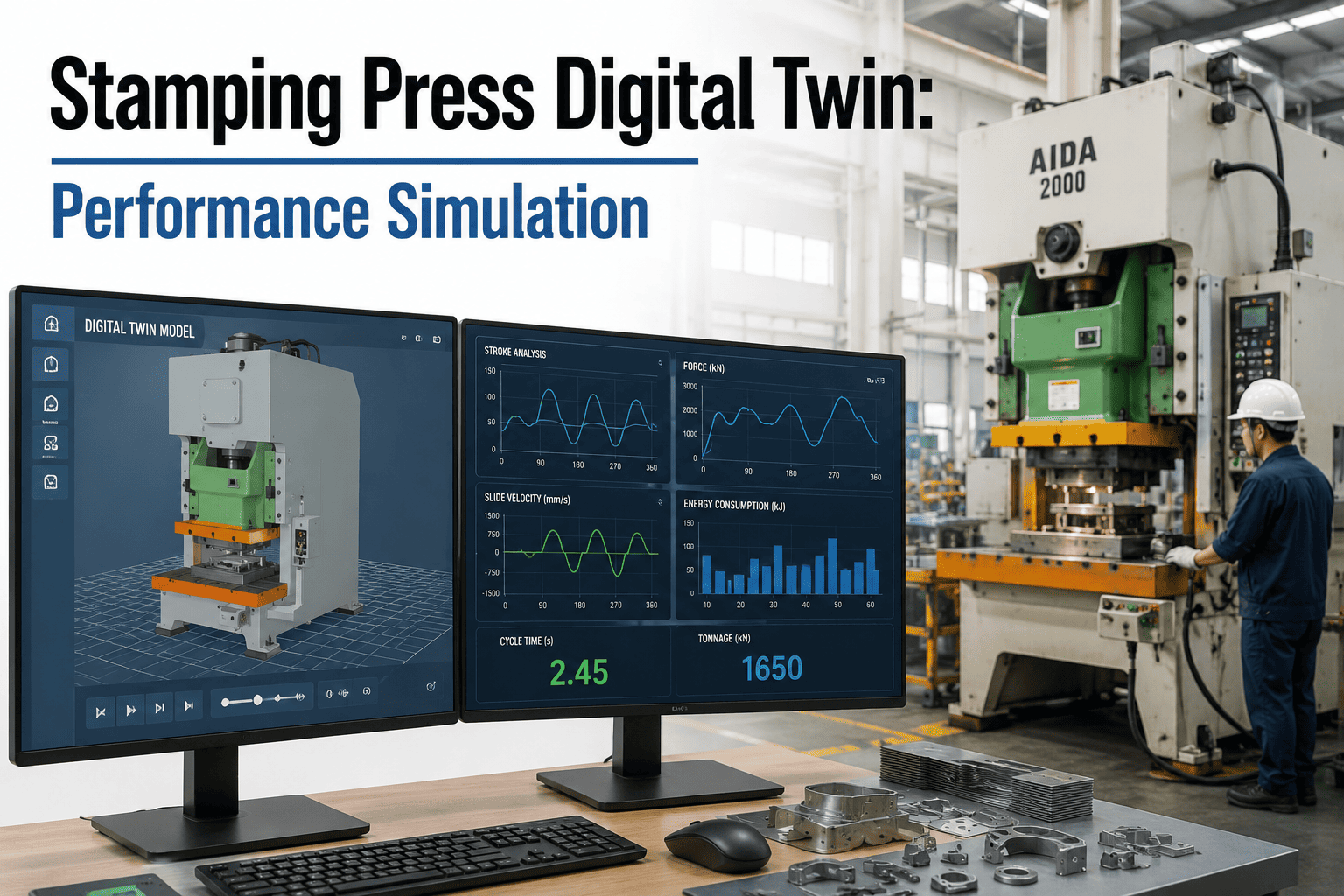
A digital twin mirrors a physical press using live sensor data, letting engineers validate die designs, predict maintenance needs, and test process changes in simulation instead of on the production line. iFactory builds and continuously updates these models so the virtual press stays accurate as the real one wears, ages, changes tooling, and moves through its normal maintenance cycle over years of production.
Live
Model updates from real press sensor data
Pre-Production
Die validation before the first physical hit
Predictive
Maintenance timing from simulated wear
The Model Stack
What a Working Digital Twin Is Actually Built From
01
Sensor Fusion From the Physical Press
Load cells, position encoders, vibration sensors, and temperature readings from the real press feed continuously into the model, so the twin reflects actual current behavior rather than a static assumption made when it was first built. The more consistently this data flows, the less the model has to guess about what changed since the last update.
02
A Process Model of the Stamping Cycle
The mechanics of the stroke, the die interaction, and the material behavior are modeled together, so the twin can simulate how a change to speed, force, or tooling geometry would actually play out rather than treating each variable in isolation. Isolated variable testing is exactly where traditional trial-and-error tends to miss interaction effects that only show up once everything is running together.
03
A Continuously Recalibrated Baseline
As the physical press wears, gets serviced, or runs a new job, the model recalibrates against incoming sensor data instead of drifting away from reality the way a one-time simulation inevitably does after a few months of production. This is the difference between a twin engineers can rely on years into its life and one that quietly becomes decorative.
04
A Simulation Interface for Engineers
Engineers run "what if" scenarios against the model — a new die, a faster feed rate, a deferred bearing replacement — and see predicted outcomes before deciding whether to test the change on the physical press at all. That interface is what turns a technically accurate model into something an engineering team actually uses day to day.
Where the Model Gets Used
Three Ways Engineering Teams Actually Use a Press Twin
Die Design Validation
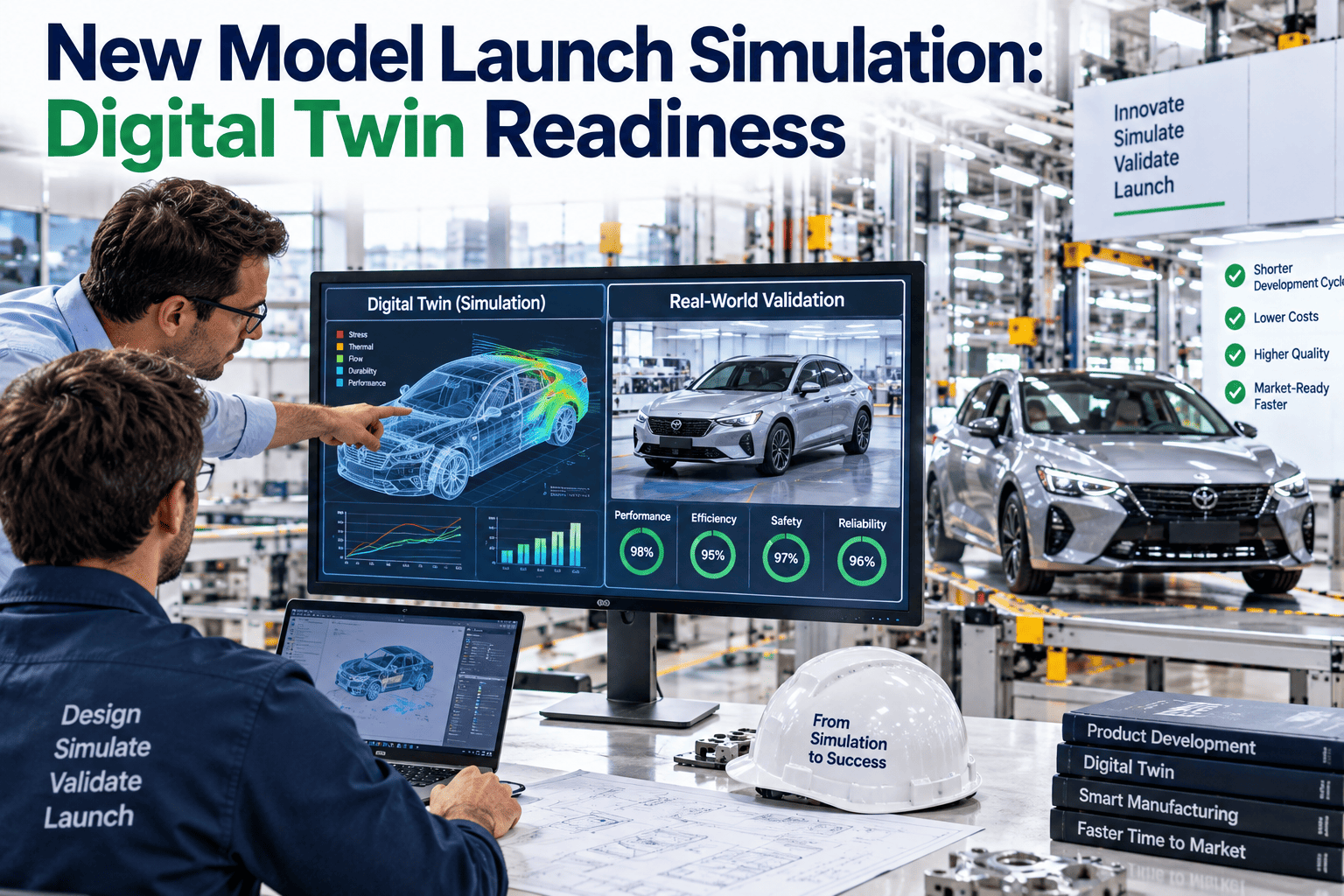
A new or modified die can be simulated against the press model before it's cut, catching force distribution issues or clearance problems that would otherwise only show up as scrap or a die crash during the first physical trial run. Catching these issues in simulation avoids the cost of re-cutting a die that was already committed to steel, and shortens the overall time between design sign-off and a die that runs cleanly in production.
Maintenance Timing Prediction
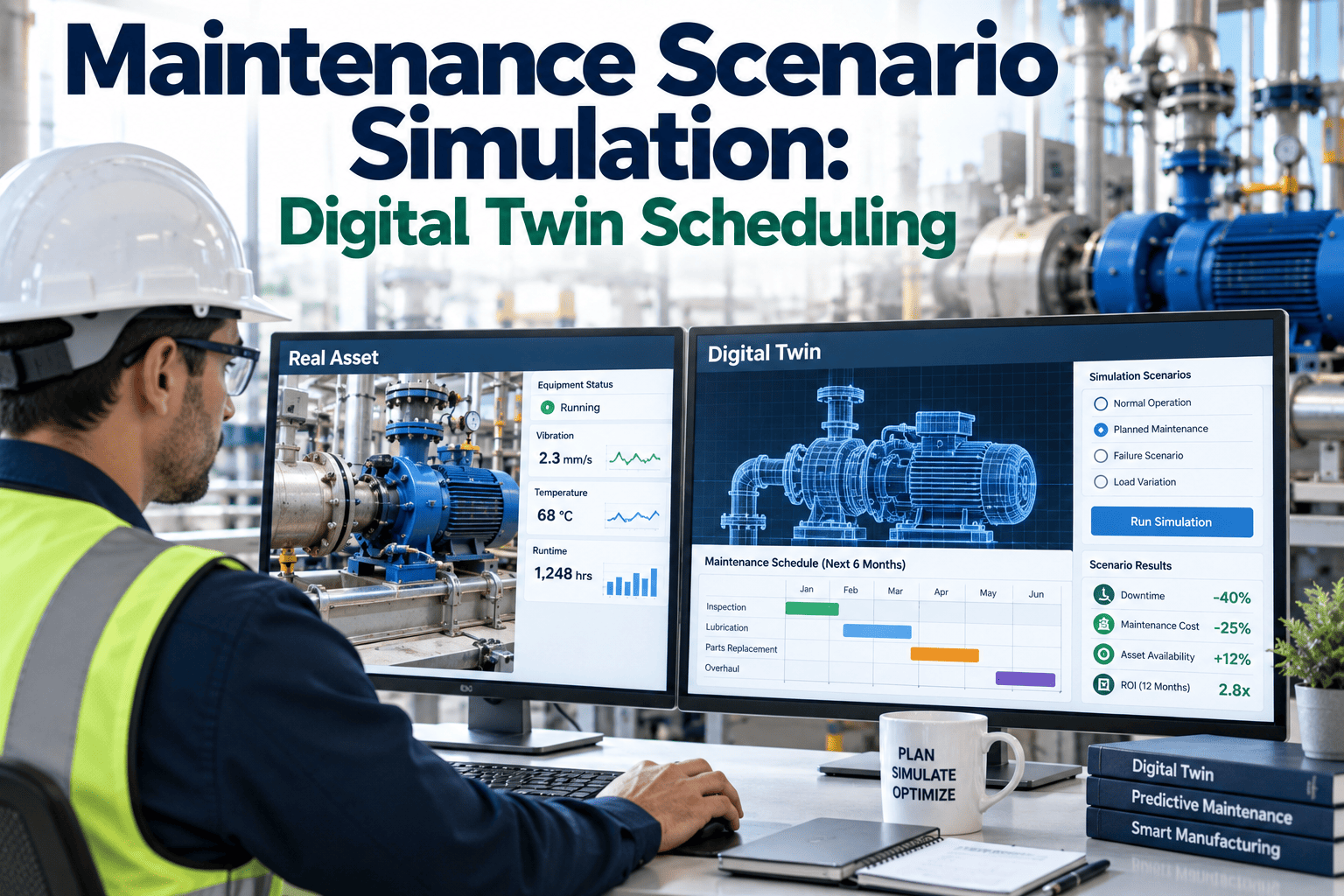
By simulating how current vibration and load patterns translate into component wear, the twin can flag that a specific bearing or clutch is trending toward failure weeks before it would show up as an unplanned stoppage, giving maintenance teams a scheduling window instead of a surprise, and letting the replacement happen during a planned changeover rather than mid-shift.
Cycle Time and Throughput Testing
Proposed speed increases or feed system changes can be tested in simulation first, showing whether the gain in throughput is actually achievable without pushing force or vibration into a range that shortens tooling life or increases scrap rates on the very run meant to be faster and more efficient.
Root Cause Replay After an Incident
When a scrap spike or a die issue does occur on the physical press, engineers can replay the same conditions against the model with full sensor context, isolating whether the cause was a tooling drift, a material variation, or a process parameter drifting outside its normal range — an investigation that's far harder to run from raw logs alone.
See Your Own Press Modeled
Most Engineering Teams Are Surprised by What the Simulation Catches
Bring a recent die change or a proposed cycle time increase and we'll walk through how a digital twin would have modeled that decision beforehand, including what it likely would have flagged before the physical trial ran.
Old Way vs. New Way
Traditional Trial-and-Error vs. Digital Twin Simulation
| Decision Point | Traditional Approach | Digital Twin Approach |
|---|
| New die validation | Physical trial run, adjust after crashes or scrap | Simulated first, physical trial confirms the model |
| Maintenance timing | Fixed schedule or reactive after failure | Predicted from simulated wear trends |
| Cycle time changes | Tested live, risking scrap and tooling wear | Modeled in simulation before the physical test |
| Root cause analysis | Reconstructed from logs after the fact | Replayed against the model with full sensor context |
| Engineer confidence | Built on experience and past incidents | Built on simulated outcomes plus experience |
What Trips Teams Up
Common Reasons a Digital Twin Project Stalls Before It Pays Off
Building the Model Once and Never Recalibrating
A twin that isn't continuously fed live sensor data starts drifting from reality the moment the press wears, gets serviced, or runs a new job, and a stale model that quietly stops matching reality is often worse than no model at all, because engineers keep trusting predictions that no longer hold and have no obvious signal telling them the model has fallen out of sync.
Trying to Twin Every Press at Once
Spreading instrumentation and modeling effort across an entire press shop simultaneously usually means no single press gets validated well enough to actually be trusted for a real decision, which is why most successful rollouts start with one high-value press and expand only after that one proves out and the team has a working template for the next.
Skipping the Validation Period
A model that hasn't been checked against several real job changes yet is still a hypothesis, not a trusted tool, and using it for a high-stakes die decision before that validation period has run its course puts the project's credibility at risk if the first prediction turns out wrong and engineers lose confidence before the model has had a fair chance.
Treating Simulation as a Replacement for Physical Trials
Even a well-validated twin reduces risk and narrows the range of what a physical trial needs to confirm, but it doesn't eliminate the value of that first physical run entirely — the two are meant to work together, not one replacing the other outright, and teams that treat simulation as the final word rather than a strong prediction tend to be caught off guard by real-world variation eventually.
Getting Started
How a Press Twin Gets Built and Trusted
1
Instrument the press with load, position, vibration, and temperature sensors
2
Build the initial process model from a known-stable production run
3
Validate the model against real outcomes across several job changes
4
Run a low-stakes simulation, like a minor die tweak, and confirm accuracy
5
Expand to higher-stakes decisions once engineers trust the predictions
A Composite Scenario
A Die Change That Would Have Been a Costly Guess
Before
An engineering team needed to modify a progressive die to accommodate a revised part geometry. The traditional path was to cut the modified die, run a physical trial, and adjust based on whatever scrap or force imbalance showed up — a process that historically took two or three trial rounds and several hours of press downtime per round, plus the cost of scrap material generated during each failed attempt.
After
The proposed die geometry was simulated against the press's digital twin first, which flagged a force distribution issue that would have caused premature wear on one station. The design was corrected in simulation, and the first physical trial matched the model's predictions closely enough that only minor fine-tuning was needed on the actual press, cutting the process down to a single trial round instead of the usual two or three.
Common Questions
Stamping Press Digital Twins — FAQ
How accurate does a digital twin need to be before engineers can trust it?
Accuracy is built incrementally — the model starts with a known-stable process, gets validated against real outcomes across several job changes, and earns trust for higher-stakes decisions only after it's proven reliable on lower-stakes ones. No twin is treated as fully trustworthy on day one, and that gradual validation is part of the process rather than a shortcut around it, which is also why engineers should expect an initial period where they still confirm predictions against physical outcomes.
Our team can walk through how validation is structured for a specific press.
Does the model stay accurate as the press ages?
Yes, because it's continuously recalibrated against live sensor data rather than built once and left static. A press that's run for three more years of production, with normal wear and multiple services along the way, updates its own twin instead of requiring a manual rebuild to stay useful, which is one of the main differences between a genuine digital twin and a one-time simulation project.
What kind of sensors does a press need before it can be twinned?
At minimum, load, position, vibration, and temperature sensing across the key stations of the press, though the exact instrumentation depends on what decisions the twin needs to support. A model built primarily for maintenance prediction weighs vibration and load data more heavily than one built mainly for die validation, which is why the instrumentation plan usually starts with a clear picture of what the twin is meant to answer.
Can a digital twin actually prevent a die crash?
It can catch the conditions that typically lead to one — force imbalances, clearance issues, or timing conflicts — during simulation, before the die is ever run physically. It doesn't eliminate the risk entirely, since real-world variation always exists, but it moves the discovery point from an expensive physical failure to a simulated test run, which is a meaningfully cheaper place for that discovery to happen.
Book a demo to see how this applies to a specific die or press.
How long does it take to build a working twin for one press?
Initial instrumentation and baseline modeling typically take a few weeks, followed by a validation period across several job changes before the model is trusted for higher-stakes decisions. Most teams start with a single high-value press rather than attempting to twin an entire line at once, and use the lessons from that first press to instrument the next ones faster.
Stop Testing Expensive Changes on the Physical Press First
Simulate Die Changes and Maintenance Decisions Before Committing the Machine
iFactory builds continuously updated digital twins of your stamping presses, so engineers can validate decisions in simulation before they become physical trial-and-error, whether the question is a new die, a faster cycle, or a maintenance call that can't wait for a failure to answer it.