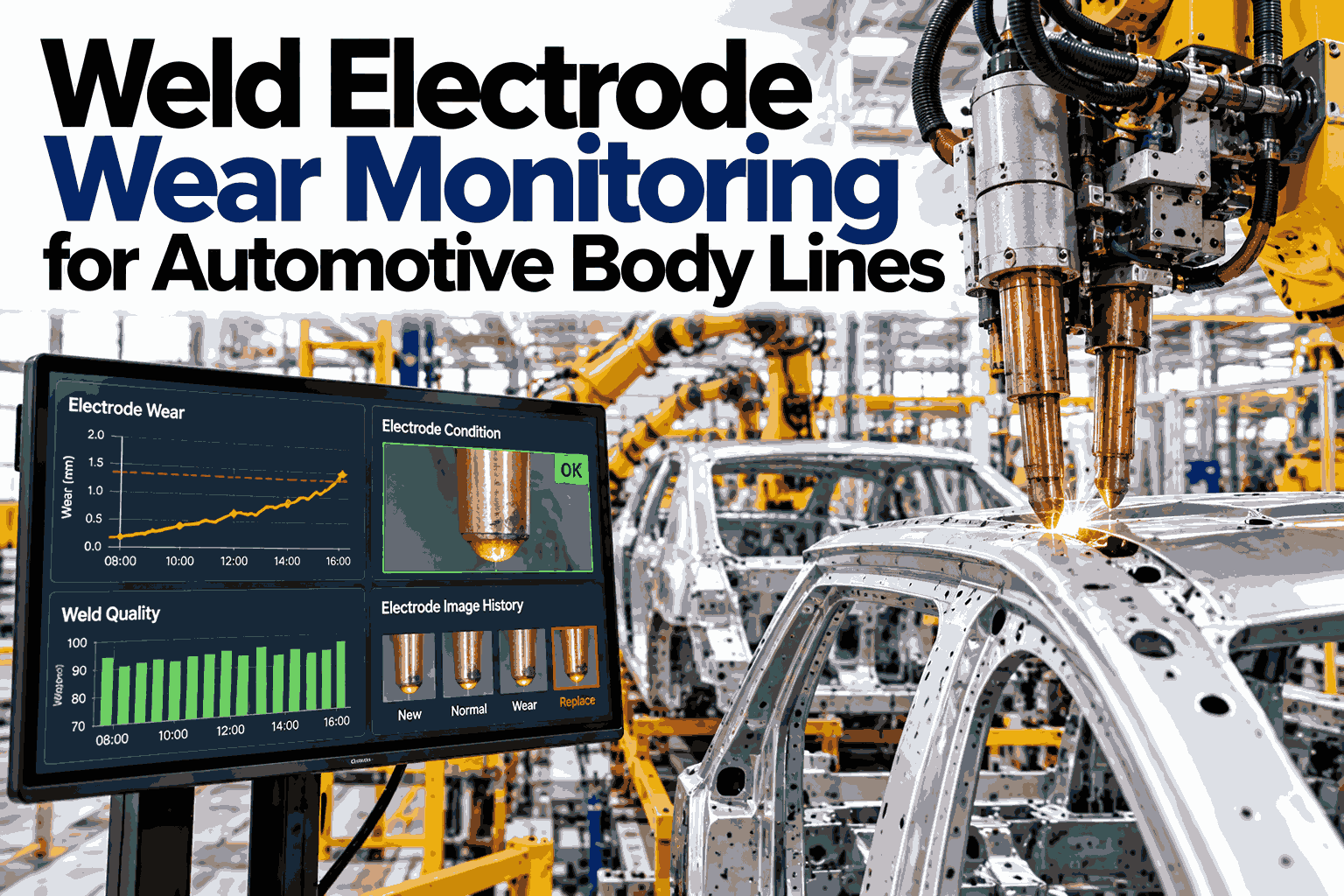
Every spot weld on a body line passes through two small pieces of copper, and those tips change a little with every single weld. Contact area grows, coatings alloy into the surface, and the heat that once formed a solid nugget slowly spreads across a wider face. Most plants manage this with a fixed weld count and a good deal of habit, which means good tips get dressed early and worn tips get missed late. Teams that want to replace that guesswork can see wear trends built from their own weld data in a live 30-minute session with iFactory AI.
Dress the Tip When the Weld Says So, Not When the Counter Does
iFactory AI tracks electrode wear from the signature of every weld, predicts remaining tip life, and tunes dressing cadence so quality stays stable across long shifts.
Why the Tip Is the Weakest Link
A fresh tip concentrates current into a small, hot spot. As it mushrooms, the same current spreads over a larger face and the nugget gets less energy per square millimeter.
Illustrative curve of tip face growth across tip life. Actual growth depends on material, coating, force, and current.
How Wear Turns Into a Defect
Mushrooming widens the contact area with every weld.
Current spreads out, so heat at the joint drops.
Fusion gets smaller and joint strength weakens.
Cold or stuck welds pass unless someone is watching.
Four Ways Plants Decide When to Dress
Every approach makes a trade-off. The table shows what each one sees and what it quietly misses.
| Approach | How It Decides | Blind Spot | Best Fit |
|---|---|---|---|
| Fixed weld count | Dress after a set number of welds | Ignores real tip condition | Stable single-material lines |
| Stepper current | Raises current as count grows | Can mask wear and push toward expulsion | Moderate wear, tuned schedules |
| Manual inspection | Technician checks the tip face | Nothing is watched between checks | Spot audits |
| Signature monitoring | Reads drift in every weld signal | Needs a healthy baseline per station | Mixed stack-ups, long shifts |
See Your Tip Life Curve Before You Change Anything
Book a 30-minute demo and iFactory AI will show how wear tracking, tip life prediction, and dressing cadence work against your own weld schedules.
Fixed Count vs Condition-Based Dressing
The Wear Signals iFactory AI Watches
No single signal proves a tip is worn. The pattern across several signals, over many welds, is what gives it away.
A Composite Scenario: The Long Shift That Drifted
A body line dressed tips at a fixed count and saw weak-joint rework climb in the final hours of every shift, even though morning quality looked fine.
Illustrative example based on common spot welding patterns, not a specific customer result.
Delivered Turnkey, Live in 6 to 12 Weeks
iFactory AI arrives pre-configured on an NVIDIA server with software pre-loaded. Rack it, connect power and Ethernet, and the team handles the rest.
Frequently Asked Questions
How can software tell an electrode is worn?
Each weld leaves a signature in current, voltage, resistance, and force. As the tip face grows, those curves shift in small, repeatable ways that a model can separate from normal variation. A live look at drift on your own guns shows how clearly it appears.
Does this replace tip dressing schedules?
It replaces the guesswork behind them. Dressing still happens, but the timing follows the actual condition of each gun rather than one interval applied everywhere. Plants usually keep a safety ceiling on weld count and let evidence trigger earlier or later action within it.
Will it work with coated and high-strength steels?
Coatings alloy into tips and change how fast they wear, so the system learns a separate baseline for each material combination in your schedule. That keeps predictions accurate on difficult stack-ups. Walk through your material mix with the iFactory AI team in one call.
What does tip life prediction actually output?
It gives an estimate of remaining healthy welds for each gun, plus an alert when drift crosses a threshold you set. Maintenance sees which guns to dress at the next planned break, so tip changes stop interrupting production unexpectedly.
How quickly can we go live?
Delivery is turnkey and typically takes 6 to 12 weeks. The hardware arrives pre-configured, integration covers cabling, network, and plant systems, and the final phase trains maintenance staff. Sketch a rollout plan for your body lines in a 30-minute conversation.
Get Longer Tip Life and Steadier Welds Across Every Shift
iFactory AI tracks electrode wear, predicts tip life, and tunes dressing cadence so quality holds from the first weld to the last. Book a walkthrough on your own line data.