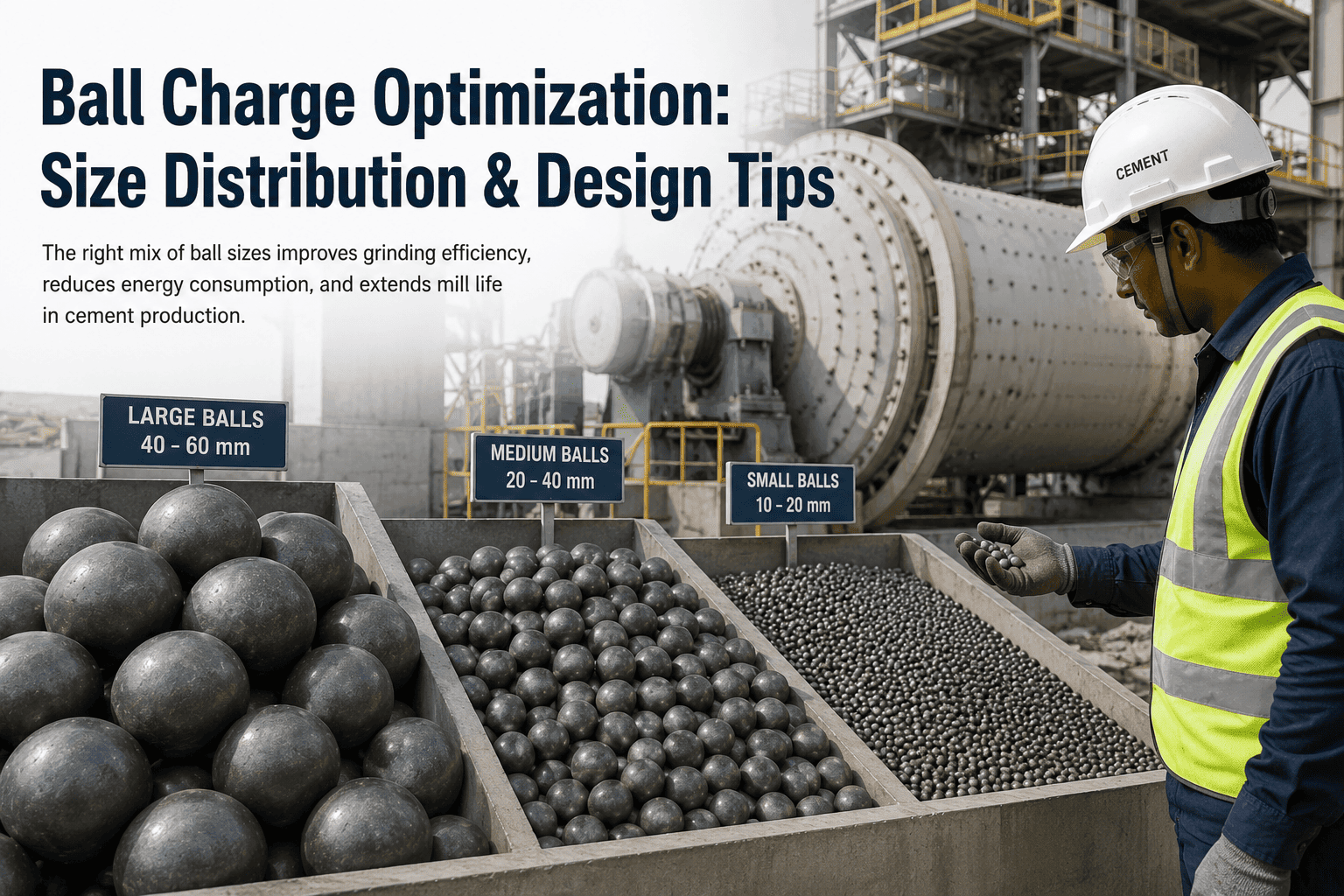
Two hundred tons of steel sitting inside a cement ball mill doesn't look like a variable anyone tunes day to day — it looks like a fixed piece of equipment that was loaded once and topped up whenever wear made it necessary. In practice, the size distribution of that charge is one of the biggest levers a plant has over how many tons of clinker get ground per kWh, and it drifts constantly whether anyone is watching or not. This walks through how filling degree, ball size distribution, and media quality actually determine grinding efficiency, and where most charge designs quietly go wrong, with a short demo available if you want to see the same drift mapped against your own mill data.
Cement Blog · Grinding Inefficiency
Ball Charge Optimization: Getting Size Distribution and Design Right
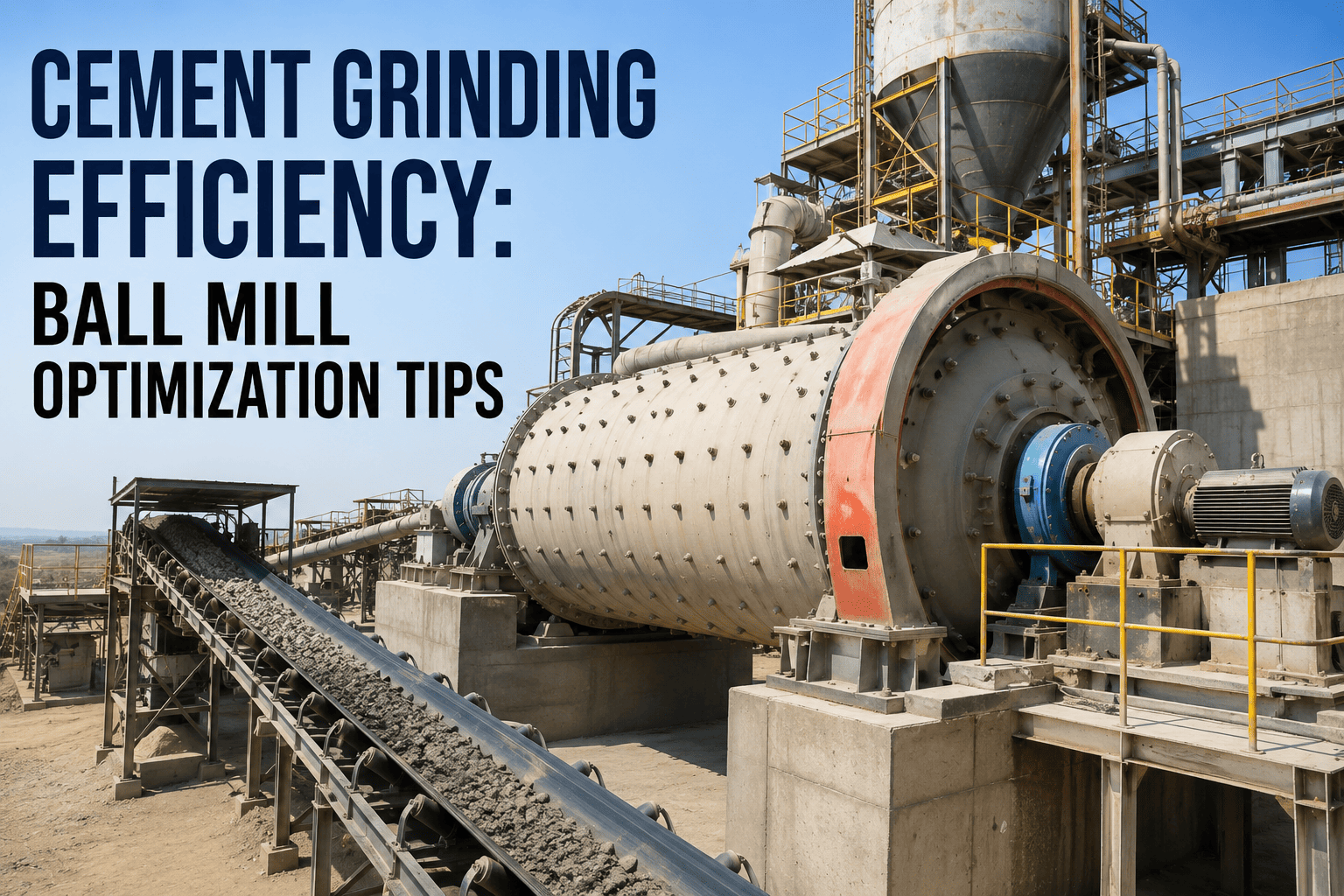
A ball mill's grinding action is decided almost entirely by two numbers: how full the chamber is, and what size the balls inside it are. Get either one wrong and the mill keeps drawing full power while producing noticeably less usable output. This breaks the topic down the way a plant process team actually needs it — filling degree ranges, chamber-by-chamber ball sizing, media quality trade-offs, and the design mistakes that show up most often during a mill audit.
25-35%
typical filling degree range for a cement ball mill chamber
200+ t
steel media a two-chamber mill can carry at once
2
distinct ball sizing strategies needed across chamber one and two
Why Charge Design Gets Overlooked
The Charge That Was Loaded Years Ago Is Rarely the Charge Running Today
Grinding media gets purchased and accounted for as a consumable, which is exactly why it rarely gets treated with the same design discipline as the mill itself. A charge is loaded to a specification at commissioning or after a major reline, then topped up ad hoc over the following months and years as media wears down and gets consumed. Nobody deliberately decides to run a coarser or finer charge than designed — it happens gradually, ball by ball, as replenishment decisions get made without reference to the original size distribution curve. The mill keeps drawing roughly the same power the whole time, because power draw is driven mostly by total charge mass and mill geometry, not by how well-matched the size distribution is to the feed. What changes quietly in the background is throughput and fineness, which is exactly why a drifting charge can go unnoticed for a full production quarter before anyone connects declining output to the media inside the mill.
Filling Degree
How Full Is Full Enough — And What Happens Past That Point
Filling degree is the volume of grinding media expressed as a percentage of total mill chamber volume, and it is one of the only two adjustments available on a mill once speed, liner shape, and diameter are fixed by design. Cement ball mills typically run somewhere between 25% and 35% filling degree per chamber, and moving outside that band in either direction costs efficiency in a different way. Because filling degree governs how the charge cascades and tumbles inside the shell, even a small deviation changes the balance between impact energy and simple churning with no grinding benefit at all.
Ball Size Distribution
Chamber One and Chamber Two Are Solving Two Different Problems
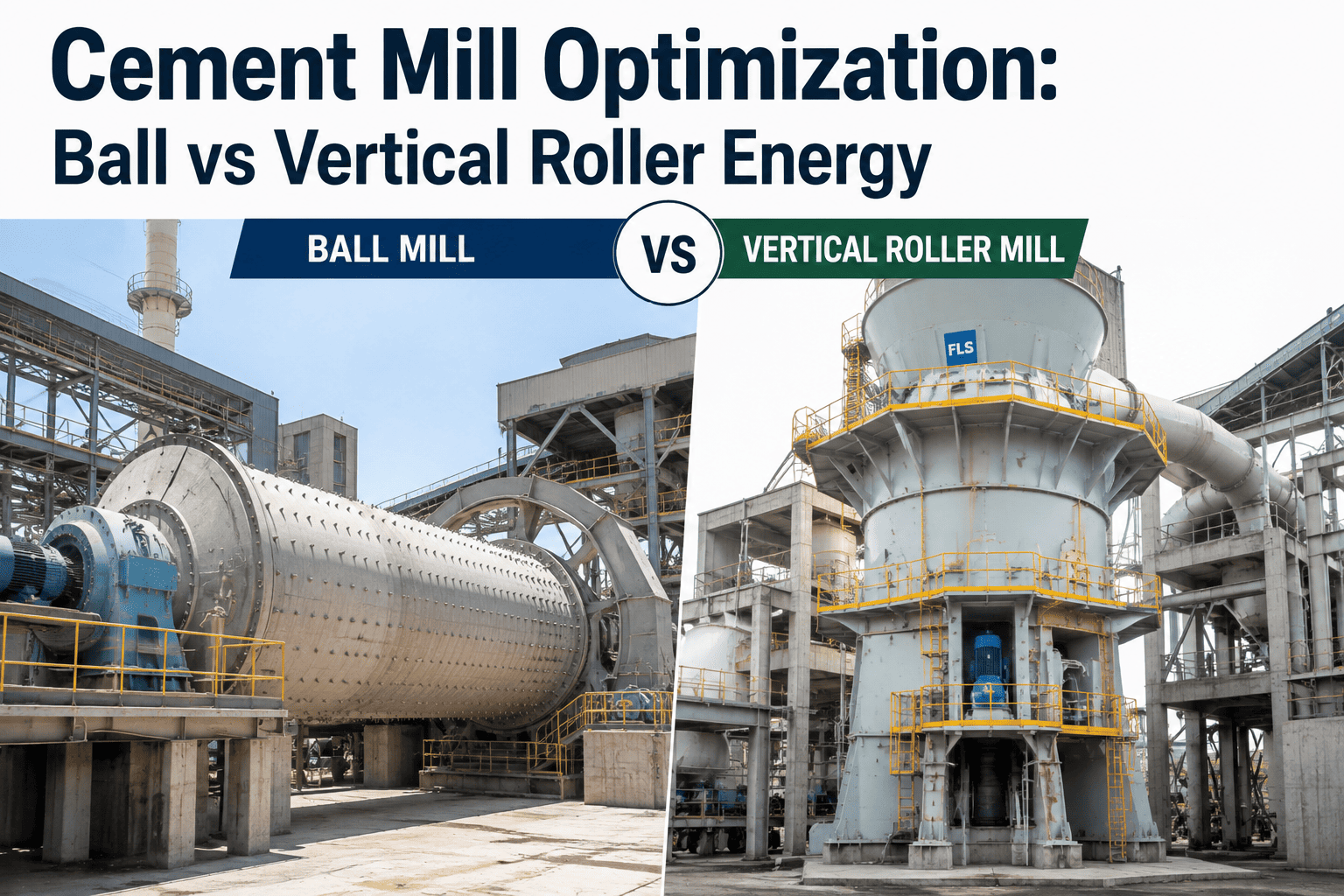
A two-chamber cement ball mill isn't running the same grinding job twice — the first chamber is breaking coarse clinker down through impact crushing, and the second is refining that intermediate product down to target fineness through attrition. Loading both chambers with the same ball size distribution, or letting worn media migrate between them, undermines both jobs at once.
Chamber One — Impact Crushing
Needs larger diameter balls to deliver enough impact energy to break coarse clinker particles quickly. Undersized media here leaves coarse material under-broken, pushing the problem downstream into the second chamber where it can't be efficiently fixed.
Chamber Two — Attrition Grinding
Relies on smaller diameter balls to grind already-reduced material down to target Blaine through surface attrition rather than impact. Oversized media here wastes energy on particles that don't need heavy impact, and can actually overgrind material past the fineness target.
Design Principles
Five Things a Well-Designed Charge Gets Right
01
Match ball size to feed grindability, not tradition. A charge sized for a clinker source that ground easily will under-perform the moment feed hardness increases, even if nothing else in the mill changed.
02
Screen media below 60mm out of the first chamber. Undersized balls left in the coarse compartment stop contributing meaningful impact energy and should move to the second chamber where their size is actually useful.
03
Replenish against a size distribution curve, not a weight target. Topping up media to hit a tonnage figure without tracking the resulting size mix is how a charge drifts away from design over several years without anyone deciding it should.
04
Hold filling degree inside the 25-35% band per chamber. Treat any sustained drift outside that range as a signal worth investigating rather than a minor variance to absorb.
05
Track power draw against output, not power draw alone. A mill can hold steady power consumption for months while throughput per kWh quietly declines as the charge wears out of specification.
See How Far Your Own Charge Has Drifted From Design
Most plants haven't compared their current ball size distribution against the original design curve in years. A short session shows what that comparison looks like using your mill's own power and fineness data.
Media Selection
Ball Quality Affects the Design Just as Much as Ball Size
Two charges with identical size distributions on paper can behave very differently in the mill if the media itself wears at different rates. Softer or lower-hardness media rounds and shrinks faster, meaning the size distribution the plant thinks it has loaded is already out of date within weeks of a top-up. Harder, more wear-resistant media holds its designed size and shape longer, which keeps the actual in-mill distribution closer to the intended curve for longer between replenishment cycles — an important factor when comparing media on unit cost alone, since a cheaper ball that wears twice as fast can cost more in lost grinding efficiency than it saves in purchase price.
Common Pitfalls
Charge Design Mistakes That Show Up Most Often During a Mill Audit
| Mistake | What It Does to the Charge | Symptom in the Mill |
|---|---|---|
| Topping up by weight only | Size distribution drifts silently even as total charge mass stays constant | Output declines while power draw stays flat |
| Letting undersized balls stay in chamber one | Impact energy in the coarse compartment falls below design | Coarse material pushed into chamber two under-broken |
| Fixed charge design across clinker sources | Media sizing matched to one grindability, wrong for another | Fineness inconsistency between production campaigns |
| Filling degree allowed to creep upward | Charge begins centrifuging instead of cascading cleanly | Higher specific power consumption with no output gain |
| Media hardness chosen on unit price alone | Faster wear rate shrinks designed size distribution quickly | Frequent top-ups needed to hold the same charge profile |
Applied Example
A Charge That Looked Fine on Paper But Was Grinding the Wrong Material
A finish mill had been topped up consistently for three years, always to the same total tonnage the original design called for, so a routine inventory check showed nothing unusual. A closer sieve analysis of the charge told a different story: undersized balls that should have been screened out of the first chamber had been accumulating there instead, quietly reducing the average impact energy available for breaking coarse clinker. Output had drifted down by a noticeable margin over that period, attributed at the time to harder clinker from a newer quarry face. Re-sorting the charge, moving undersized media into the second chamber where it belonged, and topping up the first chamber with correctly sized balls restored close to the mill's original throughput within a few days, with no other change to the circuit. The total tonnage of steel in the mill had barely changed across those three years — the size distribution inside it had changed a great deal, and that was the actual problem the whole time.
The mistake I see most often isn't a bad charge design, it's a good charge design that nobody has re-verified in years. Media wears down together — ball size, filling degree, and hardness all drift at once — and because power draw doesn't change much through that drift, it hides in plain sight. The plants that stay ahead of it aren't running exotic media, they're just checking the actual size distribution against the design curve on a regular schedule instead of assuming a weight-based top-up is enough.
Priyanka Sundaram
Grinding Media and Mill Performance Specialist · 12 years in cement plant operations
Common Questions
Ball Charge Optimization — Frequently Asked
These are the questions plant teams tend to ask first when they start reviewing charge design instead of treating media as a fixed consumable.
How often should ball size distribution actually be checked?
Most plants only check size distribution during a full mill stop for reline or major maintenance, which can leave a year or more between real verifications while the charge quietly drifts the entire time. A better cadence ties the check to observed changes in output or power trends rather than a fixed calendar interval, since a charge that's still close to design doesn't need frequent physical inspection while one showing early drift benefits from a closer look sooner. Continuous tracking of power draw against output can flag when a physical check is worth scheduling. Book a demo to see how that trend is built from data you likely already have.
Is a higher filling degree always more efficient since there's more media doing the work?
No, past a certain point additional filling degree starts working against the mill rather than for it, because the charge begins to centrifuge along the shell wall instead of cascading and tumbling the way it needs to for effective impact grinding. Cement ball mills typically operate best somewhere between 25% and 35% filling degree per chamber, and pushing well beyond that range tends to raise power draw without a matching gain in throughput. The right level depends on mill diameter, speed, and liner design working together, not filling degree in isolation. Ask our team about your mill's specific optimal range.
Should both mill chambers always use the same ball hardness and quality?
Not necessarily, since the two chambers are doing different mechanical work — the first relies on impact crushing while the second relies on attrition grinding — and media wear behaves differently under each type of stress. Many plants do standardize on a single media supplier and hardness grade for simplicity of procurement and inventory, which is a reasonable trade-off as long as the size distribution in each chamber is still being managed to the design curve for that compartment. The bigger factor is usually size distribution discipline, not hardness matching between chambers. Book a session to review your current media strategy against your circuit.
Can charge drift be detected without opening the mill for a physical inspection?
To a meaningful extent, yes — a mill's power draw, throughput, and product fineness together carry indirect signals of how well the current charge matches the feed it's grinding, even without a direct look inside the shell. A charge that has drifted coarser than design tends to show declining output at stable power, while one that has drifted finer than needed tends to show unusually high power consumption relative to the fineness being achieved. These signals don't replace a physical sieve analysis entirely, but they can flag when that analysis is worth scheduling rather than waiting for the next planned mill stop. Contact support to see what your existing data already suggests.
Does switching clinker sources really justify redesigning the ball charge?
It depends on how different the grindability is between sources, but a meaningful shift in clinker hardness does change how much impact energy is needed to break it efficiently, which is exactly what ball size distribution controls. A charge tuned for an easily ground clinker can leave a harder source under-broken in the first chamber, pushing coarse material downstream where the second chamber isn't designed to compensate for it. Rather than a full redesign, most plants adjust the balance of ball sizes within the existing distribution to better match the new feed characteristics. Book a call to see how that adjustment is typically approached.
Find Out What Your Charge Is Actually Grinding Like Today
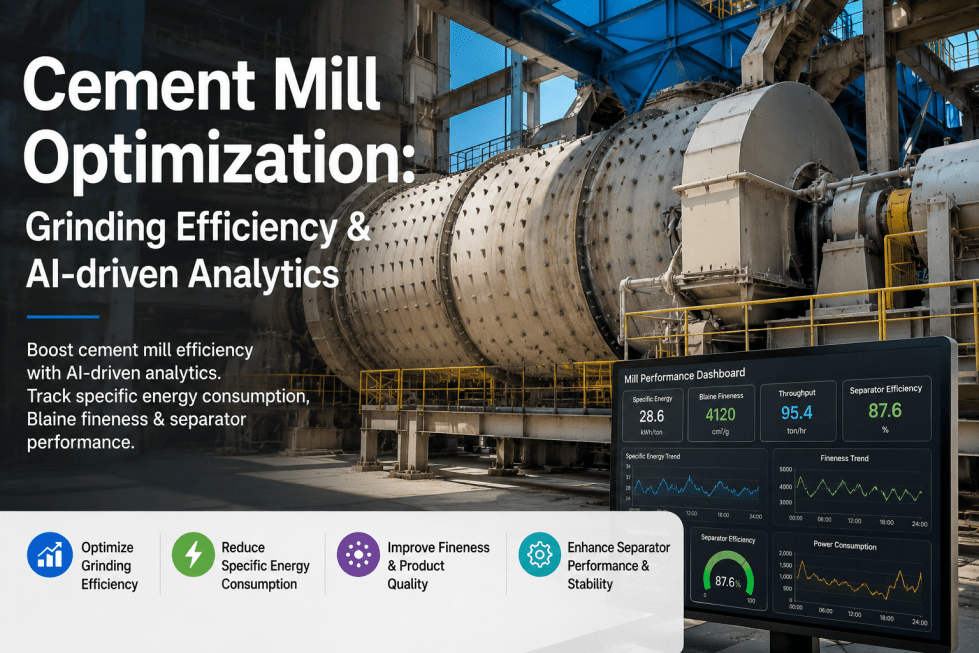
iFactory tracks power draw, throughput, and fineness continuously to flag when a ball charge has drifted from its designed size distribution — so a re-sorting or top-up decision gets made from evidence, not from whenever the next mill stop happens to fall.