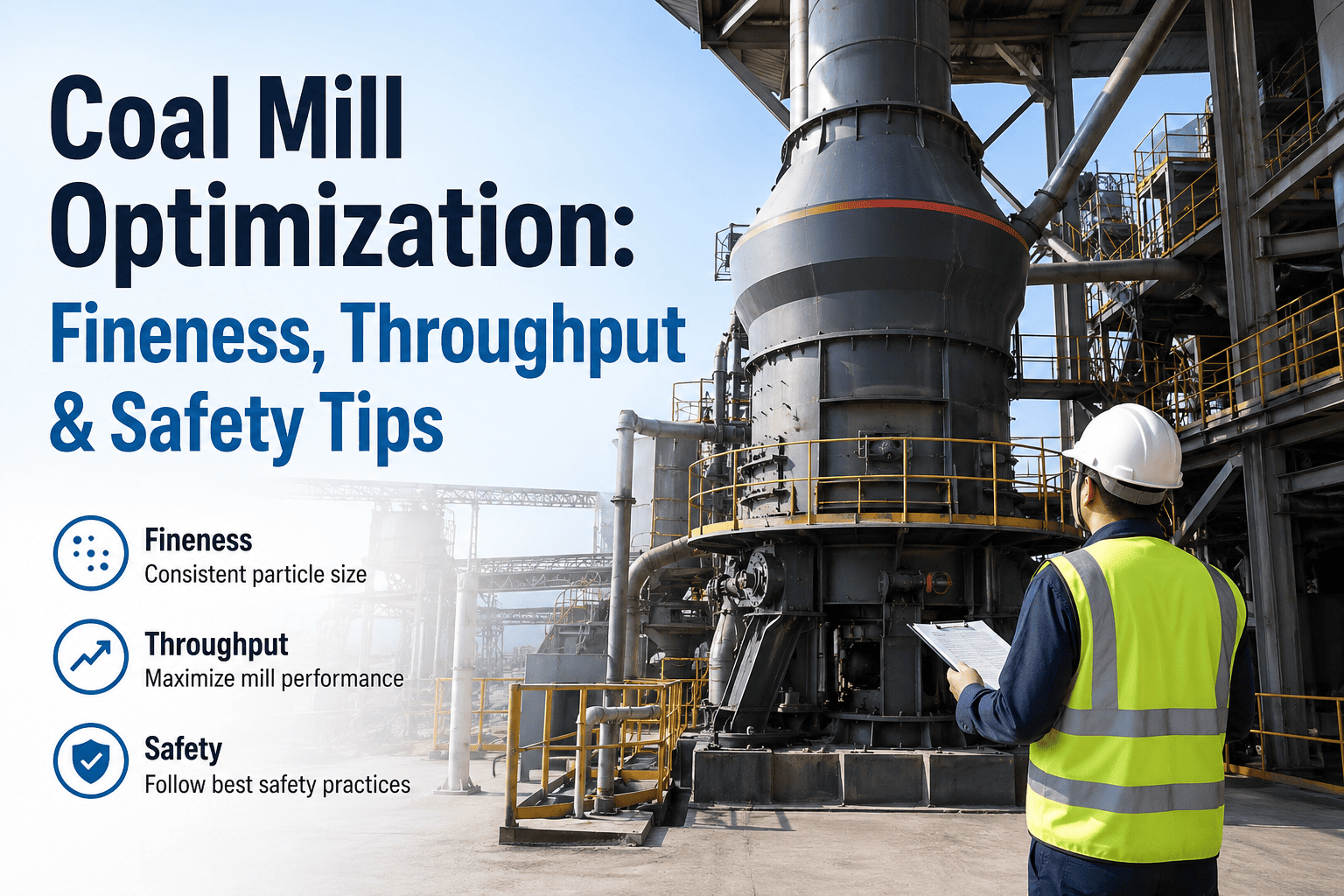
Coal mill operators in cement plants chase two numbers that pull in opposite directions every shift: coal fineness, which determines how completely the fuel burns in the kiln, and mill throughput, which determines whether the kiln gets enough fuel to hold its firing rate. Push the classifier for finer coal and throughput drops. Push throughput and fineness slips, sending coarse particles into the kiln that burn incompletely and waste fuel. Layered on top of that balancing act is a genuine safety hazard, since pulverized coal in the right concentration and the presence of an ignition source is an explosion risk that mill design and monitoring exist specifically to prevent. Talk to iFactory support about coal mill performance and safety monitoring for your plant.
Cement · Fuel Optimization · Coal Mill Operation
Coal Mill Optimization: Fineness, Throughput and Safety Working Together
Fineness and throughput compete for the same mill capacity, and safety margins compete with both. Here is how the three actually interact, and where most plants leave performance and safety margin unclaimed.
2–5%
Typical fuel consumption penalty from coarse coal fineness outside target specification
8–15%
Throughput headroom often available once fineness and mill differential pressure are properly balanced
Sub-Second
Response window needed between an early fire signal and a triggered inerting action
The Core Tradeoff
Fineness and Throughput Are Fighting for the Same Mill Capacity
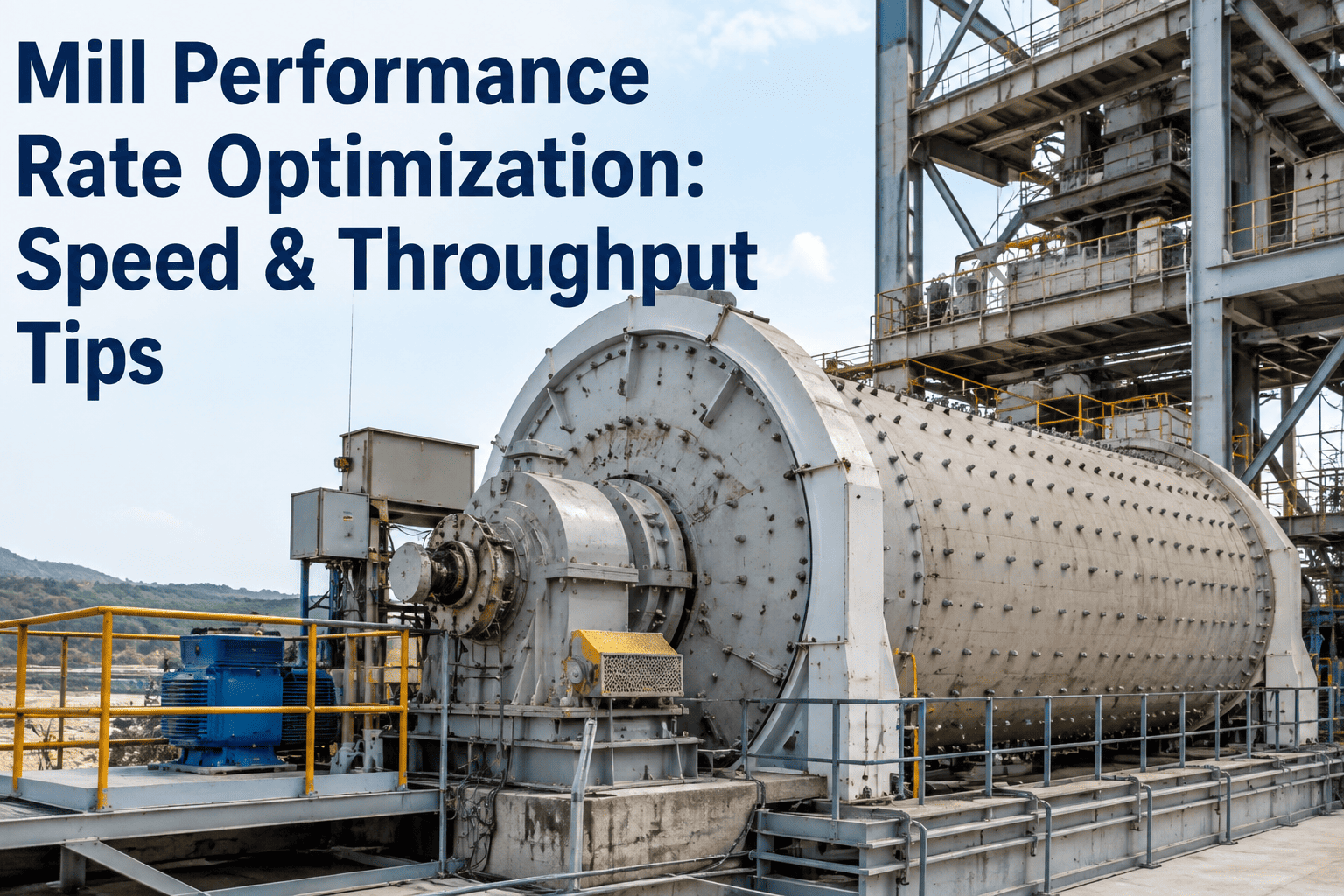
Every coal mill has a fixed grinding capacity at a given classifier setting. Moving that setting to favor one output variable takes capacity away from the other, and most operators only see this tradeoff after fuel consumption or kiln firing rate has already drifted off target for days.
Push Fineness Up
Classifier speed increases, rejecting coarser particles back for regrinding
Residue on 90-micron sieve drops toward the tighter end of specification
Mill throughput falls as more material recirculates instead of exiting
Kiln gets better combustion per unit of fuel, but less total fuel per hour
VS
Push Throughput Up
Feed rate increases and classifier speed relaxes to let more material pass
Fineness drifts coarser, raising the proportion of oversize particles
Coarse particles burn incompletely in the kiln, wasting delivered fuel energy
Kiln gets more total fuel per hour, but poorer combustion efficiency per unit
Optimization Levers
Five Levers That Actually Move the Fineness-Throughput Balance
01
Classifier Speed and Vane Position
The primary control for fineness. Small speed adjustments shift the cut point between accepted fine particles and rejected coarse material sent back to the grinding zone, directly trading fineness against throughput in real time.
02
Mill Differential Pressure
Rising differential pressure signals material buildup inside the mill body. Left unmanaged, it forces a throughput cutback to protect the mill, so tracking its trend allows proactive feed adjustment before an automatic trip occurs.
03
Raw Coal Feed Rate
Feed rate sets the base throughput target, but increasing it without a corresponding classifier adjustment simply pushes coarser coal through, so feed rate and classifier setting need to move together rather than independently.
04
Hot Gas Inlet Temperature
Hot gas dries incoming coal and carries fine particles up to the classifier. Insufficient temperature leaves coal too wet to grind efficiently, while excessive temperature raises fire risk inside the mill, so this variable sits at the intersection of throughput and safety.
05
Coal Moisture at Feed
Higher inlet moisture consumes drying capacity that would otherwise go toward grinding throughput, and inconsistent moisture from stockpile blending causes fineness to swing even when every other mill setting stays constant.
Explosion Risk by Zone
Where Explosion Risk Concentrates Inside the Coal Grinding Circuit
Not every point in the grinding circuit carries the same explosion risk. Dust concentration, oxygen availability, and potential ignition sources vary by zone, and safety systems are typically weighted toward the highest-risk points rather than applied uniformly across the whole circuit.
High Risk
Mill Body and Classifier
Highest concentration of fine coal dust in suspension combined with elevated internal temperature makes this the zone where most fire and explosion incidents originate.
Medium Risk
Bag Filter and Dust Collector
Fine dust settles and can smolder undetected in low-airflow pockets, particularly after a mill stop when residual hot material remains inside the collector.
Medium Risk
Coal Feeders and Chutes
Lower dust concentration than the mill body, but blockages and buildup can create localized hot spots if feed flow becomes inconsistent for extended periods.
Lower Risk
Pulverized Fuel Piping
Continuous high-velocity flow to the burner limits dust settling under normal operation, though risk rises sharply during low-flow or shutdown conditions.
Early Warning
The Fire Detection Timeline — What Changes Before an Incident, and How Fast
1
CO Concentration Begins Rising
Carbon monoxide is typically the earliest measurable indicator of smoldering combustion inside the mill or filter, often detectable well before any temperature change is visible.
2
Outlet Gas Temperature Trends Upward
As smoldering progresses, mill or filter outlet temperature begins a gradual upward trend distinguishable from normal process fluctuation once trended over time.
3
CO Rate of Rise Accelerates
The rate of CO increase, not just the absolute value, sharpens noticeably as combustion intensifies, which is why rate-of-rise alarms catch developing incidents earlier than fixed-threshold alarms alone.
4
Inerting System Triggers
Once thresholds are crossed, automatic inerting with carbon dioxide or nitrogen displaces oxygen inside the mill or filter, and the mill trips to stop feed and airflow simultaneously.
Fineness Drift and Early Fire Signals Both Move Faster Than a Manual Round Can Catch
iFactory tracks classifier performance, mill differential pressure, and CO trend rate together, so fineness drift gets corrected before fuel waste builds up and fire signals get flagged before they become incidents.
Measured Outcomes
What Plants See After Balancing Fineness and Throughput Actively
2–5%
Fuel Consumption Reduction
Correcting chronic coarse fineness typically recovers several percent of fuel consumption per tonne of clinker within weeks of retuning classifier settings.
8–15%
Throughput Headroom Gained
Plants that had been running conservatively to avoid differential pressure trips often find meaningful throughput headroom once pressure trends are actively managed.
Earlier
Fire Signal Detection
Rate-of-rise CO monitoring consistently flags developing conditions earlier than fixed-threshold alarms alone, widening the response window before inerting is needed.
Fewer
Unplanned Mill Trips
Proactive differential pressure and feed rate management reduces the frequency of protective trips that interrupt kiln firing rate unexpectedly.
Field Example
A Vertical Roller Mill Recovered Fuel Cost by Correcting a Six-Month Fineness Drift
A cement plant running a vertical roller coal mill had gradually increased feed rate over roughly six months to keep pace with rising kiln firing demand, relaxing classifier speed each time throughput fell short rather than addressing the underlying cause. By the time a fuel consumption review flagged the issue, residue on the 90-micron sieve had drifted well past the upper end of specification, and unburned carbon in the kiln exit gas had risen along with it. Specific fuel consumption had increased by an amount equivalent to a meaningful share of the plant's monthly coal budget, though the change had been gradual enough that no single week looked alarming on its own. Retuning the classifier back to target fineness, paired with a modest feed rate reduction and closer differential pressure tracking to avoid another slow drift, brought fineness back into specification within days. Specific fuel consumption dropped back toward its baseline, and the plant recovered the throughput it had chased through classifier relaxation by regaining stable, predictable mill operation instead.
6 Months
Duration of undetected fineness drift
Days
Time to restore target fineness after retuning
Lower
Unburned carbon at kiln exit after correction
Restored
Specific fuel consumption back near baseline
Common Questions
Coal Mill Fineness, Throughput and Safety — What Operators Ask First
What is a reasonable target range for coal fineness in most cement kiln applications?
Target fineness depends on coal type, kiln burner design, and combustion requirements, but many plants work toward a residue specification on the 90-micron sieve as the primary reference point, with a secondary check at a finer sieve size to control the tail of coarse particles. The exact target should come from a combustion performance review specific to your fuel and kiln setup rather than a generic industry number.
Contact support to review fineness targets against your current combustion performance.
Why does mill throughput sometimes drop even when the classifier setting has not changed?
Unchanged classifier settings can still produce falling throughput when coal moisture rises, hot gas temperature drops, or internal buildup increases mill differential pressure, since all three reduce effective grinding capacity independent of the classifier itself. This is why throughput problems are often misdiagnosed as classifier issues when the actual root cause lies in drying capacity or internal mill condition. Trending differential pressure and inlet gas temperature alongside throughput usually reveals the real driver quickly.
How is CO monitoring different from a standard fire alarm, and why does the difference matter?
A standard fixed-threshold fire alarm only triggers once a gas concentration crosses a set point, which by definition means the condition has already reached that level before any action is taken. Rate-of-rise CO monitoring instead tracks how quickly concentration is increasing, which can flag a developing smoldering condition well before it reaches a fixed threshold, giving operators a meaningfully wider window to intervene before automatic inerting or a full trip becomes necessary.
Book a demo to see rate-of-rise monitoring applied to your mill's CO trend.
Can throughput and fineness both be improved at the same time, or is it always a strict tradeoff?
Within a fixed mill capacity, fineness and throughput are always a tradeoff at any single classifier setting, but the overall achievable combination of both can improve when other constraints are addressed, such as reducing coal moisture variability, correcting hot gas temperature, or clearing internal buildup that was quietly limiting capacity. In practice, many plants find headroom on both variables simultaneously simply by removing a constraint that had nothing to do with the classifier setting itself.
Contact support for a mill capacity review specific to your operation.
How quickly should differential pressure trends be reviewed to avoid an unplanned mill trip?
Differential pressure can build gradually over hours as internal material accumulates, so a review cadence tied to shift handover is often too infrequent to catch a slow trend before it forces a protective trip. Continuous trending with an early warning threshold set well below the actual trip point gives operators time to adjust feed rate proactively rather than reacting only after the automatic trip has already interrupted kiln firing.
Book a demo to see continuous mill pressure trending in action.
Fineness, Throughput and Safety Are One Connected System, Not Three Separate Problems
iFactory brings classifier performance, mill differential pressure, and fire detection trends into one view, so operators can hold fineness on target, claim available throughput, and catch developing fire conditions early, without treating them as three separate monitoring tasks.