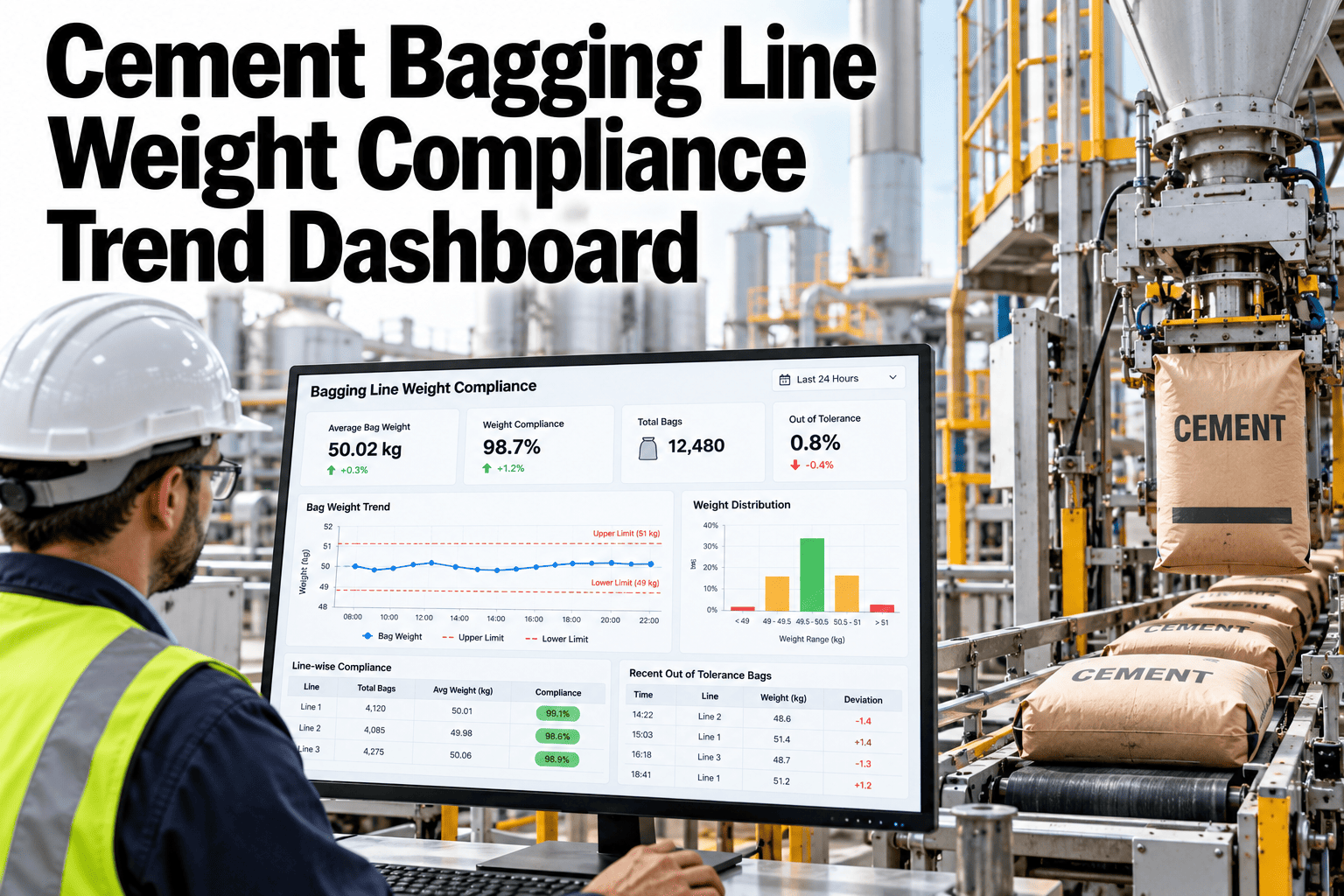
Every bag that leaves a packer right after a product or format changeover carries extra risk — a spout still calibrated for the previous grade, a bag format mismatch, or a setting nobody reset in the rush to get back to rate. Bag weight tolerance is one of the most closely watched numbers in cement packing, checked by regulators, customers and the plant's own quality team alike, and it is exactly at a changeover that it is most likely to drift. A documented first-off check closes that gap before a pallet of out-of-tolerance bags reaches a truck. Packing supervisors who want to tighten their own changeover process can walk through a changeover and first-off check workflow with our team.
Catch a Drifting Spout Before the Pallet Ships
iFactory, an on-premise AI platform for cement packing operations, logs every changeover event and first-off check, so a grade switch never leaves bag weight to chance.
Why Is a Changeover the Riskiest Moment for Bag Weight?
A packer running steady at one product and format has usually settled into its tolerance band. A changeover resets that — a different bulk density, a different spout setting, a different bag format — and the first bags off the line are the ones most likely to drift before anyone notices, because operator attention is split between restarting the line and watching the weight. Ask our team how your current changeover process catches drift in those first minutes.
Five Steps From Stop to Confirmed Resume
The packer is stopped and the outgoing product and format are logged closed.
Spout, format and any required settings are switched for the new product.
Settings are confirmed against the new product's spec before restart.
The first bags are weighed and checked before the run is cleared.
Full-rate running resumes, with the changeover logged and closed.
Skipping straight from step two to step five under time pressure is the most common shortcut on a busy shift, and it is exactly the shortcut that lets a miscalibrated spout keep running until someone downstream notices a weight problem on their own.
The First-Off Check Table
| Check | What confirms it | Action if it fails |
|---|---|---|
| Average bag weight | Sample mean at or above nominal | Adjust spout, re-check before resume |
| Individual bag weight | No sample below the set floor | Hold the batch, recalibrate |
| Bag format and seal | Format matches the order, seal intact | Correct format, re-run first-off |
| Print and batch code | Legible, correct grade and date | Adjust printer, re-check sample |
See How Your Own Changeovers Hold Up at First-Off
Share your current changeover and first-off process, and we will show where drift is most likely to slip through.
Average Tolerance vs Individual Tolerance
The Changeover That Looked Fine on Average
A grade changeover's first-off sample passed on average weight, comfortably above nominal. A later shift review found several individual bags from that same run sitting close to the floor, which the average check alone had not flagged. The run had continued at full rate through the rest of the shift on the strength of that single average-weight pass.
Why Changeover Discipline Needs to Be Consistent Across the Whole Packing Hall
A plant with several packers running different grades at once often finds that changeover discipline varies by line and by shift unless the check itself is standardized and logged the same way everywhere. A packer that skips first-off under time pressure on one shift is the one most likely to generate the bag weight complaint that lands on the quality team's desk the following week.
Every Changeover Logged, Every First-Off Checked
Changeover Event Logging
Every product and format switch is logged with timestamp and outgoing/incoming product.
Dual Tolerance Tracking
Average and individual bag weight are checked together at every first-off and continuously after.
Delay & Downtime Tracking
Changeover duration by product pair is tracked to spot which switches run longest.
Turnkey On-Premise Deployment
Packing and weight data stay on your own server, with no outside cloud dependency.
What Packing Teams Ask About Changeover and Grade Tracking
How many bags should a first-off sample include?
Sample size typically follows the applicable weights and measures regulation or customer requirement, so confirm the specific number with your quality team rather than assuming a fixed figure applies everywhere. Discuss first-off sample sizing for your plant.
What is the difference between average and individual tolerance?
Average tolerance checks whether the batch mean sits at or above the nominal weight, while individual tolerance sets a floor no single bag may fall below — a batch can pass one check and fail the other. Ask support how both are tracked together.
How quickly should a spout be recalibrated after a failed first-off check?
The batch should be held immediately, and recalibration should happen before any further bags are released, since continuing to run on a failed check only grows the amount of product that later needs review. Review your current hold procedure with our team.
Does changeover tracking slow down the packing line?
Logging the event and running the first-off check adds a short, fixed step to a changeover that most plants already perform informally — the main change is that it becomes recorded rather than skipped under time pressure. Discuss changeover timing for your packer.
Can this track delay time by product pair?
Yes. Logging changeover start and confirmed-resume time for every product pair shows which switches consistently take longer, which is useful for both scheduling and spotting a setup step that needs simplifying. Ask about delay tracking for your packer fleet.
Make Every Changeover End With a Confirmed First-Off Check
See changeover events, first-off checks and both weight tolerances tracked together on your own packing lines.