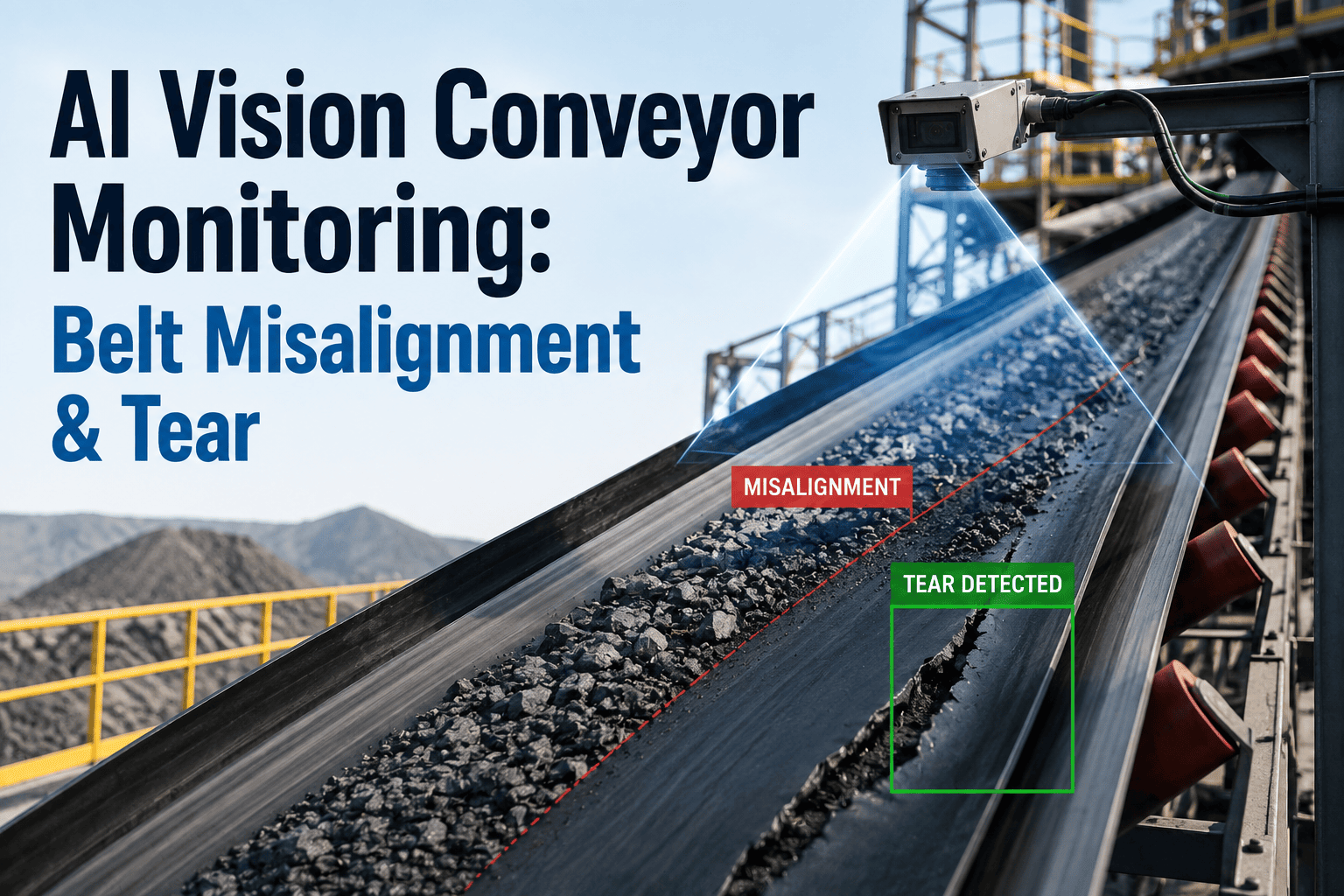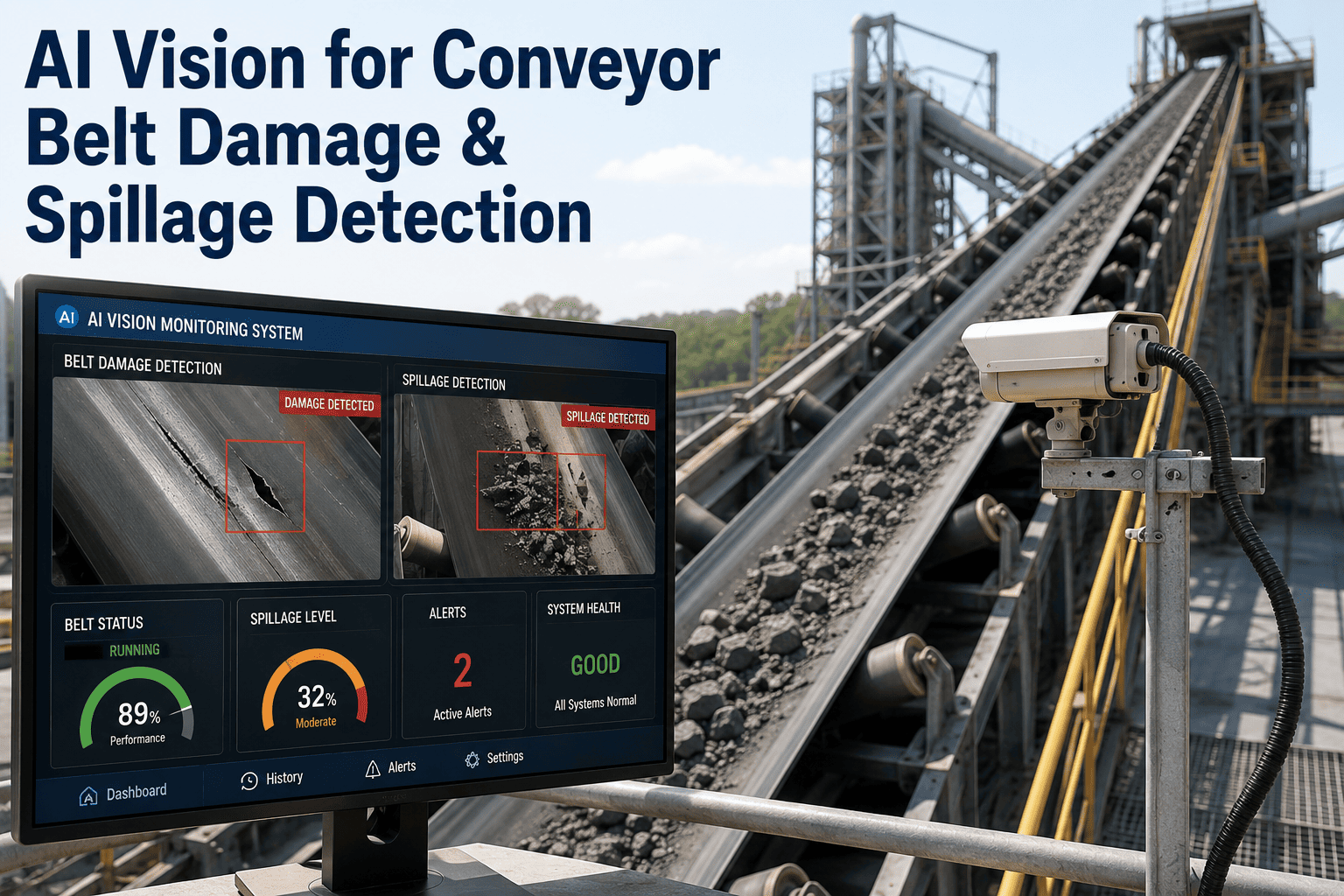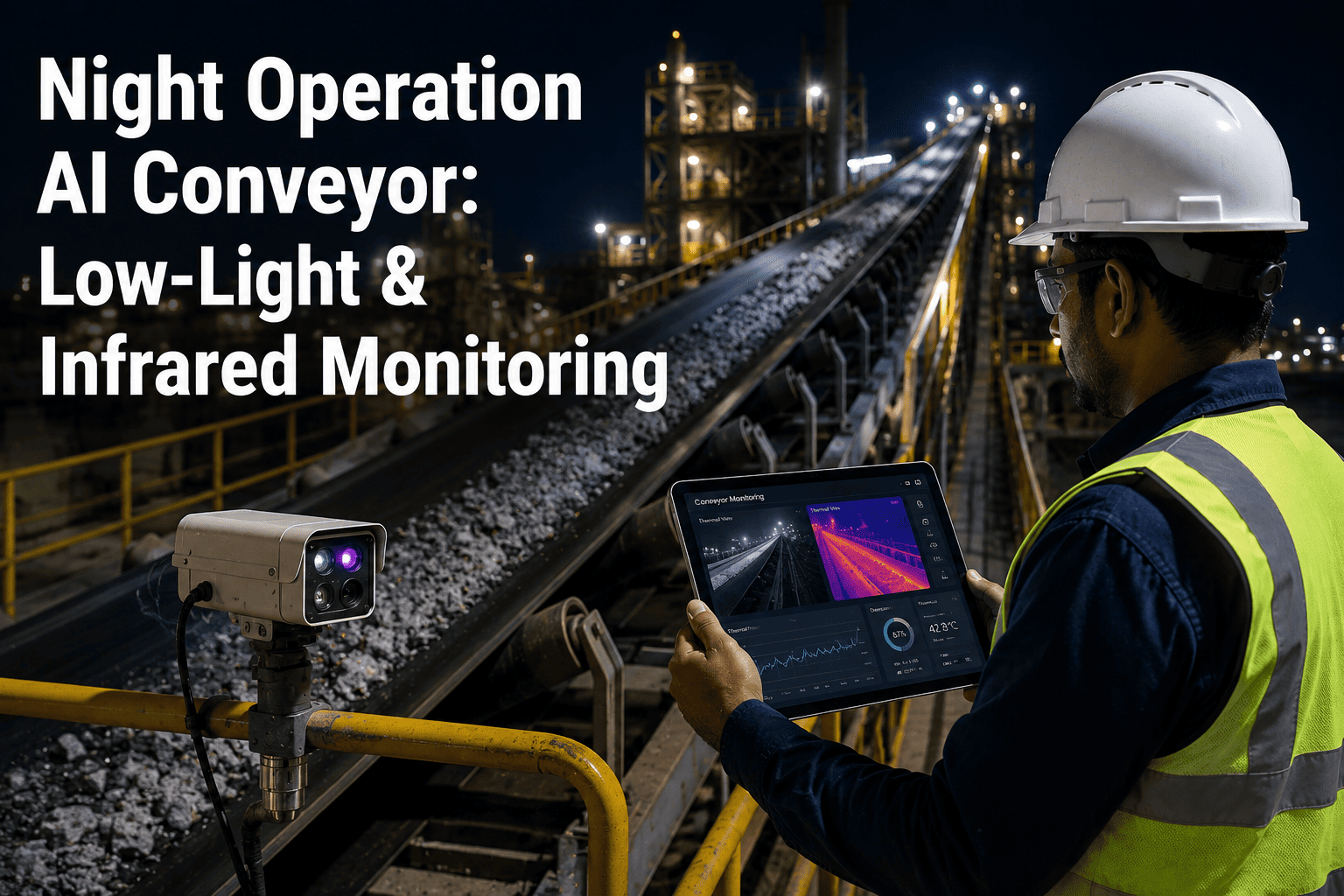
Belt conveyors rarely fail during the day shift. Idler bearings seize, belt edges begin to fray, and material spillage builds up most often between midnight and dawn, when fewer people are walking the gallery and the human eyes that would normally catch a smoking bearing or a misaligned belt simply aren't there. Cement plants that run conveyors around the clock are effectively operating blind for eight to ten hours of every day, relying on whatever a night-shift operator happens to notice during a walk-through. iFactory AI closes that gap with a vision system built specifically for low-light and infrared conditions, so the belt gets the same level of scrutiny at 3 a.m. that it gets at 3 p.m. — Book a Demo to see night-shift footage analyzed in real time.
Why Night Shifts Carry Most of the Conveyor Risk
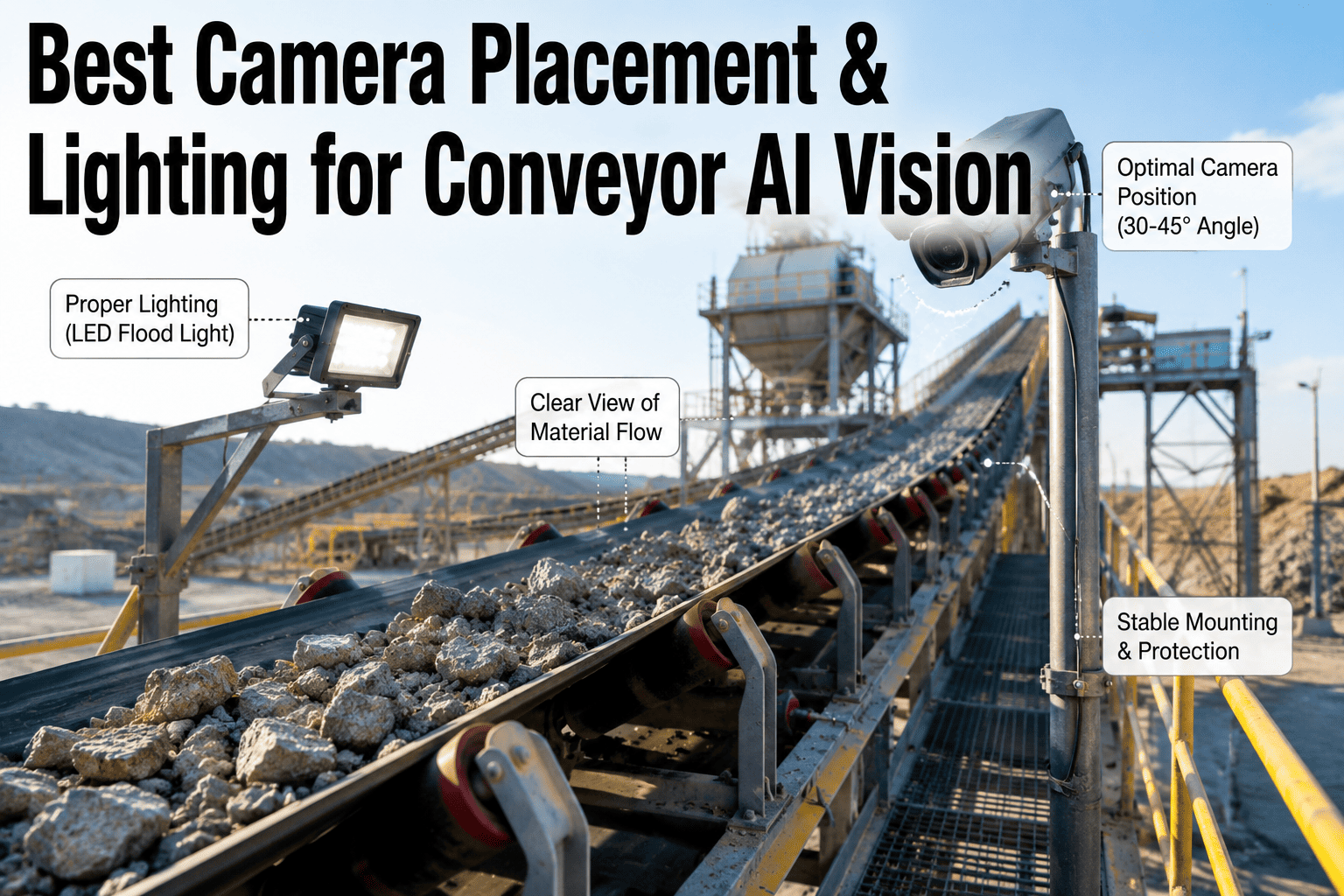
Daylight and well-lit process areas give operators an easy visual baseline: belt tracking, material spillage, guard condition, and idler smoke are all things a trained eye picks up quickly during a walk. Once the sun goes down, gallery lighting in most cement plants is inconsistent — bright near control points, dim or absent along long overland sections — and the same walk-through that took ten minutes during the day can miss a developing fault entirely at night. Fatigue compounds the problem: night-shift staffing is typically leaner, walk frequency drops, and the attention available for subtle visual cues is lower during the circadian low points of a 12-hour shift.
The mechanical reality of a conveyor does not change after dark. Idler bearings still heat up before they seize, belts still mistrack before they run off the pulley, and material carryback still accumulates before it becomes a housekeeping and fire risk. What changes is the plant's ability to see it happening. A monitoring system that only performs well in daylight is, in practice, a system that only protects half the operating day.
Three Imaging Modes, Blended Automatically Through the Shift
Low-Light Enhanced Vision
Used during dusk, dawn, and dim gallery lighting. Sensor gain and frame stacking recover usable detail from ambient light levels too low for a standard camera, without introducing the motion blur that hand-held night photography suffers from.
Infrared Thermal Imaging
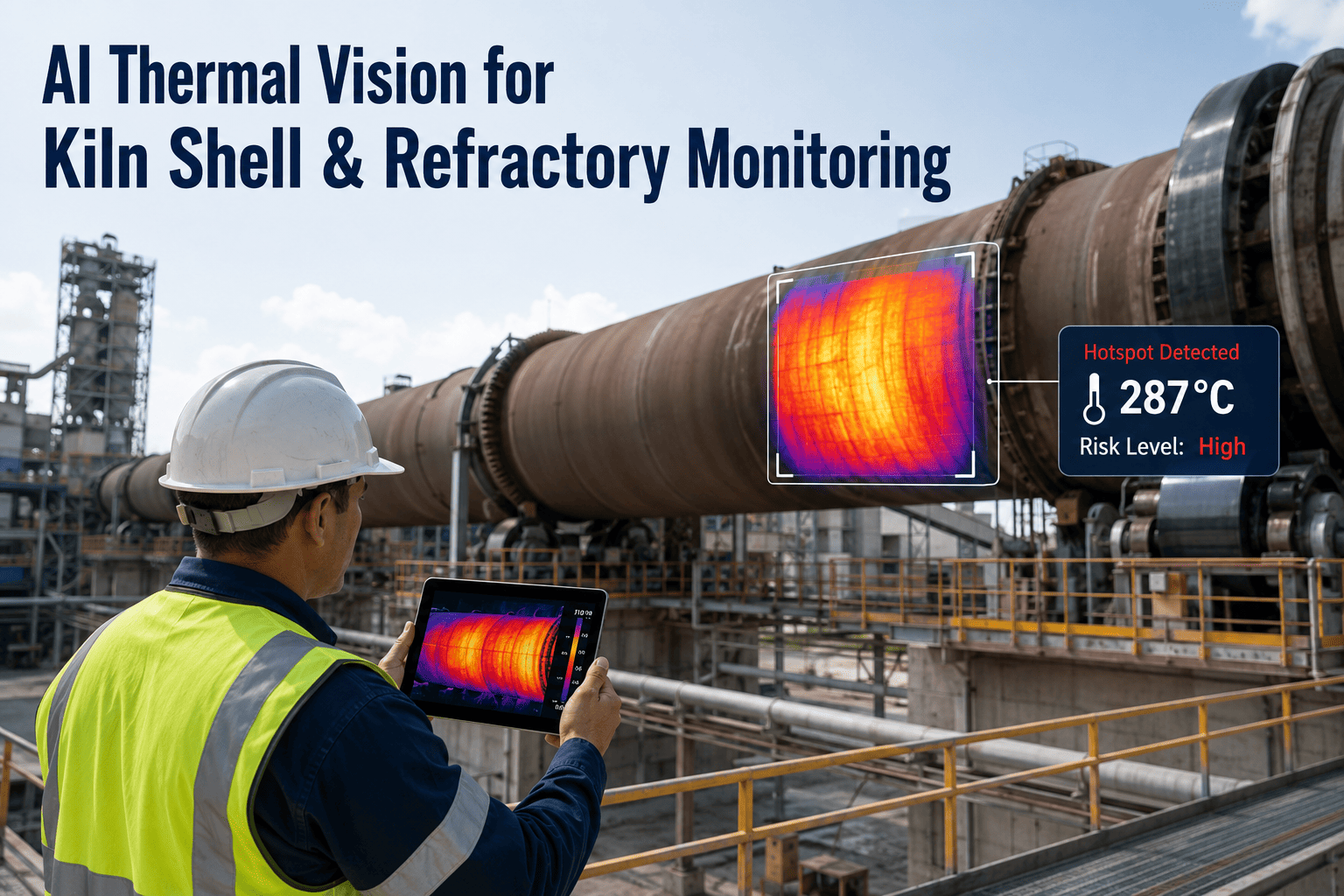
Used in near-total darkness and to catch heat-based failure modes regardless of light. Bearing friction, belt slip, and motor overheating all show up as thermal signatures long before they are visible to a human eye under any lighting condition.
Hybrid Fusion View
Combines the visible-light and thermal feeds into a single overlay, so a spillage event and the elevated bearing temperature near it can be correlated in one frame instead of reviewed as two disconnected data streams.
Keeping AI Model Accuracy Stable When Light Drops
Most machine vision models are trained overwhelmingly on daylight or well-lit indoor imagery, which is exactly why so many "AI camera" pilots quietly stop performing once night falls — the model was never shown enough dark-condition examples to generalize. iFactory AI trains and continuously fine-tunes its conveyor models on a mixed dataset spanning full daylight, dusk transition, gallery artificial lighting, and true low-light and infrared frames, so accuracy does not fall off a cliff at a specific lux threshold. The platform also tracks ambient light level in real time and automatically shifts which imaging mode is weighted most heavily in the fused detection output.
What Night Monitoring Catches That a Walk-Through Misses
| Failure Mode | Visible-Light Detection | Infrared Detection | Typical Night Miss Rate (Manual) |
|---|---|---|---|
| Idler bearing overheating | Not visible until smoking | Detected from early thermal rise | High |
| Belt mistracking | Visible with adequate lighting | Not applicable | Moderate |
| Material spillage buildup | Visible with adequate lighting | Limited use | Moderate to high |
| Belt slip at pulley | Difficult in low light | Detected via friction heat | High |
| Guard or splice damage | Visible with enhanced low-light mode | Not applicable | High |
The Real Cost of an Unplanned Night Stoppage
A conveyor that fails at 4 a.m. rarely fails quietly. By the time an idler seizes or a belt runs off its pulley in the dark, the damage is often already done — a burned-through belt section, a damaged pulley face, or in worse cases a fire risk from friction heat against accumulated material. The cost of that failure is not just the repair itself but the downstream production loss while the line is down, the emergency callout for maintenance staff who were not scheduled to be on site, and the rushed nature of a repair completed under time pressure rather than planned conditions. None of these costs show up in a maintenance budget line labeled "night monitoring," which is part of why night coverage tends to be under-invested relative to the risk it actually carries.
Comparing that against the cost of extending vision-based monitoring to run continuously through the night is rarely a close call. The camera and processing infrastructure needed for 24-hour coverage is largely the same infrastructure already justified for daytime monitoring; the incremental cost is mostly in the low-light and infrared imaging hardware and the model training needed to keep accuracy stable after dark. For most plants, avoiding even one unplanned night stoppage covers a meaningful share of that incremental investment.
Rolling Out Night Coverage Without Disrupting Day Operations
Extending an existing daytime vision system into full night coverage is typically staged rather than deployed all at once, so operations teams have time to build trust in the alerts before they become the primary line of defense during unstaffed hours. A phased rollout also gives the platform time to gather enough low-light and infrared footage from the specific plant environment to fine-tune detection thresholds for local conditions like gallery layout and existing lighting.
What a Cement Plant Night Shift Supervisor Reported
Before this, our night shift was basically running on trust — trust that nothing was going wrong on the overland conveyor between the 2 a.m. and 6 a.m. rounds. The infrared view caught a tail pulley bearing running hot two nights before it would have seized, and we would have found that out the hard way at shift change. The low-light camera view has also made our spillage housekeeping conversations a lot less argumentative, because now there is a timestamped image instead of a disagreement about what the night crew did or didn't see.