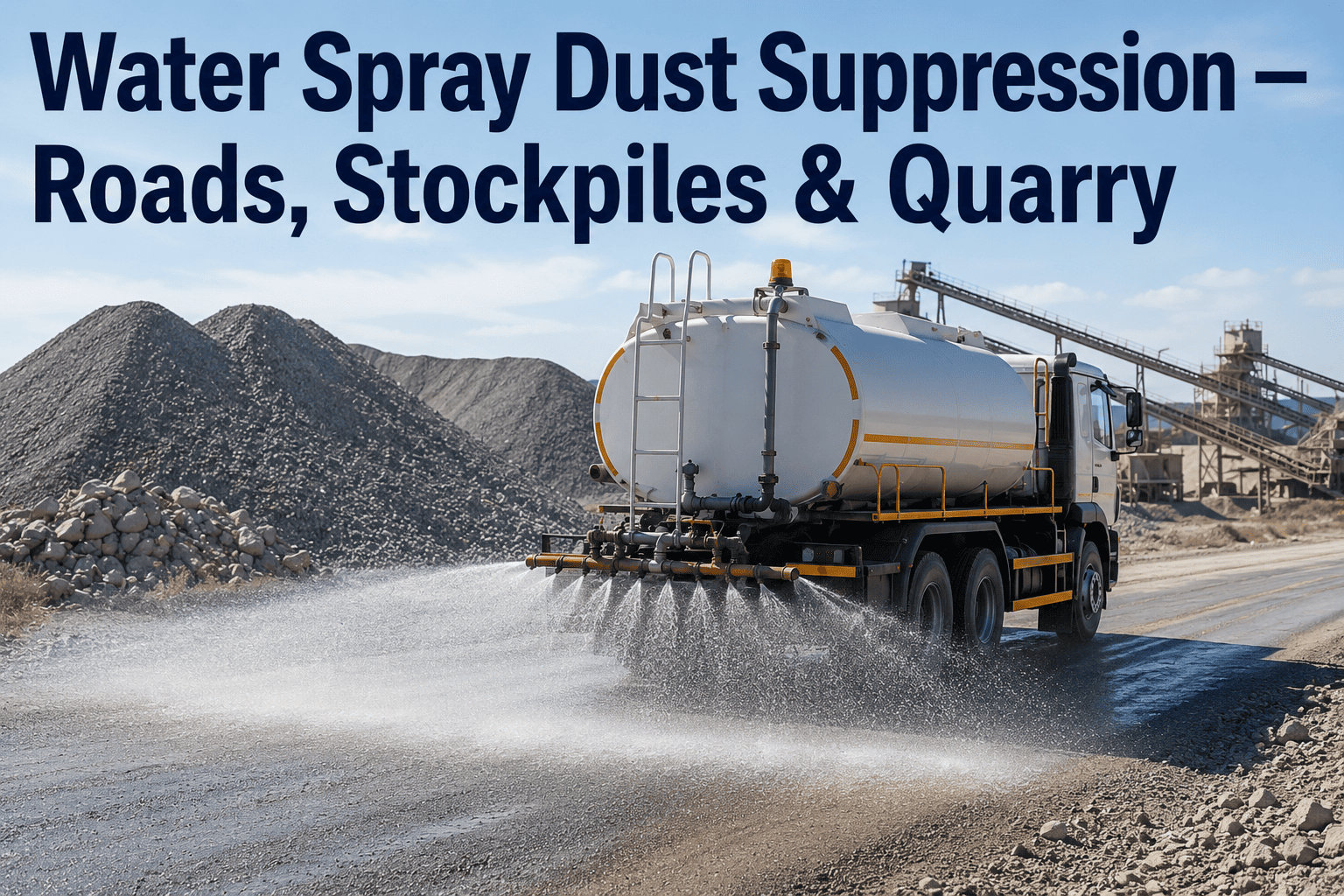
Most quarry dust complaints do not come from the crusher. They come from the haul road, from a truck rolling past a stockpile at the wrong wind angle, or from a loader working a dry pile at midday with no water on it at all. A water spray system fixes this only when the nozzle count, pressure, and coverage pattern actually match the zone it is protecting, which is the part most sites get wrong. Oversized nozzles waste water and create mud; undersized coverage leaves half a haul road dry while the truck ahead kicks up a plume that a community two kilometers away can see. iFactory's dust monitoring model tells you which zone is actually driving your PM10 numbers before you spend the water budget on the wrong one. Book a walkthrough of zone-level dust data from a site with a similar haul road layout.
Water Only Works Where the Nozzle Is Actually Pointed
Design haul road, stockpile, and quarry water spray coverage around measured PM10 data instead of a blanket spray schedule, and cut water consumption while cutting visible dust at the same time.
What a Blanket Spray Schedule Actually Costs
A fixed-interval spray schedule treats every zone the same regardless of traffic, wind, or moisture content, which wastes water on wet zones and under-serves dry ones.
typical water demand per standard spray unit under conventional continuous operation
water consumption reduction reported when mist cannons replace continuous wetting at transfer points
common 8-hour respirable crystalline silica exposure limit used to set control priorities
width a single rotating haul road sprinkler head can typically cover in one pass
Three Zones, Three Different Suppression Strategies
A haul road, a stockpile, and a crusher transfer point generate dust through completely different mechanisms, and treating them with the same spray pattern is the most common design mistake on a quarry site.
Vehicle-generated dust
Wheel action lifts fines from a dry running surface with every pass. Fixed or mobile spray bars, sensor-triggered sprinklers, or water bowsers rewet the surface at intervals tied to traffic volume rather than the clock.
Wind-driven dust
Exposed material sheds fines whenever wind speed crosses a threshold. Perimeter misting, wind-triggered activation, and shape management to reduce exposed surface area do more than a scheduled soak ever will.
Drop-and-impact dust
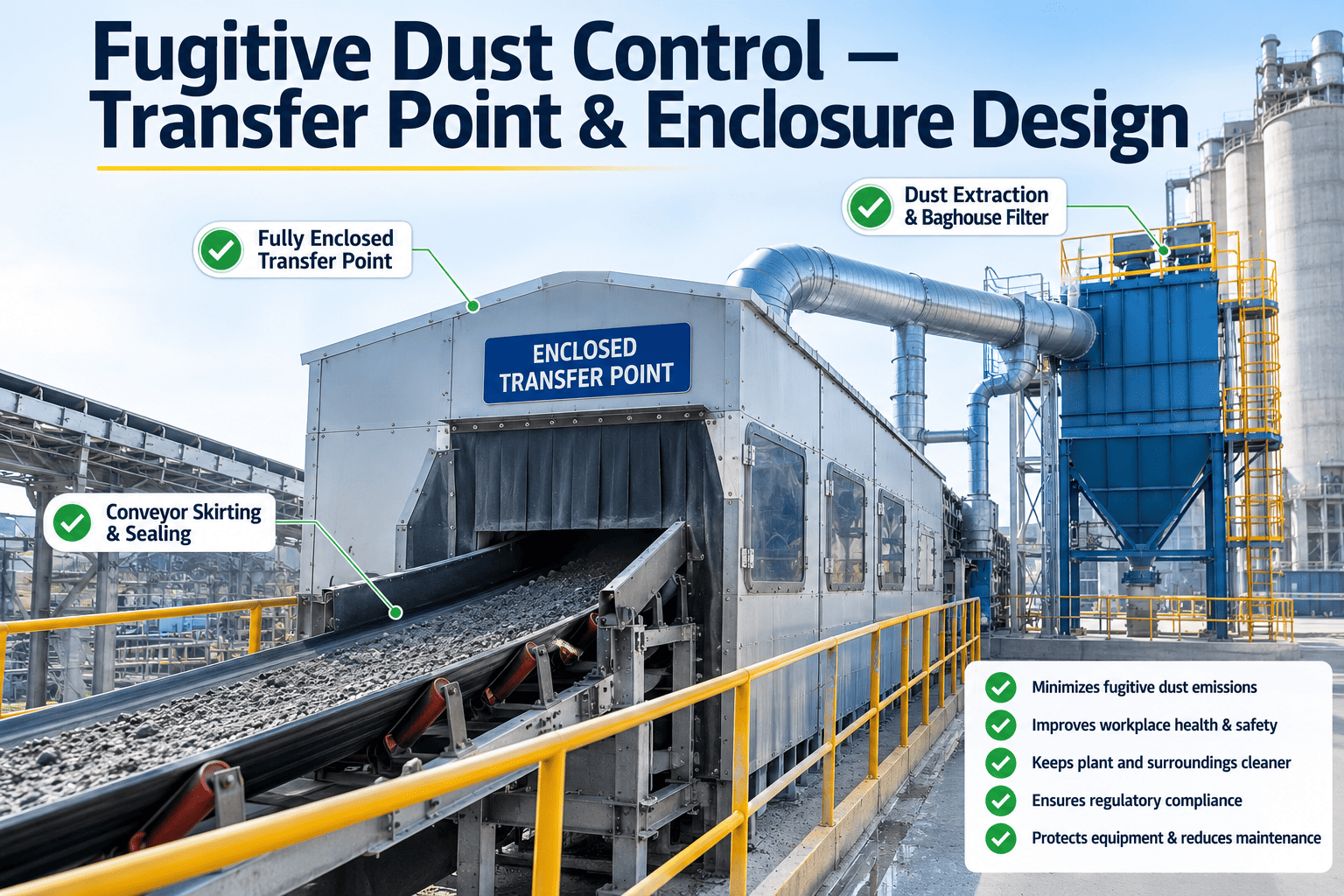
Material free-falling at a transfer point aerosolizes fines on impact. Fogging or misting nozzles aimed to intercept the plume, not soak the material, control this without adding unwanted moisture to product.
Scheduled Spraying vs. Data-Triggered Suppression
- Every zone sprayed on the same clock interval regardless of conditions
- Wet zones get oversprayed, creating mud, runoff, and erosion risk
- Dry, high-wind zones go unaddressed between scheduled passes
- No record connects a specific dust complaint to a specific zone or hour
- Water trucks run routes that do not match actual need that day
- PM10 and wind sensors trigger sprays only where and when levels rise
- Water use drops because dry zones get water and wet zones do not
- High-wind stockpile events trigger perimeter misting automatically
- Every trigger event is logged against the sensor reading that caused it
- Bowser routes and spray-bar schedules adjust to real conditions daily
See Which Zone Is Driving Your Dust Complaints
iFactory overlays PM10 monitor data against your haul road, stockpile, and transfer point layout to show exactly where water is being wasted or missed.
Nozzle and Delivery Method Selection by Zone
Matching the delivery method to the zone is what separates a well-run water spray program from one that just uses more water than it needs to.
How iFactory Optimizes Your Spray Network
The model connects existing PM10 monitors, weather stations, and spray infrastructure into one system that decides when and where to spray.
Baseline dust mapping
Fixed and mobile monitors establish a PM10 baseline across every haul road segment, stockpile, and transfer point on site.
Weather correlation
Wind speed, direction, and humidity are correlated against dust readings to identify which zones are wind-sensitive.
Trigger-point programming
Spray systems are programmed to activate on the specific PM10 or wind threshold that matters for each zone, not a shared default.
Bowser and route optimization
Water truck routing is adjusted daily based on which haul road segments actually crossed their dust threshold.
Compliance logging
Every trigger event, spray activation, and PM10 reading is archived, ready for regulatory reporting or community inquiry.
What Changes After Zone-Level Optimization
Figures reported by quarry sites within two to three months of moving from a fixed schedule to data-triggered suppression.
Why a Summer Spray Plan Fails the Moment Winter Arrives
Water demand, wind exposure, and haul road surface behavior all shift with the season, and a spray plan built for one condition quietly under-performs in the other.
Higher evaporation rate means the same trigger threshold needs more frequent activation, and stockpile perimeter misting becomes the dominant water draw on site.
Natural moisture reduces haul road spray frequency, but runoff and erosion risk rise, shifting the priority toward drainage and surface grading over water volume.
Stockpile perimeter triggers need to fire earlier and more often regardless of season, since wind speed, not temperature, is the primary driver of pile dust events.
Water-Only Programs vs. Chemical Dust Suppressants
Water alone works, but it evaporates fast and needs constant reapplication. Chemical binders and polymer stabilizers extend the interval between treatments considerably.
- Lowest upfront cost and simplest to operate with existing equipment
- Requires frequent reapplication, especially in hot or windy conditions
- Higher total water truck movement and associated haul road traffic
- No lasting surface binding effect between applications
- One application can hold surface dust down for several months on a haul road
- Reduces water truck trips and the traffic volume they add to the road
- Some binders carry waterway proximity restrictions worth checking first
- Best suited to fixed haul roads rather than frequently shifting pit access routes
Site Readiness Checklist Before Redesigning Spray Coverage
PM10 monitors placed at every haul road segment and stockpile perimeter, not just the site boundary
Wind speed and direction data available at a resolution matched to spray-trigger decision timing
Existing nozzle and spray bar condition inspected for blockage, wear, and pattern drift
Water source capacity and bowser fleet size confirmed against peak seasonal haul road demand
Runoff and erosion risk assessed for any zone currently receiving continuous or scheduled spraying
Historical complaint log reviewed to confirm which zones and hours actually generate community concern
Frequently Asked Questions
Do we need to replace our existing spray bars and nozzles?
In most cases, no. The optimization works with your existing spray bars, sprinklers, and misting cannons, and simply changes when and how often each one activates based on measured conditions rather than a fixed clock. Nozzle replacement is only recommended where an inspection finds wear, blockage, or a spray pattern that no longer matches the zone it was originally installed to cover.
How quickly can we see a reduction in water use?
Most sites see a measurable drop in total water consumption within the first few weeks of switching from a fixed schedule to trigger-based activation, since a large share of scheduled spraying was previously happening on zones that did not need it that day. Book a demo to see a water-use comparison from a site with a similar haul road length.
Can this help with regulatory PM10 reporting?
Yes. Every PM10 reading, trigger event, and spray activation is timestamped and archived, creating a continuous record that can be pulled directly for regulatory submissions or community inquiries. This replaces a manual log or a fixed-schedule assumption with an actual data trail showing what suppression activity happened and when, tied to the sensor reading that caused it.
Does trigger-based suppression work in areas with unreliable water supply?
It generally performs better under water constraints than a fixed schedule, because water is directed only to the zones and hours where it is actually needed rather than spread evenly regardless of demand. Sites with limited water access typically see the largest percentage reduction in consumption, since a fixed schedule was previously the least efficient way to allocate a scarce resource across multiple zones.
How is this deployed without disrupting active haul road traffic?
Monitor and weather station installation happens alongside normal operations, since these units mount on existing poles, berms, or vehicles without requiring a road closure. Talk to a specialist about sequencing installation around your current haul road traffic pattern.
Find Out Where Your Water Budget Is Actually Going
Book a 30-minute scoping call and bring your current spray schedule. iFactory will map it against real PM10 and wind data from your site.