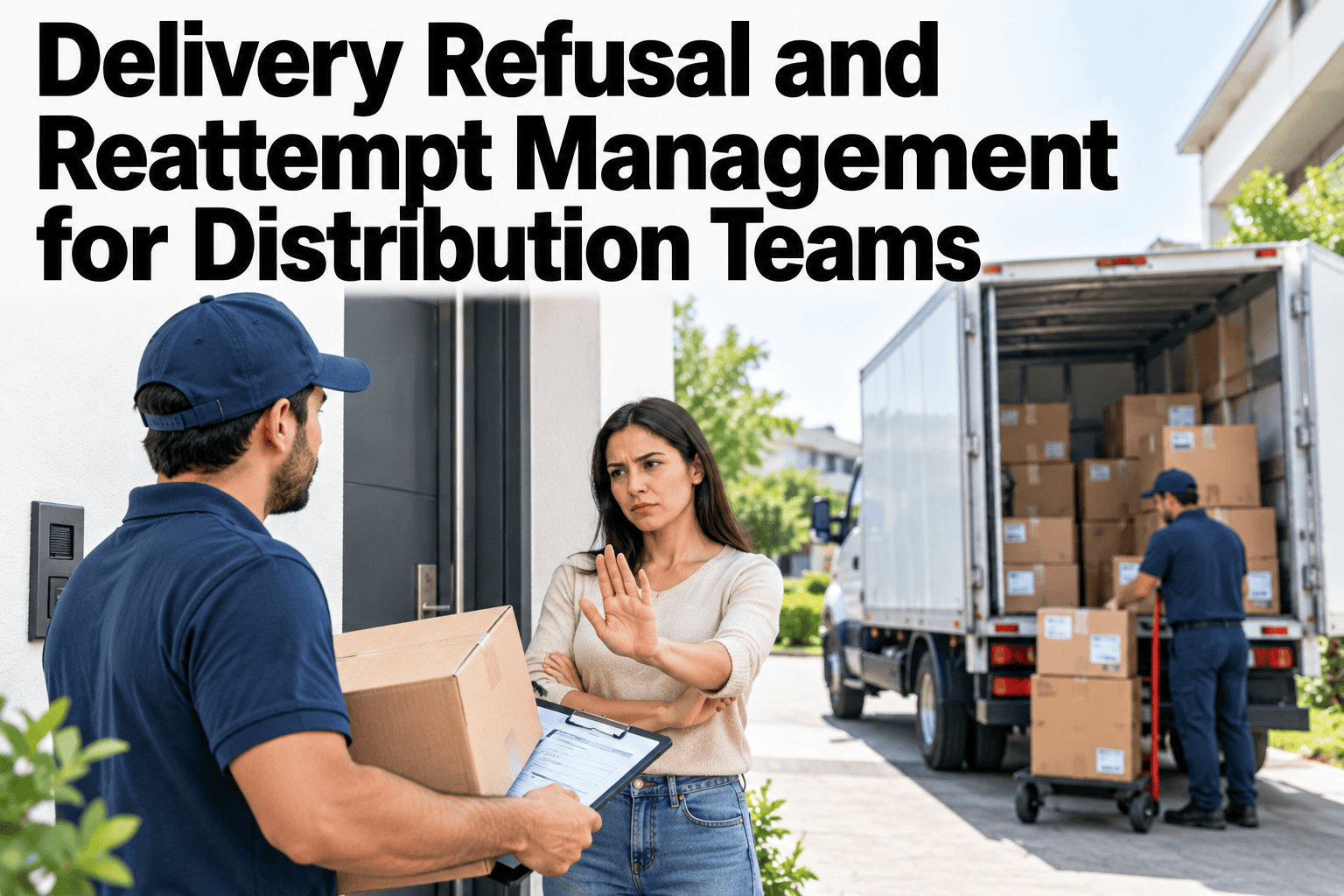
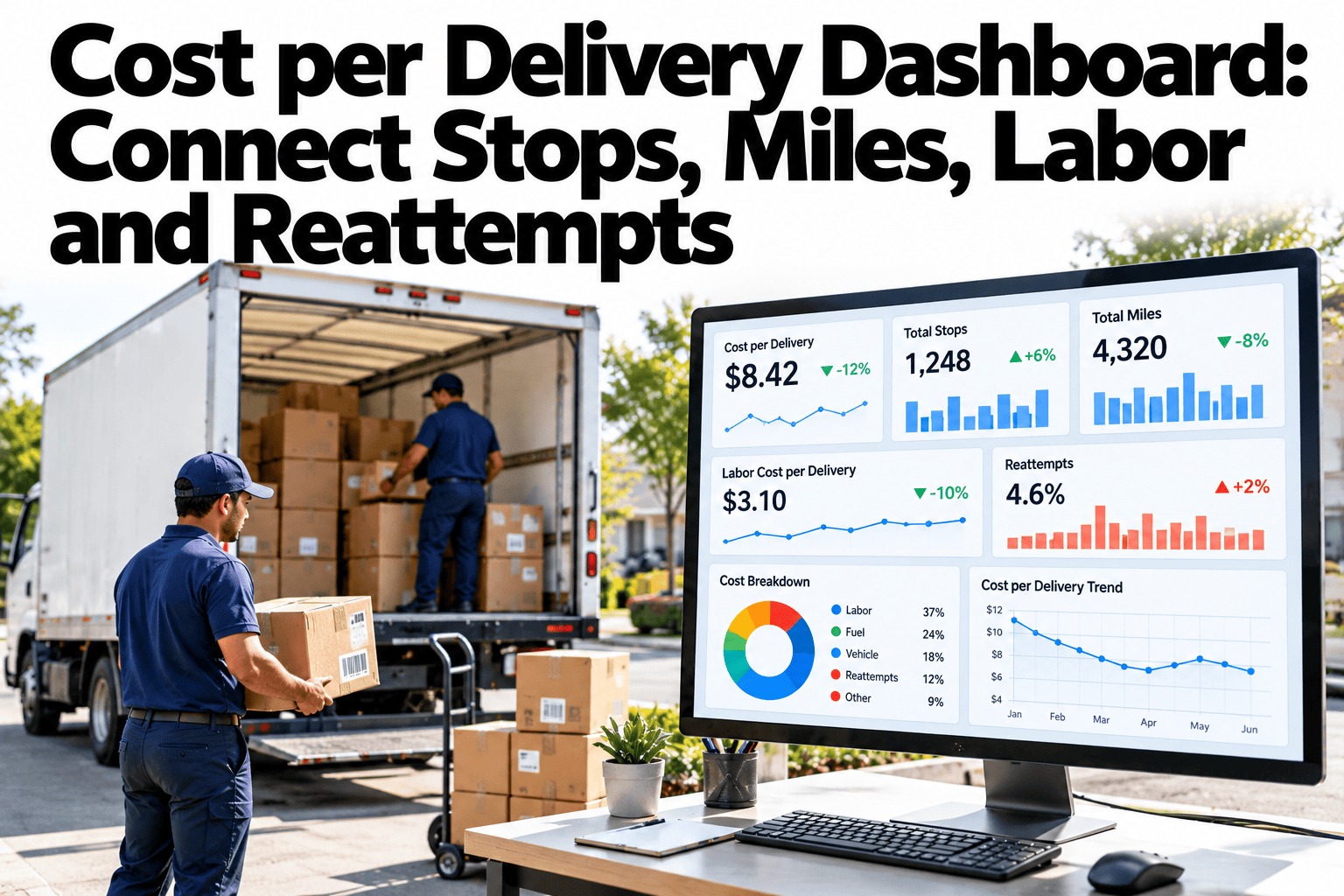
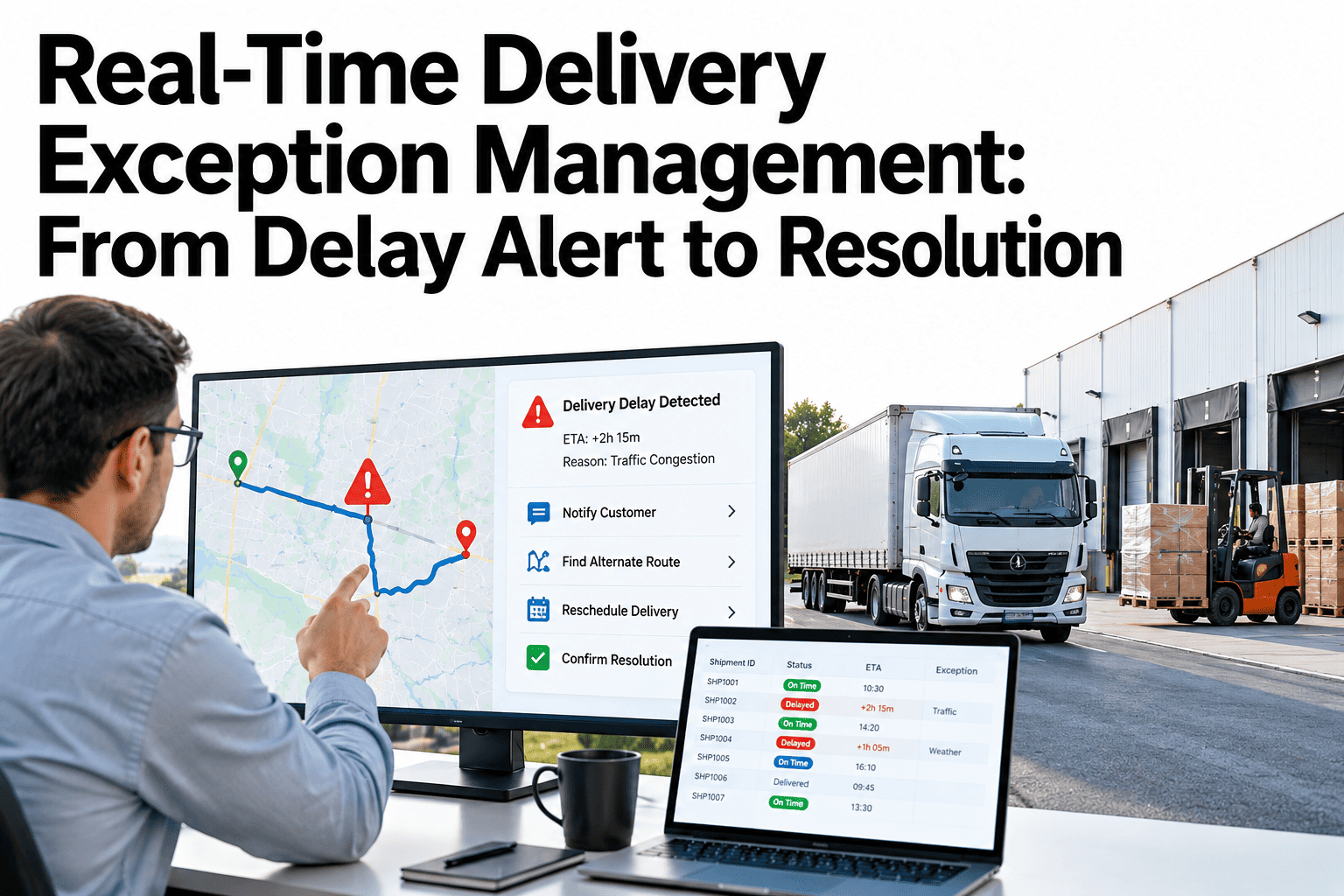
A delivery that is refused or fails to land costs more than the first attempt. The vehicle has driven the route, the driver has spent time at the door and the goods must either return to the warehouse or try again, often with little information about why. Delivery refusal and reattempt management turns each failed delivery into a recorded event with a reason, a customer confirmation and a decision on what happens next. Over time, the pattern behind refusals shows where to fix the process. To see how this could look for your operation, you can review a refusal and reattempt workflow with our team.
Returns, reverse logistics and delivery claims
Turn Every Refused Delivery Into a Recorded Reason and a Planned Next Step
iFactory AI captures refusal reasons at the door, confirms reattempts with the customer and shows which patterns drive repeat failures.
Why did Route 14 have four refusals today?
Refusal summary
Three refusals were for late arrival after the customer closing time. One was for a quantity mismatch. Reattempts are proposed for tomorrow morning.
Source: delivery appRoute 14
The refusal problemA Failed Delivery Is a Cost With No Owner
When a customer refuses a delivery, the driver often calls the office, the goods ride back on the vehicle and the order sits until someone decides what to do. Each step adds delay and cost.
Driver arrives
The customer refuses or nobody can receive
Reason is unclear
The driver notes a quick comment or none
Goods return
Stock goes back to the depot
Follow-up lags
Customer service chases the reason later
The sooner the reason is recorded and the customer is contacted, the more likely the delivery can be rescued without a second wasted trip.
Why deliveries are refusedEight Common Refusal Reasons
Reasons are rarely random. Most operations see the same causes repeat across customers and routes.
Late delivery
Arrival after the customer's receiving window or closing time.
Wrong product or quantity
Goods do not match the order or purchase order.
Damaged goods
Visible damage or poor condition on arrival.
Quality concern
Shelf life, temperature or appearance not acceptable.
No one to receive
Site closed or no authorised person present.
Payment or paperwork issue
Missing purchase order, invoice or payment.
Order cancelled or changed
The customer no longer needs the goods.
Access or safety problem
Vehicle cannot reach the delivery point safely.
Many refusals are caused before the vehicle leaves, through poor order data or planning. Delivery teams see them first, but they often start elsewhere.
Reason codesA Short, Clear List Makes Patterns Visible
Reason codes should be quick for a driver to choose on a handheld device and meaningful for analysis later.
| Code group | Examples | Typical owner | Typical action |
|---|
| Timing | Late arrival, window missed | Dispatch | Adjust windows and route sequence |
| Order accuracy | Wrong product, wrong quantity | Order management and warehouse | Correct order data and picking |
| Product condition | Damage, temperature, shelf life | Warehouse and quality | Investigate and replace |
| Customer readiness | Closed, no receiver, no purchase order | Customer service | Confirm and reschedule |
| Access and safety | Blocked access, unsafe unloading | Dispatch and customer | Agree access and equipment |
See Why Your Deliveries Are Really Being Refused
Share a few weeks of failed deliveries and see how iFactory AI would group them by reason, route and customer.
At the doorFour Things a Driver Should Capture Every Time
The driver is the only person at the scene. A short, consistent capture routine produces most of the evidence needed later.
Reason code
Selected from a short list on the device.
Photo evidence
A photo of the goods, the door or the problem.
Customer statement
A note or confirmation from the customer, if given.
Time and location
Automatic records of when and where it happened.
Keep the routine under a minute. Long forms make drivers skip steps, and the data quality falls.
Customer confirmationConfirm Before You Reattempt
A reattempt without confirmation is a gamble. A short call or message avoids repeating the same failure.
1
Contact
The customer is contacted soon after the refusal.
2
Confirm the issue
The reason is checked and any problem is clarified.
3
Agree the next step
Reattempt, change, credit or cancel.
4
Record the agreement
The new date and conditions are logged.
Where possible, offer a new time window rather than asking an open question. Specific options get answers faster.
ReschedulingPlan the Reattempt as Carefully as the First Delivery
Reattempts need their own planning. Fitting them into existing routes can disrupt other deliveries.
Same route, next day
Customer ready and goods suitable. Lowest cost.
Combined with another route
A nearby route can absorb the stop with limited disruption.
Special run
Used only when value or urgency justifies the cost.
Limit the number of reattempts. After two failed tries, escalate to customer service or sales to decide whether to continue.
RestockingHandle Returned Goods Quickly and Safely
Goods returned from a refusal are inventory again only after a check. Without one, stock records and quality can suffer.
1
Receive and scan
Scan returned items against the order and refusal record.
2
Inspect
Check condition, damage and, where relevant, shelf life or temperature history.
3
Decide
Return to stock, quarantine for review or send for disposal or rework.
4
Update stock
Correct inventory and release the goods for sale.
5
Close the loop
Link the outcome to the refusal record for cost and pattern analysis.
Perishable goods may have very limited time. Plan returns handling in advance for time-sensitive products.
Cost of failed deliveriesPut a Price on Each Refusal
Measuring cost makes the issue visible to finance and leadership. Include the whole cycle, not only the extra trip.
Refusal cost = wasted trip cost + handling and restocking + reattempt cost + lost sales or credit
Trip
Driver time, fuel and vehicle use
Handling
Returns processing and inspection
Reattempt
Extra route or special run
Value
Credits, lost sales or damaged goods
Even modest costs add up when refusals happen daily across many routes.
Repeat patternsWhere Refusals Concentrate
A few customers, routes or products usually account for a disproportionate share of refusals. Identifying them directs effort.
Refusal pattern
Frequent
Occasional
Same customer or route
Targeted fix
Work with the customer or redesign the route
Process fix
Common cause across the operation
Spread across many
Account review
Occasional but costly for one customer
Monitor
Isolated events with low impact
Share the patterns with customer service and sales. They can often resolve issues that operations cannot.
An illustrative splitWhat Drives Refusals in a Typical Distribution Operation
The mix differs by sector and region. This split is illustrative.
30 percent: Timing and window issues
Late or early arrival.
25 percent: Order accuracy
Wrong items or quantities.
25 percent: Customer readiness
Nobody to receive or missing paperwork.
20 percent: Condition and quality
Damage or quality concerns.
Measure your own split. It will point to where improvement pays back fastest.
Who is involvedRefusal Management Spans the Business
Dispatch
I plan windows and routes to reduce late arrivals.
Drivers
I capture the reason and photos at the door.
Customer service
I confirm and rebook reattempts.
Warehouse and quality
I inspect returns and fix the causes behind them.
Review refusals together in a short weekly meeting. Shared visibility turns separate problems into joint actions.
What improvement looks likeBefore and After a Refusal Management Programme
Track the same measures before and after. This view is illustrative.
Informal handling
Refusals with a recorded reason
Reattempts that fail again
Managed workflow
Refusals with a recorded reason
Reattempts that fail again
Informal versus managedWhat Changes in Daily Work
Informal handling
Reason noted in free text or not at all
Reattempts planned without confirmation
Goods wait before being inspected
Patterns invisible until a complaint
Managed workflow
Reason chosen from a short list with a photo
Customer confirms before reattempt
Returns inspected and restocked quickly
Patterns reported weekly
RolloutFive Steps From Pilot Route to Standard Process
1
Choose a pilot
Pick routes with frequent refusals.
2
Agree the codes
Create a short reason list with drivers and customer service.
3
Capture at the door
Add reason, photo and timestamp to the delivery app.
4
Run the confirmation and reschedule steps
Contact customers and plan reattempts.
5
Review weekly and scale
Study patterns, fix causes and extend to more routes.
Reason code list agreed with drivers
Photo and timestamp captured for every refusal
Customer contact process defined
Reattempt rules and limits written
Returns inspection and restocking steps agreed
Cost of refusals calculated
Weekly pattern review scheduled
Owner named for refusal data quality
Talking to customersFour Messages Every Team Needs Ready
Customer contact after a refusal should be fast and consistent. Prepared messages reduce effort and avoid awkward wording.
Refusal notice
Explains what happened and asks for confirmation of the reason.
Reattempt offer
Proposes specific dates and time windows.
Credit or cancellation
Confirms the outcome and next steps clearly.
Prevention note
Asks the customer to help avoid repeats, such as confirming access or paperwork.
Keep messages short and polite. A clear tone often turns a refusal into a constructive conversation.
Repeat refusalsA Simple Policy for Customers Who Refuse Often
Occasional refusals are normal. Repeated refusals from the same customer need a different response.
First refusal
Record the reason, confirm with the customer and reattempt.
Second refusal
Review the cause with customer service and agree a fix.
Third refusal
Escalate to the account owner and review terms, windows or service level.
Apply the policy fairly and record each step. Clear rules protect the relationship and your costs.
Credit and invoicingLink the Refusal to Finance
Refusals affect invoices, credits and stock. Unclear handoffs between operations and finance cause errors.
1
Record the outcome
Operations records refused, rescheduled or cancelled goods.
2
Notify finance
The decision and quantities are shared automatically.
3
Adjust the invoice
Credits or amendments are issued according to policy.
4
Reconcile stock
Inventory is corrected once returned goods are processed.
A direct link between the delivery record and finance avoids disputes and keeps customer statements accurate.
Driver trainingFive Habits That Make Refusal Data Reliable
Drivers are the source of the best data. Short, practical training helps them capture it consistently.
1
Explain why
Show how the data is used to fix causes, not to blame drivers.
2
Practise the routine
Run through reason, photo and notes on the device.
3
Keep it quick
Aim for under a minute at the door.
4
Give feedback
Share weekly results and thank drivers for good records.
5
Refresh regularly
Review codes and routines every few months.
Drivers who see their records lead to real improvements are far more likely to keep recording them well.
Expert reviewWhat a Last-Mile Operations Lead Would Check First
Refusals are symptoms. The most valuable programmes use the data to fix timing, order accuracy and customer readiness, rather than only to manage returns more neatly.
Verdict
Strong when reason capture is quick and weekly reviews lead to real fixes.
Watch for
Drivers choosing the first code on the list and cost reports that nobody uses.
Do next
Pilot one route, sort refusals by reason and fix the single largest cause.
Frequently asked questionsWhat Distribution Teams Ask About Delivery Refusals and Reattempts
How many reason codes should we use?
Keep the list short, usually between eight and twelve, grouped under a few headings. Codes must be quick for drivers to choose and meaningful for analysis. Review the list every few months and merge codes that are rarely used.
See a sample reason list.
Should we always reattempt a refused delivery?
Not always. Reattempt when the customer confirms readiness and the goods are suitable. For quality refusals, wrong orders or cancellations, a reattempt may be wasteful. Set rules by reason code and value.
Ask about reattempt rules.
How do we stop the same refusals repeating?
Look at patterns by customer, route and product, then fix the root cause, such as time windows, order data or packaging. Share findings with customer service and sales, who can often resolve issues with the customer.
Discuss pattern reviews.
What should we do with refused perishable goods?
Plan quickly. Check condition and temperature history, decide on return to stock, discount, donation or disposal according to policy and safety rules, and record the outcome.
Ask about perishable returns.
How do we show the cost to leadership?
Combine trip cost, handling, reattempt cost and credits for a period and present the total with the top causes. Conservative inputs help the figure survive scrutiny.
Plan a cost summary.
Fewer wasted trips, clearer causes
Make Every Refused Delivery Teach You Something
Book a session with iFactory AI to design your reason codes, build a confirmation and reschedule flow and see the patterns behind your failed deliveries.