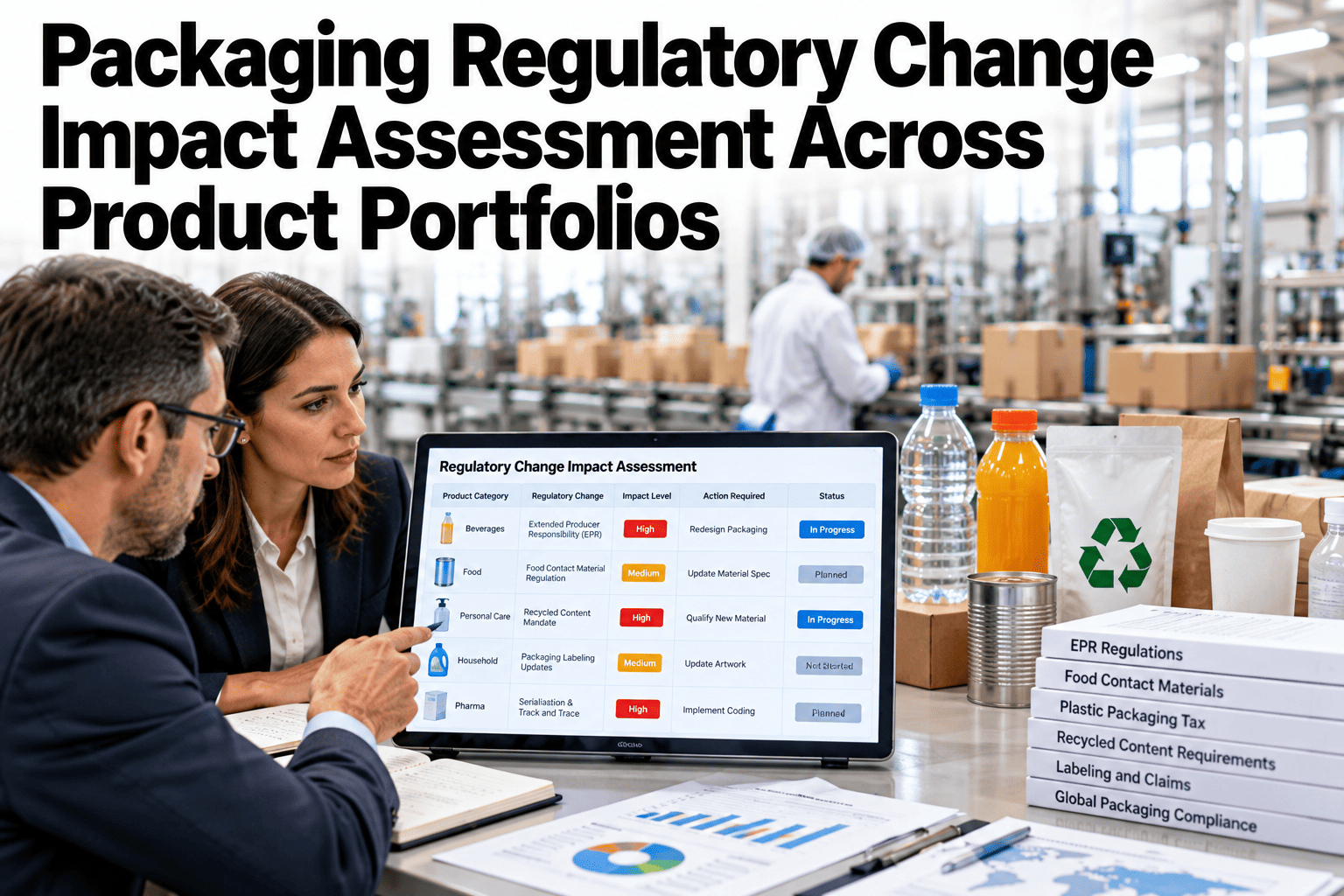
A new extended producer responsibility rule passes in one market, and the question that actually matters is not whether it passed, it is how many SKUs in the current portfolio now need a data field nobody has collected yet. That question usually takes a packaging compliance team weeks to answer manually, by which point the implementation deadline has gotten a lot closer. See your own portfolio's exposure to a specific regulation.
Know Which SKUs a New Regulation Actually Touches
iFactory AI tracks packaging regulation changes against your product portfolio, flagging affected SKUs, data gaps, and the owner responsible for closing each one.
The Manual Impact Assessment Problem
A compliance team reading a new regulation line by line, then manually checking it against a spreadsheet of SKUs, is slow exactly when speed matters most.
By the time a manual assessment identifies every affected product, data gap, and responsible owner, a meaningful share of the implementation window is often already gone. A continuously updated watchlist tied directly to the portfolio removes most of that lag.
Regulation Watchlist
Active and upcoming regulations tracked against their expected implementation date and portfolio exposure.
| Regulation | Market | Implementation | Portfolio Exposure |
|---|---|---|---|
| EPR Packaging Rule | EU | Q2 2027 | High |
| Recyclability Labeling | US - CA | Q4 2026 | Moderate |
| Material Restriction Update | UK | Q1 2027 | Low |
| Minimum Recycled Content | EU | Q3 2027 | High |
Check Your Portfolio Against the Watchlist
Book a 30-minute session and see which of your SKUs sit in the high-exposure zone for an upcoming regulation.
SKU Exposure by Product Line
Exposure to the EPR Packaging Rule mapped across product lines. Darker cells show higher concentrations of affected SKUs.
From Flagged Regulation to Closed Gap
An impact assessment is only useful if it ends in an assigned owner and a due date, not just a list of affected SKUs.
What Shapes Exposure Level
Material Composition
Regulations targeting specific materials flag only the SKUs that actually contain them.
Market Distribution
Exposure scoped to SKUs actually sold in the regulation's covered market.
Threshold Proximity
SKUs sitting close to a regulatory threshold flagged as higher risk than those comfortably within it.
Existing Data Coverage
SKUs with incomplete compliance data flagged as higher priority regardless of actual exposure risk.
Getting It Running on Your Portfolio
iFactory AI connects to your product and packaging specification data to assess regulatory exposure continuously.
Frequently Asked Questions
How are new regulations added to the watchlist?
Regulations are added as they are identified by your compliance team or tracked regulatory sources, with implementation dates and scope entered to drive the exposure assessment.
Does this provide legal interpretation of a regulation?
No, the system maps regulation scope against your portfolio data once the scope is defined, but legal interpretation of a new rule remains your compliance team's responsibility.
Can exposure be reassessed if a SKU's material composition changes?
Yes, a material change triggers a re-check against the active watchlist, since a formulation update can shift a SKU's exposure level in either direction.
How are owners assigned to a data gap?
Gaps are assigned based on your team structure, configured during setup, so the right function owns the right type of missing data. Support can help map your team's ownership structure.
Can this track exposure across multiple markets at once?
Yes, exposure is tracked per market, so a SKU sold in several regions shows its compliance status against each applicable regulation separately. Ask about your specific market footprint in a walkthrough.
Close Compliance Gaps Before the Deadline
iFactory AI flags which SKUs a new regulation touches and tracks every gap through to closure. Book a walkthrough with your own portfolio.