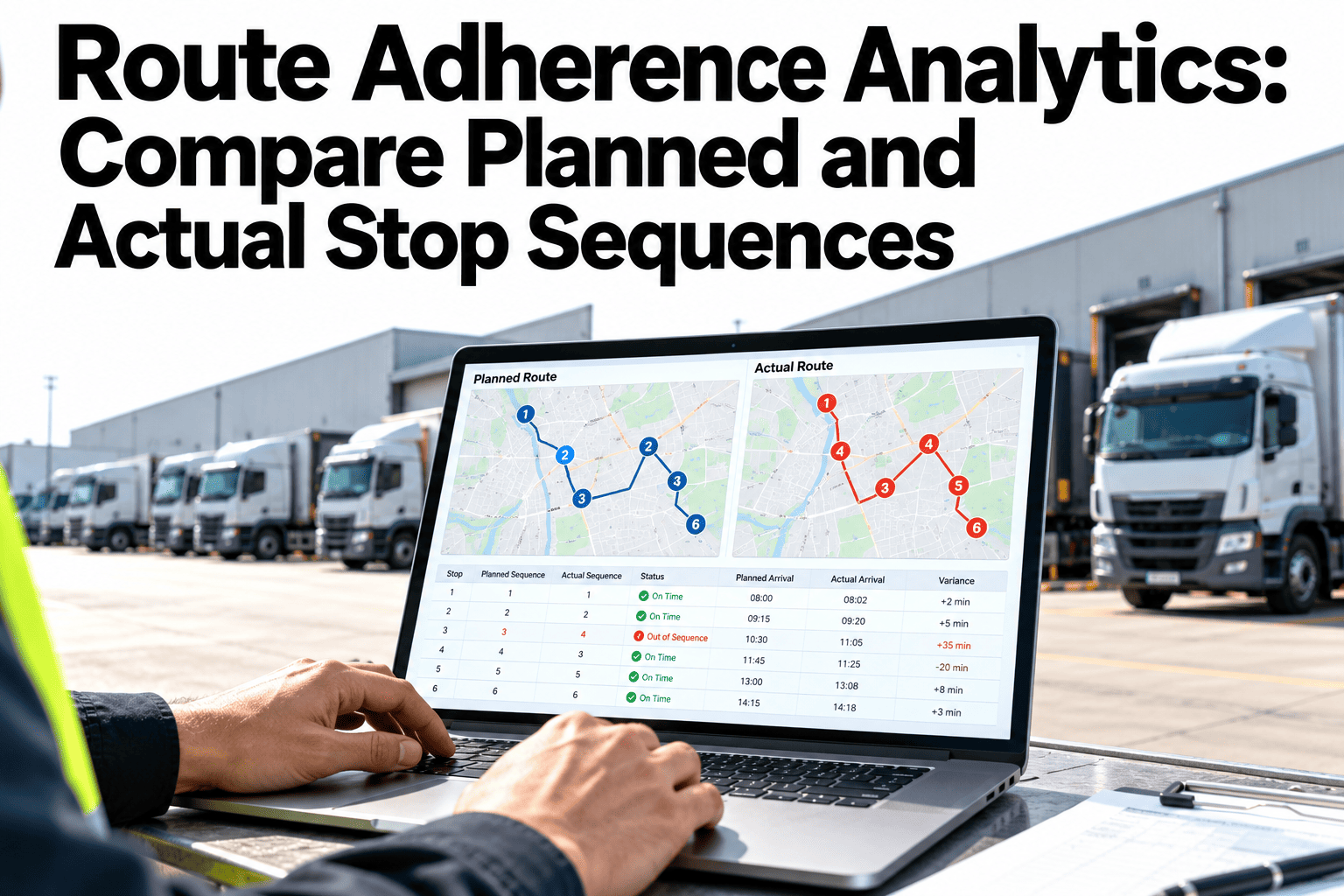
A route plan is a promise about the order of stops, the time at each and the miles driven. By the end of the day the actual route often looks quite different. Drivers swap stops to match access, skip a stop that was closed or add a call that was not planned. Some deviations are smart and some are costly, and without a comparison nobody can tell which is which. Route adherence analytics lays the planned and actual sequences side by side so deviations can be understood. Dispatch teams can compare planned and actual stop sequences for a day of their own routes and see which deviations matter.
Compare the Route You Planned With the Route That Ran
iFactory helps delivery teams compare planned and actual stop sequences, understand deviation reasons and improve how routes are planned and run.
Planned vs Actual: Same Stops, Different Order
The dashed line is the plan. The solid line is what happened. The gap is where questions begin.
Schematic only. Real routes involve many more stops and road detail.
Four Steps From Route Data to Insight
The method is simple. What takes effort is keeping the data clean.
Why Drivers Deviate From the Plan
Not every deviation is a problem. Many have good reasons that planning can learn from.
| Deviation Reason | What It Often Means | Planning Response |
|---|---|---|
| Customer access or window | Plan ignored real opening hours | Update windows and access rules |
| Traffic or road closure | Route did not reflect conditions | Adjust routing assumptions |
| Loading order | Load sequence did not match the plan | Align loading with the stop sequence |
| Added or dropped stop | Late order change or failed delivery | Review cut-off and rebooking rules |
| Driver preference | Local knowledge or habit | Capture what works and test it |
Where Deviations Typically Come From
Rank the sources to decide what to fix first.
Illustrative shares. Your own route data decides the real ranking.
Comparing Drivers and Sites Fairly
A comparison is only fair if routes are comparable. Otherwise the numbers punish the wrong people.
Compare like with like
Group routes by area, stop count and delivery type before comparing
Separate cause from choice
Check whether deviations came from the plan or from the driver
Look at patterns, not days
One bad day says little, while a pattern over weeks says a lot
Share findings with drivers
Drivers often explain what the data cannot
See One Day of Your Routes Planned vs Actual
Share a day of planned routes and stop times. We will compare them with what ran and show which deviations are costing you time.
Policing Drivers vs Understanding Deviations
The goal is better plans, not blame.
From Deviation to Corrective Action
Match the response to how often the deviation occurs.
A Practical Route Adherence Program
Begin with a few routes and learn before scaling.
What Experienced Dispatch Leaders Look For in Route Adherence
Frequently Asked Questions
Is a deviation from the planned route always bad?
No. Drivers often make smart changes based on traffic, access or local knowledge. The aim is to understand which deviations help and which cost time, then update the plan to include the good ones. Look at your own deviations to see which ones are worth copying in a short session.
What data do we need to compare planned and actual routes?
You need the planned stop sequence with expected times, and the actual stop events with times, ideally from driver app or position data. Even stop confirmations by time can support a first comparison. More detailed tracking adds accuracy later.
How do we measure route adherence?
Common measures include share of stops visited in planned order, time variance per stop and distance variance for the route. Choose one or two simple measures to start and explain them clearly to drivers. Choose adherence measures that fit your routes with our team.
Will drivers feel monitored?
It depends on how the data is used. When findings feed planning improvements and drivers are part of the review, adoption is usually better. Using the data only for discipline tends to make people hide changes, which makes the data less useful.
How does this improve planning?
Repeated deviations show where plans assume things that are not true, such as windows, access or loading order. Fixing these inputs makes future plans easier to follow. Explore which planning assumptions your data would challenge first on a short call.
Close the Gap Between the Route Planned and the Route Driven
Bring a day of planned routes and actual stops. We will show deviations, reasons and the planning changes they point to.