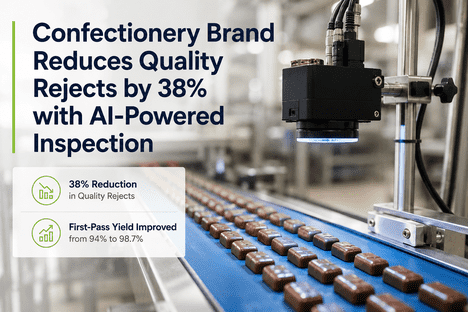
A premium confectionery brand producing chocolate molded products, enrobed centers, and sugar-coated confections faced a persistent quality challenge: 6.0% of production was rejected or reworked due to surface defects, bloom formation, shape irregularities, and packaging inconsistencies costing $2.1 million annually in scrap, rework, and customer claims. Manual inspection on the packaging line achieved approximately 80% defect detection on a good shift and fell to 60% during fatigued late-night runs, while 100% of production was never inspected due to human visual limitations at line speed. AI-powered vision inspection replaced human-only QC with deep learning models running on NVIDIA edge GPUs at sub-50ms inference per product, inspecting every unit across molding, enrobing, and packaging lines simultaneously. The platform detected fat bloom, micro-cracks, surface contamination, shape deviation, enrobing coverage voids, and packaging seal defects at 99.4% accuracy with under 2% false positive rate. The result: first-pass yield improved from 94.0% to 98.7%, quality rejects reduced by 38%, customer complaints dropped 61%, and the platform paid for itself within 8 months. Quality directors and production managers evaluating AI vision for confectionery quality Book a Demo to see AI vision inspection deployed on live confectionery lines with real-time defect detection, classification, and automated reject integration.
Reduce Quality Rejects 38% With AI-Powered Vision Inspection
iFactory's AI Vision platform inspects every product at line speed — detecting bloom, cracks, coating voids, shape defects, and packaging issues at 99.4% accuracy with real-time reject integration and automated quality reporting.
Why Confectionery Quality Rejects Persist Despite Manual Inspection
Confectionery manufacturing presents unique quality inspection challenges that push manual visual inspection beyond its limits. Chocolate surfaces reflect and distort light unpredictably. Bloom develops gradually and can be indistinguishable from acceptable surface variation in fast-moving production. Enrobing coverage voids hide underneath the product. Micro-cracks in molded shells are invisible to the naked eye at line speed. Packaging seal defects require consistent illumination and inspection angles that human inspectors cannot maintain across an 8-hour shift. At a typical confectionery facility running three molding lines, two enrobing lines, and four packaging lines at combined speeds exceeding 600 pieces per minute, manual inspection cannot scale to cover every product. The result: 3-8% of production is rejected or reworked, and an estimated 20-40% of defective products escape to customers depending on shift conditions and inspector fatigue. Quality leaders evaluating AI vision for their facilities can see how deep learning models detect confectionery-specific defects that manual inspection consistently misses.
Human Visual Fatigue at Line Speed
Manual inspectors achieve ~80% defect detection on their best shift and drop to ~60% during fatigued late-night runs. Human vision cannot sustain consistent inspection quality across 600+ pieces per minute for 8-hour shifts, resulting in variable product quality and unpredictable defect escape rates to customers.
Confectionery Defect Subtlety
Fat bloom develops as a gradual polymorphic transition in cocoa butter crystals. Micro-cracks in molded shells measure 0.1-0.5mm. Enrobing coverage voids hide beneath the product. These defects require consistent illumination, magnification, and trained pattern recognition that exceed human capability at production speed.
No Data Feedback to Process
Manual inspection provides no structured data on defect type, frequency, or spatial distribution. Without defect classification data, quality teams cannot correlate reject patterns with upstream process parameters — tempering temperature, cooling tunnel profiles, enrober viscosity — missing opportunities for root-cause correction.
AI Vision Inspection: From Image Capture to Automated Reject and Process Feedback
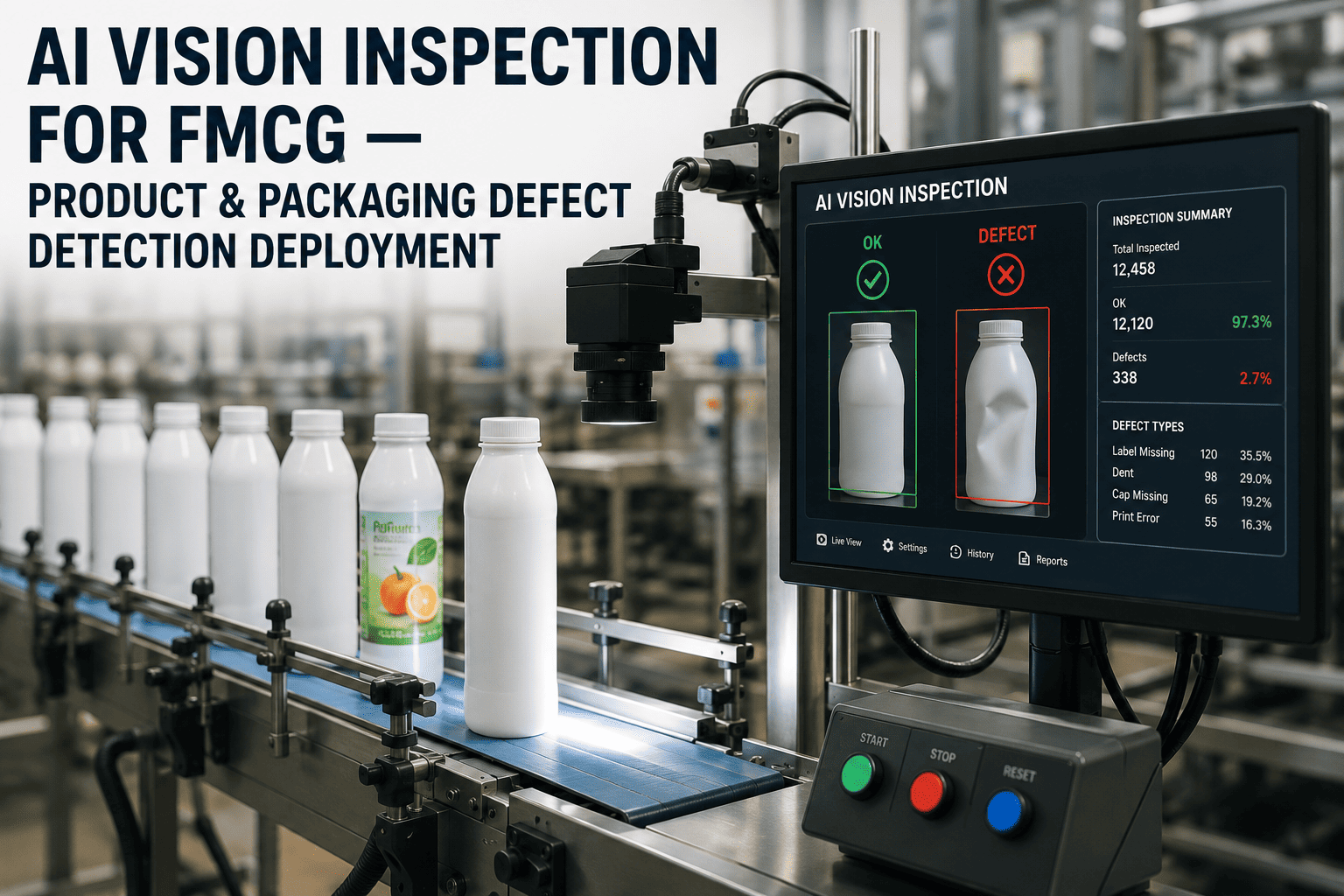
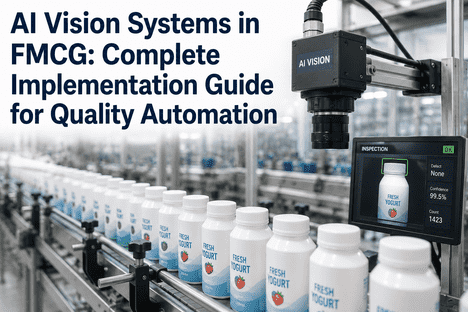
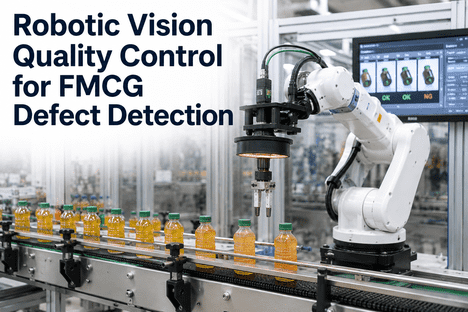
iFactory's AI Vision platform installs on existing confectionery production lines with zero line modification. High-resolution industrial cameras capture every product under specialized lighting optimized for reflective chocolate surfaces. Deep learning models running on NVIDIA Jetson edge GPUs analyze each image in under 50 milliseconds, classifying defect type, severity, and location in a single inference pass. Defective products are automatically rejected via PLC-connected pneumatic diverters, and defect data flows into the SPC engine for real-time process capability monitoring and root-cause correlation. Quality managers comparing AI vision platforms can see confectionery-specific defect models in live production with real-time reject integration and CAPA automation.
Multi-Angle Image Capture
Industrial cameras (5-45 MP, 30-500 fps) with specialized lighting capture every product from multiple angles. Strobed diffuse lighting eliminates glare on reflective chocolate surfaces. Area-scan cameras inspect top and side surfaces while optional bottom cameras detect mold-side defects.
Deep Learning Defect Classification
YOLOv8 models detect localized defects — cracks, foreign bodies, broken pieces — while Vision Transformers analyze texture and pattern anomalies for bloom, discoloration, and coating variation. Multi-output models classify defect type and severity simultaneously in under 50ms per product.
Automated Reject and Workflow
Reject signals arrive at PLC-connected pneumatic diverters before the defective product reaches the rejection actuator — physically impossible with cloud-routed inference. The platform simultaneously auto-generates CMMS work orders with AI-annotated images, defect classification, and severity scoring.
SPC Integration and Root-Cause Feedback
Defect classification data flows directly into the SPC engine, correlating visual defect patterns with upstream process parameters — tempering temperature curves, cooling tunnel profiles, enrober viscosity, deposit weight. AI identifies multivariate drift patterns before reject rates increase, enabling preventive process adjustment.
AI Vision Inspects Every Product — Not Just a Sample
iFactory's AI Vision platform detects bloom, cracks, coating voids, shape defects, and packaging issues at 99.4% accuracy on every product. Automated reject integration, real-time SPC, and closed-loop CAPA workflows deliver measurable quality improvement within weeks of deployment.
Measured Quality Improvement From AI Vision Inspection Deployment
The confectionery brand deployed iFactory AI Vision across three molding lines, two enrobing lines, and four packaging lines over a 10-week phased rollout. The following metrics represent measured performance improvement from manual inspection with periodic sampling to AI-powered 100% inline inspection across 8 months of production covering chocolate molded products, enrobed centers, and sugar-coated confections.
| Performance Metric | Manual Inspection | AI Vision Inspection | Improvement |
|---|---|---|---|
| First-Pass Yield | 94.0% | 98.7% | +4.7 points |
| Quality Reject Rate | 6.0% | 1.3% | 38% reduction |
| Customer Complaints | Baseline | 61% lower | 61% reduction |
| Enrobing Line Reject Rate | 5.2% | 0.9% | 83% reduction |
| Defect Detection Accuracy | ~70% (avg across shifts) | 99.4% | +29.4 points |
| Inspection Coverage | Periodic sampling | 100% of production | Full coverage |
| Annual Quality Cost (scrap + rework + complaints) | $2.1M | $480K | 77% reduction |
Before AI vision, our quality team relied on end-of-line manual inspection that caught only the most obvious defects. Fat bloom on our dark chocolate molded products was consistently under-detected because the visual cues are subtle and develop progressively. The AI models caught bloom patterns we had never documented as recurring defects. Within the first month, the system flagged a tempering temperature drift on Line 2 that was causing a 3% reject rate increase — our manual inspectors had not detected the pattern because the defects were distributed across three shifts and appeared as isolated events. The root-cause correlation between enrober viscosity and coating void frequency has been the most valuable capability. We now adjust enrober parameters based on real-time AI defect data rather than waiting for end-of-shift yield reports. Our first-pass yield crossed 98% within four months of deployment, and our customers noticed the difference before our quality team did.
AI Vision Inspection Capabilities for Confectionery Manufacturing
iFactory's AI Vision platform integrates with existing confectionery production lines through standard industrial protocols and ONVIF-compatible cameras. The platform connects to existing IP cameras or deploys purpose-built industrial cameras with specialized lighting for chocolate and sugar confectionery inspection. All inference runs on-premise on NVIDIA edge GPUs with zero cloud dependency, ensuring sub-50ms detection latency and complete data sovereignty. Quality leaders evaluating AI vision capabilities can review the integration architecture and defect model library for confectionery applications.
The platform includes pre-trained confectionery defect models covering bloom detection (fat and sugar), micro-crack identification on molded shells, surface contamination classification, shape and dimensional deviation analysis, enrobing coverage void detection, coating thickness variation, packaging seal integrity inspection, label placement verification, and foreign material detection. Models are trained on 500-2,000 labeled images per defect category and achieve 99.4% accuracy after active learning. Unsupervised anomaly detection models are available for facilities without labeled defect image libraries, using PatchCore and PaDiM algorithms trained exclusively on conforming product images.
The platform works with existing ONVIF-compatible IP cameras or purpose-deployed industrial cameras with specialized lighting. Camera setup requires approximately 30 minutes per station, with complete retrofit installation in 2-4 hours per line with zero line modification. Inference runs on-premise on NVIDIA Jetson Orin NX or AGX Orin edge GPUs with sub-50ms end-to-end latency. Reject signals connect to PLCs via OPC-UA, MQTT, or Modbus TCP for automated pneumatic diverter actuation. Integration with existing MES, ERP, and CMMS platforms is provided through REST API and standard enterprise connectors.
Defect classification data flows automatically into the iFactory SPC engine, correlating visual defect patterns with upstream process parameters including tempering temperature curves, cooling tunnel profiles, enrober viscosity, deposit weight, and packaging seal parameters. The quality command center dashboard displays first-pass yield by line and SKU, defect Pareto analysis, real-time control charts with Cp/Cpk trending, CAPA pipeline status, and compliance pass rates. Automated CAPA generation triggers root-cause analysis workflows when defect rates exceed configured thresholds, with AI-suggested probable causes based on correlated process variable analysis.
AI Vision Turns Confectionery Quality From a Sampling Activity Into a 100% Inspection Process With Closed-Loop Process Feedback
What the confectionery quality team lacked was not skill or dedication — they understood bloom formation, recognized coating defects, and documented customer complaints. The missing piece was a scalable, consistent, data-generating inspection system that could examine every product at line speed, classify defects with laboratory-grade accuracy, and feed structured data back into process control. AI vision inspection closed this gap — delivering 38% reject reduction, first-pass yield improvement from 94.0% to 98.7%, 61% fewer customer complaints, and $2.8M in annual savings across a mid-size confectionery operation. The technology did not change the chocolate recipes, the enrober settings, or the packaging materials. It changed who inspects the product and how defect data flows back to process control — from manual sampling with no data feedback, to 100% AI inspection with real-time SPC integration and closed-loop corrective action. Quality directors and production managers ready to eliminate confectionery quality rejects Book a Demo to see the AI Vision deployment plan for confectionery lines with a personalized ROI projection based on your product mix, line speeds, and current reject rates.
AI Vision Inspection for Confectionery Manufacturing — Frequently Asked Questions
The platform detects all major confectionery defect categories: fat bloom and sugar bloom on chocolate surfaces, micro-cracks in molded shells, surface contamination and foreign material, shape and dimensional deviation, enrobing coverage voids and tail drips, coating thickness variation, packaging seal integrity issues, label misalignment, and missing or incorrect date codes. The model library includes pre-trained confectionery defect models that achieve 99.4% accuracy after active learning, with unsupervised anomaly detection available for facilities without labeled defect image libraries.
The platform is hardware-agnostic and works with existing ONVIF-compatible IP cameras from Hikvision, Dahua, Axis, Bosch, Sony, and other major manufacturers. For confectionery lines without existing camera infrastructure, iFactory deploys purpose-built industrial cameras with specialized lighting optimized for reflective chocolate surfaces. Setup requires approximately 30 minutes per camera station, with complete line installation in 2-4 hours with zero production line modification. Multi-angle arrays provide 360-degree coverage for enrobed and molded products.
Pre-trained confectionery defect models achieve approximately 90-92% detection accuracy at deployment and exceed 99% within the first week of on-site active learning. Models are trained on 500-2,000 labeled images per defect category from the specific product line. Model retraining on 50-200 new sample images is completed within 24 hours without requiring line stoppage, enabling continuous improvement as new product variations and defect patterns emerge in production.
Reject signals connect to PLCs via OPC-UA, MQTT, or Modbus TCP with sub-50ms inference latency — the reject signal arrives at the pneumatic diverter before the defective product reaches the rejection actuator. Simultaneously, the platform auto-generates CMMS work orders with AI-annotated images, defect classification, severity scoring, and recommended corrective actions. Defect data flows into the SPC engine for real-time process capability monitoring, with automated CAPA workflows triggered when defect rates exceed configured thresholds.
Yes. The platform is fully on-premise with zero cloud dependency, meeting data sovereignty requirements for food manufacturers. All cameras are available in IP69K washdown-rated enclosures for food-grade environments. The platform includes pre-built compliance templates for HACCP, FSMA, SQF, BRCGS, FSSC 22000, ISO 9001, and GMP with automated CCP monitoring, digital HACCP logs with immutable timestamps, and audit-ready record packages generated for any date range. Every inspection result, alert, and corrective action is logged with full traceability supporting regulatory audit requirements.
Schedule an AI Vision Walkthrough for Your Confectionery Lines
iFactory's AI Vision platform inspects every product at line speed with 99.4% accuracy, detects bloom, cracks, coating voids, and packaging defects, and feeds quality data directly into SPC and CAPA workflows. Schedule a personalized walkthrough with a live demonstration using your confectionery line data.