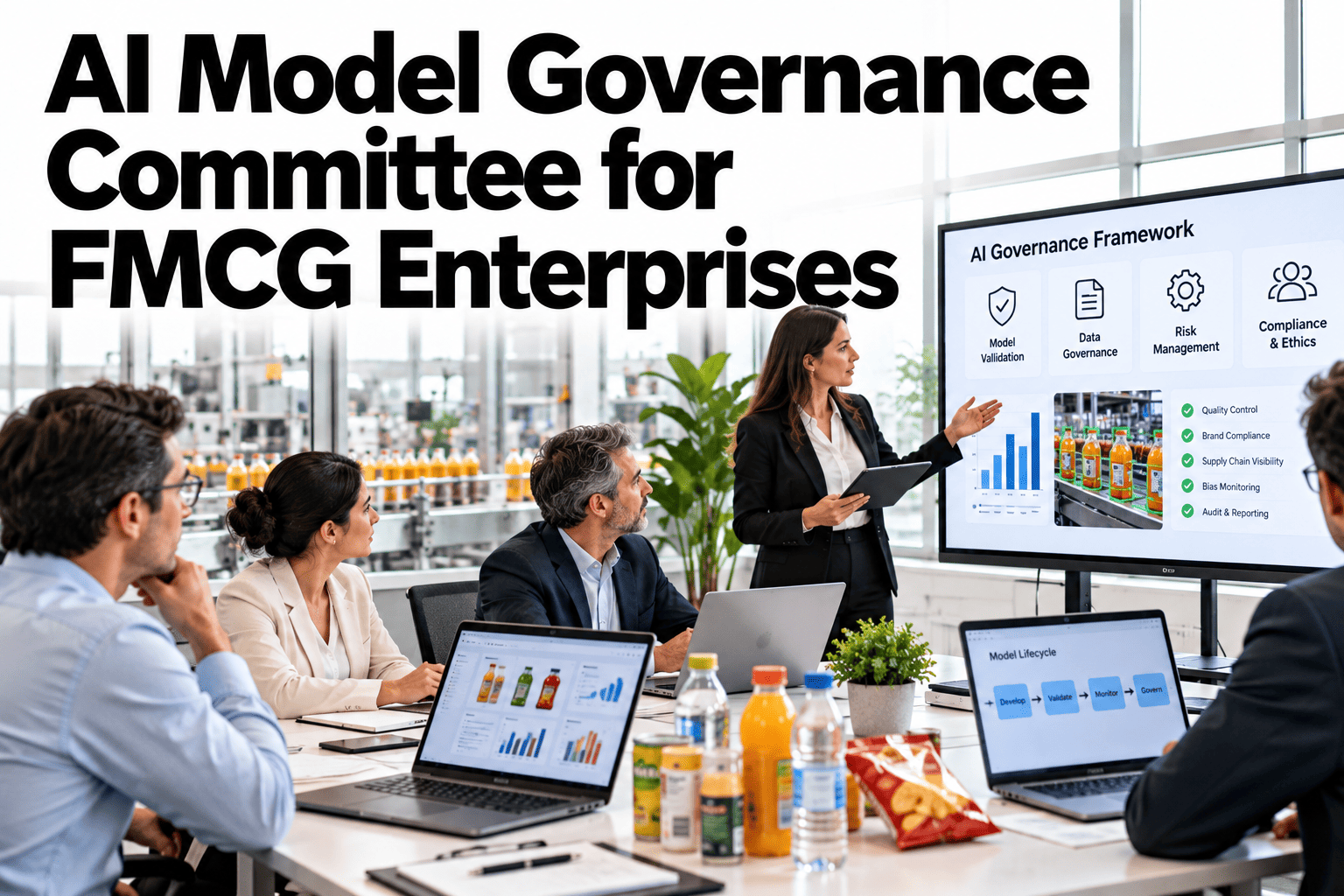
A digital twin pilot that worked well on one packaging line tends to run into a different problem once an FMCG enterprise tries to scale it across a dozen plants: nobody actually owns the model, two teams are running slightly different versions without knowing it, and nobody can say when the twin was last validated against real line data. The modeling technology isn't what breaks at enterprise scale, governance is, specifically who owns a model, how versions are controlled, how often validation happens, and who has access to change what. Enterprises building that structure before scaling further can review a governance framework built for multi-plant twin programs.
The Model Didn't Fail. Nobody Owned It.
iFactory AI's Digital Twin and Virtual Line Testing platform carries built-in ownership assignment, version control, and validation tracking as a twin program scales across plants.
Why Twin Programs Stall Once They Scale Past One Line
A single pilot twin on one line can run informally, maintained by whoever built it. That approach breaks down predictably once a second, third, and tenth line each need their own model.
No Defined Owner Per Model
Without a named owner, a model's accuracy degrades silently as the real line changes and nobody is responsible for keeping the twin current.
Versions Drift Across Teams
Two engineering teams can end up running different versions of what's supposed to be the same model, producing different answers to the same what-if question.
Validation Happens Once, Then Never Again
A twin validated at launch against real line data is treated as permanently trustworthy, even as the physical line it represents keeps changing.
The Four Governance Pillars and What Each One Owns
Each pillar answers a distinct question, and skipping any one of them leaves a specific, predictable gap in the program.
| Pillar | Question It Answers | What Happens Without It |
|---|---|---|
| Ownership | Who is accountable for this model's accuracy? | Drift goes unnoticed because no one is watching for it |
| Version Control | Which version is the current, trusted one? | Teams make decisions from inconsistent models |
| Validation Cadence | How current is this model's accuracy, really? | Confidence in a what-if answer outlives its actual reliability |
| Access Policy | Who can change the model, and who can only query it? | Unauthorized changes go untracked, undermining trust in results |
An enterprise doesn't need a heavyweight bureaucracy to answer these four questions, it needs each answer documented and enforced consistently as the program scales.
See Governance Applied to Your Own Twin Program
Bring your current twin setup to a 30-minute session and map ownership, versioning, and validation against your actual plant footprint.
Setting a Validation Cadence That Actually Holds
Validation isn't a one-time launch activity, it's a recurring check that a model's predictions still match what the real line is doing.
An Access Policy Checklist
Access control isn't about restricting use, it's about making sure every change to a trusted model is deliberate and traceable.
An Illustrative Comparison: Governed vs Ungoverned Twin Programs
The figures below are a labeled illustrative composite, not a reported customer result, showing how trust in twin-based decisions can shift once governance is applied across a multi-plant rollout.
The enterprises that scale twin programs successfully treat governance as infrastructure from the first pilot, not as something bolted on once a problem forces the issue. A single well-validated, clearly owned model on one line is a far better foundation to scale from than five models across five lines with no shared versioning or validation discipline, even if the five-model approach looks like faster progress on paper.
Frequently Asked Questions
Who should own a digital twin model within our organization?
Ownership typically sits with process engineering for the model's accuracy and relevance, working alongside IT or a digital twin program lead for version control and access, so the right structure depends on how your organization already divides process and systems responsibility. Discuss ownership structure for your organization in a short session.
How often should a twin actually be revalidated?
The right interval depends on how frequently the underlying line changes, with a high-change packaging line needing more frequent validation than a stable, rarely modified process, so cadence should be set per model rather than applied as one fixed enterprise-wide rule. Ask the iFactory AI team to recommend a cadence for your lines.
Can a model validated on one line be reused on a similar line at another plant?
Not without its own validation, since even nominally identical lines can differ enough in actual equipment condition and operating history that a model built for one needs to be confirmed against the other's real data before being trusted for decisions there. Review model reuse policy for your plant footprint in a demo.
What happens when a model's validation shows it has drifted?
A flagged drift triggers a recalibration against current line data, with the update logged and a new version becoming the trusted current one, rather than the old version being quietly used until someone happens to notice a problem. See how drift flags are handled on a call.
Does governance slow down how fast we can use the twin for decisions?
Properly structured governance generally speeds up decision-making rather than slowing it, since a clearly versioned, validated model lets teams act on its answers with confidence instead of pausing to manually re-verify results each time. Discuss governance workflow efficiency with the support team.
Build the Governance That Scales With the Twin Program
iFactory AI's Digital Twin platform carries ownership, versioning, and validation tracking built in. Book a walkthrough built around your own multi-plant rollout.