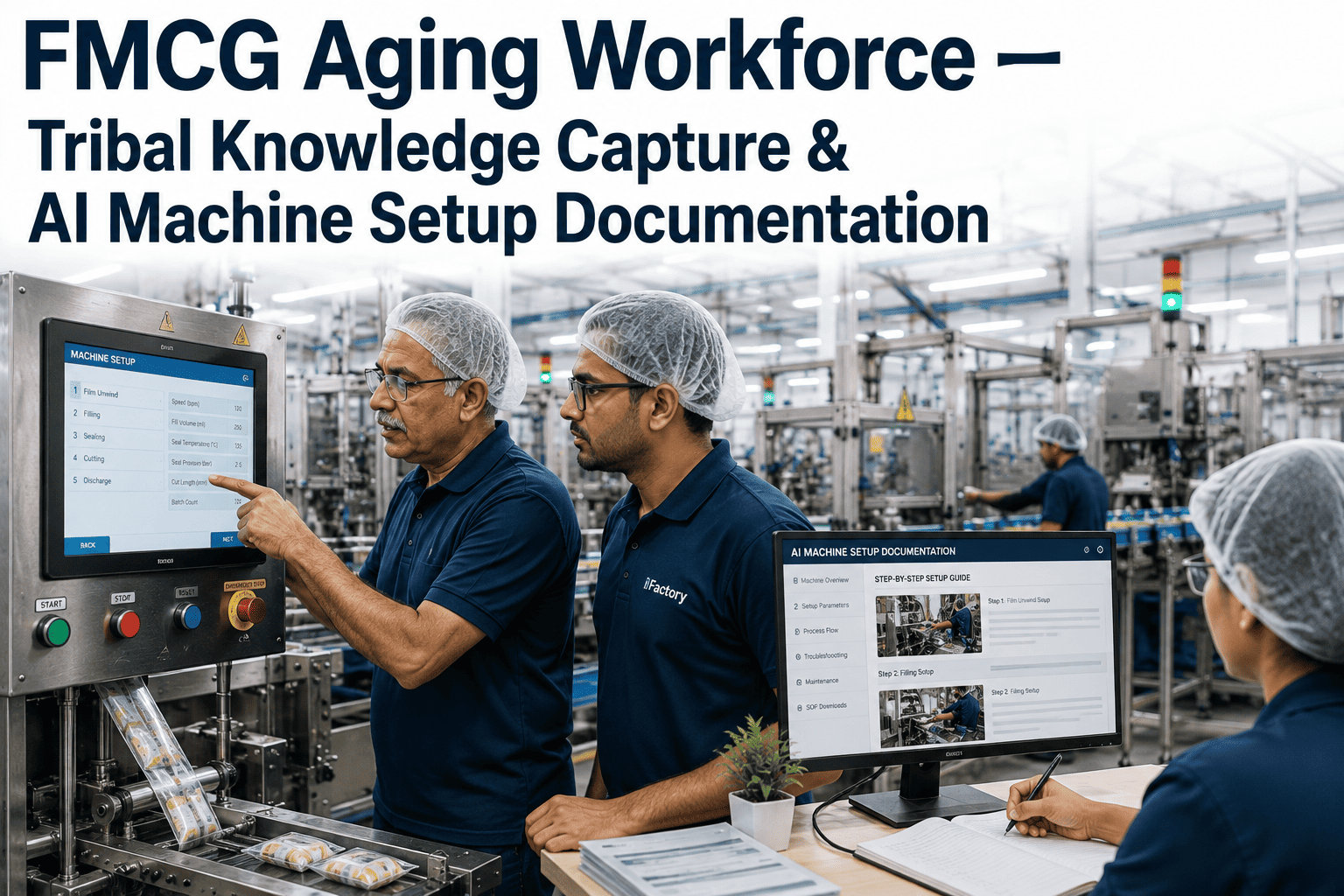
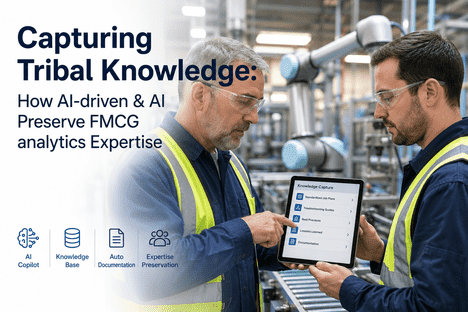
The operator who can set up a particular filler line by ear, catching a subtle change in sound before the reject rate ever climbs, usually never wrote that skill down anywhere. It lives entirely in their hands and their memory, built over fifteen or twenty years on that specific machine, and when they retire it walks out the door with them. Plants feel this loss slowly at first, a slightly longer changeover here, a quality catch that comes a shift later than it used to there, until eventually the gap becomes impossible to ignore. Capturing that expertise before it leaves is one of the highest-leverage things an aging FMCG workforce can do, and it is a problem ifactory support helps plant leaders get ahead of.
iFactory Knowledge Capture
Capture What Your Most Experienced Operators Know Before They Retire
AI-assisted capture of machine setup expertise, troubleshooting technique, and quality judgment, turning decades of tribal knowledge into a searchable resource the next generation of operators can actually use.
Why This Is Becoming Urgent for FMCG Plants Specifically
FMCG manufacturing has an unusually large share of operators who have run the same equipment for a decade or more, often on legacy lines that were never fully documented when they were originally installed. As that generation approaches retirement in the coming years, plants face a genuine cliff, not a gradual decline: a handful of retirements in a short window can remove the majority of institutional knowledge for an entire line or process area at once. New hires trained only on formal procedures inherit the documented ten percent of what actually makes that line run well, while the other ninety percent, the judgment calls and subtle cues, disappears unless someone deliberately captures it first.
From Tribal Knowledge to Team Resource
Experienced Operator
→
AI-Guided Capture
→
Structured Knowledge Base
→
Every Future Operator
What Actually Gets Captured, and How
The hardest part of capturing tribal knowledge is that the expert usually cannot fully explain what they know, because it has become instinct rather than a conscious step-by-step process. Getting it out requires structured prompting rather than simply asking someone to write a manual, which is where an AI-guided interview process makes the difference between a genuine capture and a document nobody reads.
Machine Setup Sequences
The specific order and adjustments an expert makes during setup, including the small corrections that never made it into the official procedure.
Troubleshooting Patterns
The symptoms an experienced operator recognizes before a fault code even triggers, and what they check first based on years of pattern matching.
Quality Judgment Calls
The subjective calls a veteran inspector makes that fall between clear-cut pass and fail criteria, captured through guided example review.
Undocumented Workarounds
The informal fixes operators have relied on for equipment quirks that were never formally logged as a known issue.
Identify Your Own Risk First
Bring Your Retirement Timeline for the Next Two to Three Years
We will walk through which lines and roles carry the highest knowledge-loss risk and where a capture project would matter most.
How the Capture Process Actually Runs
A capture project works best structured as a series of short, focused sessions rather than one long interview, since experts rarely surface their best insights on demand and instead recall specific examples when prompted about a particular scenario they have lived through.
From Interview to Usable Knowledge Base
1
Identify the Highest-Risk Roles
Rank roles by tenure, retirement timeline, and how undocumented the role's expertise currently is.
2
Run Guided Capture Sessions
Structured interviews and shadowed walkthroughs prompt the expert to explain decisions in the moment they are actually making them.
3
Structure the Knowledge
Captured insight is organized into searchable, scenario-based entries rather than left as unstructured transcripts nobody will read.
4
Validate With a Second Expert
A second experienced operator reviews the captured content for accuracy before it becomes part of the standard knowledge base.
5
Make It Available on the Floor
The knowledge base becomes a searchable reference newer operators can consult during setup or troubleshooting, not a binder in an office.
Documented Procedure vs Captured Tribal Knowledge
Have a veteran operator approaching retirement in the next year? Let us know their role and we will suggest where to prioritize capture.
Frequently Asked Questions
How do you get an experienced operator to explain knowledge they've never had to put into words?
The key is scenario-based prompting rather than asking someone to write a general manual, since most experts struggle to explain their expertise in the abstract but can walk through exactly what they did and why during a specific real event they remember clearly. Structured interview techniques and shadowed observation during actual setup or troubleshooting tend to surface far more usable detail than a sit-down interview alone.
Talk to our team about the interview approach used for this kind of capture.
How much time does this actually take from an experienced operator's schedule?
Capture sessions are designed to be short and focused, typically a series of thirty to sixty minute sessions spread across several weeks rather than a single lengthy interview that pulls someone off the floor for a full day. This pacing also tends to produce better results, since operators recall more useful detail across multiple focused conversations than in one long session.
Book a walkthrough to see a sample session structure.
What if the retiring operator is reluctant to share knowledge they see as their job security?
This is a common and understandable concern, and it is best addressed directly by framing the capture as recognition of the operator's expertise and a way to formally credit their contribution, rather than as a replacement for them. Plants that position the project as building a legacy resource named after the contributing expert typically see far better engagement than plants that frame it purely as a knowledge transfer exercise.
Reach out to our team for guidance on framing this conversation well.
How is the captured knowledge kept accurate once the original expert is gone?
Every captured entry goes through a validation step with a second experienced operator before it becomes part of the standard knowledge base, and the base itself is designed to be updated over time as new situations arise rather than treated as a frozen snapshot from a single capture project.
Book a scoping call to discuss ongoing maintenance of the knowledge base.
Can this be done for multiple retiring operators across different lines at once?
Yes, most plants facing a retirement wave are dealing with several high-risk roles at once rather than a single individual, and the capture process is designed to run in parallel across multiple experts, prioritized by retirement timeline and how critical each role is to production continuity.
Contact our team to build a prioritized capture plan across your retirement timeline.
Don't Let It Walk Out the Door.
Capture Your Plant's Institutional Knowledge While You Still Can
Bring your list of experienced operators nearing retirement. We will help you prioritize who to capture first and how to start.