A batch review that should take twenty minutes routinely takes two hours when the batch record is a stack of paper sheets filled out by hand across three shifts. Someone has to physically locate every page, check every operator signature, verify every recipe deviation was documented, and hope nobody's handwriting is illegible at the exact step that matters. Multiply that by dozens of batches a week and the batch review backlog becomes its own production bottleneck, one that never shows up on an OEE dashboard because it happens in an office instead of on the floor. Electronic batch records exist to close exactly that gap, and ifactory support works with FMCG plants moving off paper-based batch documentation.
Get Batches Reviewed in Minutes, Not Hours of Paper Chasing
AI-supported electronic batch records and recipe management that catch deviations as they happen, so batch review starts with exceptions already flagged instead of a blank stack of paper.
What Paper-Based Batch Records Actually Cost a Plant
Paper batch records feel low-risk because they are familiar, but the real cost shows up in places that are easy to overlook. A missed signature discovered during review means chasing down an operator who has since gone home. A recipe deviation that was verbally approved but never written down becomes a compliance gap months later during an audit. And every hour spent manually reviewing a completed batch is an hour a quality team is not spending on the next batch already queued behind it. None of this shows up as a single dramatic failure, it shows up as a slow accumulation of delay and risk that plants eventually accept as normal simply because it has always been this way.
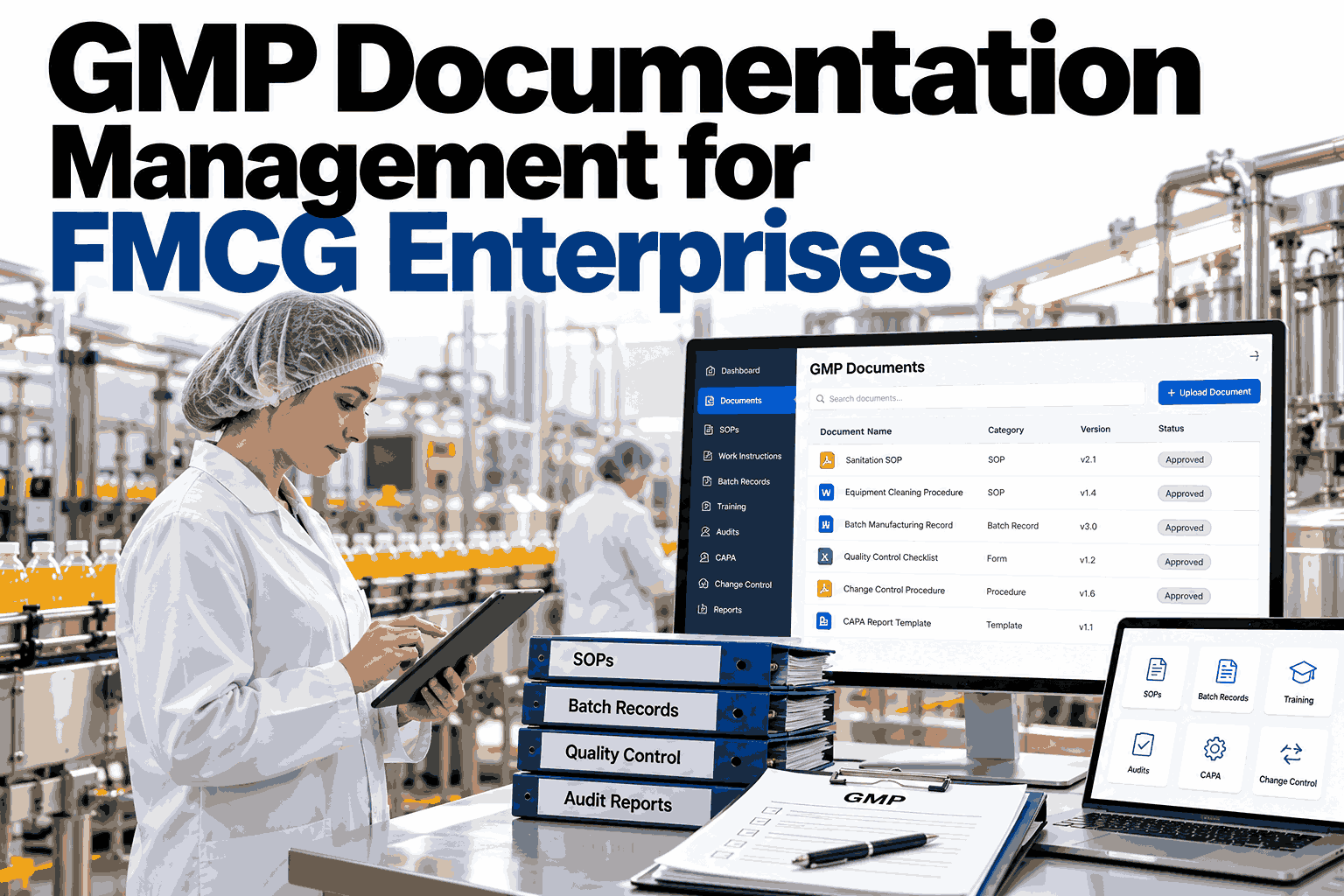
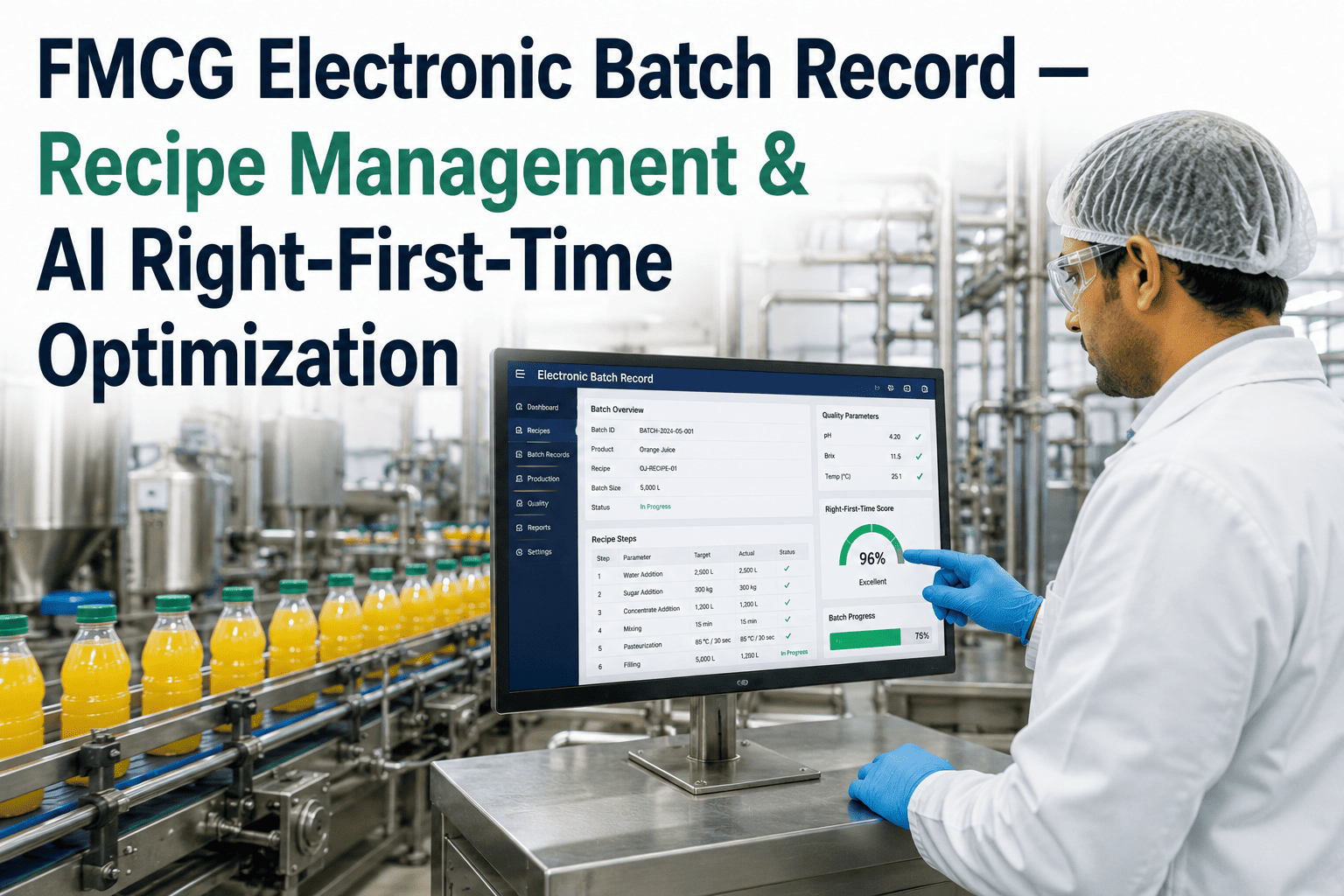
What an Electronic Batch Record Actually Captures
The value of going digital is not just legibility, it is that the record becomes structured data the moment it is captured, which means it can be checked against the recipe automatically instead of relying on a reviewer to catch every discrepancy by eye.
Bring a Recent Batch Record and Let's Time the Review
We will walk through how long that same batch would have taken to review with deviations flagged automatically instead of found manually.
How Right-First-Time Improves Once Deviations Are Caught Live
The biggest shift from going electronic is not review speed, it is when a deviation gets caught. A paper record surfaces a problem during review, often hours or days after the batch is complete, when the only option left is disposition. An electronic record with live parameter checking surfaces the same problem while the batch is still running, when there is still time for an operator to correct course before the entire batch is at risk. That single timing shift is usually what drives the biggest improvement in right-first-time rates after a plant moves off paper.
| Factor | Paper-Based Record | Electronic Batch Record |
|---|---|---|
| When a deviation is caught | During after-the-fact review | Live, while the batch is running |
| Batch review time | Hours per batch | Minutes, exceptions pre-flagged |
| Signature completeness | Dependent on manual follow-up | Enforced at the point of entry |
| Audit readiness | Records searched manually | Searchable digital history |
Moving From Paper to Electronic Without Disrupting Production
Switching batch documentation methods on a live production line understandably makes plants nervous, which is why the transition is usually run in parallel before it fully replaces paper.
Wondering which recipe is the right one to digitize first? Send us your recipe list and we will suggest a starting point.
Frequently Asked Questions
Move Your Batch Records to a System That Flags Deviations Live
Bring a recipe you would want to digitize first. We will show you what the transition would look like without disrupting your current production schedule.