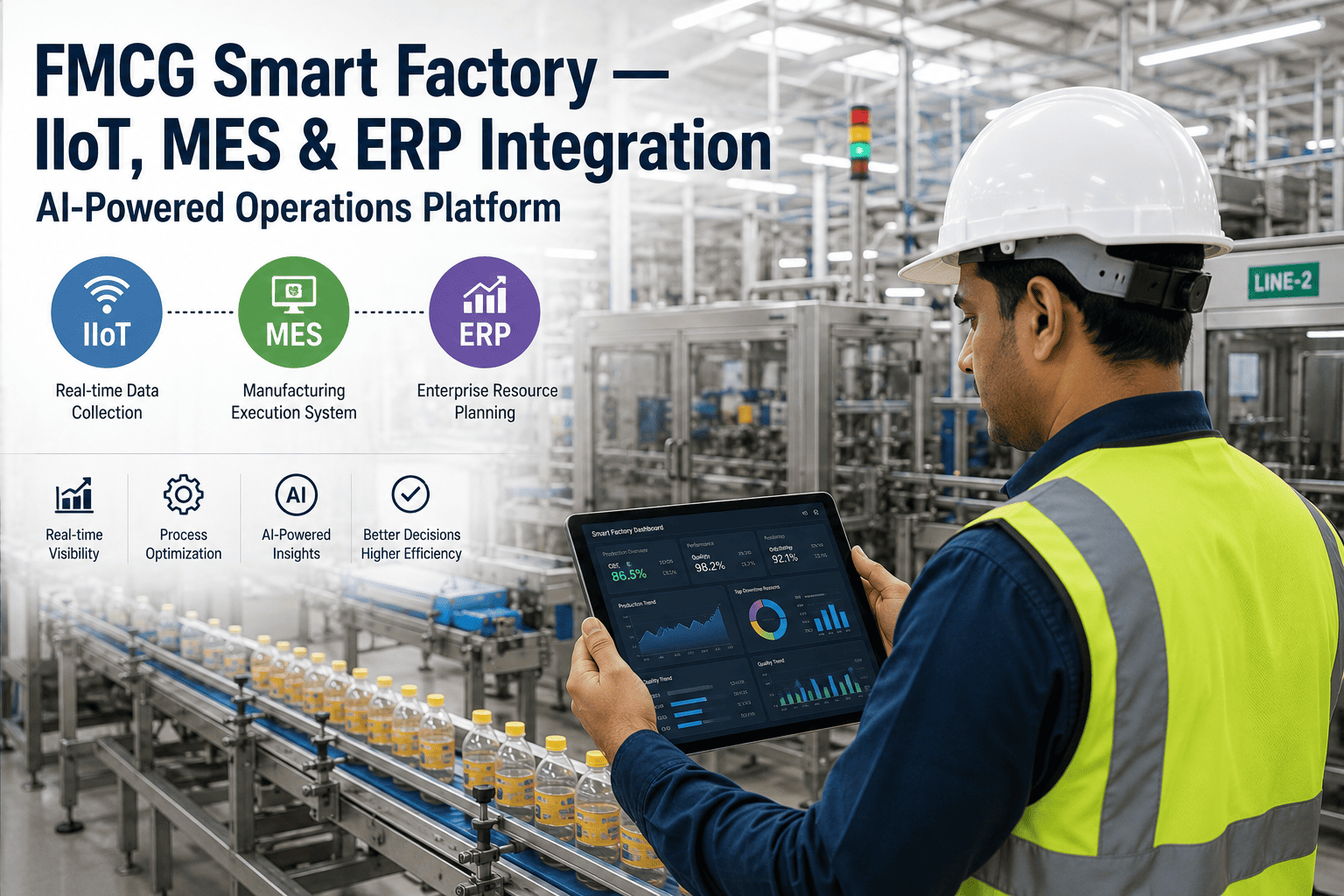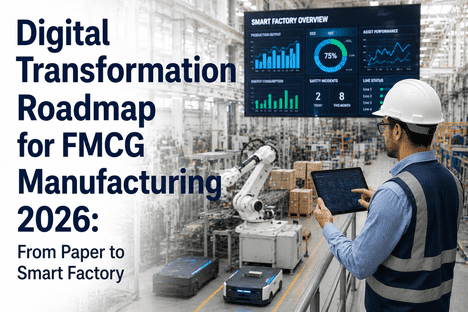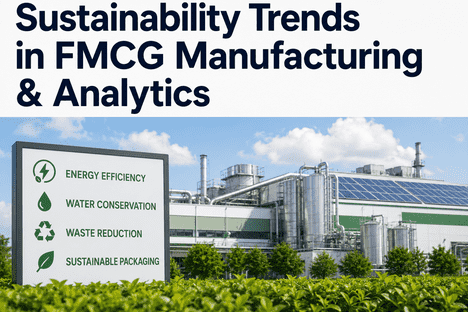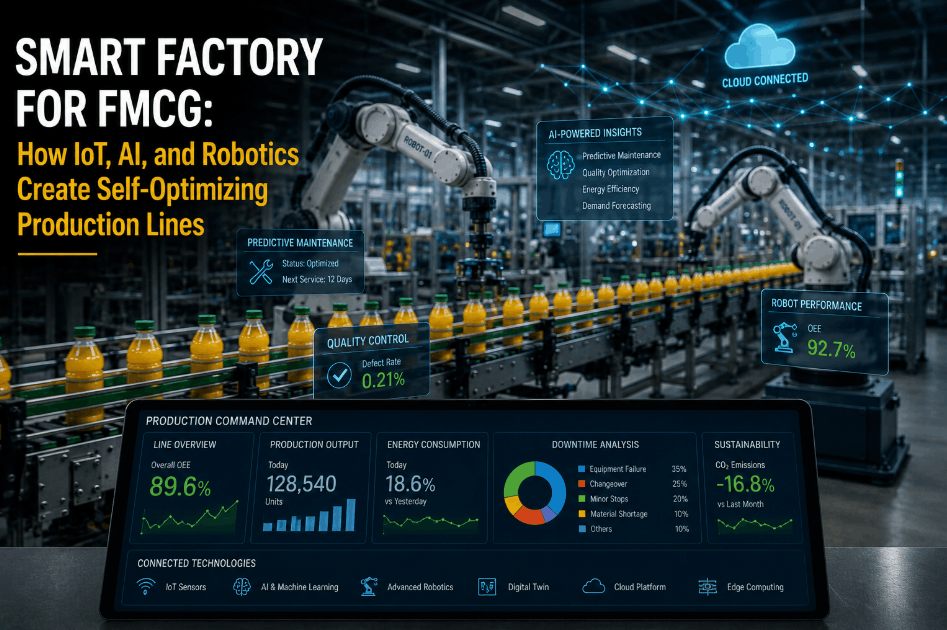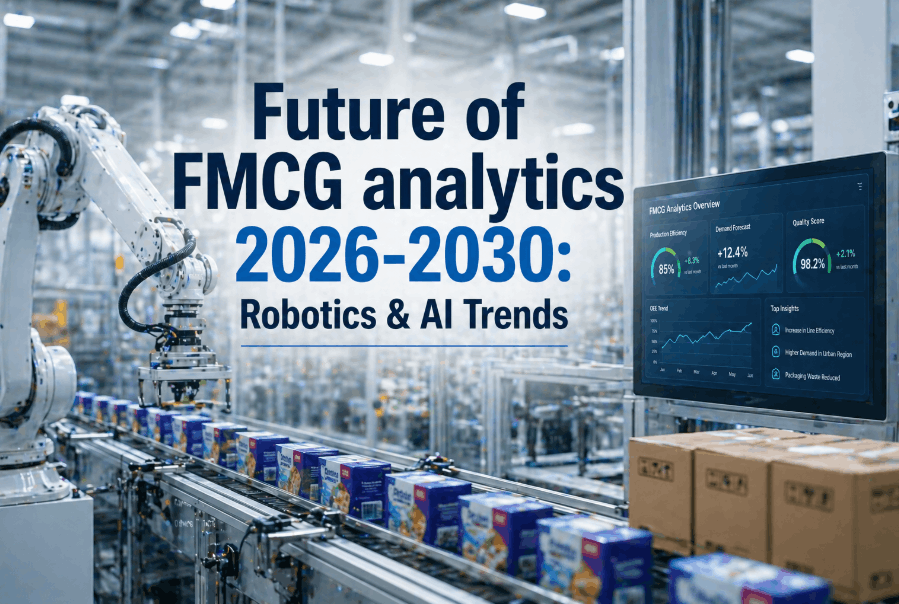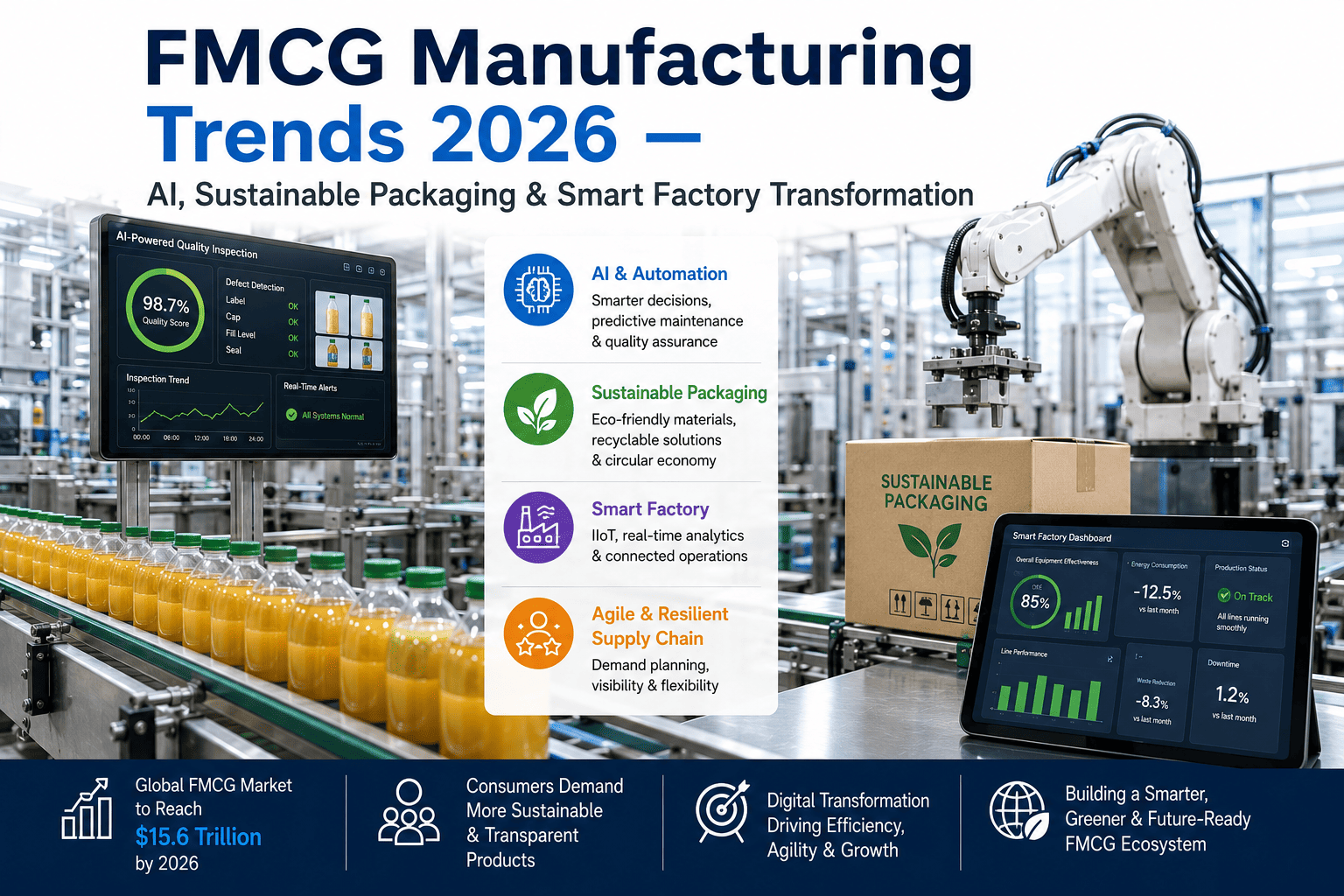
Every FMCG operations leader walking into a 2026 budget conversation is being asked to reconcile three pressures that don't naturally pull in the same direction: cut cost, hit sustainability commitments that are increasingly written into customer contracts and regulation, and modernize production fast enough to stay competitive against peers who are already deploying AI on their lines. Treating these as three separate initiatives competing for the same budget is exactly how transformation programs stall — the plants making real progress in 2026 are the ones finding where AI-powered production, sustainable packaging, and smart factory adoption actually reinforce each other rather than compete. iFactoryapp.com works with VPs of Operations navigating exactly this reconciliation, and what follows is a look at the trends genuinely shaping FMCG manufacturing this year and how they connect, along with where Book a Demo fits if you want to talk through your specific portfolio.
Why 2026 Is a Genuine Inflection Point, Not Another Trend Cycle
FMCG manufacturing has weathered plenty of technology trend cycles that generated conference talks without changing much on the plant floor. What's different in 2026 is that the pressures pushing toward AI adoption, sustainability, and smart factory transformation are no longer optional strategic choices — customer contracts increasingly specify sustainable packaging requirements with real commercial consequences for non-compliance, ESG reporting obligations are tightening in ways that require production-level data most plants don't currently capture cleanly, and competitive pressure from peers already running AI-optimized lines is compressing margins for plants still running on manual processes and gut-feel scheduling.
Predictive maintenance, AI vision inspection, and demand-responsive scheduling are moving from pilot projects to standard operating infrastructure across leading FMCG manufacturers.
Material reduction, recyclability requirements, and packaging optimization are increasingly embedded in customer contracts and regulatory frameworks, not just brand marketing initiatives.
Connected sensors, real-time visibility platforms, and integrated data systems are becoming baseline expectations rather than differentiators for competitive FMCG operations.
Where These Trends Actually Reinforce Each Other
Treated as separate line items, AI investment and sustainability investment compete for the same limited capital budget. Treated as connected, they compound. Smart factory sensor data that improves predictive maintenance is the same data that supports accurate ESG reporting on energy and material usage. AI vision inspection that catches packaging defects also reduces material waste from over-packaging or rework. Demand-responsive AI scheduling that improves throughput also reduces the energy waste of running lines inefficiently. Plants that build their transformation roadmap around this overlap get more value from the same investment than plants pursuing each initiative in isolation.
2026 Trend Adoption Snapshot Across FMCG Manufacturing
Adoption maturity varies meaningfully by trend, and understanding where the industry actually stands helps calibrate whether your own plant is ahead, on pace, or genuinely behind peers on a given initiative.
| Trend Area | Current Adoption Stage | Primary Driver | Typical Timeline to Standard Practice |
|---|---|---|---|
| Predictive maintenance AI | Moving to mainstream | Unplanned downtime cost reduction | Already standard at leading plants |
| AI vision inspection | Rapid growth phase | Quality consistency and brand protection | 1-2 years to mainstream |
| Sustainable packaging redesign | Regulatory-driven acceleration | Customer contract and compliance requirements | Already mandatory in some categories |
| Fleet-wide smart factory platforms | Early-to-mid adoption | Multi-plant visibility and ESG reporting | 2-3 years to mainstream |
What a VP of Operations Sees Changing Fastest
The conversation with our board shifted meaningfully in the last year. Sustainability used to be framed as a brand and marketing initiative that operations supported, and AI was framed as an efficiency project we'd get to eventually. Now they're the same conversation, because our biggest customers are asking us to prove both energy efficiency and packaging sustainability with actual production data, and the only realistic way to produce that data reliably is the same smart factory infrastructure that's also driving our efficiency gains. We stopped treating these as separate budget lines about eight months ago and the roadmap got a lot clearer.