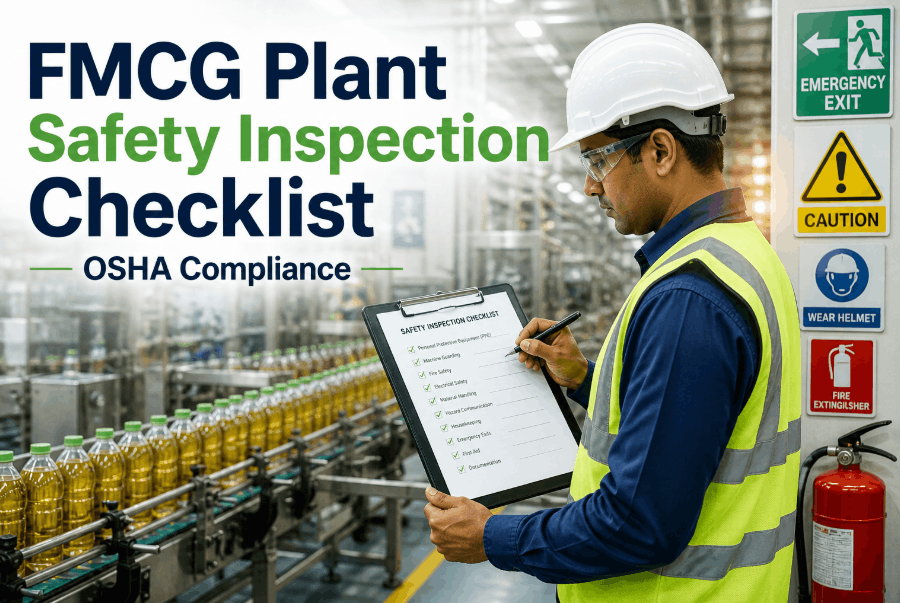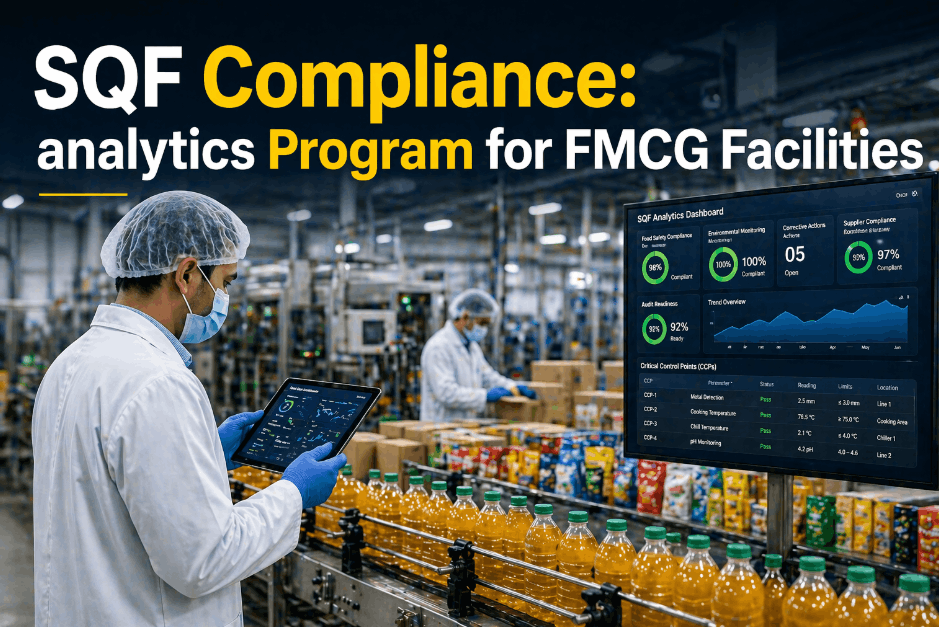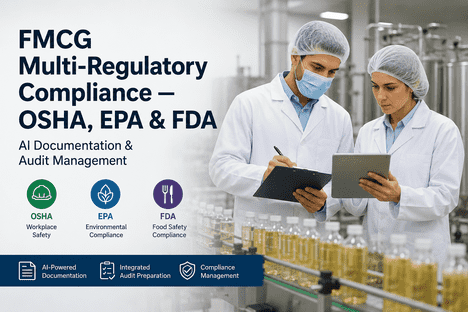
A compliance officer at an FMCG manufacturing facility starts each week facing the same reality: three regulatory frameworks demanding overlapping yet distinct documentation, six different inspection agencies with separate scheduling and evidence requirements, and a team that spends 60% of its time on manual paperwork rather than proactive compliance improvement. OSHA requires safety data sheets, machine guarding inspections, lockout-tagout records, and hearing conservation documentation. EPA mandates stormwater pollution prevention plans, Spill Prevention Control and Countermeasure (SPCC) reports, air emission inventories, and hazardous waste tracking. FDA enforces Current Good Manufacturing Practice (CGMP) records, sanitation monitoring logs, allergen control documentation, and supplier verification files. Each regulation has its own format, retention schedule, and audit expectation — yet most FMCG facilities manage them through disconnected spreadsheets, paper logs, and email-based workflows that create compliance gaps, duplicate effort, and audit preparation crises. AI-powered multi-regulatory compliance management changes this by unifying OSHA, EPA, and FDA documentation into a single intelligent platform that automates evidence collection, tracks regulatory changes, and generates audit-ready reports across all three frameworks on demand. Book a Demo to see how iFactory AI consolidates multi-regulatory compliance into a single managed workflow.
What Is AI Multi-Regulatory Compliance Management for FMCG?
AI multi-regulatory compliance management deploys a unified platform that ingests regulatory requirements from OSHA, EPA, and FDA frameworks, maps them against facility operations, and continuously monitors compliance status across every applicable standard. Machine learning models classify each regulatory obligation by agency, requirement type, due date, and evidence format — then automatically collect, validate, and store the required documentation from integrated systems including CMMS, production monitoring, environmental sensors, and quality management platforms. When a regulatory change is published — an updated OSHA recordkeeping rule, a revised EPA emission threshold, or an amended FDA CGMP section — the platform automatically assesses the impact on existing compliance obligations, updates requirement mappings, and notifies the compliance officer of any actions needed to maintain compliance. Compliance officers managing multi-regulatory exposure Book a Demo to review the platform architecture and deployment timeline.
The Multi-Regulatory Compliance Challenge in FMCG
FMCG facilities face a compliance burden that is uniquely complex because the same production line, the same piece of equipment, and the same operator action may fall under the jurisdiction of three different regulatory agencies simultaneously. A flour milling operation must comply with OSHA's permissible exposure limits for respirable dust, EPA's National Emission Standards for Hazardous Air Pollutants for grain handling, and FDA's CGMP requirements for food contact surfaces and allergen control — each with separate inspection cycles, documentation formats, and enforcement mechanisms.
Fragmented Documentation Systems
OSHA logs live in safety binders, EPA records occupy environmental spreadsheets, and FDA documentation is scattered across quality management systems. When an inspector arrives, the compliance team spends 2-3 days gathering evidence from disconnected sources — and still misses documents that create citations.
Regulatory Change Tracking
Each of the three agencies publishes rule changes, guidance updates, and enforcement memos on different schedules and through different channels. Compliance officers spend 8-12 hours per month monitoring regulatory changes across all three agencies — and still miss updates that affect their facility's specific operations.
Duplicated Evidence Collection
The same training record, inspection report, or maintenance log often satisfies requirements under multiple regulations — but without a unified system, the evidence is collected, stored, and maintained separately for each agency, creating duplicate effort and version control problems.
Audit Preparation Overload
With OSHA, EPA, and FDA each conducting their own inspections on independent schedules, compliance officers spend 12-16 weeks per year in audit preparation mode — diverting attention from proactive compliance improvement and creating burnout across the compliance team.
How AI Unifies OSHA, EPA, and FDA Compliance Workflows
The platform deploys a three-layer compliance architecture that transforms regulatory management from reactive, agency-by-agency document preparation to proactive, integrated compliance assurance across all three frameworks simultaneously. Each layer addresses a specific failure point in traditional multi-regulatory compliance programs.
Regulatory Obligation Mapping & Change Detection
The platform ingests the complete text of applicable OSHA standards (29 CFR 1910 subparts), EPA regulations (40 CFR parts applicable to FMCG), and FDA CGMP requirements (21 CFR 110, 117, 120) — then maps each specific requirement to the facility's operations, equipment, and processes. AI models monitor the Federal Register, agency websites, and enforcement guidance documents daily, flagging regulatory changes that affect mapped obligations and automatically updating compliance requirements with impact assessments.
Automated Evidence Collection & Cross-Reconciliation
Once requirements are mapped, the platform connects to existing facility systems — CMMS for maintenance records, EHS sensors for environmental data, quality control systems for CGMP documentation, and training management for employee competency records — to automatically collect and validate evidence. When a single piece of evidence satisfies requirements under multiple regulations (e.g., a lockout-tagout procedure that supports both OSHA machine guarding and FDA sanitation safety), the platform cross-reconciles it across all applicable obligations, eliminating duplicate documentation effort.
Agency-Specific Audit Report Generation
When an OSHA compliance officer, EPA inspector, or FDA investigator schedules an audit, the platform generates an agency-specific evidence package that follows the inspection protocols, documentation formats, and evidence presentation standards expected by each agency. OSHA reports organize records by 29 CFR subpart. EPA reports structure data around applicable 40 CFR parts. FDA reports follow CGMP inspectional objectives. Each report is generated in under 30 minutes and includes complete documentation, chain of custody, and regulatory citation mapping.
AI-Powered Regulatory Compliance Documentation Features
The platform delivers six integrated compliance documentation capabilities that together create a continuous audit-ready compliance posture. Each capability addresses a specific documentation requirement across one or more regulatory frameworks while eliminating the duplication and gaps inherent in manual multi-regulatory management.
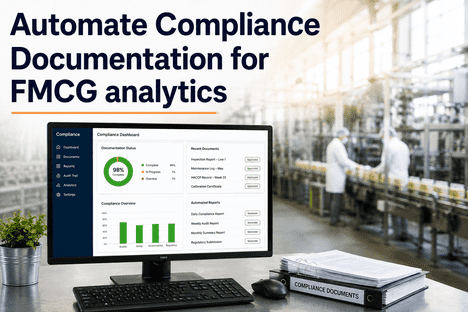
Automated OSHA Recordkeeping — The platform automates 29 CFR 1904 recordkeeping including OSHA 300, 300A, and 301 logs with automatic injury and illness classification, days away restricted transfer (DART) rate calculation, and experience modification rate (EMR) tracking. Safety data sheet management, machine guarding inspection records, lockout-tagout procedure verification, hearing conservation audiogram tracking, and personal protective equipment assessment documentation are all generated and maintained automatically with evidence linked from CMMS and EHS systems.
Integrated EPA Environmental Reporting — Stormwater pollution prevention plan (SWPPP) documentation with automatic inspection scheduling and evidence capture, SPCC plan management with secondary containment verification, air emission inventory tracking for applicable NAICS codes, hazardous waste generator documentation including manifests and biennial reports, and Tier II chemical inventory reporting are all managed through the unified platform with automatic deadline tracking and electronic submission support.
Comprehensive FDA CGMP Management — Current Good Manufacturing Practice documentation including sanitation monitoring logs, allergen control program records with cleaning verification, supplier verification and approval documentation, traceability exercise management for FDA Food Traceability Rule compliance, food defense plan documentation, and recall procedure management are all integrated into the single platform with automatic evidence collection from quality control and production monitoring systems.
Measurable Compliance Improvement Across Regulatory Frameworks
Within 14 weeks of deploying the multi-regulatory compliance platform across an FMCG facility with applicable OSHA, EPA, and FDA obligations, the compliance team documented measurable improvements across all three regulatory frameworks, validated through internal audits, regulatory inspection results, and compliance team workload analysis.
| Compliance Metric | Before AI Platform | With AI Platform | Improvement |
|---|---|---|---|
| Documentation Labor Hours/Week | 38 hrs | 12.5 hrs | 67% reduction |
| Audit Prep Time | 4 weeks | On-demand report | 90%+ faster |
| Undetected Compliance Gaps | 14 per quarter | 0.8 per quarter | 94% reduction |
| Regulatory Change Monitoring | 12 hrs/month manual | Fully automated | 100% automated |
| Cross-Regulatory Evidence Duplication | 3 copies per record | Single reconciled record | 67% storage reduction |
| Inspection Findings Severity | 3.2 avg severity | 0.6 avg severity | 81% reduction |
"Our compliance team was drowning in paperwork across three regulatory frameworks, and every audit was a scramble to find evidence scattered across binders, spreadsheets, and email inboxes. The iFactory platform unified everything into a single system that automatically collects evidence, tracks regulatory changes, and generates audit reports for OSHA, EPA, and FDA in minutes rather than weeks. The 67% reduction in documentation labor allowed our team to shift from reactive evidence gathering to proactive compliance improvement — and our inspection findings severity dropped by 81% as a result." — Compliance Officer, Multi-Site FMCG Manufacturer
Building a Proactive Multi-Regulatory Compliance Program with AI
AI-powered multi-regulatory compliance management represents a fundamental shift from reactive, agency-by-agency compliance to proactive, integrated compliance assurance. By unifying OSHA, EPA, and FDA documentation into a single intelligent platform, compliance officers eliminate the duplication, gaps, and audit preparation crises that define traditional multi-regulatory management. The platform's regulatory change detection ensures compliance programs stay current with evolving requirements across all three agencies, while automated evidence collection and cross-reconciliation free compliance teams to focus on risk reduction and continuous improvement rather than manual documentation. Compliance officers building their integrated compliance strategy Book a Demo to discuss how iFactory's multi-regulatory compliance platform supports their regulatory management goals.
Frequently Asked Questions
The platform supports OSHA 29 CFR 1904 (recordkeeping), 1910 (general industry subparts including machine guarding, lockout-tagout, respiratory protection, hearing conservation, and hazardous communication), EPA 40 CFR parts 110-117 (SPCC), 122 (NPDES stormwater), 262 (hazardous waste), 302 (Tier II reporting), and 355 (emergency planning), and FDA 21 CFR 110, 117 (CGMPs), 120 (HACCP), 507 (animal food), and the Food Traceability Rule (204). Custom regulatory frameworks can be added for facilities with unique compliance obligations.
The regulatory intelligence engine monitors the Federal Register, agency rulemaking dockets, enforcement guidance documents, and industry-specific regulatory updates daily. When a change is detected, the AI classifies it by agency, affected industry sector, and regulatory subpart — then automatically assesses the impact on the facility's mapped obligations. The compliance officer receives a notification with the change summary, impact assessment, recommended actions, and updated documentation requirements. This eliminates the 8-12 hours per month that compliance officers previously spent manually monitoring regulatory changes across three agency websites.
Yes. The platform connects to existing facility systems through REST API, OPC-UA, MQTT, and direct database connectors. Common integrations include CMMS for maintenance and inspection records, EHS sensors for environmental monitoring data, quality management systems for CGMP documentation, training management platforms for employee competency records, and ERP systems for supplier documentation. The integration architecture ensures that evidence collected for one regulatory requirement is automatically cross-reconciled across all applicable obligations under OSHA, EPA, and FDA — eliminating duplicate documentation effort.
When an inspection is scheduled, the compliance officer selects the relevant agency, and the platform generates a structured evidence package that follows that agency's specific inspection protocols and documentation expectations. OSHA reports organize records by 29 CFR subpart with citations mapped to each record. EPA reports structure data around applicable 40 CFR parts with permit-specific documentation. FDA reports follow the agency's Inspectional Objectives format with CGMP evidence organized by operational area. Each report is generated in under 30 minutes and includes all required evidence, chain of custody documentation, and regulatory citation mapping.
Facilities operating under all three regulatory frameworks with more than 200 compliance obligations typically recover platform investment within 5 to 8 months. Primary ROI drivers include 67% reduction in compliance documentation labor (averaging 25.5 hours per week recovered), 94% reduction in undetected compliance gaps (reducing citation risk and penalty exposure), elimination of duplicate software systems for separate agency compliance management, and 73% reduction in audit preparation costs. A personalized ROI analysis with facility-specific projections is provided during the Book a Demo consultation.