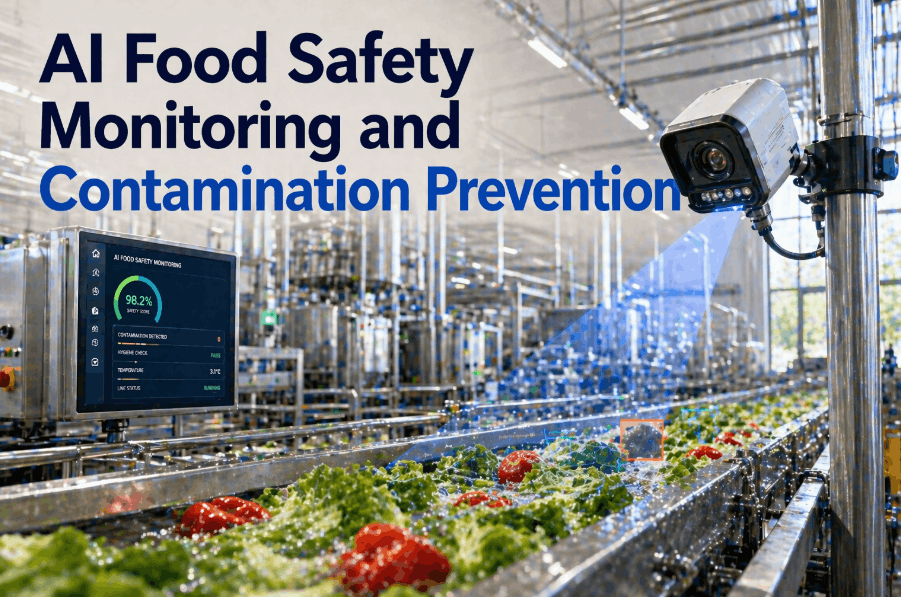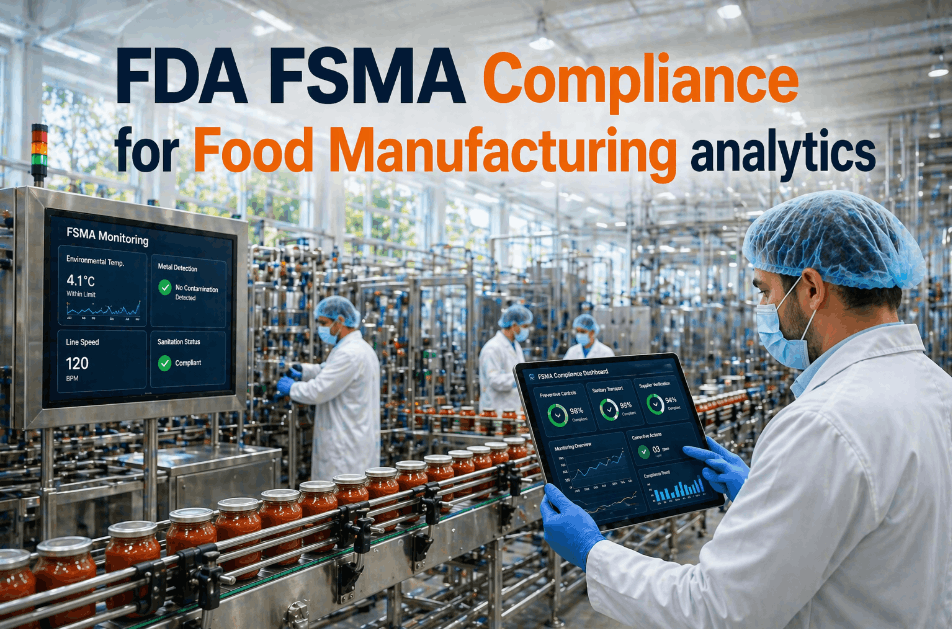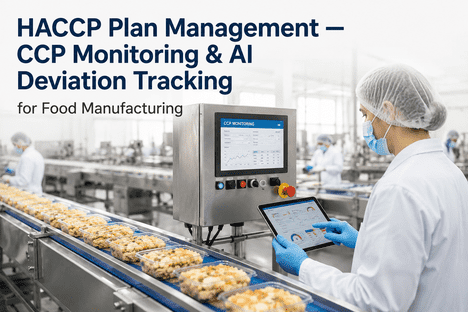
HACCP plan management requires quality managers to maintain critical control point monitoring logs, deviation reports, and corrective action records across every production shift. Traditional paper-based HACCP systems create documentation gaps, delayed deviation detection, and audit preparation cycles that consume 3 to 4 weeks every certification period. AI-powered HACCP plan management changes this completely automating CCP monitoring in real time, detecting deviations the moment they occur, and generating complete HACCP records that are always audit-ready. For quality managers overseeing food safety across multiple production lines, this means every CCP is continuously verified, every deviation is documented with complete traceability, and every corrective action is tracked through closure without manual log entries or pre-audit document compilation. Book a Demo to see how iFactory AI transforms your HACCP compliance workflow.
What Is AI-Powered HACCP Plan Management in Food Manufacturing?
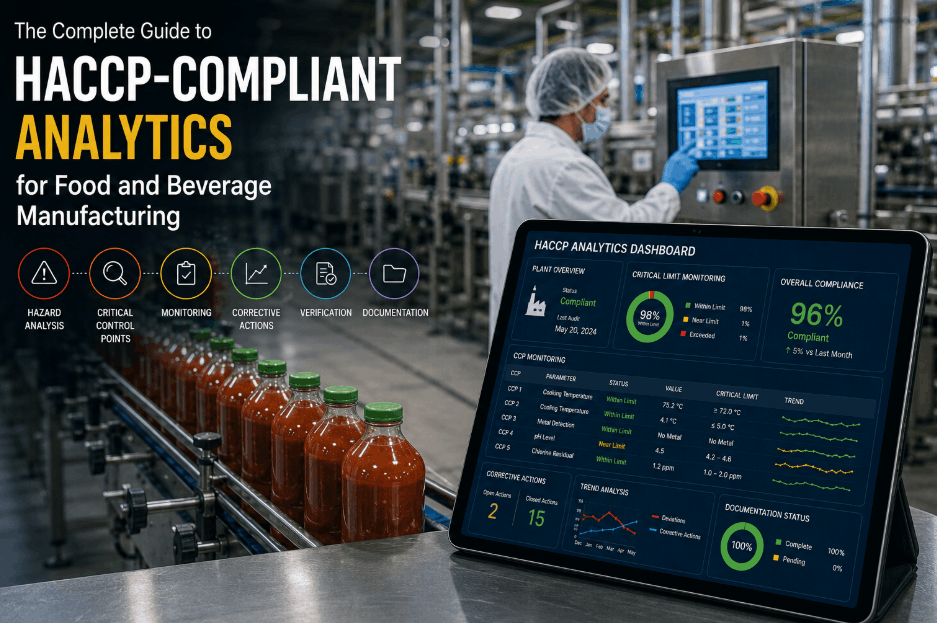
AI-powered HACCP plan management deploys machine learning models that continuously monitor every critical control point cooking temperatures, cooling rates, metal detector calibration, pH levels, water activity, and sanitation parameters and compare each reading against established critical limits in real time. When a CCP approaches or exceeds its critical limit, the system generates an immediate alert, documents the deviation with complete time-stamped sensor data, and creates a structured corrective action record with root cause classification. Unlike traditional HACCP systems that rely on periodic manual checks and paper log sheets, AI-powered HACCP management provides continuous surveillance with automated documentation, trend analysis, and audit-ready record keeping that satisfies SQF Edition 9, BRC Issue 9, FSSC 22000 Version 6, and FDA 21 CFR Part 120/123 requirements. Quality managers who previously spent 60% of their shift reviewing paper logs and compiling deviation reports now receive real-time compliance dashboards, automated deviation summaries, and predictive alerts that flag CCP trends before they reach critical limits. Book a Demo to see the AI HACCP platform in action.
How AI CCP Monitoring Ensures Food Safety Compliance
Continuous CCP monitoring with AI eliminates the gap between periodic manual checks that characterizes traditional HACCP compliance. Conventional food safety programs require operators to record CCP readings at defined intervals — every 30 minutes, hourly, or per batch — creating windows of undetected deviation that can last hours. AI-powered monitoring captures every CCP reading continuously, detecting deviations at the moment of occurrence and generating immediate alerts with full documentation for quality manager review. For compliance auditors reviewing HACCP records, this means complete CCP verification data for every minute of production, not just the spot-check intervals recorded in manual logs. Furthermore, the system's predictive analytics identify CCP trends — such as a gradual thermal drift in a cooking line — before the critical limit is breached, enabling proactive intervention that prevents deviations from occurring at all. For quality managers managing 6 to 12 CCPs across multiple production lines, this transforms HACCP compliance from reactive deviation documentation to proactive food safety management.
| Capability Dimension | Traditional HACCP | AI-Powered HACCP | Compliance Impact |
|---|---|---|---|
| Monitoring Frequency | Periodic (30 min–2 hr intervals) | Continuous — every production second | 100% CCP coverage with zero gaps |
| Deviation Detection | At next scheduled check | At moment of occurrence — instant alert | 94% faster deviation response |
| Documentation Method | Manual log sheets, paper records | Auto-generated digital HACCP records | Zero documentation errors |
| Corrective Action | Paper forms, manual tracking | Digital workflow with closed-loop verification | Complete corrective action traceability |
| Audit Preparation | 3–4 weeks evidence gathering | On-demand report generation | 82% reduction in audit prep labor |
| Trend Analysis | Manual review of paper logs | Real-time dashboards + predictive analytics | Proactive deviation prevention |
| Record Retention | Physical storage — risk of loss | Cloud-based, searchable, auto-backed up | Permanent audit-ready record retention |
The comparison demonstrates that AI-powered HACCP management does not replace the quality manager's expertise — it amplifies it with continuous monitoring and complete data correlation that no manual system can match. The same quality manager who previously spent 60% of each shift on log review and documentation now focuses on trend analysis, process improvement, and strategic food safety initiatives — with automated systems handling the monitoring and documentation workload.
Key HACCP Management Capabilities for Food Quality Managers
iFactory's AI HACCP Management platform delivers four integrated capabilities that create a continuous food safety compliance cycle. Each capability builds on the previous one with measurable impact at every stage of deployment.
Expert Analysis — Four Ways AI Transforms HACCP Management for Food Quality Managers
Conclusion — From Reactive CCP Logs to Proactive Food Safety Management
What the quality team lacked was not commitment to food safety — every quality manager was diligent, thorough, and dedicated to maintaining HACCP compliance. The missing piece was a system that could monitor every CCP continuously and correlate data across all production lines simultaneously — a task impossible with manual log sheets and periodic checks. AI-powered HACCP plan management closed this gap — reducing deviation response time by 94%, cutting documentation errors by 67%, recovering 2.5 hours per quality manager per shift, and slashing audit preparation time by 82%. The platform did not replace quality manager expertise — it amplified it with continuous monitoring that ensured every CCP was verified every second of production, every deviation was documented with complete traceability, and every corrective action was tracked through verified closure. Book a Demo to review the AI HACCP deployment plan for your food manufacturing facility.
Frequently Asked Questions — AI HACCP Plan Management for Food Manufacturing
What is AI-powered HACCP plan management and how does it differ from traditional HACCP systems?
AI-powered HACCP plan management uses machine learning models to continuously monitor every critical control point through automated sensor integration, detecting deviations in real time and generating complete HACCP records automatically. Traditional HACCP systems rely on periodic manual checks and paper log sheets, creating documentation gaps and delayed deviation detection. AI-powered HACCP provides continuous surveillance with automated documentation, predictive analytics, and closed-loop corrective action management — transforming food safety compliance from reactive documentation to proactive prevention.
How does AI CCP monitoring integrate with existing HACCP plans and sensor infrastructure?
The platform integrates with existing temperature sensors, metal detectors, pH meters, water activity analyzers, and other CCP monitoring devices through standard industrial protocols including REST API, OPC-UA, MQTT, and Modbus. The system maps each sensor to the corresponding CCP in your HACCP plan, applies the critical limits and monitoring parameters defined in your plan, and begins continuous monitoring without requiring changes to your established HACCP framework.
Does AI HACCP management replace the quality manager or the HACCP team?
No. The platform augments quality manager expertise by automating monitoring, documentation, and data correlation — the tasks that consume 60% of a quality manager's shift. The AI identifies deviations, classifies severity, and generates corrective action recommendations — but the quality manager retains full authority over disposition, corrective action decisions, and food safety releases. The system amplifies human judgment by eliminating the manual data collection and log keeping work that prevents quality managers from focusing on strategic food safety initiatives.
What regulatory and certification standards does AI HACCP management support?
The platform supports SQF Edition 9, BRC Issue 9, FSSC 22000 Version 6, FDA 21 CFR Part 120 (HACCP for juice), FDA 21 CFR Part 123 (HACCP for seafood), and FDA Preventive Controls (21 CFR Part 117). HACCP records are generated in regulatory-compliant format with complete operator traceability, time-stamped sensor data, and closed-loop corrective action documentation — satisfying the most stringent audit requirements across all major food safety certification schemes.
What is the typical implementation timeline for AI HACCP plan management?
Implementation typically requires 4 to 6 weeks for a single facility deployment. The timeline includes HACCP plan review and sensor mapping (Week 1), platform configuration and critical limit setup (Week 2), sensor integration and system validation (Week 3), quality team training and parallel run (Week 4), and full deployment with audit readiness verification (Weeks 5–6). Multi-facility deployments follow a phased rollout with 3 to 4 weeks per additional facility. A personalized implementation timeline is provided during the initial consultation with iFactory's food safety engineering team.
How does AI deviation tracking handle corrective action verification for regulatory compliance?
When a deviation is detected, the system generates a structured corrective action record with root cause classification, assigns the action to the responsible team member, and tracks completion against defined timelines. Following corrective action implementation, the system continues monitoring the affected CCP and automatically documents the effectiveness of the corrective action — confirming that the deviation has been resolved and the CCP is operating within critical limits. This closed-loop lifecycle is documented in an audit-ready format that satisfies regulatory requirements for corrective action verification.