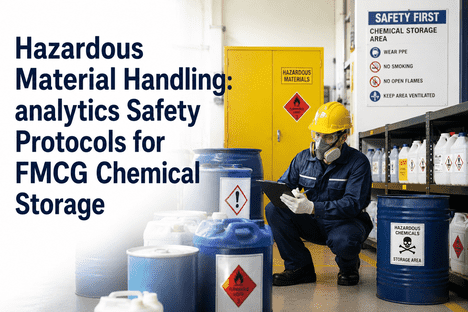
Hazardous Material Handling: analytics Safety Protocols for FMCG Chemical Storage
By Seren on June 11, 2026
FMCG production facilities store and handle dozens of hazardous chemicals daily—caustic soda for CIP cleaning, phosphoric acid for sanitation, ammonia for refrigeration, quaternary ammonium compounds for disinfection, and concentrated detergents for packaging line washdown. Each chemical presents distinct risks: corrosivity, toxicity, reactivity, and environmental hazard. Managing these materials safely requires more than static SDS binders and manual inspection rounds. Analytics-driven safety protocols transform chemical storage management by digitizing compliance checklists, automating inspection workflows with robotic sensors, and providing real-time visibility into storage conditions, shelf life, and spill prevention readiness. Safety and compliance leaders in FMCG Book a Demo to see how iFactory Safety Checklists and Chemical Tracking modules digitize hazmat compliance.
40-60%
Reduction in safety inspection non-conformances achieved by FMCG plants using digitized chemical storage checklists with automated analytics
85%
Of hazardous material incidents in FMCG facilities are preventable with real-time storage condition monitoring and automated compliance workflows
70%
Faster root cause analysis for hazmat near-misses when inspection data, SDS records, and incident reports are linked in a single analytics platform
3x
More storage locations inspected per shift when robotic inspection tools augment manual safety walkthroughs with automated sensor checks
Hazardous Material Handling · FMCG Chemical Storage · Safety Analytics
Hazardous Material Handling: Analytics Safety Protocols for FMCG Chemical Storage
Discover how analytics-driven safety checklists, robotic hazmat inspection, and chemical tracking digitize compliance for FMCG storage facilities managing hazardous materials.
The Hazardous Material Challenge in FMCG Facilities
FMCG plants face a unique hazardous material management challenge: they store large volumes of diverse chemicals in close proximity to food products, packaging materials, and high-traffic production areas. A typical beverage plant may store 5000+ liters of caustic soda, 2000+ liters of phosphoric acid, and hundreds of liters of sanitizers, lubricants, and cleaning agents in a single chemical storage area. The consequences of improper storage—container corrosion, incompatible chemical mixing, vapor release, or spill escalation—range from production downtime to serious safety incidents and regulatory penalties under OSHA PSM, EPA RCRA, and local fire codes.
Incompatible Chemical Storage
Acids stored near bases, oxidizers near flammables, or corrosives without secondary containment create the conditions for violent reactions, toxic gas release, and facility-wide evacuation events.
Expired or Degraded Chemicals
Peroxides, nitrates, and certain sanitizers degrade over time, forming unstable compounds that can combust or explode. Manual expiry tracking misses dates, leaving hazardous materials beyond safe use periods.
Incomplete Inspection Records
Paper-based safety checklists are often incomplete, illegible, or lost. Auditors and safety managers lack visibility into which storage locations were inspected, what was found, and whether corrective actions were completed.
Chemical Storage Safety Checklist: Analytics-Enabled Inspection Protocol
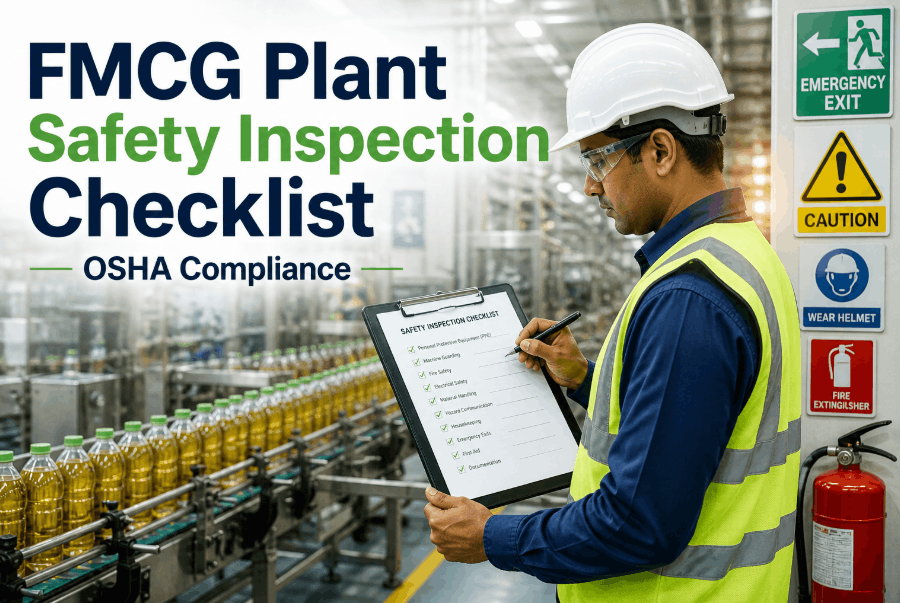
The following checklist integrates iFactory Safety Checklists with chemical tracking analytics to create a comprehensive inspection protocol for FMCG hazardous material storage areas. Each item includes the data point the analytics platform captures to drive trend analysis and early warning.
Verify Secondary Containment Integrity
Inspect all chemical storage locations for secondary containment (spill pallets, berms, dikes). Analytics platform captures containment condition score, photo evidence, and identifies locations with recurring deterioration patterns that indicate corrosive chemical incompatibility.
Confirm Chemical Compatibility Segregation
Verify that incompatible classes—acids vs. bases, oxidizers vs. flammables, water-reactives away from moisture sources—are physically separated per the facility's chemical compatibility matrix. Analytics tracks segregation compliance across all storage zones and flags when materials are moved outside approved areas.
Verify Container Labels and SDS Availability
Every container must display a legible GHS-compliant label with hazard pictograms, signal words, and precautionary statements. Current SDS must be accessible within the storage area. Analytics scans label QR codes to verify SDS version currency and tracks last-reviewed date per chemical.
Inspect Spill Kit Readiness and Location
Verify that spill response kits appropriate for the stored chemical classes are present, fully stocked, and located within defined response distance. Platform analytics track kit inventory levels, expiry dates of absorbents and neutralizers, and generate replenishment alerts.
Confirm Ventilation and Temperature Control
Storage areas must maintain proper ventilation rates and stay within the temperature ranges specified in each chemical's SDS. IoT sensors connected to the analytics platform provide real-time temperature, humidity, and VOC level data with automated alerts when thresholds are breached.
Verify Fire Protection Systems
Check that fire extinguishers, sprinkler coverage, and fire-rated storage cabinets are appropriate for the chemical classes stored. Analytics maps extinguisher locations to chemical storage zones and tracks inspection intervals, hydrostatic test dates, and discharge logs.
Check Container Condition and Expiry Dates
Inspect drums, totes, and intermediate bulk containers for corrosion, dents, or leaks. Verify chemical expiry dates against the centralized chemical tracking database. Analytics generates automated disposal workflows for expired materials and flags containers showing recurring integrity issues.
Verify PPE Availability and Condition
Confirm that chemical-resistant gloves, face shields, aprons, and emergency eyewash stations are available and in working condition at each storage and dispensing location. Analytics tracks PPE inventory, replacement schedules, and eyewash weekly flushing compliance.
Review Waste Accumulation Compliance
Verify that hazardous waste accumulation areas are properly labeled with accumulation start dates, waste codes, and that containers are closed and in good condition. Analytics tracks waste storage time limits under RCRA and generates alerts when accumulation approaches regulatory thresholds.
Robotic Hazmat Inspection: Augmenting the Safety Walkthrough
Safety inspection walkthroughs are time-consuming and prone to human error. Robotic inspection platforms equipped with gas sensors, thermal cameras, and RFID readers can autonomously patrol chemical storage areas on scheduled intervals, collecting inspection data that feeds directly into the analytics platform. FMCG facilities using robotic hazmat inspection report inspecting 3x more storage locations per shift because the robot handles routine sensor checks while safety technicians focus on corrective actions and high-risk area assessments.
01
Autonomous Patrol Scheduling
Robot navigates predefined chemical storage zones on a configurable schedule (hourly, per shift, daily) following GPS waypoints and RFID-tagged storage locations. Patrol routes update dynamically based on chemical movement and inspection priority scoring from the analytics platform.
02
Multi-Sensor Data Collection
Gas sensors detect VOC levels, hydrogen sulfide, ammonia, and chlorine. Thermal cameras identify hot spots on electrical panels and chemical containers. Optical cameras capture container labels, spill containment condition, and storage organization for visual verification.
03
Real-Time Anomaly Detection
Sensor readings stream to the analytics platform, which compares current values against historical baselines and regulatory thresholds. Gas leaks, temperature excursions, and container displacement trigger immediate alerts to the safety team via mobile push notification.
04
Auto-Generated Inspection Records
Each patrol generates a complete inspection record with sensor readings, photo evidence, and pass/fail status for every checklist item. Records are timestamped, geo-tagged, and linked to the chemical storage location in the analytics database for audit readiness.
05
Corrective Action Workflow
Anomalies automatically generate corrective work orders assigned to the appropriate technician or safety officer. The platform tracks resolution time, root cause, and verifies closure with follow-up inspection data from the next robotic patrol cycle.
Analytics Safety Protocols vs. Traditional Chemical Storage Management
The table below compares how analytics-driven safety protocols differ from traditional paper-based chemical storage management across criteria most relevant to FMCG safety managers and EHS teams.
Criterion
Traditional Approach
Analytics Safety Protocols
Inspection Frequency
Weekly or monthly manual walkthroughs dependent on safety team availability
Continuous: robotic patrols plus manual inspections on auto-generated schedules
Chemical Inventory Tracking
Paper logs and spreadsheet records updated periodically, often outdated
Real-time: QR-code scanning, RFID tag reads, automated consumption tracking linked to production usage
Expiry and Shelf-Life Management
Manual date checks during inspection rounds; expirations frequently missed
Paper incident forms filed after the event; root cause analysis takes days or weeks
Digital incident capture with linked inspection history; AI-assisted root cause analysis within hours
Audit Readiness
Hours of paper file review to prepare for regulatory inspections
One-click report: all inspection records, chemical tracking, and corrective actions organized by compliance framework
What Industry Experts Say
Before deploying analytics-based safety protocols at our FMCG plant, chemical storage inspections were a weekly ritual that produced inconsistent results. One inspector would catch the expired peroxide container; the next would miss it. The spill kit audit relied on someone remembering to check the absorbent type matched what was stored nearby. After implementing iFactory Safety Checklists with robotic hazmat patrol and chemical tracking analytics, we moved from reactive inspection cycles to continuous monitoring. The platform alerted us to a temperature excursion in our ammonia storage area at 2 a.m.—the robot detected the rising VOC level before any human would have noticed on the morning walkthrough. Our non-conformance rate dropped 52% in six months, and our last OSHA inspection was the smoothest we have ever experienced because every record was available in one system with complete audit trails.
EHS Director
Major FMCG Beverage and Food Production Facility
Ready to Digitize Your FMCG Chemical Storage Safety Protocols?
iFactory AI combines Safety Checklists, Chemical Tracking, and robotic hazmat inspection into a single analytics platform purpose-built for FMCG hazardous material management. Book a live walkthrough to see how your facility can achieve 40-60% fewer inspection non-conformances with digitized safety protocols.
Hazardous material handling in FMCG facilities demands more than static checklists and manual inspection rounds. Analytics-driven safety protocols—powered by digitized safety checklists, chemical tracking, and robotic hazmat inspection—transform chemical storage management from a reactive compliance exercise into a continuous, data-driven safety operation. FMCG plants that adopt these protocols achieve 40-60% fewer inspection non-conformances, catch storage condition anomalies in real time, and present complete audit trails at the touch of a button. Safety and compliance leaders evaluating digitized chemical storage solutions Book a Demo to see how iFactory's Safety Checklists and Chemical Tracking modules map to your FMCG hazardous material storage workflow.
Frequently Asked Questions
FMCG facilities commonly store caustic soda (sodium hydroxide) for CIP cleaning, phosphoric and nitric acids for sanitation, ammonia for industrial refrigeration, quaternary ammonium compounds for disinfection, chlorine dioxide for water treatment, hydrogen peroxide for aseptic packaging, and various lubricants, detergents, and solvents for packaging line maintenance. Each chemical class requires specific storage conditions, containment, and compatibility segregation as defined by OSHA and local fire codes.
Analytics provides continuous monitoring rather than point-in-time inspection snapshots. IoT sensors track temperature, humidity, and VOC levels in real time. The platform correlates inspection findings across multiple storage locations to identify systemic issues (e.g., a particular chemical brand that consistently arrives with damaged containers) before they cause incidents. Trend analysis reveals which checklist items fail most frequently, enabling targeted training and process improvements. The analytics layer transforms raw inspection data into actionable safety intelligence.
FMCG chemical storage is governed by multiple regulatory frameworks including OSHA 29 CFR 1910.1200 (Hazard Communication Standard) for SDS and labeling, OSHA PSM (Process Safety Management) for highly hazardous chemicals above threshold quantities, EPA RCRA for hazardous waste management, NFPA 30 for flammable and combustible liquids storage, and local fire code requirements for maximum allowable quantities and storage cabinet specifications. Analytics platforms help manage compliance across all these frameworks through centralized record keeping and automated reporting.
Robotic inspection patrols supplement rather than replace human safety walkthroughs. The robot handles routine sensor checks, label verification, and condition documentation that consumes inspector time. When the robot detects an anomaly, it alerts a human safety technician who investigates and resolves the issue. The platform routes corrective actions through the existing work order management system, ensuring that robotic findings are acted upon through the same workflow as human-reported issues.
iFactory Chemical Tracking captures: chemical name and CAS number, SDS version and last-review date, storage location (building, room, zone, and specific rack/position), container type and capacity, received date and lot number, expiry date and shelf-life window, hazard class and compatibility group, current quantity and minimum reorder level, waste accumulation start date and EPA waste code, and inspection history with linked findings. All data is accessible from a single chemical dashboard with drill-down to individual containers and full audit trail.