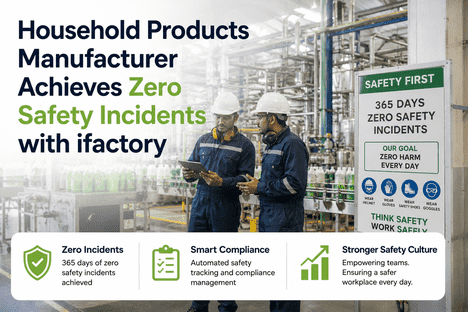
On day 366, the Plant Safety Manager at a household chemicals manufacturer in Cincinnati, Ohio walked into the morning safety meeting and reported something the facility had never achieved in its 28-year operating history: 365 consecutive days without a recordable safety incident. No OSHA recordables, no lost-time events, no near-miss escalations requiring corrective action plans. The year prior had included three recordable injuries — two from equipment interaction failures during line changeovers and one from a chemical exposure event during maintenance. All three were traceable to safety system inspections that had been missed, delayed, or undocumented. Eighteen months after deploying iFactory's Compliance and Audit Trail Management platform, this 340,000 sq ft facility producing 180 million units of household cleaning products annually had achieved zero recordable incidents, safety PM compliance of 91% up from 34%, and a complete, auditable safety inspection record that satisfied every OSHA and EPA documentation requirement. Safety and operations leaders exploring automated compliance tracking regularly Book a Demo to review the safety compliance architecture for their chemical manufacturing facilities.
The Challenge: Three Recordable Incidents Driven by a Broken Safety Inspection System
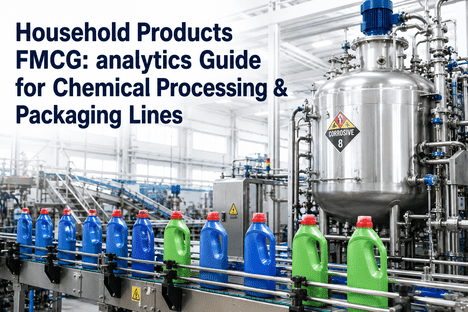
This household chemicals manufacturer operates six production lines producing bleach, detergents, disinfectants, and aerosol products under ISO 9001 and ISO 45001 certification. The facility handles chlorine for water treatment chemical production under OSHA PSM coverage, stores aerosol products per NFPA 30 requirements, and maintains an EPA Risk Management Plan for regulated chemical quantities. The three recordable injuries in the year before iFactory deployment were not the result of reckless behaviour or unusual circumstances. They were the predictable output of a safety inspection programme that was structurally incapable of delivering consistent compliance.
Paper-Based Inspection System with No Enforcement
Safety inspections were conducted using paper checklists stored in binders at each production area. There was no system to verify that inspections were completed on schedule, no automatic escalation when inspections were missed, and no mechanism to enforce completion before the next inspection cycle. Supervisors discovered overdue inspections only during monthly safety meetings, by which time equipment may have operated for weeks without required safety checks.
No Correlation Between Inspections and Incidents
When the chlorine exposure event occurred during a maintenance procedure, the investigation revealed that the required pre-maintenance safety inspection had been completed only 60% of the time over the preceding six months. However, the facility had no system to correlate inspection completion rates with incident risk. The data existed in inspection binders but was never aggregated, analysed, or used to predict which areas were at elevated risk.
Manual Audit Trail Gaps During Regulatory Inspections
During an OSHA inspection following the chemical exposure event, the facility could not produce complete documentation for 40% of required safety inspections over the prior year. Some inspections had been conducted but the paper records were misfiled; others had been skipped entirely with no documentation of the gap. The inability to demonstrate a systematic safety inspection programme eroded regulatory credibility and contributed to the citation.
Reactive Safety Culture Without Leading Indicators
Safety performance was measured solely by lagging indicators — recordable injury rates and lost-time incident frequency. The facility had no leading indicators to measure the health of its safety system: inspection compliance rates, corrective action closure times, near-miss reporting trends, or safety PM completion percentages. Without leading indicators, the team could not identify degrading safety conditions before they produced injuries.
How iFactory's Compliance Platform Transformed Safety at This Facility
iFactory's Compliance and Audit Trail Management platform replaced paper-based safety inspections with digital, automated workflows that ensure every required inspection is scheduled, assigned, completed, and documented with full traceability. The platform integrates with the facility's equipment asset register, production schedule, and regulatory compliance calendar to create a unified safety management system. Chemical manufacturing leaders exploring digital compliance transformation regularly Book a Demo to understand the integration requirements and deployment timeline.
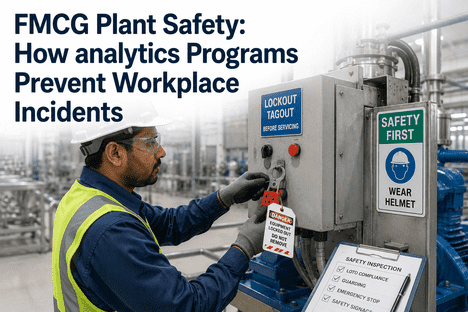
Digital Inspection Scheduling and Enforcement — Every safety inspection — daily machine-specific checks, weekly area safety walks, monthly PSM equipment integrity inspections, quarterly LOTO procedure reviews, and annual program audits — is configured in iFactory with defined frequency, assigned inspector, and required checklist items. The platform automatically generates inspection work orders on the scheduled dates and assigns them to the responsible technician or safety specialist. If an inspection is not completed within the defined window, the system escalates notifications through a configurable chain: technician at 1 day overdue, supervisor at 3 days, safety manager at 5 days, plant manager at 7 days. Before deployment, the facility's safety PM compliance rate was 34%. Within 8 months of iFactory deployment, compliance reached 91% and has been sustained above 90% for 18 consecutive months.
Closed-Loop Corrective Action Management — When an inspection identifies a safety deficiency — a missing machine guard, a leaking chemical valve, an expired emergency eyewash station — the platform automatically generates a corrective action work order with the deficiency description, required remedy, priority level, and due date based on the severity classification. The work order is assigned to the appropriate maintenance or safety team member and tracked through completion with documented evidence including photographs, measurement readings, and digital sign-off. Corrective actions that exceed their due date trigger escalation to ensure no safety deficiency remains unresolved without management visibility. In the 18 months since deployment, 97% of corrective actions have been closed within their defined due date — compared to approximately 60% under the previous paper-based system.
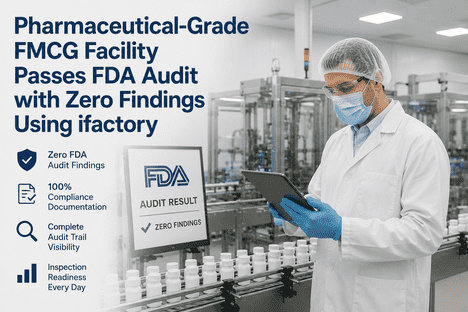
Complete, Audit-Ready Compliance Documentation — Every completed inspection, every corrective action, every safety permit, and every incident investigation is logged in iFactory's immutable audit trail with timestamps, user identification, and digital signatures. The platform automatically compiles OSHA 300 logs, PSM mechanical integrity records, EPA RMP inspection documentation, and ISO 45001 audit evidence in report formats ready for regulatory presentation. When OSHA conducted its next programmed inspection 14 months after deployment, the facility produced complete documentation for 100% of required safety inspections within 15 minutes of the inspector's request. The facility received zero citations in consecutive OSHA inspections for the first time since the plant opened.
Key Capabilities for Chemical Manufacturing Safety Compliance
iFactory's compliance platform is designed for the specific regulatory and operational demands of chemical manufacturing facilities, integrating safety management with the maintenance workflow that already governs equipment reliability.
PSM Mechanical Integrity Tracking
Schedule and track all Process Safety Management mechanical integrity inspections including pressure vessel testing, relief device verification, corrosion monitoring, and critical instrumentation calibration. The platform maintains complete inspection histories for every PSM-covered asset with automated notifications for upcoming and overdue inspections.
Lockout/Tagout Program Management
Manage LOTO procedures, annual reviews, and authorized employee training records within a single system. Each piece of equipment is linked to its specific LOTO procedure, and the platform tracks annual procedure review deadlines with automated alerts to prevent lapses. The facility has had zero LOTO annual review deadlines missed since deployment.
Chemical Safety Data Sheet Integration
Link SDS documents to specific chemicals and storage locations within the facility. The platform tracks SDS review schedules, maintains version history, and ensures that the most current SDS is accessible from any mobile device on the production floor. Inspection checklists can include SDS verification items to confirm that current sheets are posted at chemical use points.
OSHA 300 & EPA RMP Reporting
The platform automatically generates OSHA 300, 300A, and 301 logs from incident records and maintains complete PSM mechanical integrity documentation for EPA RMP compliance. Reports are available as PDF exports with configurable date ranges, facility filters, and incident type classifications. This facility produced zero-citation OSHA inspections for the first time using iFactory's audit-ready reporting.
Measurable Safety Performance Improvement
Within 18 months of deploying iFactory's compliance platform, the facility transformed its safety performance across every measurable dimension. The following table compares key metrics before and after deployment.
| Metric | Before Deployment | After Deployment | Improvement |
|---|---|---|---|
| Recordable Incidents (annual) | 3 | 0 | –100% |
| Safety PM Compliance | 34% | 91% | +57 points |
| Corrective Action Closure Rate | ~60% on time | 97% on time | +37 points |
| OSHA Inspection Citations | 2 in prior inspection | 0 in consecutive inspections | –100% |
| Near-Miss Reports Per Quarter | 8 | 42 | +425% |
| Annual Insurance Premium | $4.8M | $3.4M | –29% |
"We always believed our team was committed to safety, but our paper-based system was failing them. Inspections were missed not because technicians were careless but because there was no system to ensure they happened. The chlorine exposure incident was preventable — the pre-maintenance inspection checklist existed, but it was sitting in a binder three production areas away from where the work was being done. iFactory eliminated those systemic gaps. When a safety inspection is due, it appears on the assigned technician's mobile device with the exact checklist, required photos, and digital sign-off. The system enforces compliance in a way that paper never can. The CFO initially questioned the platform investment; after the insurance premium reduction alone delivered a 3x return in the first year, the question became how fast we could deploy it across our other facilities." — Plant Manager, Household Chemicals Manufacturer — 22 Years Chemical Manufacturing Operations
Compliance Transformation Deployment Roadmap
Implementing iFactory's compliance platform follows a structured deployment methodology designed for regulated chemical manufacturing environments where documentation integrity and operational continuity cannot be compromised during transition.
Compliance Audit and Inspection Mapping
The iFactory team conducts a comprehensive audit of all safety inspection requirements including OSHA-mandated inspections, PSM mechanical integrity schedules, EPA RMP compliance activities, ISO 45001 audit requirements, and facility-specific safety protocols. Every required inspection is mapped to a digital checklist with defined frequency, assigned role, and documentation requirements.
Digital Checklist Configuration and Mobile Deployment
Inspection checklists are configured in iFactory's digital format with sections, pass/fail criteria, numeric ranges, photo requirements, and corrective action triggers. The platform is deployed on mobile devices for all safety technicians, maintenance team members, and production supervisors with role-based dashboards showing assigned inspections, completion status, and overdue alerts.
Team Training and Workflow Validation
All personnel receive hands-on training on the mobile inspection workflow including how to complete checklists, attach photo evidence, document corrective actions, and navigate the alert system. A 30-day parallel run validates that digital inspection data matches or exceeds the completeness of the previous paper system before paper checklists are retired.
Reporting Configuration and Audit Readiness Validation
OSHA 300, PSM mechanical integrity, EPA RMP, and ISO 45001 report templates are configured and validated against actual regulatory requirements. A mock audit is conducted with the facility's safety team to confirm that all required documentation can be produced on demand with complete audit trail integrity.
Continuous Improvement and Multi-Facility Rollout
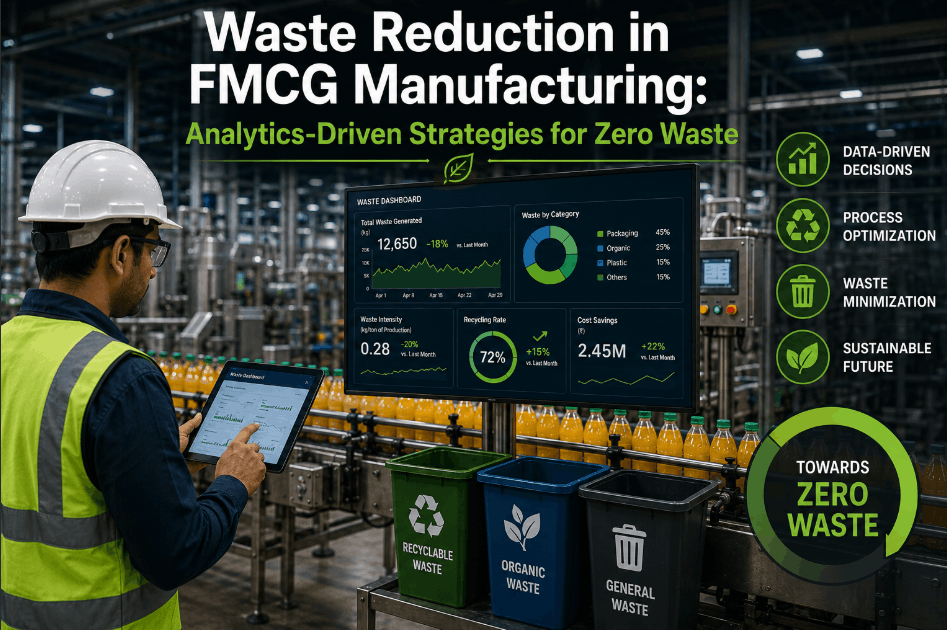
The platform's analytics dashboard provides safety leadership with real-time compliance metrics, corrective action closure rates, near-miss reporting trends, and inspection completion statistics. Monthly safety reviews use platform data to identify improvement opportunities. The success at this facility has driven a phased rollout across three additional manufacturing sites.
Frequently Asked Questions
The platform eliminates the systemic gaps that cause preventable incidents. Every required safety inspection is automatically scheduled, assigned, and enforced with escalation for overdue items. Corrective actions identified during inspections are tracked through to completion with documented evidence. Near-miss reporting is simplified through mobile capture, encouraging a proactive reporting culture. When these three elements — inspection compliance, corrective action closure, and near-miss reporting — are functioning at high reliability, the conditions that produce recordable incidents are identified and corrected before they cause harm.
iFactory supports OSHA recordkeeping (300, 300A, 301), PSM mechanical integrity documentation, EPA Risk Management Plan inspection records, ISO 45001 audit evidence, NFPA 30 aerosol storage inspection requirements, and facility-specific safety protocols. The platform's configurable checklist and reporting framework can be adapted to any regulatory framework or company-specific safety standard.
Initial deployment including compliance audit, checklist configuration, mobile deployment, and team training can be completed within 6 to 8 weeks for a single facility. Measurable improvement in inspection compliance rates is typically observed within 30 days as the automated scheduling and escalation system begins enforcement. The facility in this case study achieved full compliance steady state within 8 months. Insurance premium impacts are typically realised at the next renewal cycle after 12 months of documented safety performance data.
Yes. iFactory can integrate with existing ERP systems (SAP, Oracle, Microsoft Dynamics) for equipment master data and work order history, with document management systems for SDS and procedure storage, and with existing CMMS platforms for unified maintenance and compliance workflows. The platform can operate as a standalone compliance system or as an integrated layer within an existing maintenance technology stack. API connectors enable custom integration with proprietary systems.
Insurance carriers evaluate workers' compensation and general liability premiums based on experience modification rate (EMR) and documented safety programme effectiveness. A facility that can demonstrate sustained zero recordable incidents, high safety inspection compliance rates, and closed-loop corrective action management is eligible for premium reductions of 20-35% depending on carrier and industry classification. This facility achieved a $1.4M annual premium reduction as a direct result of demonstrated safety performance improvement. Additionally, corporate risk profiles improve as multi-site organisations reduce aggregate incident exposure across their portfolio.