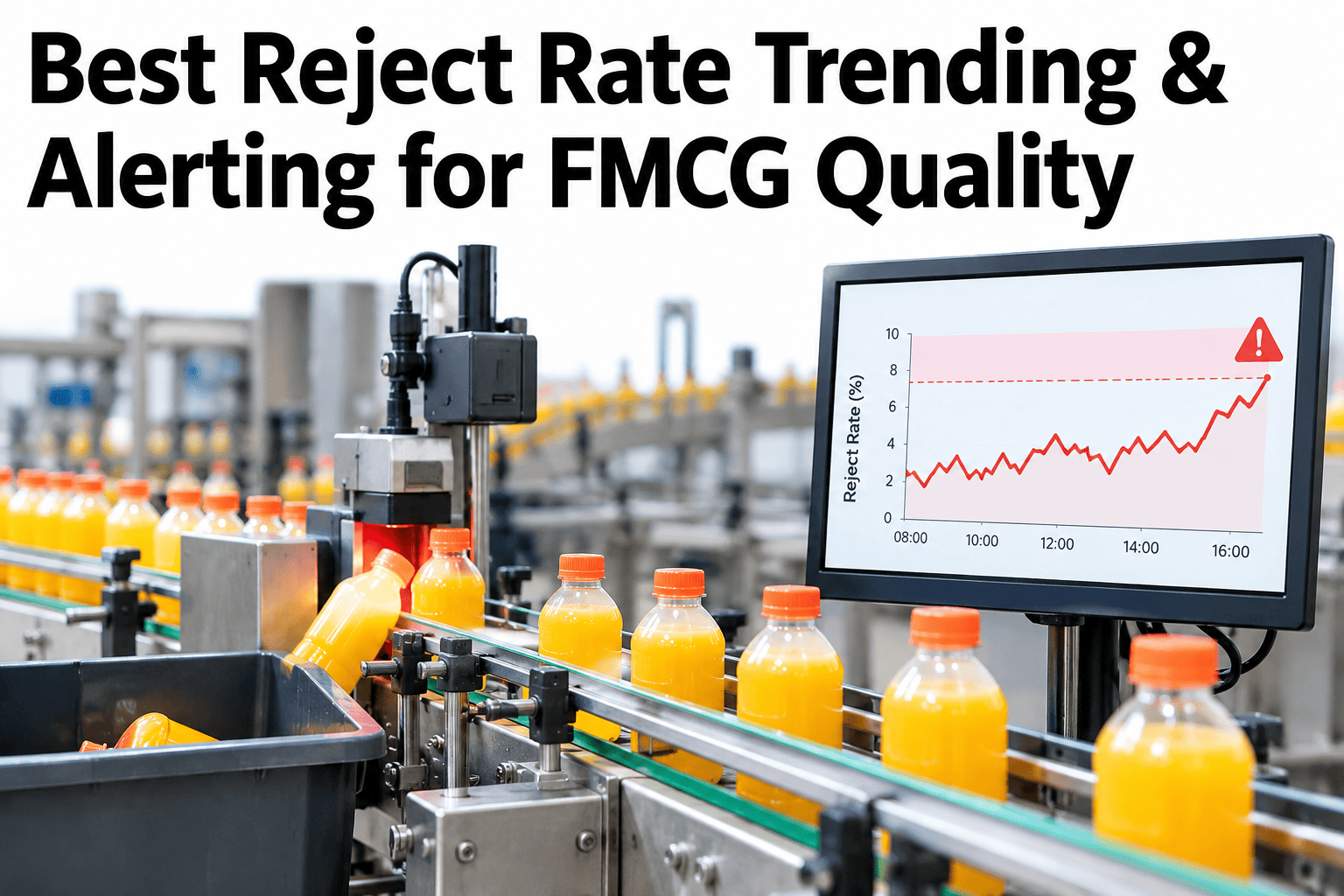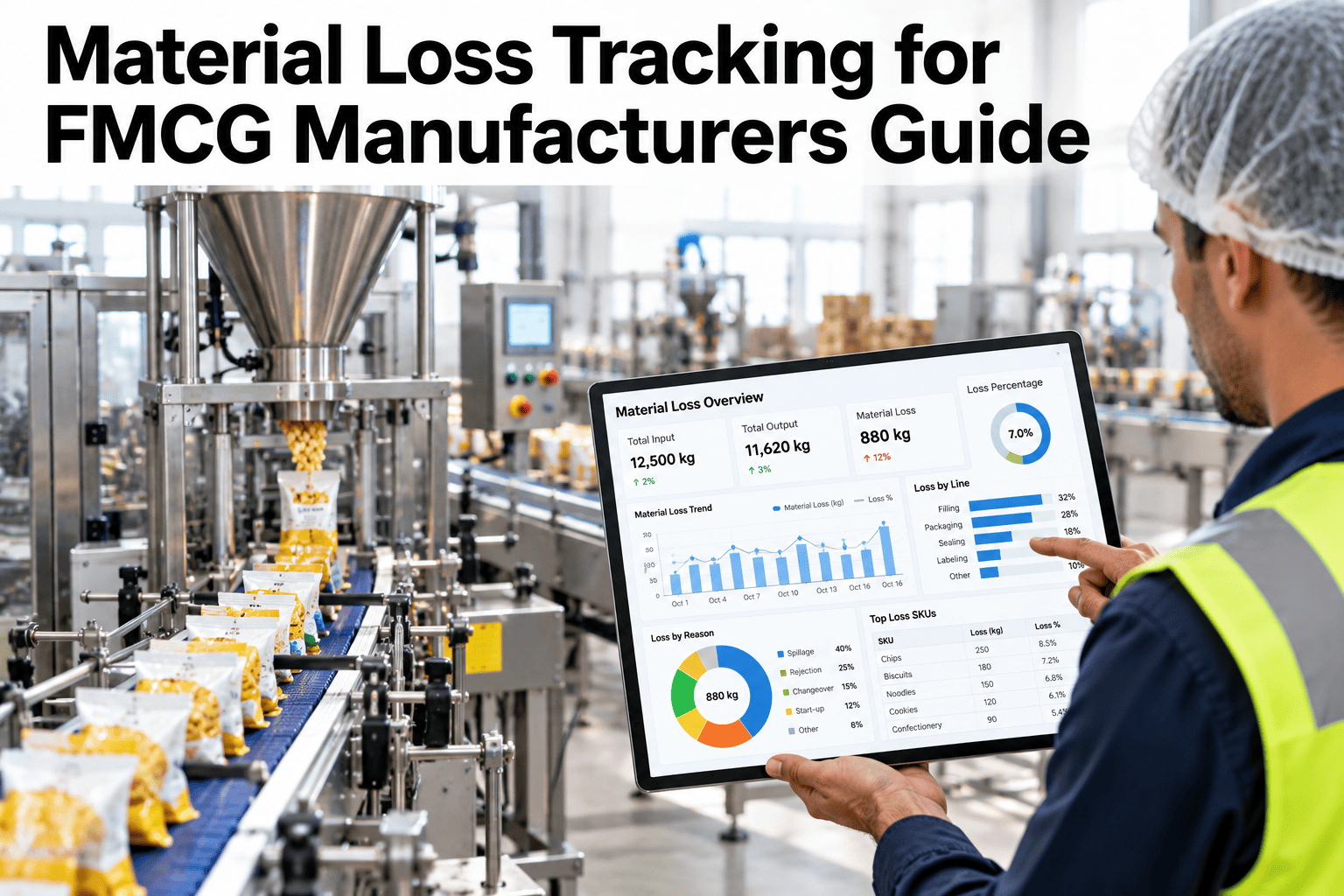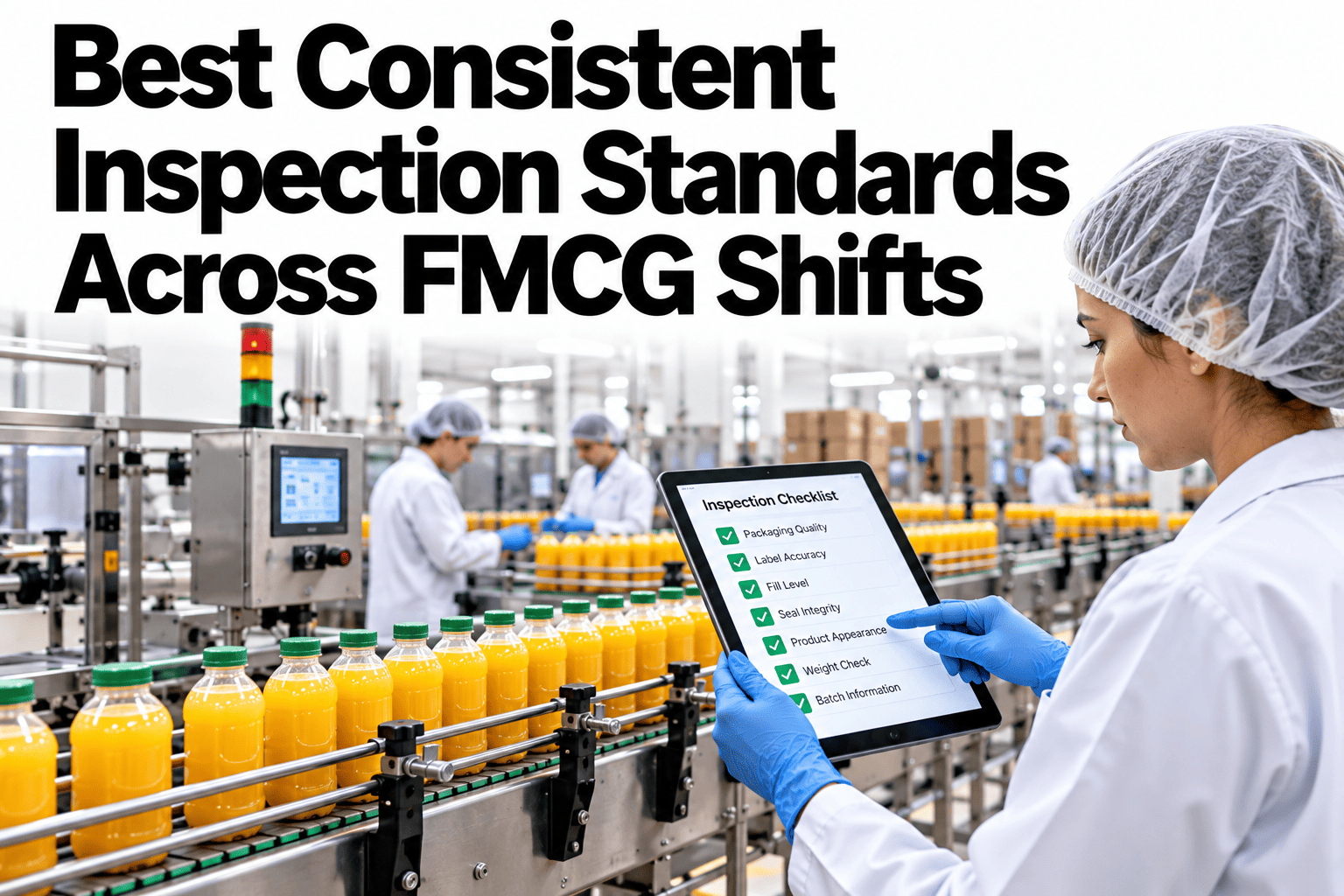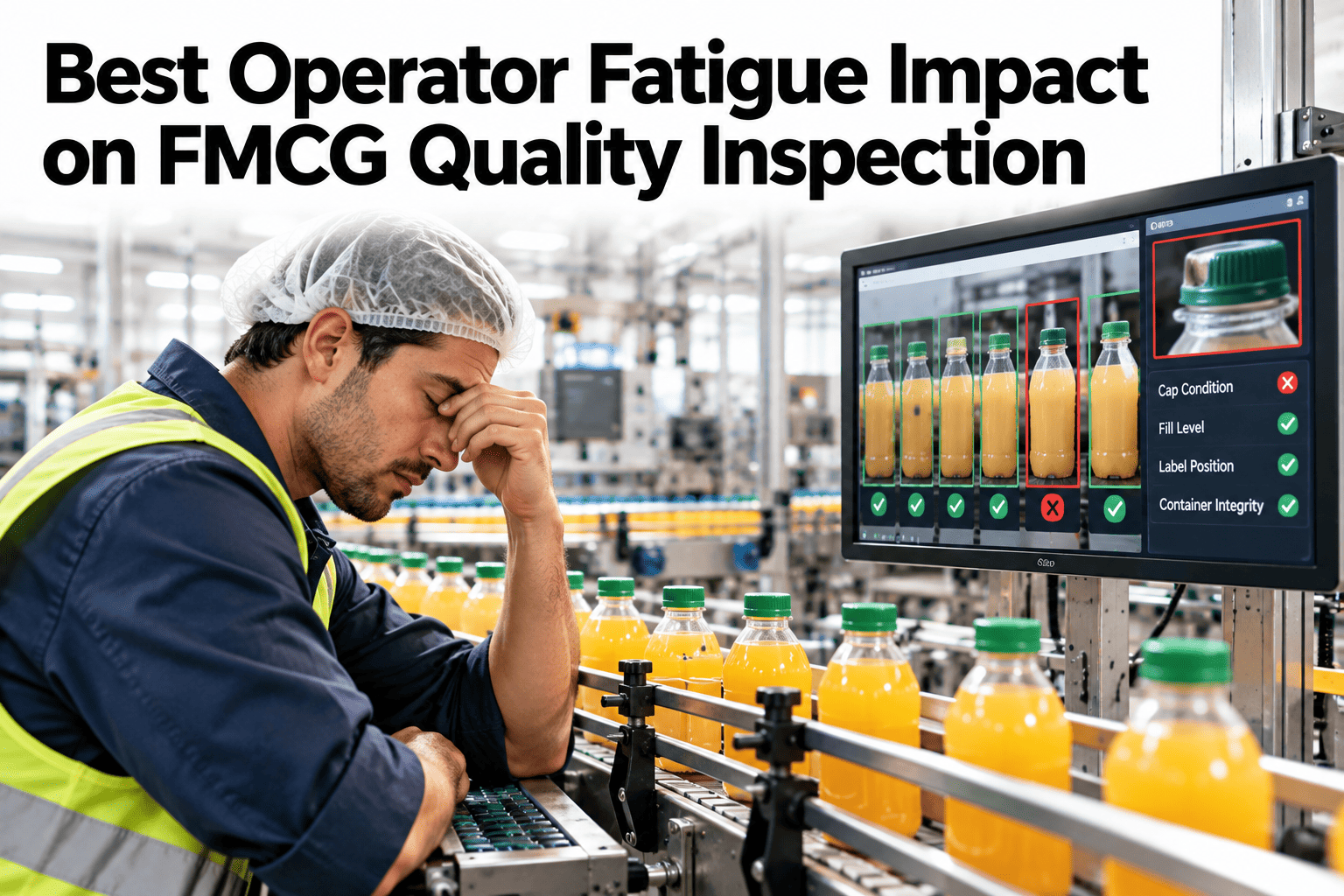
Most FMCG lines calculate the quality rate in OEE from one narrow input: what the line itself rejected during the run. That leaves out rework pulled later, off-spec product caught downstream, and the complaints that surface weeks after a batch has already shipped. A quality rate built on only the first of those four sources looks better than the line's actual performance, which means the OEE number everyone reviews is quietly flattering itself. Plant leaders can see how iFactory AI wires reject, rework, off-spec and complaint data into one quality rate before the next OEE review.
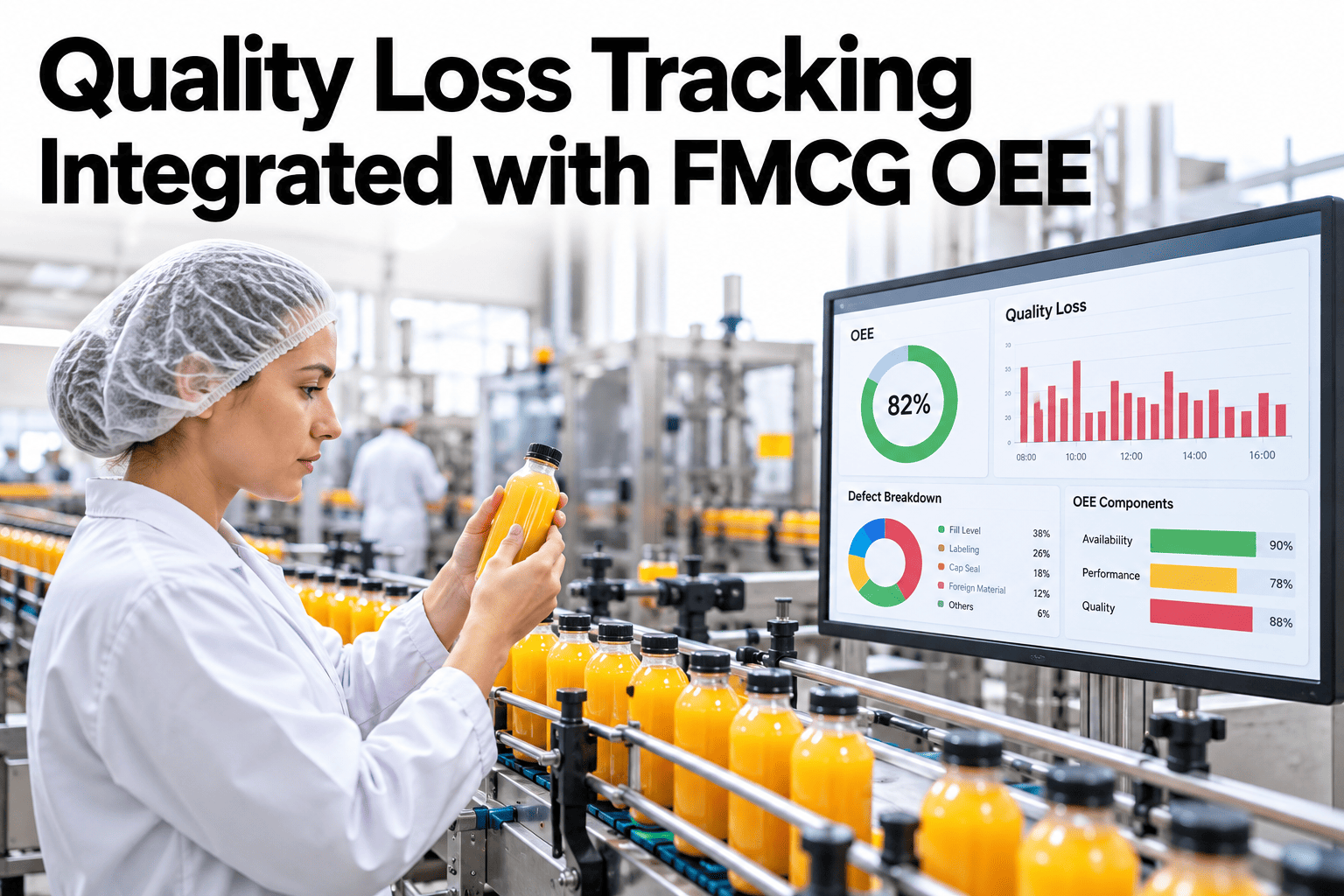
Quality Loss Tracking Integrated with FMCG OEE
Reject, rework, off-spec and complaint feedback, all feeding one quality rate instead of one narrow slice of it.
Four Sources, One Number Everyone Trusts Too Much
Each loss source happens at a different point in the product's journey, and skipping any one of them understates the true quality rate.
Caught and removed during the run itself, the most commonly tracked source.
Product pulled aside and reprocessed, which consumed line time even if it eventually shipped.
Caught later in the process, after the line itself reported it as good output.
Surfaces weeks after shipment, the slowest but often most telling signal of a quality miss.
A quality rate missing any of these sources is not wrong exactly, it's just measuring less than the name implies.
What Changes When All Four Are Wired In
The gap between a line-rejects-only rate and a fully integrated one is often where the real improvement opportunity hides.
| Quality Rate Basis | What It Shows | What It Misses |
|---|---|---|
| Line rejects only | How much the line itself caught and removed | Downstream rework, off-spec and complaint-driven losses |
| Line rejects plus rework | A fuller picture of what consumed line and labor time | Issues that only surface after the batch has left the plant |
| Fully integrated | True quality performance across the product's full lifecycle | Only limited by how quickly complaint data feeds back |
See the Gap Between Your Reported and Real Quality Rate
Book a 30-minute session and iFactory AI will show how your current quality rate compares once rework, off-spec and complaint data are wired in alongside line rejects.
Complaint Feedback: The Slowest but Most Honest Signal
Complaints arrive late, which makes them easy to treat as a separate quality function rather than part of the OEE picture. That separation is exactly what hides a recurring issue.
Building the Integration Without Breaking What Already Works
Wiring in four sources does not mean rebuilding the OEE system from scratch. It means connecting existing data where it already lives.
Confirm the baseline
Document exactly what the current quality rate includes and excludes.
Add rework and off-spec
Connect downstream rework and off-spec records to the originating batch.
Connect complaint data
Link complaint records back to batch and production conditions.
Recalculate and compare
Show the integrated rate alongside the old one to make the gap visible.
Plants that make real progress on quality loss are the ones willing to show the integrated rate alongside the old line-rejects-only number for a transition period, rather than simply swapping the metric overnight and confusing everyone reviewing the trend. A quality rate that suddenly drops because it now includes complaint feedback is not a sign that performance got worse, it's a sign the number finally means what everyone assumed it already meant. Communicate that distinction clearly when you make the change, or the new, more honest number risks being read as a crisis instead of a correction.
Where iFactory AI Fits
iFactory AI connects line rejects, rework, off-spec and complaint data into one quality rate feeding OEE, so the number reflects the product's full lifecycle, not just what happened at the line.
Four sources, one rate
Reject, rework, off-spec and complaint data all feed the same quality rate calculation.
Retroactive linkage
Complaint data links back to the originating batch, adjusting its quality record even after shipment.
Before and after comparison
The integrated quality rate is shown alongside the legacy rate during transition, so the change is understood.
Ask in plain language
Ask what's driving quality loss across all four sources this month and receive a ranked answer.
Frequently Asked Questions
Why isn't line-rejects-only enough for the quality rate in OEE?
Because it only captures what the line itself caught during the run, missing rework pulled downstream, off-spec product identified later in the process, and quality issues that only surface through consumer complaints after shipment, all of which represent real quality loss the line-only figure hides. You can watch a fully integrated quality rate calculated on sample production data in a live session.
Will our quality rate look worse once we integrate all four sources?
Often yes, at least initially, but that drop reflects a more accurate picture rather than worse actual performance, which is why running the integrated rate alongside the legacy number for a transition period helps everyone understand the change correctly. To plan this transition, request an integration planning session with the iFactory AI team, or ask support what data sources are needed.
How do complaint results, which arrive weeks later, get linked back to OEE?
Through the batch record, since a complaint tied to a specific product code and batch number can be traced back to the production conditions and OEE performance at the time that batch was made, even if the complaint itself arrives long after. A short product tour of retroactive batch linkage shows how this connection works.
Does this change how OEE is calculated in real time during a shift?
Real-time OEE during a shift still reflects what's known at that moment, mainly line rejects, while rework, off-spec and complaint data adjust the quality record retroactively as that information becomes available, giving both an immediate view and a more complete historical one. See how real-time and retroactive quality data work together in a guided walkthrough.
How do we know which of the four sources is actually driving our losses?
Once all four are wired into the same system, they can be broken down and ranked by contribution, showing whether line rejects, rework, off-spec or complaints are the largest driver, rather than guessing based on whichever source gets the most attention currently. Schedule a walkthrough of loss source ranking to see how this breakdown works.
Get a Quality Rate That Reflects the Whole Picture
iFactory AI wires reject, rework, off-spec and complaint data into one quality rate feeding OEE. Book a walkthrough to see it built around your own lines.