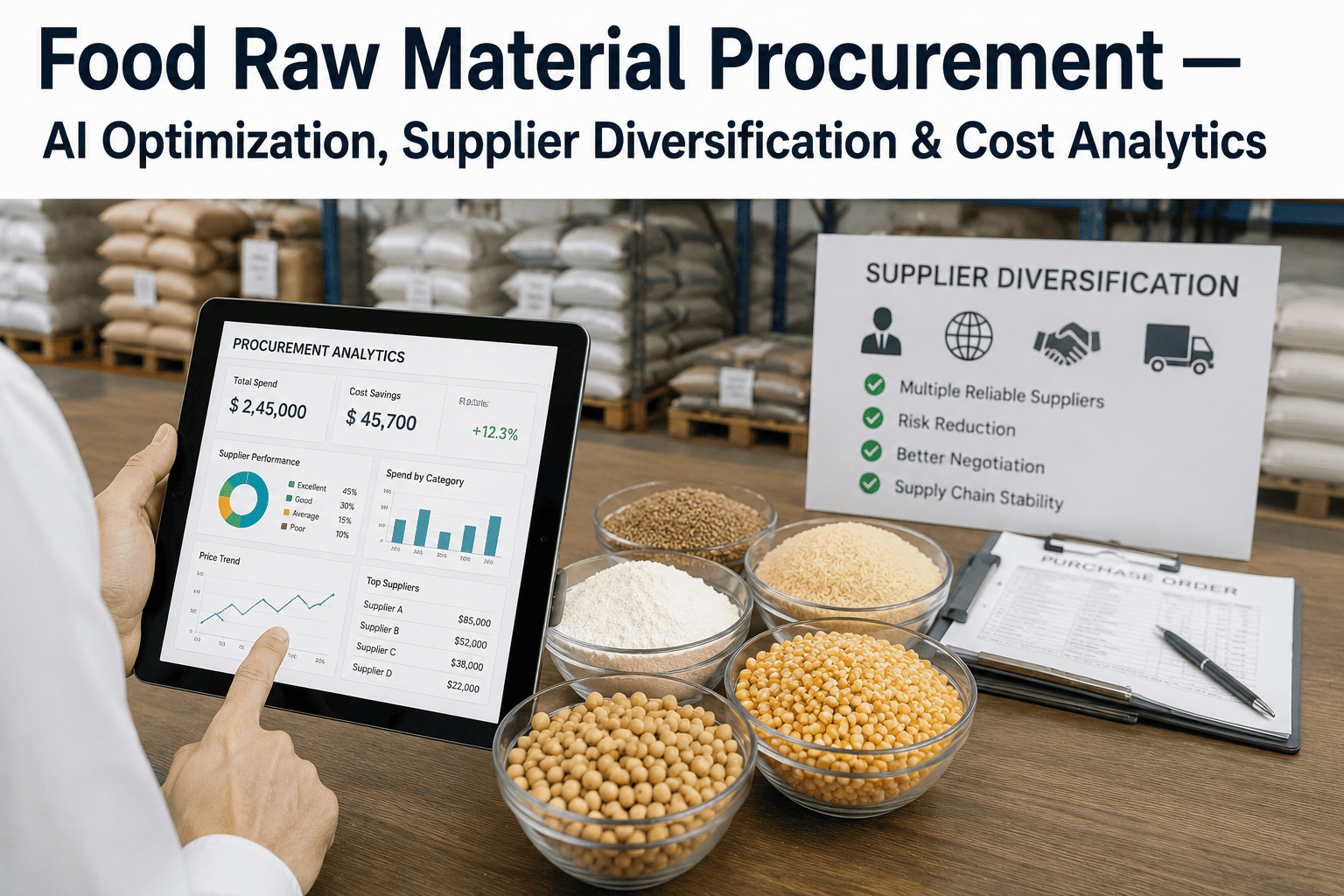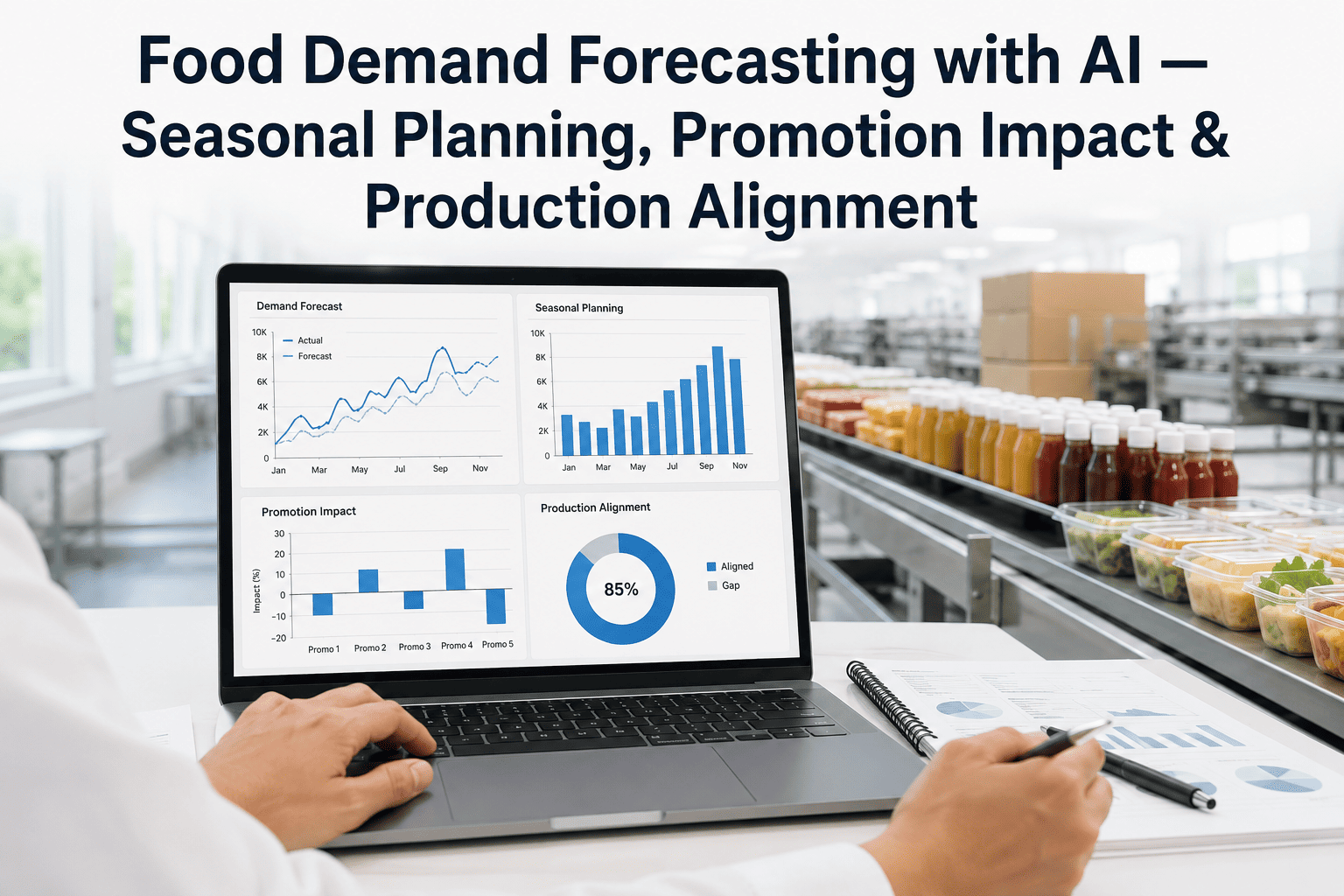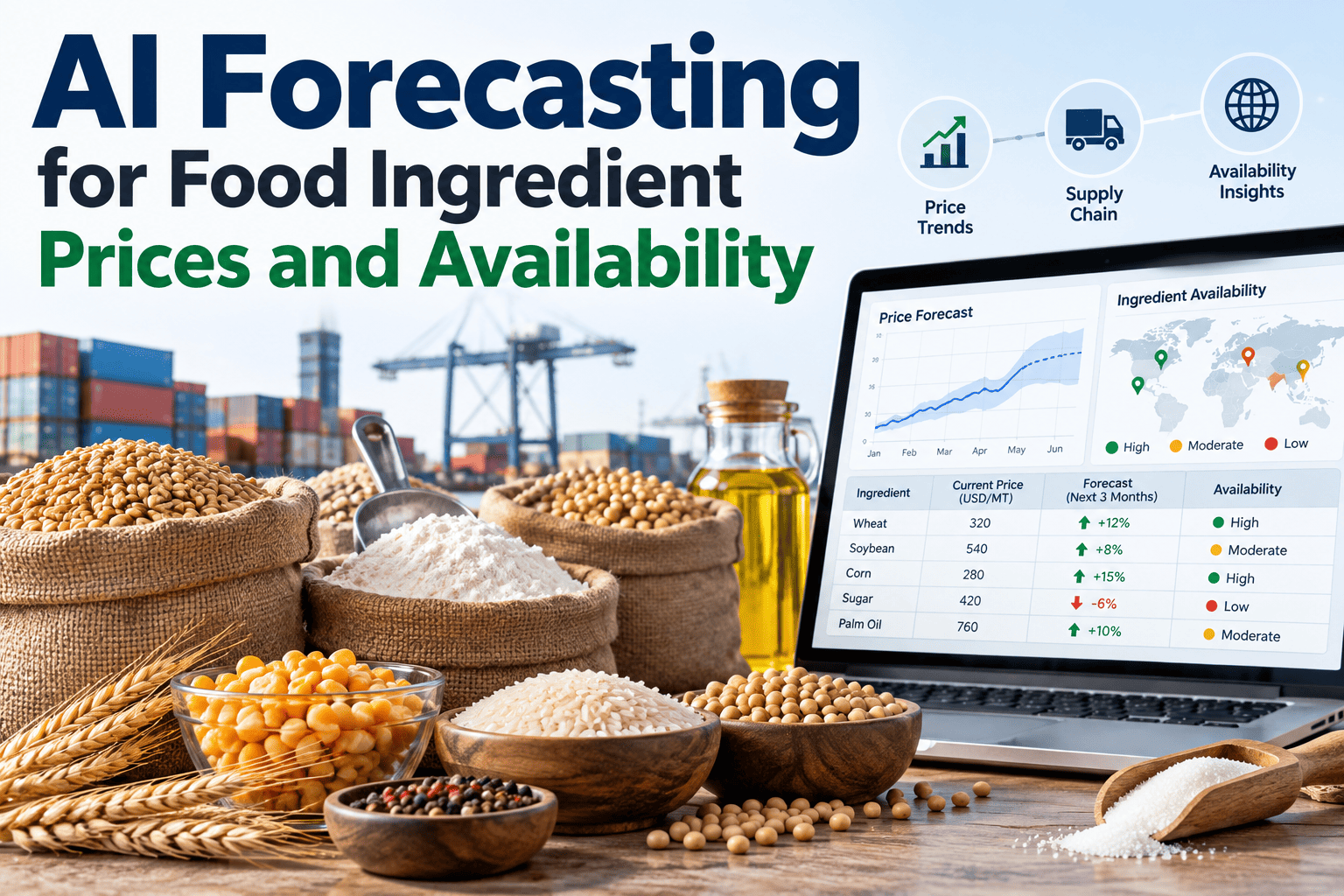
A food manufacturer buying a bulk ingredient six weeks before a price spike pays the pre-spike rate purely by accident, while a competitor that bought the same ingredient two weeks later pays substantially more for identical volume. Neither company predicted anything, they simply happened to place an order on a different day. Most F&B procurement still runs this way, reacting to whatever price a supplier quotes today rather than anticipating where that price is headed, because the signals that actually move ingredient markets, weather patterns, planting reports, currency shifts, shipping capacity, arrive scattered across sources no single buyer reviews together. Forecasting models built specifically for food commodities change that by fusing those signals into a usable early warning, and if you want to see what a live forecast for your own ingredient basket looks like, book a demo.
The Ingredient Price Spike Was Visible Weeks Before It Hit Your Invoice
iFactory forecasts food ingredient prices and availability by fusing commodity futures, weather models, and geopolitical signal into a single view tuned for procurement decisions, not generic market commentary.
The Price You See Today Already Reflects Yesterday's News
By the time a supplier quotes a higher price, the event that caused it, a drought, a port closure, a tariff change, already happened weeks earlier. Reactive procurement is structurally always a step behind, because it treats the quoted price as the first available signal rather than the last one in a much longer chain.
This gap is not a matter of buyer skill. A procurement team reading supplier price sheets is reading the most lagging indicator available in the entire chain, no matter how experienced the people involved are.
What Actually Feeds an Ingredient Price Forecast
A useful forecast is never built from price history alone, since past prices only describe what already happened. The signal that predicts what happens next comes from further upstream, in categories most procurement teams monitor separately, if at all.
No individual source above reliably predicts a price move on its own. The forecast comes from weighting all six together and recognising when several of them start pointing in the same direction at once, which is a pattern no manual review process realistically tracks across dozens of ingredients simultaneously.
See your own ingredient basket run through a live forecast
iFactory maps the commodities, origins, and currencies behind your actual purchasing list and shows what the signal is saying about them right now.
Three Time Windows, Three Different Decisions
A single forecast number is rarely useful, because a procurement team makes different decisions at different distances from today. Near-term, mid-term, and seasonal forecasts each answer a distinct question, and treating them as one blended number collapses information a buyer actually needs kept separate.
The widening bar above each stage is intentional rather than a limitation to apologise for. A forecast that claimed equal confidence at nine months as it does at two weeks would be misrepresenting its own reliability, and a procurement team needs to know which decisions can be made with confidence today versus which ones should stay flexible until the window narrows.
Not Every Ingredient Carries the Same Kind of Risk
Grouping all raw materials into one procurement strategy ignores that a single-origin spice and a globally traded grain behave completely differently under stress. Matching the forecast approach to the actual risk profile of each ingredient category is what turns a general dashboard into something specific enough to act on.
| Ingredient Category | Primary Risk Driver | Typical Volatility | Forecast Priority |
|---|---|---|---|
| Single-Origin Specialty (cocoa, vanilla) | Regional weather and crop yield concentration | High, often sharp and sustained | Seasonal forecast, supplier diversification signal |
| Globally Traded Grain (wheat, corn, soy) | Futures market movement and export policy | Moderate, broadly correlated across origins | Near and mid-term, contract timing |
| Dairy and Animal Protein | Feed cost pass-through and herd cycle timing | Moderate, with lag behind feed grain moves | Mid-term, tied to upstream grain forecast |
| Packaging-Adjacent Inputs (resin, aluminium) | Energy cost and industrial demand cycles | Moderate, less seasonal than agricultural inputs | Near-term, energy price correlation tracking |
| Imported Exotic Ingredients | Freight availability and trade policy exposure | High, availability risk often exceeds price risk | Availability forecast weighted above price forecast |
The last row matters more than it first appears. For several exotic and imported categories, the real business risk is not paying more, it is not being able to secure the ingredient at any price during a shortage window, which is why a forecast built purely around price misses half of what procurement actually needs to see coming.
How a Forecast Signal Becomes a Purchase Order
A forecast that stays inside a dashboard changes nothing. The value only appears once a signal is translated into a specific, timed procurement action, which requires a defined workflow rather than a buyer occasionally checking a chart.
The last step is what separates a forecasting tool from a static market report. A model that never learns from its own accuracy against a specific ingredient stays generic, while one that closes the loop becomes progressively more precise for exactly the commodities your plant actually buys.
The Cost of Not Seeing a Disruption Coming
The value of a forecast is easiest to see in what it prevents rather than what it predicts, since a well-timed purchase or an early alternate-sourcing decision rarely gets celebrated the way a crisis response does.
Each of these outcomes traces back to the same root cause, a signal that existed weeks earlier but never reached a decision-maker in a form they could act on in time.
How iFactory Builds Your Ingredient Forecast
Implementation starts with your actual purchasing list rather than a generic commodity dashboard, since a forecast is only useful when it is scoped to what your plant specifically buys.
What F&B Procurement Teams Ask About AI Forecasting
Turn Scattered Commodity Signal Into a Procurement Advantage
iFactory fuses weather, futures, trade, and freight signal into a forecast tuned specifically for your ingredient basket, so your next purchase order is timed by data instead of a supplier's quote.