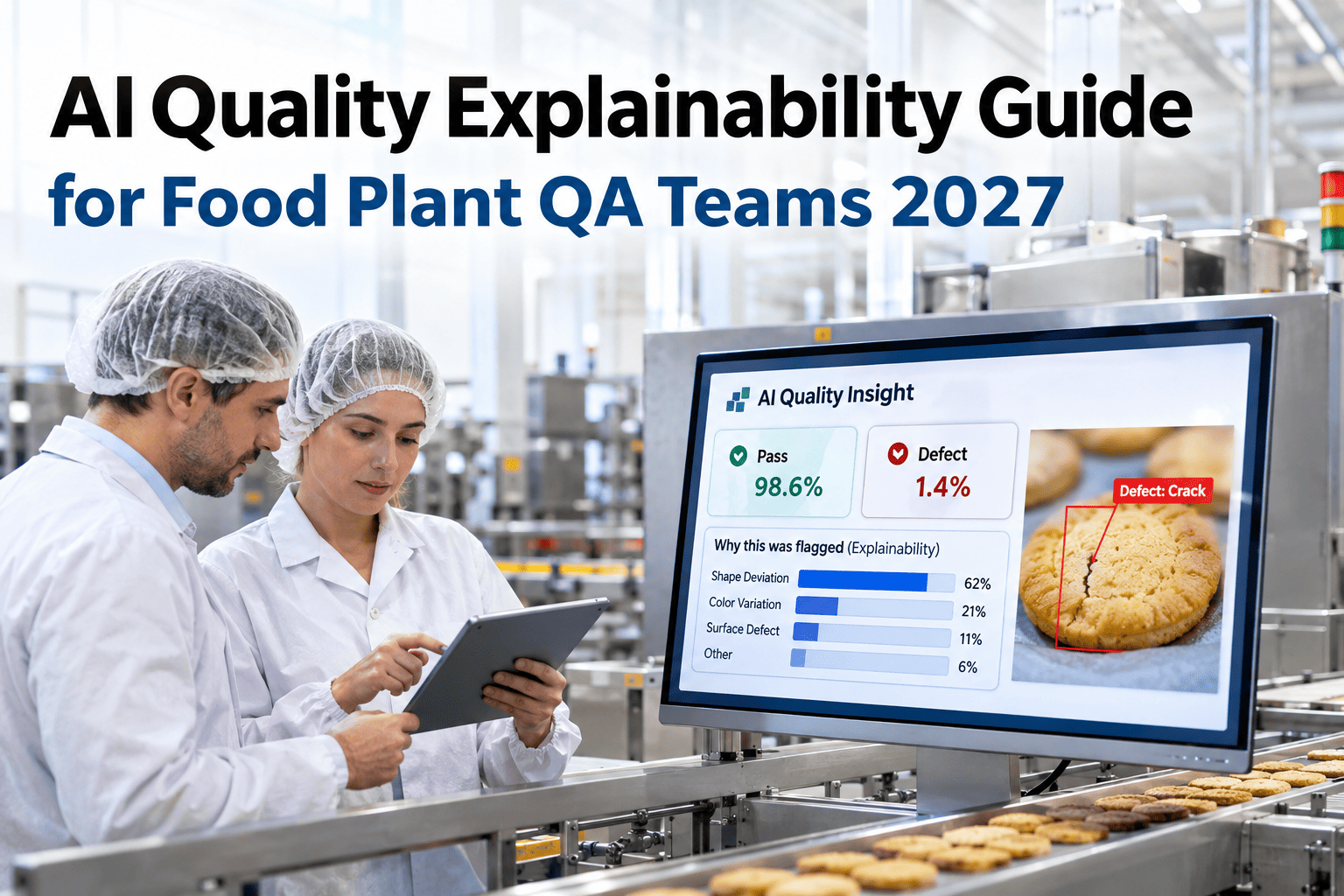
A QA team cannot act on a quality risk flag they cannot explain, and an auditor will not accept "the model said so" as a defensible answer during a review. Making an AI-flagged quality risk genuinely audit-defensible means showing which specific factors contributed to that flag, how much each one mattered, and what a comparable reference batch looked like, not just a single risk score with no reasoning behind it. Building explainability into the quality system from the start is what lets a QA team trust and act on a flag instead of overriding it out of uncertainty, and our team can walk you through how this explainability works on your own quality data.
Food plant QA, AI explainability
Make Every AI-Flagged Quality Risk Something Your QA Team Can Actually Defend
iFactory AI shows class contribution and reference batch comparisons behind every quality risk flag, so QA teams get a defensible reason, not just a score.
Why a score alone fails
"The Model Flagged It" Is Not an Answer an Auditor Will Accept
A risk score with no explanation leaves a QA team unable to defend a decision during an audit or explain to a customer why a batch was held, which pushes teams toward overriding flags they cannot justify rather than trusting a system they cannot explain.
Model produces a score
A risk number appears with no accompanying reasoning
QA cannot explain it
No way to justify the flag to an auditor or customer
Trust erodes
Teams start overriding flags they cannot defend
The system loses value
An unexplained flag gets ignored rather than acted on
Three explainability elements
What Makes a Flag Actually Defensible
Factor contribution analysis
Shows which specific inputs contributed most to the flagged risk score.
Class contribution breakdown
Groups contributing factors into interpretable categories a QA reviewer recognizes.
Reference batch comparison
Shows a similar past batch for context on what normal versus flagged actually looks like.
See What Explainability Would Look Like on Your Data
Share a recent quality flag your team reviewed and see how a full explanation would have been presented.
Explainability table
What Each Element Adds to an Audit Trail
| Element | What it shows | Why it matters for audit |
|---|
| Factor contribution scores | Which inputs drove the flagged risk | Gives a specific, traceable reason for the flag |
| Class contribution groups | Factors grouped into recognizable categories | Makes the reasoning interpretable to a QA reviewer |
| Reference batch comparison | A similar past batch for context | Shows the flag against a concrete point of comparison |
Explainability pipeline
Four Steps From Flag to Defensible Decision
1
Model flags the risk
The quality model identifies a batch or unit as elevated risk.
2
Break down the contributing factors
Show which specific inputs drove the flagged score.
3
Compare against a reference batch
Provide a similar past batch for concrete context.
4
QA reviews and documents
The team makes and records a defensible decision based on the full explanation.
Common pitfalls
Three Mistakes That Undermine Quality AI Trust
1
Showing a score with no supporting breakdown
QA has no way to understand or defend what drove the flag.
2
Technical factor names QA cannot interpret
Raw model feature names mean nothing to a reviewer without quality domain translation.
3
No reference point for comparison
Without a comparable batch, a flagged score has no concrete context.
Expert review
Explainability is not a nice-to-have feature layered on top of a quality model, it is what determines whether QA teams actually use the system day to day. A flag nobody can explain gets overridden, and an overridden system stops delivering value regardless of how accurate its underlying model is.
Watch for
A quality AI platform that presents only a risk score with no accompanying factor breakdown.
Do next
Ask to see how a vendor's platform explains a flag in terms your own QA team would actually recognize.
— iFactory food quality specialists
Frequently asked questions
What QA Teams Ask About AI Quality Explainability
What does "class contribution" actually mean in this context?
It means grouping the many individual factors a model considers into broader, interpretable categories, such as temperature-related factors or ingredient-related factors, so a QA reviewer sees a meaningful pattern rather than a long list of raw variables.
Ask about your specific factor categories.
How is a reference batch selected for comparison?
A reference batch is typically chosen for being similar in product type and process conditions but without the flagged risk, giving a concrete "this is what normal looked like" comparison point.
Discuss reference batch selection.
Does explainability slow down the speed of a real-time alert?
No, the explanation is generated alongside the flag itself rather than as a separate, slower process, so a QA team reviewing an alert gets the reasoning at the same time as the flag.
Talk through your alert timing.
Will this satisfy a third-party food safety audit requirement?
A documented, traceable explanation for each quality decision is generally what auditors look for, though the specific requirements of your certification body are worth confirming directly since they can vary.
Ask about your specific audit standard.
Can QA override a flag even with a full explanation provided?
Yes, the explanation is meant to inform the QA team's judgment, not replace it, so a reviewer can still decide the flag does not warrant action, but that decision is now made with full context rather than blind trust or blind dismissal.
Discuss your override process.
From an unexplained score to a defensible decision
Give Your QA Team Flags They Can Actually Trust and Defend
Book a session with iFactory AI to review your quality data and see how explainable risk flagging fits your QA process.