A regional dairy processor once shipped 42,000 yogurt cups across three states with the wrong allergen label after an operator loaded the wrong roll during a 2 a.m. changeover. The line ran for six hours before a morning auditor caught it by hand, and by then every cup was already sealed, cased, and on a truck. It is the kind of story every plant manager in dairy has some version of, and it is exactly the gap that full-line AI vision inspection is designed to close before it becomes a recall — details on how it fits your line are available through iFactory Support.
DAIRY · CHEESE · YOGURT · MOLD, FILL & PACKAGING DEFECTS
Dairy Does Not Behave Like a Fixed Template — Your Inspection Shouldn't Either
Cheese wheels age unevenly, yogurt fill varies by viscosity, and natural product variation makes rule-based sensors either miss real defects or reject good product. AI vision learns the difference between acceptable variation and an actual defect.
A Yogurt Cup Moves Faster Than a Person Can Reliably Watch
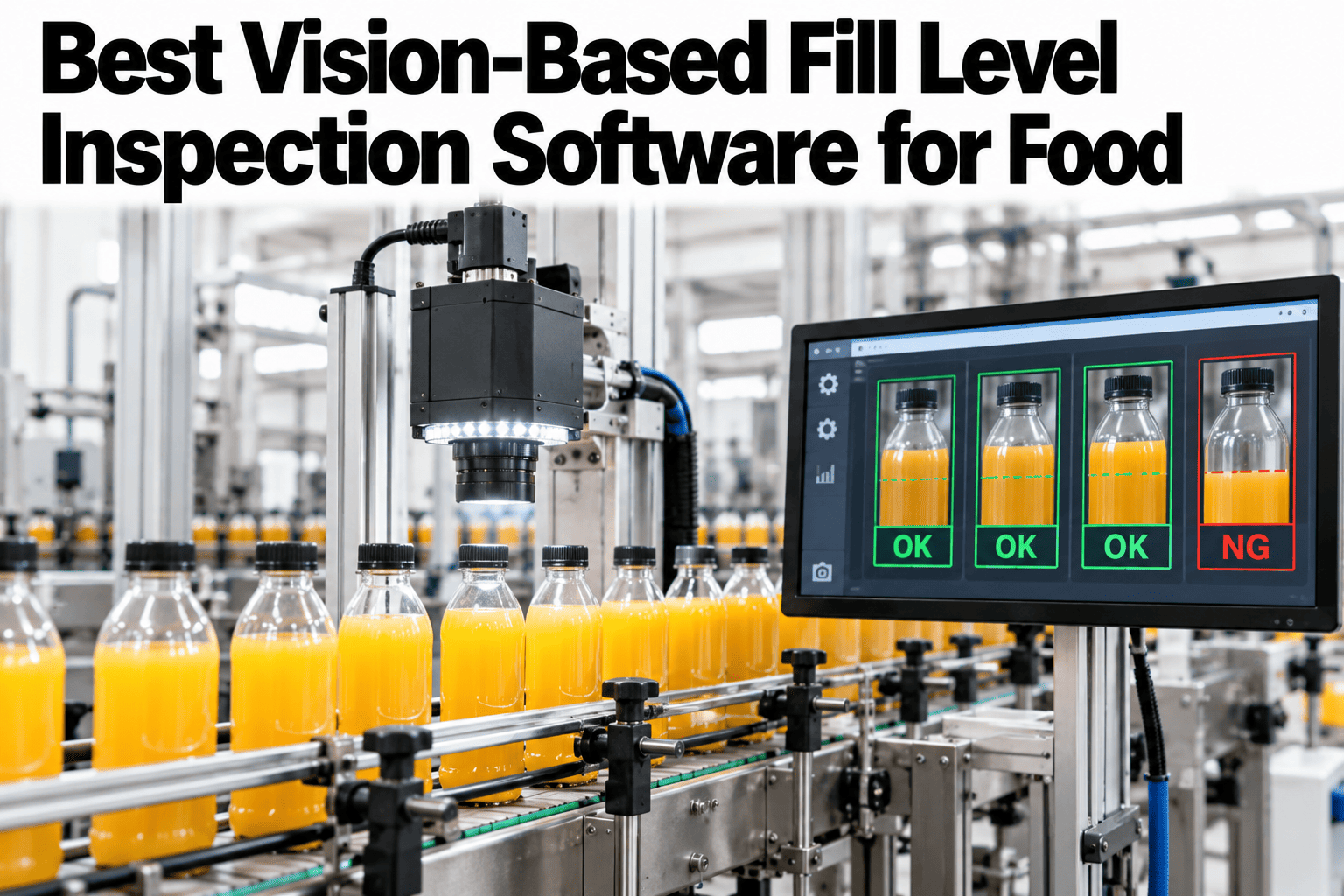
On a typical filler running several containers a second, an operator has a fraction of a second to look at each one before it disappears toward the case packer. Multiply that across a full shift and a single line can produce millions of containers a week. Skewed labels, missing caps, fill level drift, foreign material, foil seal wrinkles, and misprinted date codes all eventually slip past a human inspector at that pace — not because anyone is careless, but because sustained perfect attention at that speed is not something people are built for.
Natural & Aged Cheese
Mold spots, surface cracking, rind irregularities, and packaging plastic fragments on block, wheel, and wedge formats.
Yogurt & Dairy Desserts
Fill level accuracy, foil seal integrity, cup embossing defects, and lid alignment across cup and tub formats.
Milk & Cultured Products
Bottle fill deviation, cap seal failure, label placement, and date code legibility on high-speed filler lines.
Processed & Sliced Cheese
Slice uniformity, color consistency, and packaging seal defects across block and slice formats.
See a Model Trained on Your Actual Product Category
iFactory trains alongside your quality team so acceptance criteria match your standards, not a generic dairy template.
Why Cheese in Particular Breaks Rule-Based Sensors
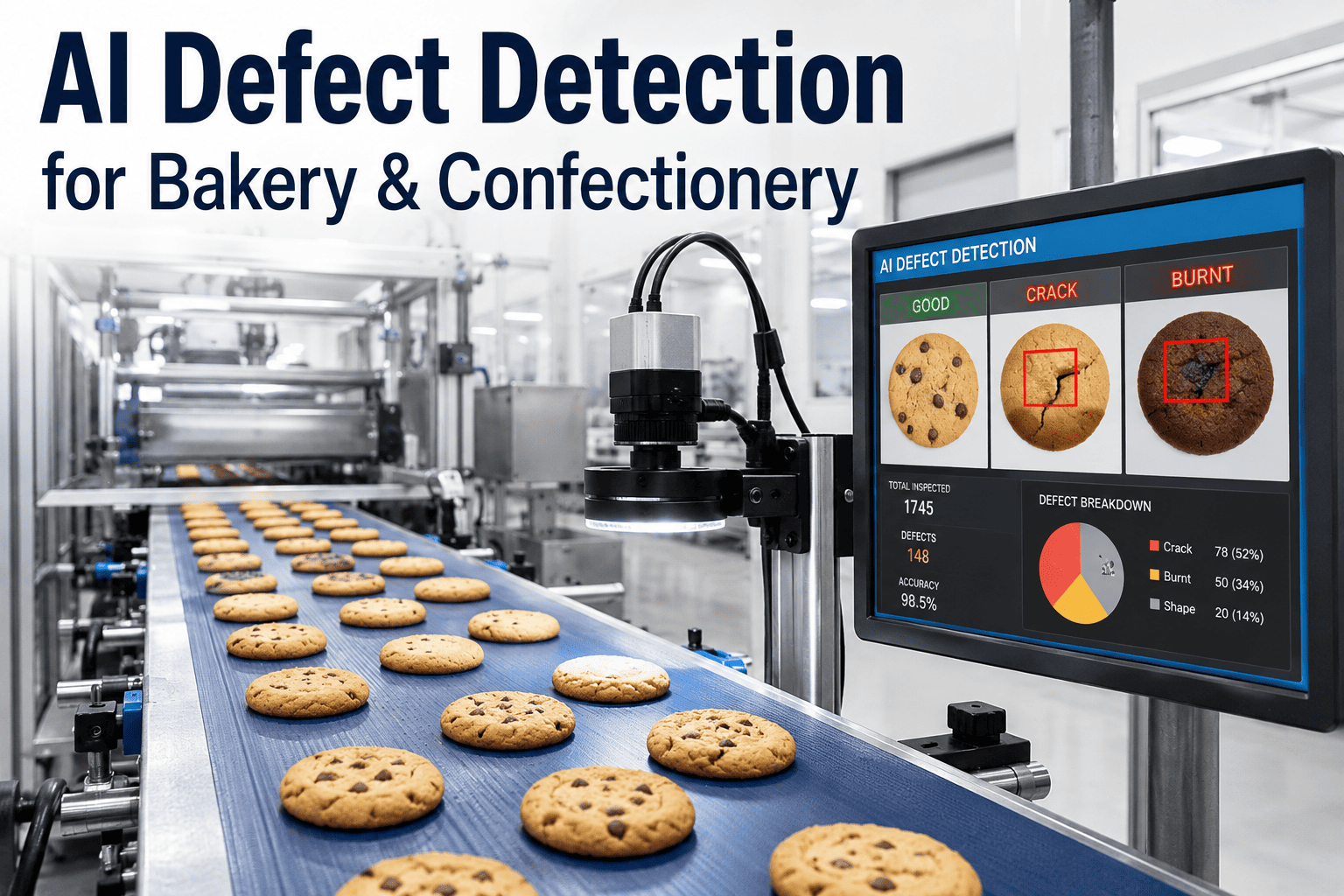
Cheese is one of the hardest products in food manufacturing to inspect with fixed thresholds, because every wheel looks slightly different and changes continuously through its aging cycle. A sensor calibrated to flag any surface irregularity will reject huge volumes of perfectly good product, while one calibrated loosely enough to avoid over-rejecting will miss real mold growth until it has spread. AI models solve this by learning from a large set of real product images annotated by the customer's own quality team, so the system distinguishes true defects from the natural surface variation a rigid rule never could.
What Full Traceability Actually Buys You
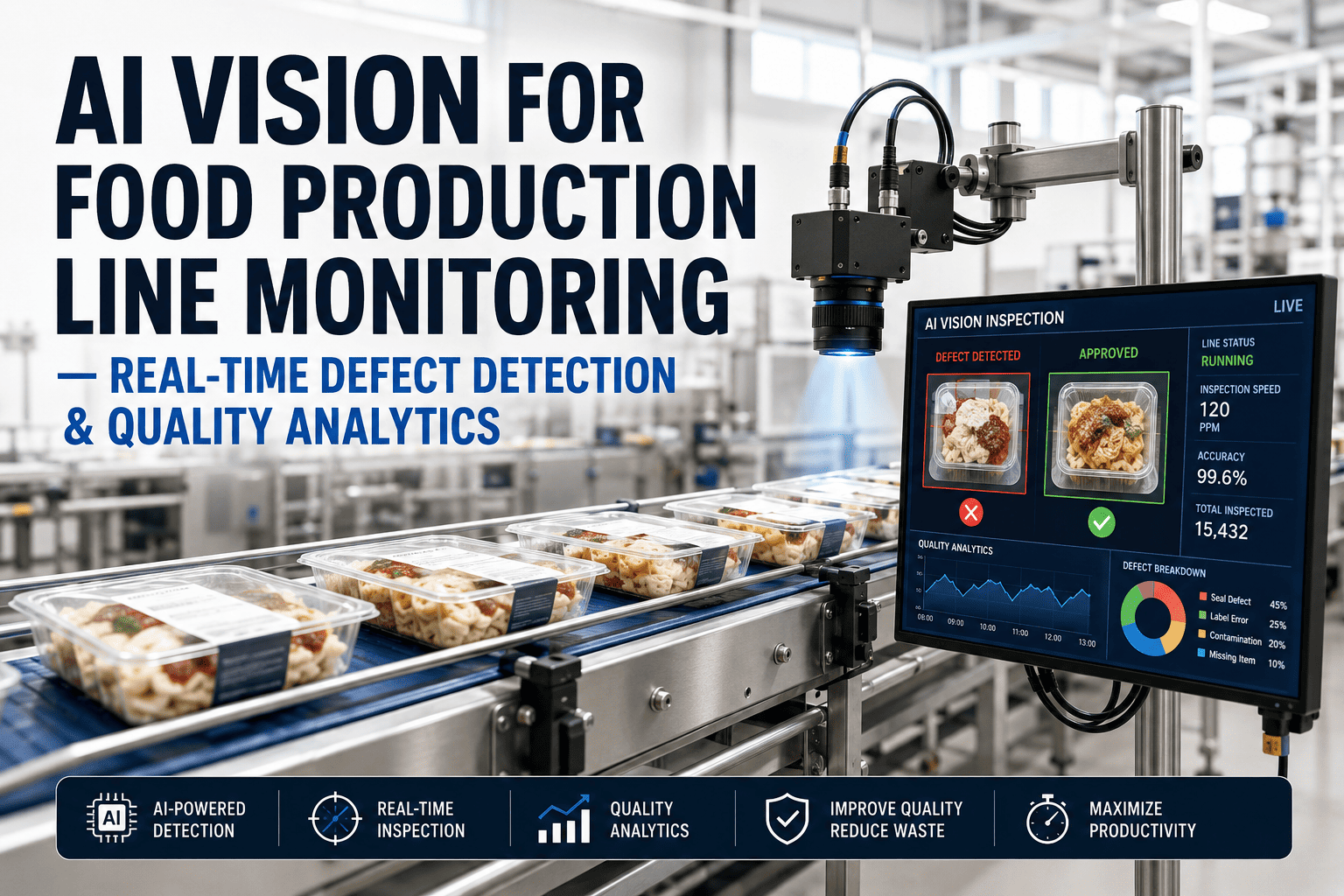
Every inspection result stored digitally, tied to the specific line, shift, and batch that produced it, turns quality control from a subjective judgment call into a documented record. When a mold pattern correlates with a specific incoming milk supply batch, or a fill deviation traces back to one particular nozzle, that connection becomes visible in the data instead of being lost to memory.
The Accuracy Gap Between a Tired Inspector and a Vision Model
| Metric | Manual Inspection | AI Vision Inspection |
| Detection accuracy |
Roughly 85-88% under good conditions |
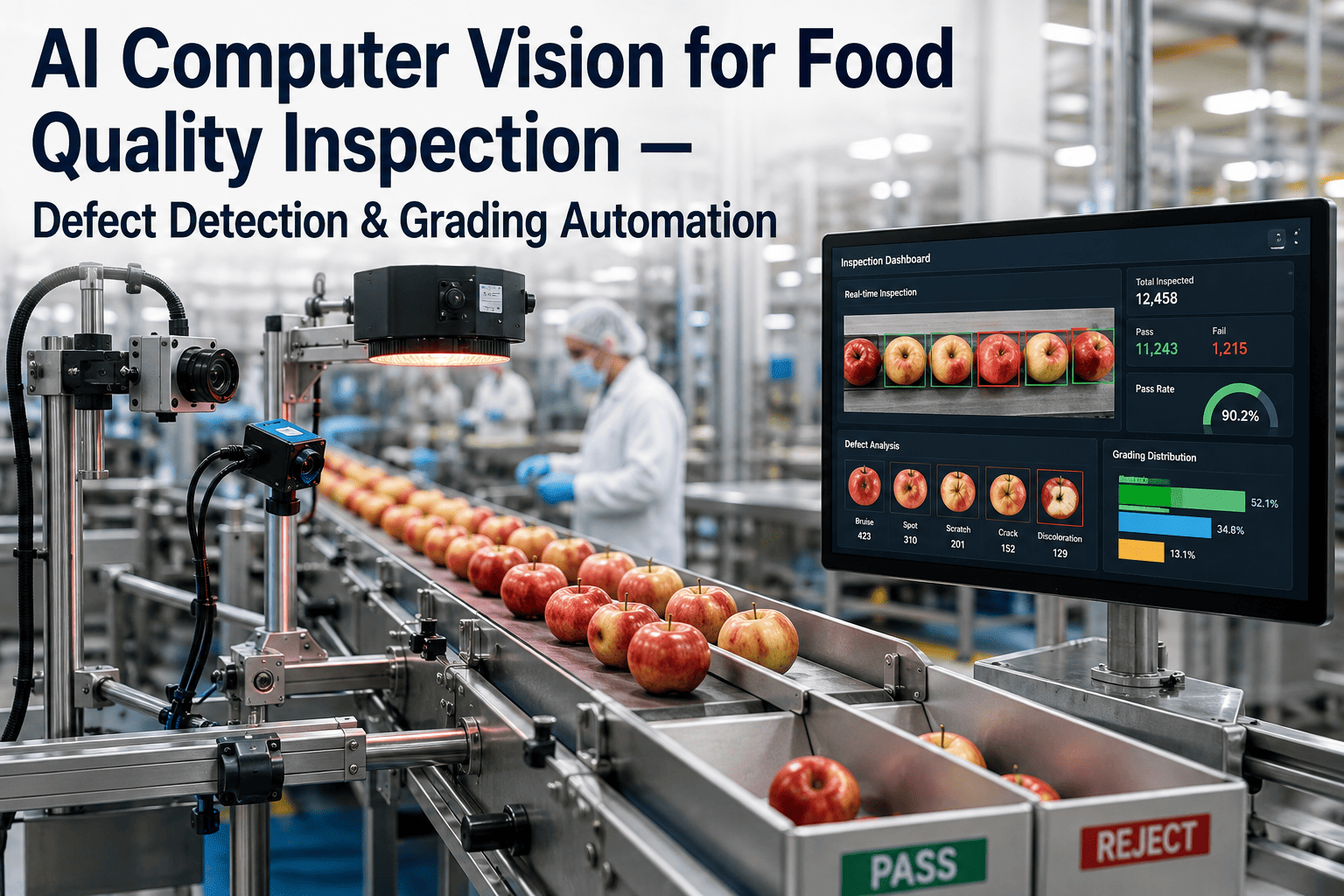
Consistently 99%+ across all shifts |
| Consistency across a shift |
Declines with fatigue over hours |
Same criteria applied at hour one and hour eight |
| SKU changeover |
Manual recalibration each time |
Recipe-based model switch, no hardware change |
| Record keeping |
Paper logs, sample-based |
Every container logged with image evidence |
What Happens When a Deviation Is Found
A well-built dairy vision deployment does not stop at flagging a reject. Surface defect excursions, contamination detections, fill deviation trends, and rising seal failure rates are connected to your existing CMMS and MES systems, so a work order can be generated automatically with the inspection image and defect classification data already attached. Quality engineers reviewing a filling nozzle that consistently underfills, or a sealing head with a degrading trend, get the context of line, shift, operator, and batch attached to every finding rather than having to reconstruct it after the fact.
Turn Every Container Into a Traceable, Inspected Unit
From cheese wheels to yogurt cups, get a continuous, documented inspection record instead of hourly spot checks.
Frequently Asked Questions
Can AI vision really tell the difference between natural cheese rind variation and actual mold?
Yes, and this is one of the core reasons dairy processors move away from rule-based sensors in the first place. The model is trained on real images annotated by the customer's own quality team according to their acceptance criteria, which lets it learn the specific visual boundary between normal aging characteristics and genuine surface mold or contamination for that particular cheese variety. Training details are available through
iFactory Support.
Does the system work across different packaging formats — cups, tubs, wheels, and blocks?
Yes. Dedicated camera configurations and lighting are set up for each format, since a cup on a filler line and a cheese wheel on an aging rack require completely different capture setups. The underlying model architecture adapts to each product type and packaging format as part of onboarding.
How quickly can a new SKU or product variant be added to the system?
Most dairy processors run multiple SKUs on the same line, so the system uses recipe-based model profiles that switch automatically at changeover. Adding a genuinely new product variant typically involves a short calibration period alongside the quality team rather than a full redeployment.
What triggers an automatic work order in the CMMS?
Configurable thresholds on surface defect rates, contamination detections, fill deviation trends, and seal failure rates can each be set to generate a work order automatically once a statistical threshold is crossed, with inspection images and classification data attached so the maintenance or quality team has full context from the first alert.
Is this only useful for large-scale dairy plants, or does it work for smaller processors too?
The underlying approach scales down as well as up — a smaller processor running one or two lines gets the same benefit of continuous, consistent inspection without needing the large inspection teams a bigger plant might have relied on historically.
Book a demo to see what a deployment looks like at your plant's scale.
DAIRY & CHEESE · 100% INSPECTION · FULL TRACEABILITY
Stop Losing Product to Defects Nobody Caught in Time
See how iFactory's vision platform inspects cheese, yogurt, milk, and packaged dairy products at full line speed with a documented record for every unit.