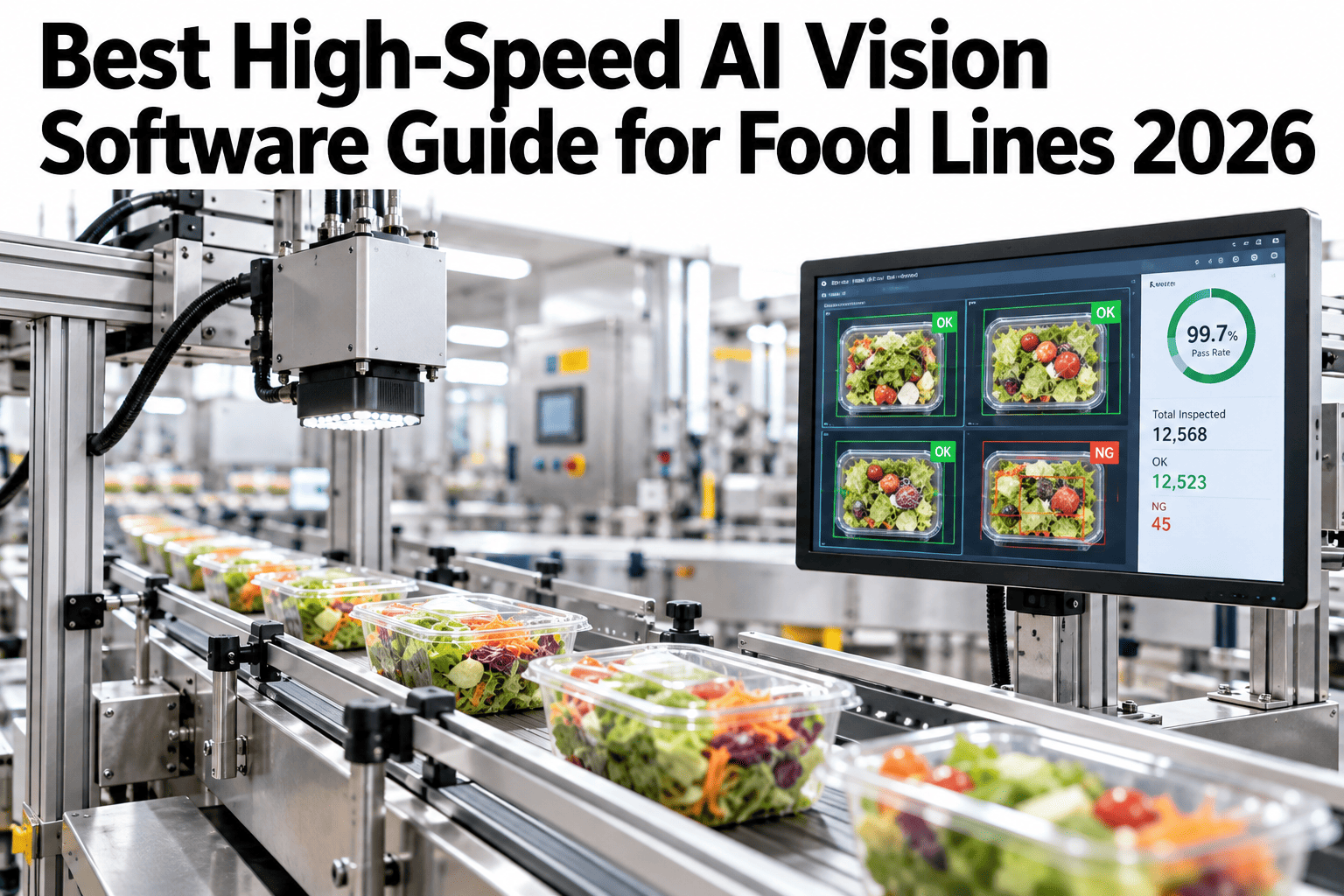
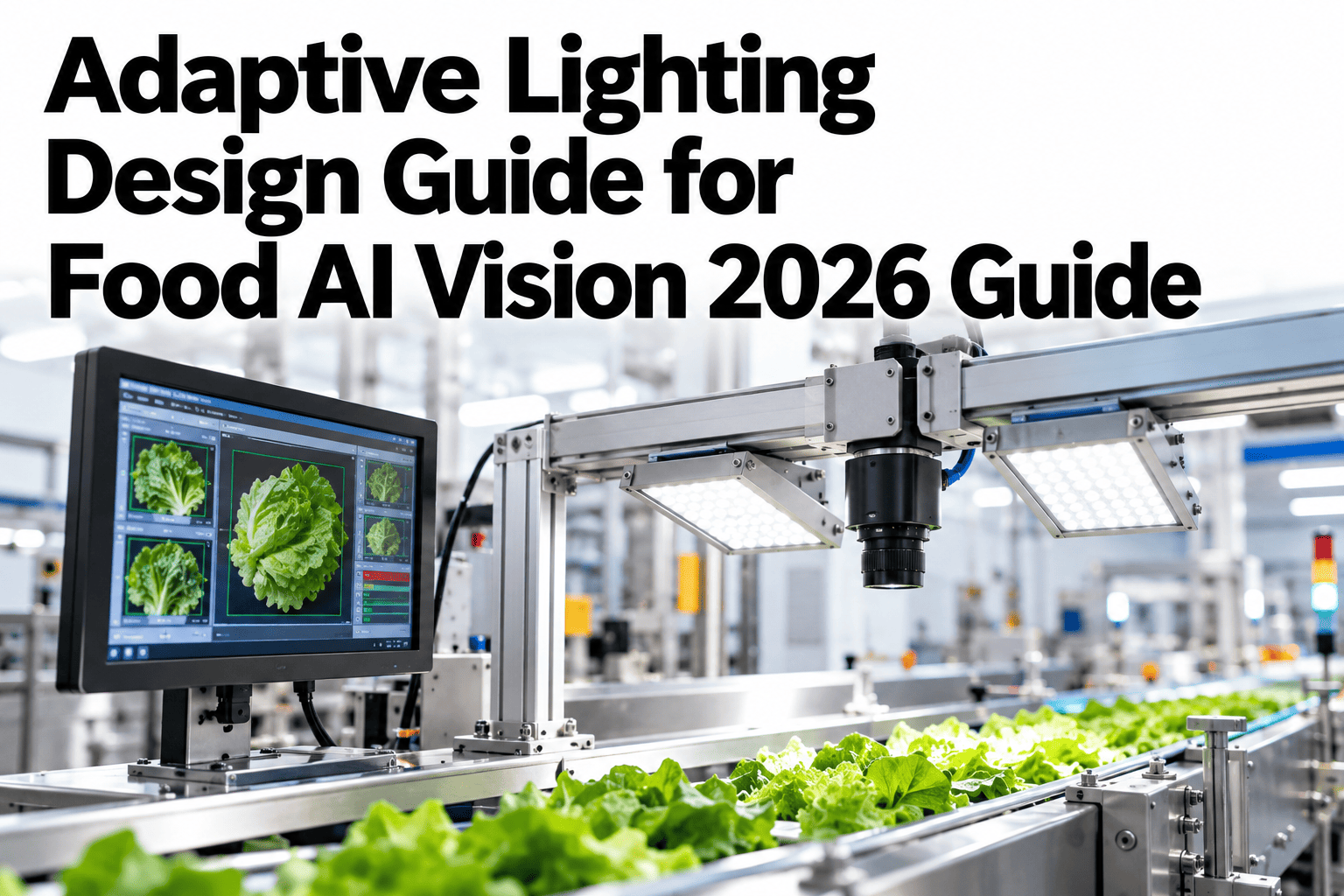
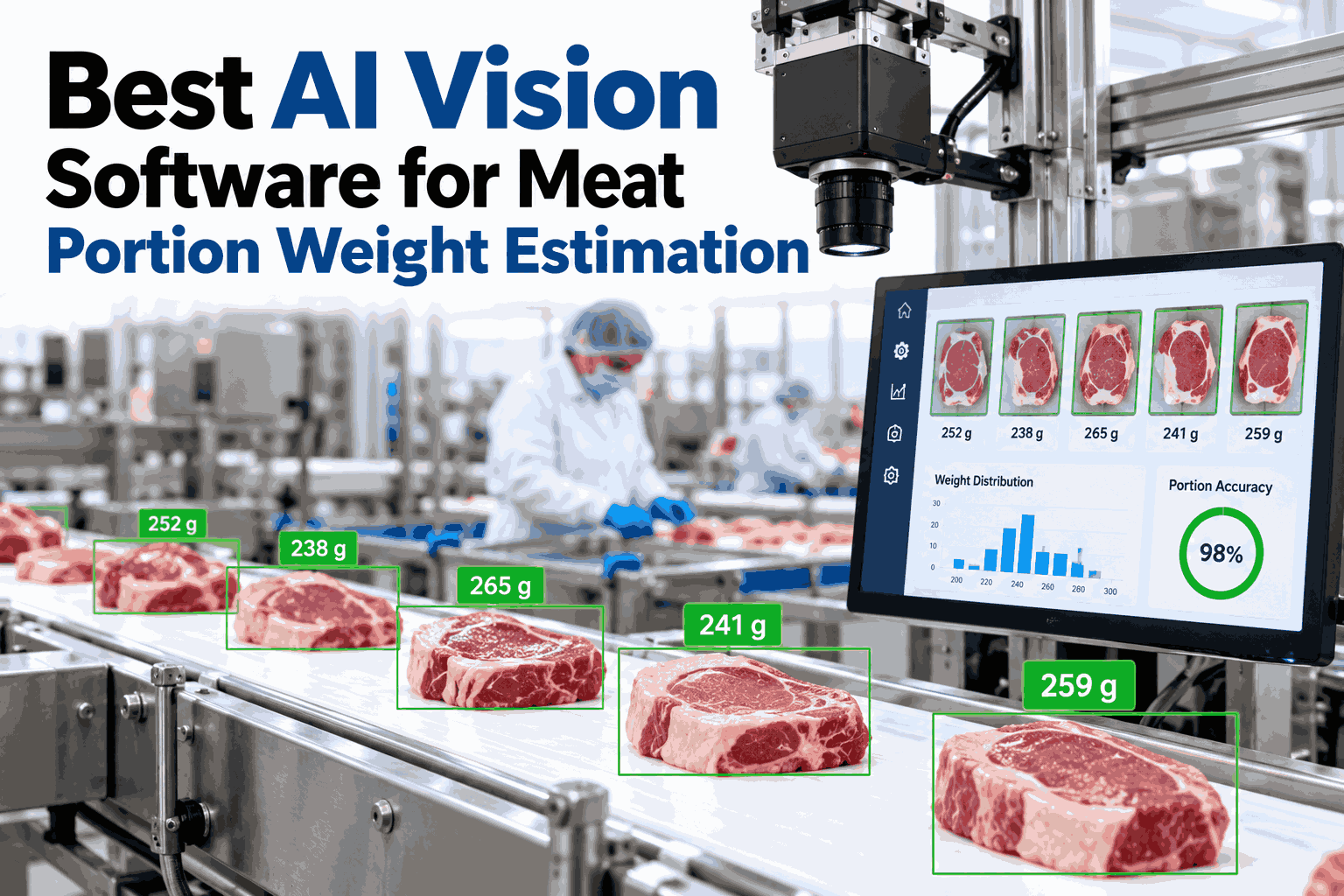
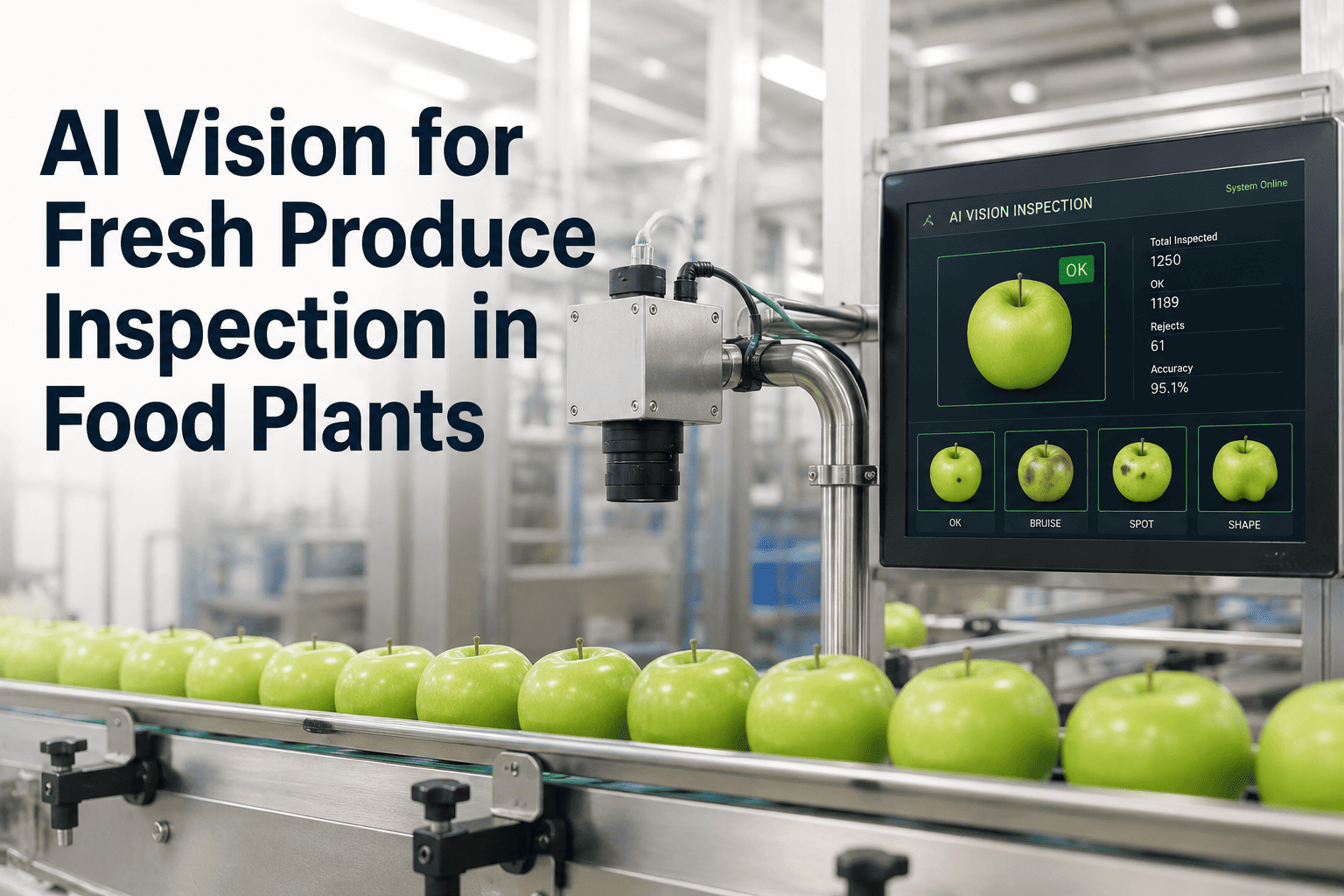
A beef trim line doesn't stop for a foreign material check the way a bottling line stops for a cap inspection. Trim moves continuously into the grinder, and a piece of clear plastic film or a fragment of packaging sitting on top of red meat looks, to an X-ray machine and a metal detector, like nothing at all, because neither technology reads density the way it reads color and texture. Meat and poultry plants have leaned on X-ray, metal detection, and human eyes at the line for decades, and each catches a different slice of the risk while leaving the rest to chance. AI vision cameras close exactly the gap those two technologies were never built to cover, reading the visible and near-infrared signature of soft foreign material directly off the product surface, and the way to see this against your own trim, cuts, or breaded product is to book a demo.
FOOD & BEVERAGE · MEAT & POULTRY PROCESSING
Catch What X-Ray and Metal Detection Were Never Built to See
iFactory's AI vision cameras inspect whole cuts, portions, trim, and breaded products for foreign material, trim variance, and package integrity, built to run in washdown and cold-zone environments without slowing your line down.
TWO KINDS OF INVISIBLE
Why Foreign Material Detection Is Really Two Separate Problems
Meat and poultry plants tend to talk about foreign material detection as one problem, but it's actually two problems that require two different imaging approaches, and a system that only handles one leaves the other entirely uncovered on your line.
VISIBLE SPECTRUM
What a High-Resolution Camera Catches
Foils, films, and plastic fragments sitting on top of or beside the product
Paper and packaging debris on the top and bottom surfaces
Compositional defects visible to a calibrated camera at normal wavelengths
Bruises, blood spots, and surface discoloration on whole cuts
NON-VISIBLE SPECTRUM
What Hyperspectral Imaging Catches
Foreign objects that share the same color as fat and lean meat under normal light
Moisture and oil content variance that signals a quality or process issue
Low-density materials with no signature that X-ray or metal detection can register
Fat distribution and cook color, even underneath a breaded coating
Running both approaches against the same product stream, rather than choosing one, is what lets a plant say with confidence that a piece of trim has actually been checked rather than partially checked.
FOLLOW THE PRODUCT
Where Risk Enters at Each Processing Stage
Every additional processing step a piece of meat or poultry passes through raises the odds that a foreign material or a quality defect enters the stream, which is why inspection needs to travel with the product rather than sit at one single checkpoint.
Primary Processing & Cutting
Whole birds and carcasses are cut and portioned. An incorrect cut that misses a fat/lean ratio standard is routed to the trim line rather than caught in place.
Trim Line & Grinding
Excess meat trimmed from prime cuts is combined before grinding, the highest-risk point for soft foreign material like film or packaging fragments to enter unnoticed.
Portioning & Breading
Further-processed products like nuggets and patties add a breading layer that hides fat distribution, cook color, and missing components from a standard camera check.
Final Packaging
Seal integrity, weight verification, and label accuracy are the last checkpoint before product leaves the plant for distribution.
Vision inspection deployed at more than one of these stages catches a defect closer to where it originated, which shortens the root-cause investigation dramatically compared to finding it only once it's fully packaged.
See your trim line inspected live
iFactory can run a side-by-side comparison of your current X-ray and metal detection setup against AI vision on your own product before you commit to anything.
WASHDOWN-READY HARDWARE
Built for the Environment, Not Adapted to It
A camera system designed for a dry goods line does not survive long in a meat plant's sanitation cycle. Every hardware decision in a meat and poultry deployment has to account for chemical washdown, cold-zone condensation, and a processing floor that gets hosed down between shifts.
Sanitary Housing
Enclosures rated for direct washdown and compatible with the sanitation chemicals already in use on your floor.
Cold-Zone Optics
Lens and lighting configurations tuned to avoid condensation fogging in refrigerated processing rooms.
Calibrated Lighting
Consistent illumination that removes the shadow and glare variation a moving carcass or portion creates under standard plant lighting.
High-Speed Capture
Imaging fast enough to grade whole, portioned, and processed product without introducing a bottleneck at line speed.
THREE TECHNOLOGIES, ONE RECORD
How AI Vision Compares to What's Already on Your Line
Most plants already run X-ray and metal detection, and the goal isn't to replace either one, it's to understand exactly what each technology covers so the gap between them stops being where defects escape.
| Capability |
X-Ray / Metal Detection |
AI Vision Inspection |
| Dense foreign material |
Strong: metal, stone, bone fragments |
Not the primary target, complements rather than replaces |
| Soft foreign material |
Weak: film, paper, and plastic often go undetected |
Strong: trained specifically on visible and near-infrared signatures |
| Trim & fat ratio |
Not measured |
Measured continuously against your defined standard |
| Cook color under breading |
Not measured |
Assessed even when a breaded coating hides the surface |
| Documentation |
Pass/fail event log |
Full imagery, classification, and lot-level record |
Plants running all three together, with the results landing in one shared record, get a genuinely complete picture instead of three separate systems that each assume something the others were checking.
TURNKEY DEPLOYMENT
How iFactory Deploys Vision on a Meat or Poultry Line
What Gets Installed
Washdown-rated camera housing sized to your line and product mix
Visible and near-infrared imaging trained on your product library
Real-time alerts to line operators the moment a threshold is crossed
Lot-level defect logging integrated with your existing quality system
24×7 remote monitoring with drift alerts on developing patterns
Deployment Timeline
Weeks 1-4: Line audit, sanitation compatibility review, camera placement
Weeks 5-9: Model training on your product library and defect history
Weeks 10-13: Dashboard go-live, alerting, operator training
FREQUENTLY ASKED QUESTIONS
What Meat and Poultry Plants Ask Before Adding Vision
Does this replace our existing X-ray and metal detection systems?
No, and that's an important distinction to make before evaluating this against your current setup. X-ray and metal detectors are excellent at what they were built for, finding dense objects like metal fragments, stones, and bone chips, but they carry an inherent blind spot for soft materials like film, paper, and plastic that don't register a meaningful density difference from the product itself. AI vision is built specifically to close that soft-material gap using visible and near-infrared imaging, so the strongest setup runs both technologies together with the findings landing in one shared quality record.
Book a demo to see how the two complement each other on your line.
Can the camera handle a breaded product where the surface is hidden?
Yes, this is one of the specific capabilities that separates a general-purpose camera from a system trained for meat and poultry applications. Standard imaging struggles once a breading or coating layer covers the product surface, but a model trained on your breaded SKUs can assess cook color, fat distribution, and missing components even underneath that coating by learning the visual signatures that correlate with what's happening beneath it. This matters most for products like nuggets, tenders, and sandwich patties where the coating is exactly what makes manual inspection unreliable in the first place.
Contact our support team to discuss your specific breaded product line.
Will the hardware survive our sanitation and washdown cycle?
Camera housings and lighting for meat and poultry deployments are specified for the environment from the start rather than adapted afterward, which means sanitary enclosures rated for direct washdown, compatibility with the cleaning chemicals your plant already uses, and optics configured to resist the condensation that cold-zone processing rooms produce. A system pulled from a dry goods application without these considerations tends to fail quickly in a meat plant's daily sanitation cycle, so this is one of the first things reviewed during the line audit before anything is installed.
Book a demo to review the hardware spec against your sanitation SOP.
How is trim and fat ratio actually measured by the camera?
The system uses calibrated imaging to assess the visible lean-to-fat surface ratio on trim as it moves toward the grinder, comparing it continuously against the standard your plant has defined rather than relying on a periodic manual check or scale-based sampling. Because this runs on every batch rather than a sample, drift toward an out-of-spec ratio gets flagged early enough for an operator to adjust the cutting process before a full lot has to be reworked or blended down to correct it.
Contact our support team to see how this maps to your current fat/lean standard.
What does the documentation look like for a food safety audit?
Every inspected unit generates a record that includes any defect or foreign material flag, the classification of what was found, the line and station where it occurred, and a timestamp, captured automatically as part of normal line operation rather than depending on a manual log during a busy shift. That continuous, image-backed record is exactly the kind of traceable data that food safety audits ask processors to produce, and it turns a recall investigation from a search through incomplete paper logs into a direct query against real production data.
Book a demo to see a sample audit trail from a live deployment.
EVERY CUT, EVERY BATCH, EVERY SHIFT
Close the Gap X-Ray and Metal Detection Leave Open
iFactory's AI vision cameras inspect meat and poultry product for foreign material, trim variance, and package integrity, built for washdown and cold-zone environments and trained on your own product library.