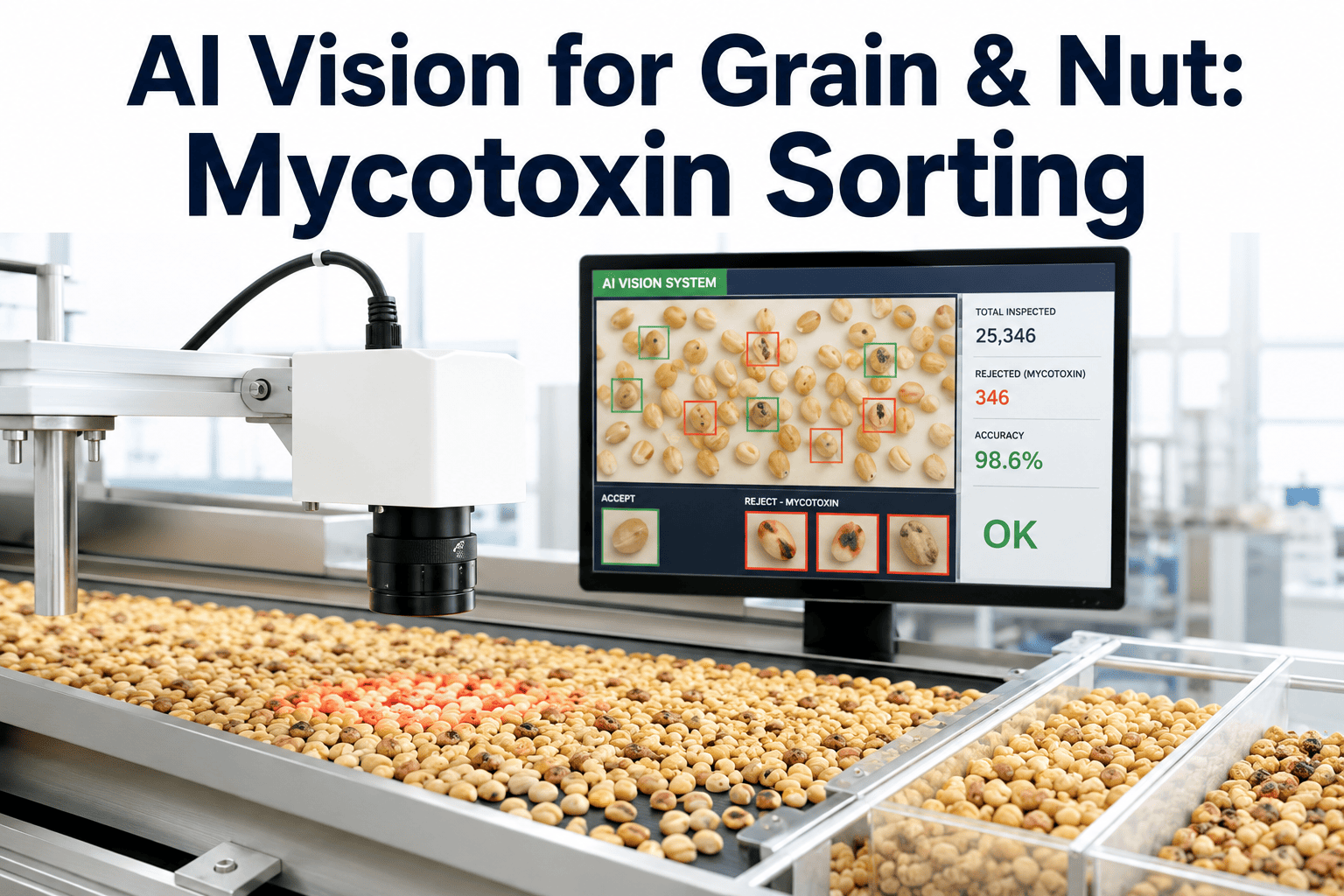
A single aflatoxin-contaminated kernel hiding among a ton of otherwise clean peanuts is invisible to the naked eye at sorting speed, discolored just enough to matter under the right wavelength of light but not enough for a person watching a moving belt to catch it reliably, hour after hour, shift after shift. Mycotoxin contamination is one of the highest-stakes defects a grain, seed, or nut processor deals with precisely because the health risk is real, the regulatory tolerance is unforgiving, and traditional color sorting alone was never designed to distinguish a toxin-producing mold signature from ordinary cosmetic discoloration. iFactory's AI vision sorting platform was trained specifically on that distinction, catching what standard optical sorting passes through.
Sort out the kernels a standard optical scanner passes through
iFactory's AI vision distinguishes mycotoxin and aflatoxin contamination signatures from ordinary cosmetic defects, at full sorting line speed.
Where contamination slips through a standard sort
Raw Intake
Full incoming volume, unsorted, mixed quality and contamination risk.
Standard Optical Sort
Removes obvious color and size defects, foreign material, and broken kernels.
Passes Through Uncaught
Subtle mold signatures and early-stage aflatoxin contamination often resemble acceptable variation to a color-only sort.
AI Vision Layer
Trained model flags the specific visual signature of mycotoxin contamination that standard sorting misses.
Cosmetic discoloration and toxin risk aren't the same thing
Traditional optical sorters are calibrated primarily around color and size thresholds, which works well for the majority of quality defects like shriveled kernels, foreign material, or off-color husks. The problem is that early-stage fungal contamination doesn't always produce a color shift dramatic enough to trip a standard threshold, and conversely, plenty of kernels with harmless cosmetic discoloration get rejected unnecessarily because the sorter can't tell the difference between the two. AI vision models trained specifically on labeled contamination data learn to recognize the actual visual signature associated with toxin-producing mold rather than relying on a blunt color cutoff that treats every dark spot the same way.
Standard Color Sort
- Single color/size threshold applied uniformly
- Cosmetic and toxin-risk discoloration treated the same
- Either over-rejects good product or under-catches risk
AI Vision Sort
- Trained on labeled contamination-signature data
- Distinguishes cosmetic variation from toxin risk pattern
- Reduces both false rejects and missed contamination
Most mycotoxin incidents trace back to kernels that technically passed a standard sort. Book a demo to see the model classify sample kernels from your own line.
From kernel to sorted stream
High-speed imaging
Each kernel or nut passes under multi-angle imaging as it moves through the sorting line at full speed.
Contamination signature classification
The model checks visual patterns against a trained library of mycotoxin and aflatoxin contamination signatures.
Foreign material and defect detection
Standard quality defects and foreign material are flagged in the same pass, not as a separate sorting step.
Real-time diversion
Flagged kernels are ejected via air jet or mechanical diverter without slowing the line for the rest of the batch.
What processors see after switching to AI vision sorting
Regulatory tolerance for mycotoxins keeps tightening
Aflatoxin and other mycotoxin limits in food and feed have been subject to increasingly strict enforcement across major export markets, and a single failed shipment can mean an entire lot rejected at the border, a costly retest cycle, or in serious cases a recall. For processors selling into markets with the tightest tolerances, the cost of an escaped contamination event routinely exceeds what an upgraded sorting system would have cost to prevent it in the first place, which is why this tends to be one of the fastest-paying-back AI vision investments a grain or nut processor can make.
Climate conditions during growing and harvest also directly affect mycotoxin risk levels year to year, meaning a sorting system that only catches obvious contamination in a bad year isn't enough; the goal is consistent detection regardless of how prevalent the risk is in a given harvest season, since the years with the highest contamination pressure are exactly when a gap in sorting capability becomes most costly.
What a pilot on your sorting line looks like
Line and product assessment
Review current sorting equipment, throughput, and the specific grain, seed, or nut varieties processed.
Model training on your product
Contamination signature training incorporates samples specific to your variety and typical growing region.
Camera and diverter integration
Installed alongside or integrated with existing optical sorting hardware where feasible.
Validation against lab testing
Sorted output is cross-checked against traditional lab mycotoxin testing to confirm detection accuracy before full rollout.
AI vision contamination sorting, explained plainly
See what your current sorting line is missing
Run a validation pass on your own product and compare it against your current lab testing results.