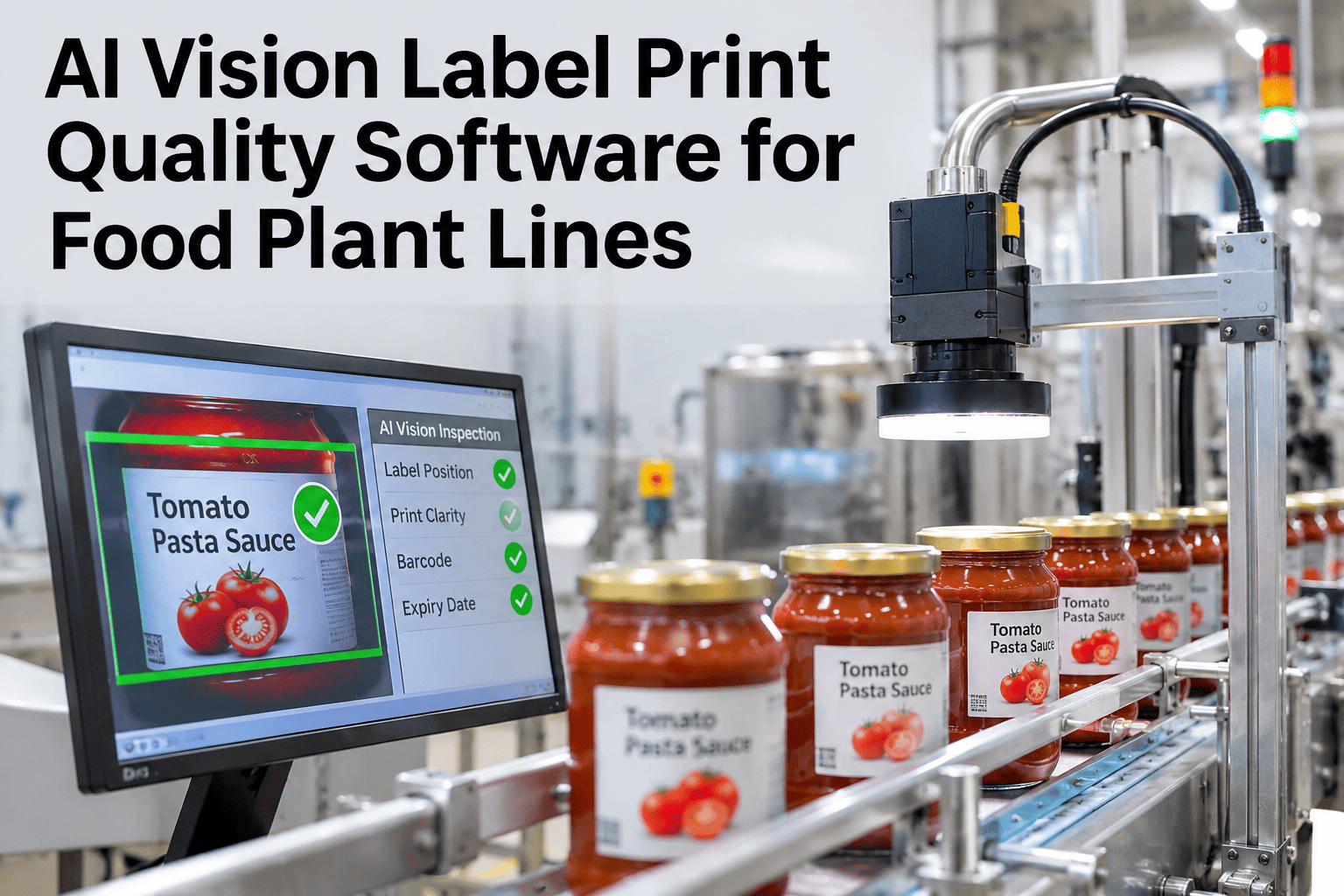
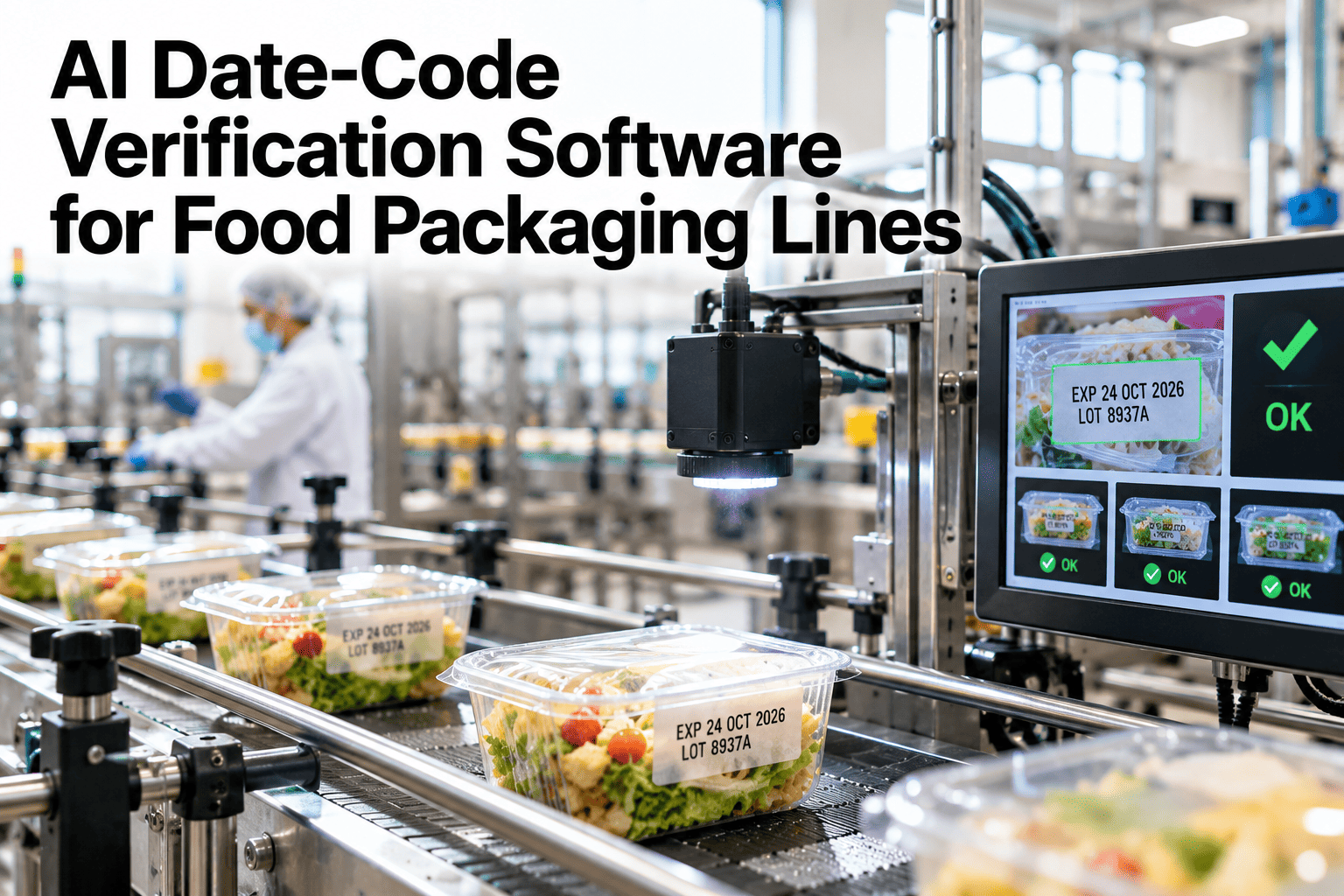
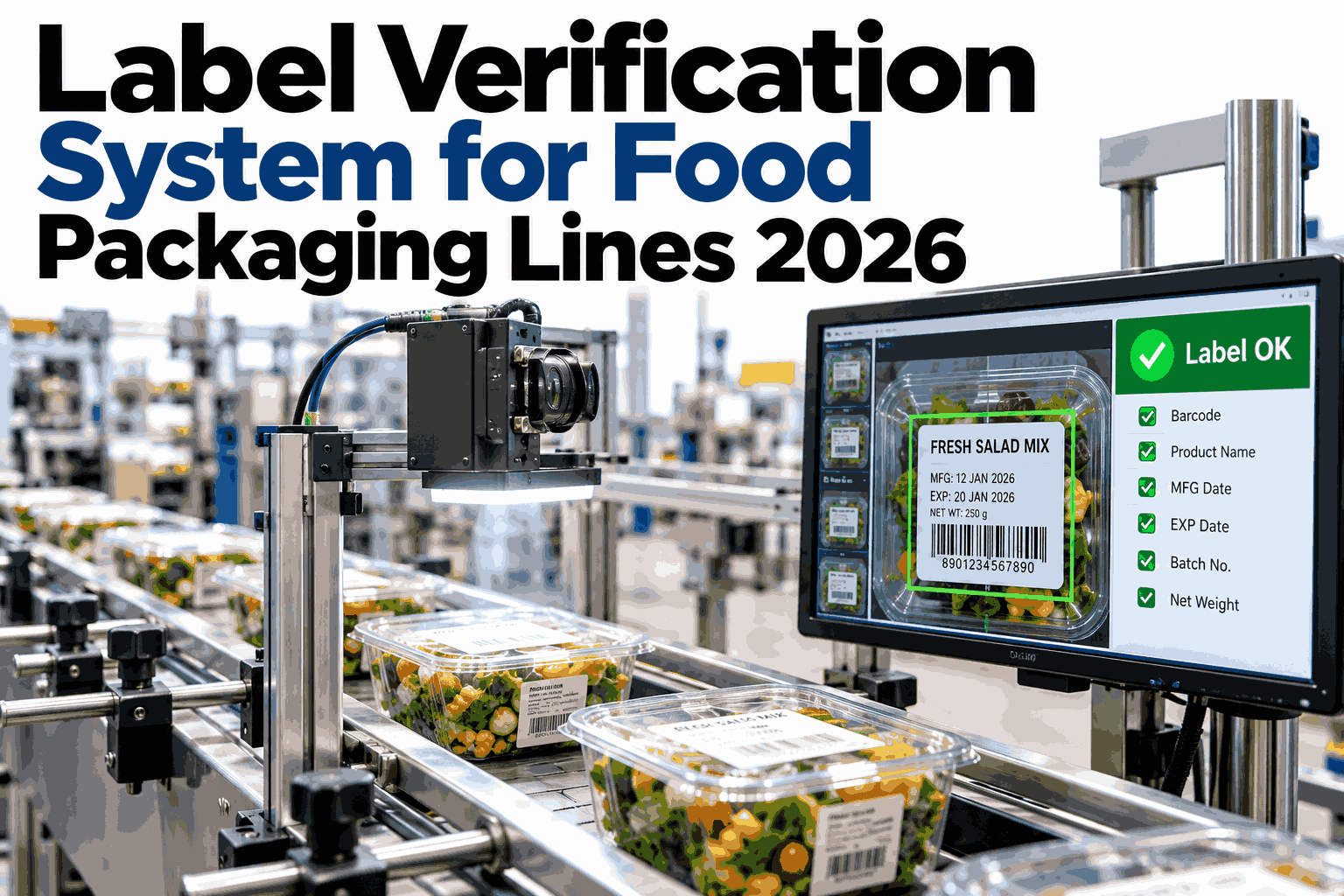
Print quality print-related defects account for roughly 21 percent of label rejects on a typical packaging line, and unreadable text is the kind of failure that often slips through a quick visual check because it degrades gradually, not all at once (food packaging label defect tracking, 2026). AI vision label print quality software grades every printed label and infers which consumable — ink, ribbon, or print head — is actually causing the decline. iFactory, an on-premise AI platform with AI Vision Camera built in, scores print quality continuously on the line. Plant teams who want this on their own labelers can request a demo with our team.
AI Vision Label Print Quality · Food Plant Lines, 2026
Print Quality Degrades Gradually — A Spot Check Catches It Too Late
iFactory AI grades every printed label and traces a declining trend back to the specific consumable causing it, before the text actually becomes unreadable.
Fresh ribbonPrint quality score decliningReplace before failure
What a print quality score checks
Five Elements of a Label That Determine Readability
Barcode scan grade
A degrading print can still look readable to the eye while failing a barcode scan at retail.
Text contrast
Ribbon or ink fade reduces contrast on fine print, including allergen and nutrition text.
Print alignment
Drift in registration can push text off the printable area or overlap graphics.
Void and streak detection
Ribbon wrinkling or a damaged print head produces localized print voids.
Edge definition
A dirty or worn print head blurs character edges before full illegibility sets in.
Tracing the cause
Which Consumable Is Actually Behind a Declining Score
| Decline pattern | Likely cause | Typical action |
|---|
| Gradual contrast fade, uniform across the label | Ribbon or ink nearing end of life | Schedule a consumable change |
| Localized streaks or voids | Damaged or dirty print head element | Clean or replace the print head |
| Progressive misalignment | Mechanical drift in the printer or applicator | Inspect and recalibrate the printer |
| Sudden step-change in quality | A consumable swap or setting change | Verify the last changeover was correct |
Why spot checks miss it
A Degrading Trend Does Not Announce Itself
A print head or ribbon rarely fails all at once — quality erodes gradually over thousands of labels, and a periodic visual spot check only catches a problem if the inspector happens to look at a label from exactly the wrong point in that decline. Continuous grading removes that timing dependency entirely.
See What Your Current Print Quality Trend Looks Like
Share your current label reject data and iFactory AI will show what a continuous print quality score would have caught ahead of your last unreadable-label complaint.
Reactive vs scheduled consumable changes
Changing Ribbons on a Schedule Versus on a Trend
Fixed replacement interval
Ribbons changed on a calendar or roll-count basis
Some changed before they needed to be, wasting consumable
Others run past the point where quality already declined
Score-driven replacement
Ribbons changed when the quality score actually crosses a threshold
Consumable life used fully without running into failure
Replacement timed to the real wear rate for that print job
Barcode scan risk
A Label Can Look Fine and Still Fail a Barcode Scanner
Barcode grading follows a different standard than human readability — a barcode can degrade to the point of scan failure at retail or distribution well before the surrounding text looks obviously wrong to a line operator walking past.
Expert review
What a Packaging Line Manager Checks First
Print quality monitoring earns its place by shortening the gap between a declining consumable and the moment someone acts on it, rather than waiting for a downstream complaint to point backward.
Verdict
Strong when the quality score distinguishes consumable wear from a mechanical printer fault, since the fix is different for each.
Watch for
A label that passes visual inspection but fails a barcode scan grade — the two are not the same check.
Do next
Pull your last unreadable-label complaint and check how many shifts of production ran before anyone caught the decline.
Frequently asked questions
What Plant Teams Ask About Print Quality Monitoring
How common is print quality as a cause of label rejects?
Print quality and unreadable text issues account for roughly 21 percent of label rejects on a typical packaging line, making it one of the most common defect categories behind allergen and nutrition panel errors (food packaging label defect tracking, 2026).
See how this compares to your own reject data.
Can this tell the difference between a ribbon problem and a print head problem?
Yes — a gradual, uniform contrast fade typically points to the ribbon or ink, while localized streaks or voids point to the print head itself, and the system flags which pattern it is seeing.
Ask support how fault classification works.
Does this check barcode scannability or just visual appearance?
How often should consumables be changed once this is in place?
Rather than a fixed interval, replacement is tied to the quality score crossing a set threshold, which varies by print job and consumable but typically extends usable life compared with a conservative fixed schedule.
Ask support about setting thresholds for your printers.
Can this run on our existing label applicators or does it need new hardware?
A vision camera is typically added at or just after the print-and-apply station on the existing line, so most plants do not need to replace their current printers or applicators.
Talk through your current line setup.
Catch the decline before the complaint
Grade Every Label's Print Quality Continuously
Book a demo to see how iFactory AI traces a declining print trend back to the consumable causing it.
{"@context":"https://schema.org","@type":"FAQPage","mainEntity":[
{"@type":"Question","name":"How common is print quality as a cause of label rejects?","acceptedAnswer":{"@type":"Answer","text":"Print quality and unreadable text issues account for roughly 21 percent of label rejects on a typical packaging line."}},
{"@type":"Question","name":"Can this tell the difference between a ribbon problem and a print head problem?","acceptedAnswer":{"@type":"Answer","text":"Yes, a gradual uniform contrast fade typically points to the ribbon or ink, while localized streaks or voids point to the print head."}},
{"@type":"Question","name":"Does this check barcode scannability or just visual appearance?","acceptedAnswer":{"@type":"Answer","text":"Both, barcode grading follows its own scan-standard check separate from visual text clarity."}},
{"@type":"Question","name":"How often should consumables be changed once this is in place?","acceptedAnswer":{"@type":"Answer","text":"Replacement is tied to the quality score crossing a set threshold rather than a fixed calendar interval."}},
{"@type":"Question","name":"Can this run on our existing label applicators or does it need new hardware?","acceptedAnswer":{"@type":"Answer","text":"A vision camera is typically added at or just after the print-and-apply station on the existing line."}}
]}